
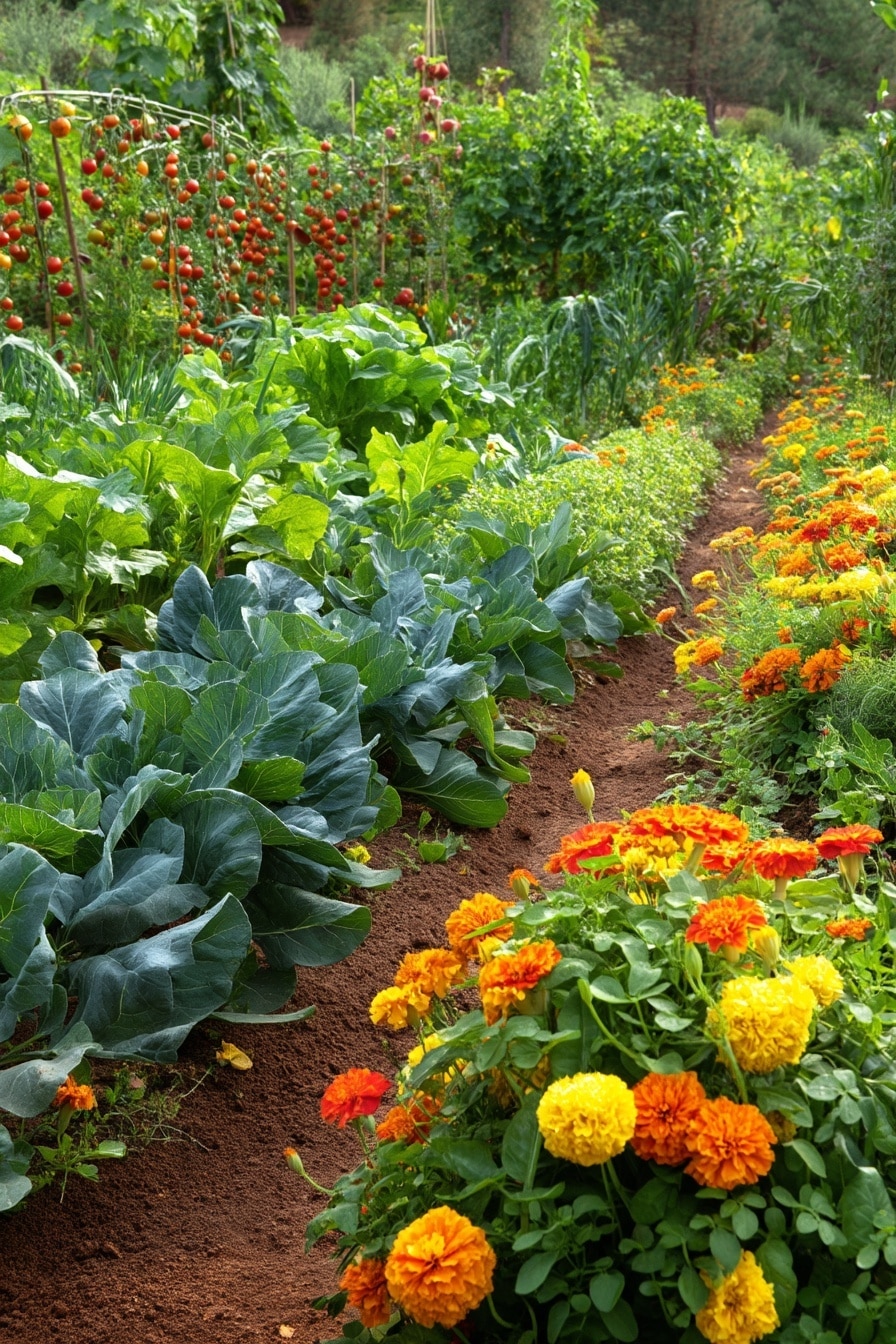
Vegetable garden ideas can transform a traditional kitchen patch into a visually stunning and functional outdoor space. Instead of treating your veggie plot as a simple food‑producing area, thoughtful design makes it a place you enjoy spending time in—adding beauty, structure, and personality to every bed and pathway.
In this article, we’ll look at 7 creative ways you can blend practicality, aesthetics, and plant production to craft a vegetable garden that feels both artistic and productive. Whether you’re working with raised beds, blending flowers with edibles, or adding vertical elements to open ground, these ideas will help you rethink what a vegetable garden can be—starting with the very first element of smart, elegant design.
Table of Contents
1. Use Symmetry to Shape the Space

One of the most elegant vegetable garden ideas is to design your layout with symmetry in mind. A symmetrical garden creates balance and order, making even a functional space feel formal and refined.
Start with a central path or focal point—like a birdbath, sundial, or small tree—and build out from there. Mirror the placement of raised beds, trellises, or planting rows on either side to create visual harmony. Use geometric shapes like rectangles or squares for structure, and plant similar crops in matching sections.
Symmetry turns your vegetable garden into a place that’s both practical and peaceful, combining beauty with growability.
2. Mix Flowers with Vegetables
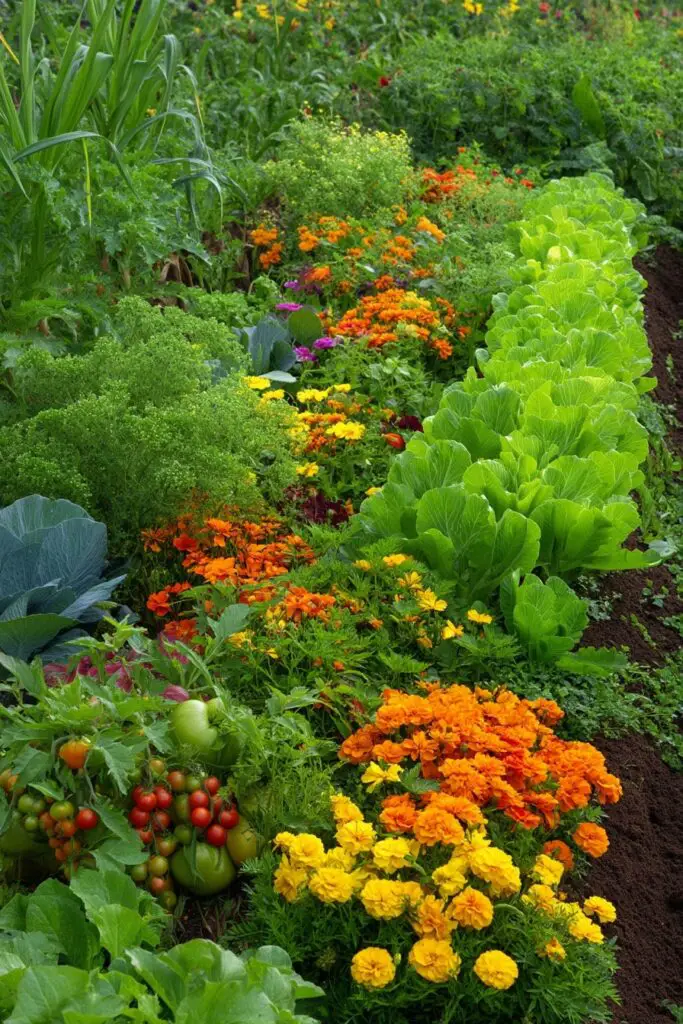
Blending flowers into your veggie plot is one of the most colorful and useful vegetable garden ideas. Flowers not only brighten the space—they attract pollinators, deter pests, and add seasonal variety.
Interplant blooms like marigolds, calendula, nasturtiums, or zinnias among your tomatoes, beans, and greens. Their height, color, and texture create contrast with leafy crops and break up the visual uniformity of vegetable rows. Use them to line borders, fill gaps, or frame beds.
This mixed planting approach brings beauty and biodiversity, turning a traditional garden into a pollinator-friendly landscape full of texture and life.
3. Try Raised Beds for Structure and Style
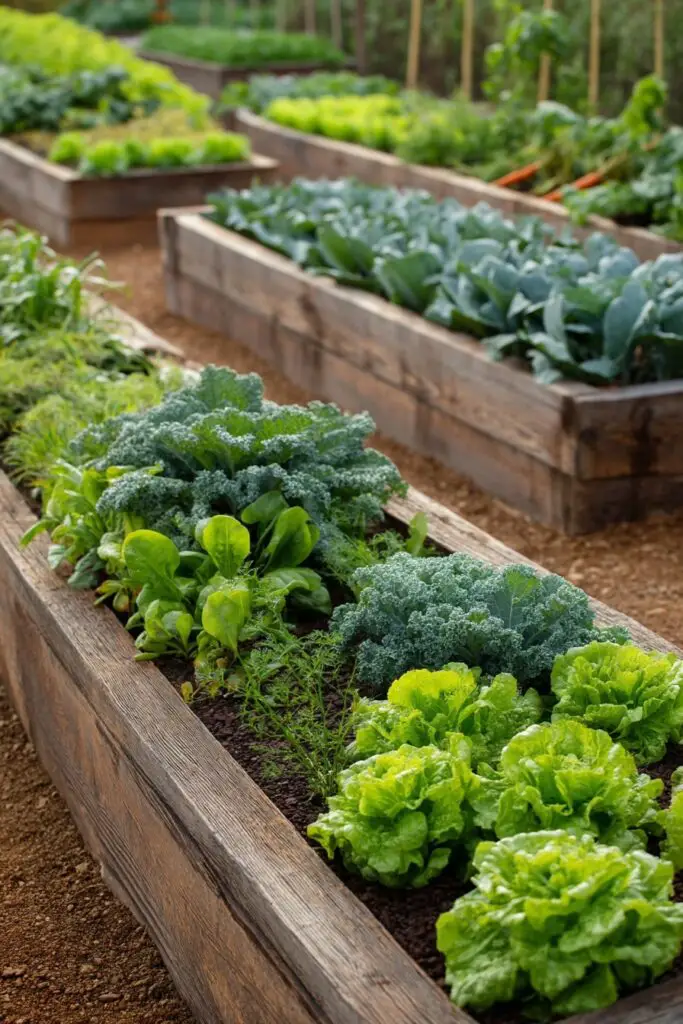
Raised beds are among the most practical and stylish vegetable garden ideas, offering both visual order and improved growing conditions. They help define the space, improve drainage, and make harvesting easier—all while giving your garden a clean, architectural look.
Use materials like cedar, stone, or metal to match your overall garden aesthetic. Arrange the beds in rows, grids, or symmetrical patterns for visual impact. Vary the height slightly across different beds to add depth and dimension.
Well-designed raised beds elevate the look and feel of a vegetable garden while also boosting productivity and ease of maintenance.
4. Incorporate Decorative Pathways
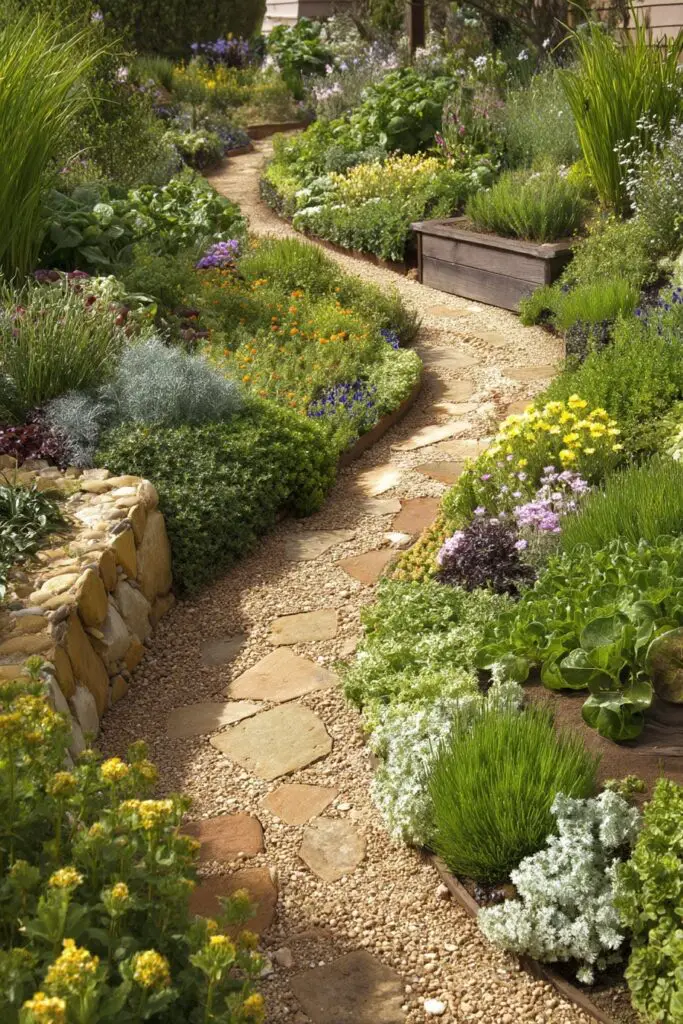
Defining walkways is one of the most underrated yet impactful vegetable garden ideas. Decorative paths do more than guide your steps—they organize the space, reduce soil compaction, and enhance the garden’s overall appearance.
Use materials like gravel, flagstone, brick, or wood chips to complement your garden’s style. Edging paths with herbs or low-growing flowers adds charm and softens hard lines. Keep paths wide enough for wheelbarrows or easy access to raised beds.
When thoughtfully laid out, pathways provide rhythm and flow to your garden while turning everyday maintenance into a more enjoyable experience.
5. Frame the Garden with Hedges or Fencing
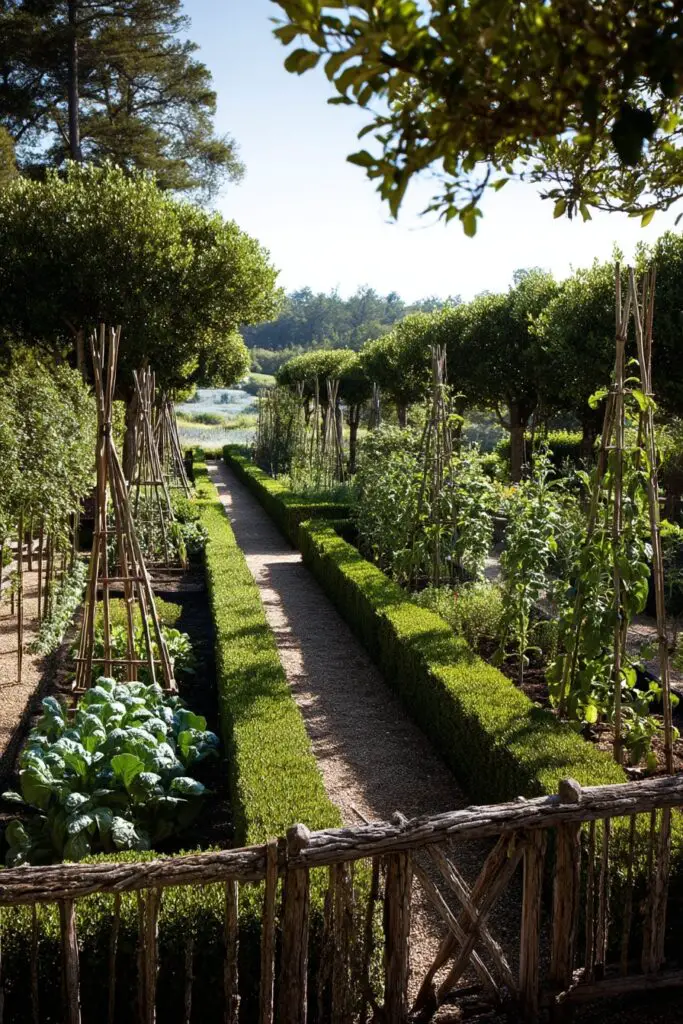
Framing your space with defined borders is one of the most classic vegetable garden ideas that instantly brings polish to the layout. Whether you choose low boxwood hedges, split-rail fences, or rustic woven willow, a frame helps create a sense of enclosure and design unity.
These borders serve both function and form—keeping animals out, anchoring raised beds, and providing a visual edge to your planting area. Even a simple trellis fence or row of shrubs can give your vegetable garden a finished look while subtly dividing it from the rest of your yard.
Framing transforms a garden from a growing patch into an intentional outdoor room.
6. Use Vertical Elements to Add Height
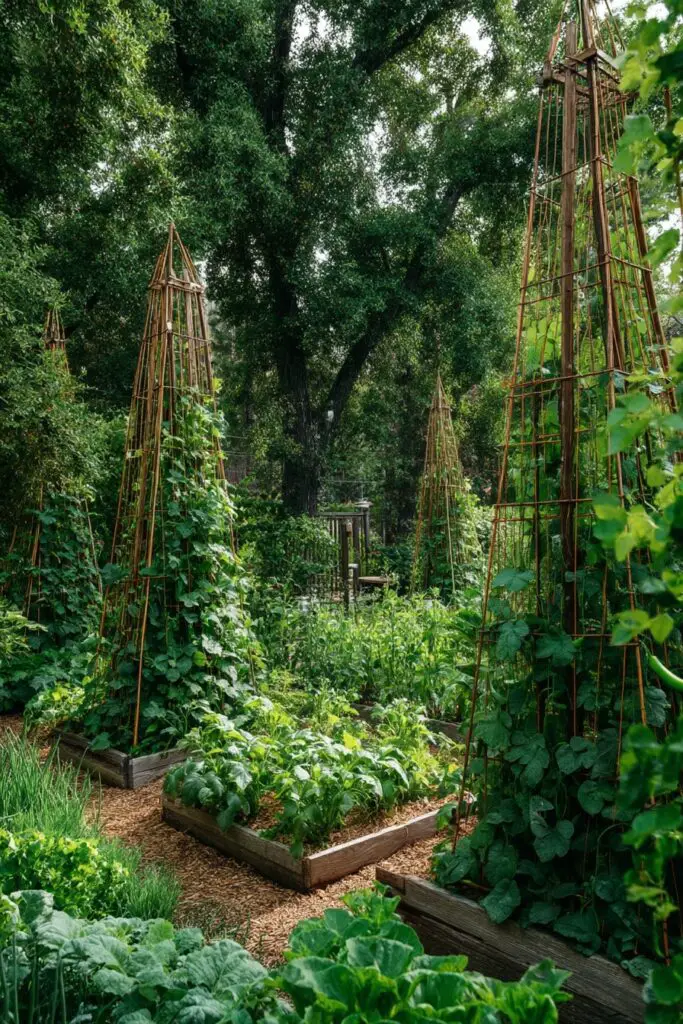
Adding height is one of the most effective vegetable garden ideas for making a small or flat space feel layered and dynamic. Vertical elements like trellises, obelisks, and arbors help guide the eye upward while expanding your planting area.
Grow climbing crops such as pole beans, cucumbers, or tomatoes along supports, or train flowering vines to soften structures. Use a series of arches to define an entryway or a central axis. Choose materials—wood, metal, or bamboo—that complement the rest of your garden’s look.
Vertical accents not only boost productivity but also add structure, rhythm, and visual drama to your layout.
7. Add Artistic Touches with Garden Decor
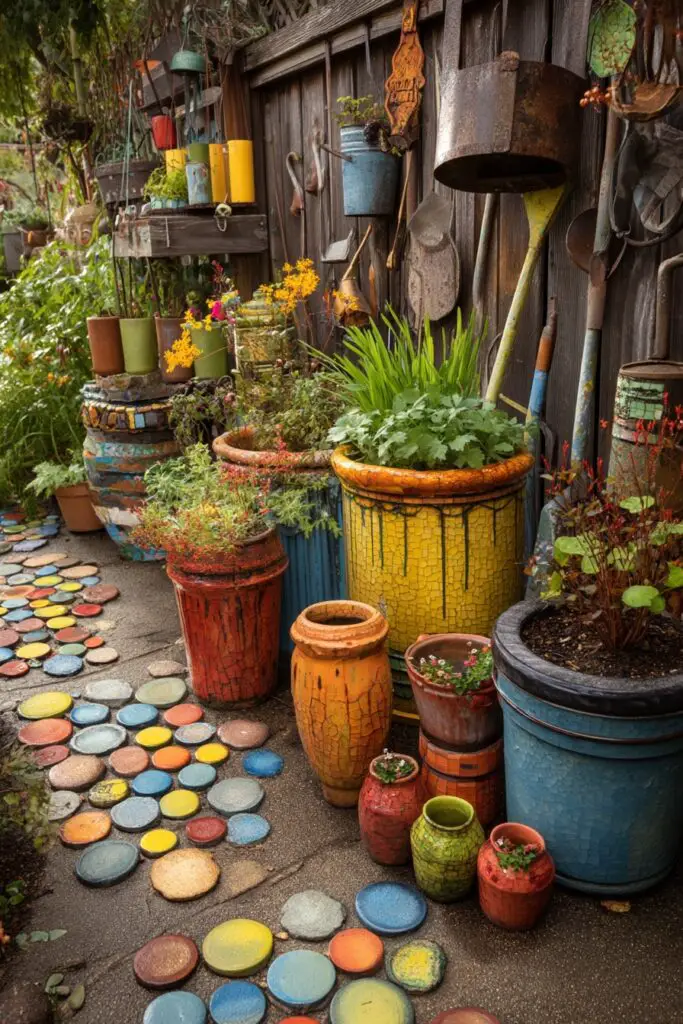
Among the more expressive vegetable garden ideas, adding decorative elements brings personal style and whimsy to your growing space. Even functional gardens benefit from a few thoughtful artistic touches.
Consider including a mosaic stepping stone, a painted birdhouse, antique tools hung on a fence, or colorful plant markers. Wind chimes, metal sculptures, or ceramic pots can also reflect your personality while adding color and texture between rows.
These decorative accents turn a practical garden into a place that feels creative and curated—one that invites you to linger, not just harvest.
Conclusion
Designing with intention can turn practical vegetable garden ideas into a beautiful, functional retreat. By combining symmetry, color, verticality, and a few creative flourishes, you can elevate a simple garden bed into a space that delights both your senses and your plate.
Whether you’re working with raised beds, decorative pathways, or a trellised archway of beans, these design strategies show that productivity and beauty go hand in hand. With the right touches, your vegetable garden becomes more than a place to grow food—it becomes a space to enjoy every day.