
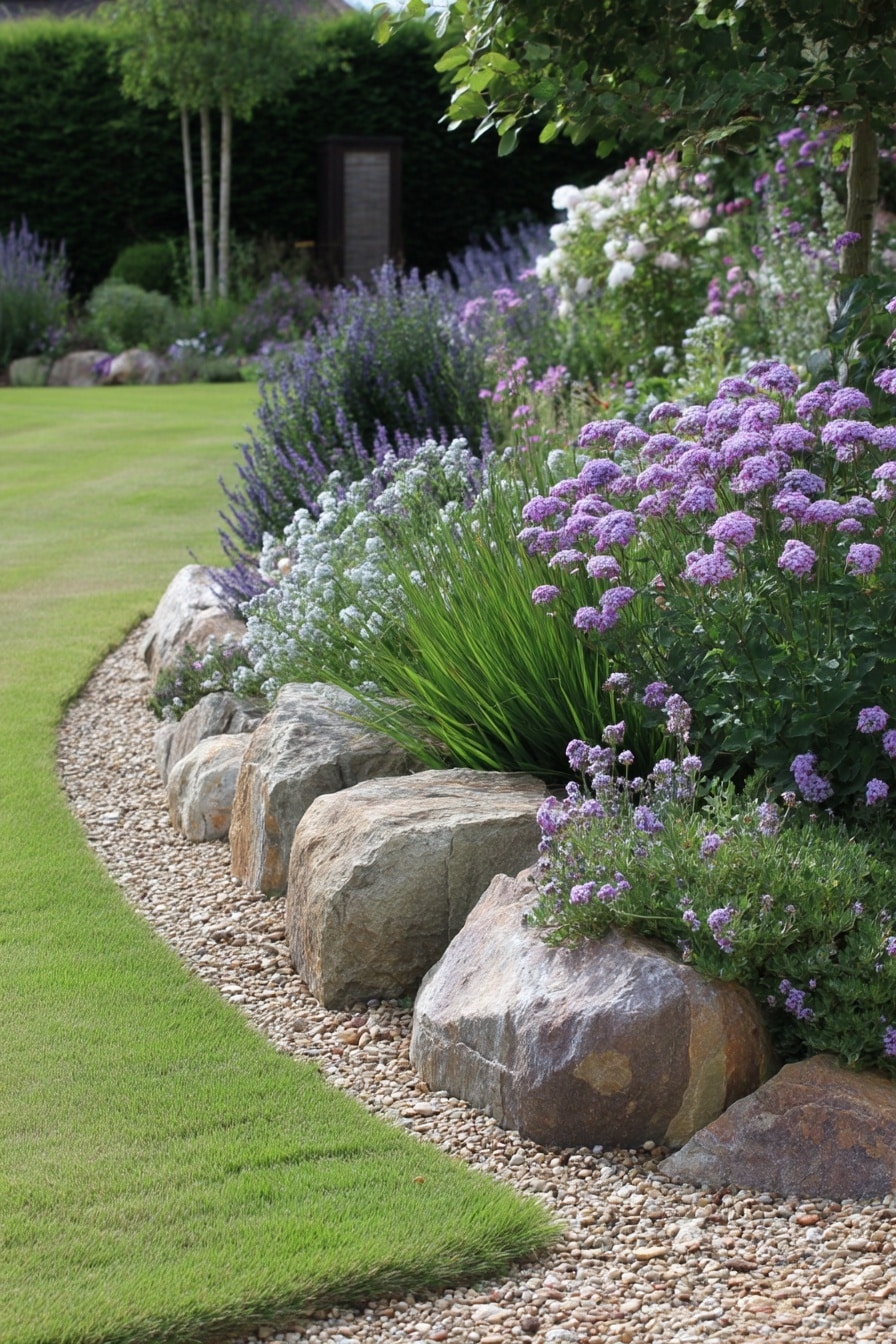
Boulder landscaping can transform an ordinary outdoor space into a striking, sculptural landscape that feels both timeless and natural. Large stones add scale, texture, and form to your garden, creating visual interest that plants alone often can’t achieve. Whether you’re creating a dramatic focal point or a serene rock garden, thoughtful placement of boulders can elevate your design with minimal upkeep.
In this guide, we’ll share ten practical tricks for incorporating boulders into your landscape. These tips are inspired by how boulders appear in nature and how designers use them to anchor planting schemes, define spaces, and build balance across different garden styles.
Table of Contents
Table of Contents
1. Bury Part of the Boulder for a Natural Look

When placing boulders, avoid simply setting them on top of the soil. Instead, sink at least one-third of each stone into the ground. This mimics how rocks appear in nature and makes your boulder landscaping look more organic and grounded.
- Helps stabilize the stone
- Prevents a “dropped-in” appearance
- Blends better with surrounding plants and terrain
This simple trick can dramatically improve the realism and elegance of your design.
2. Use Odd Numbers for a Balanced Design
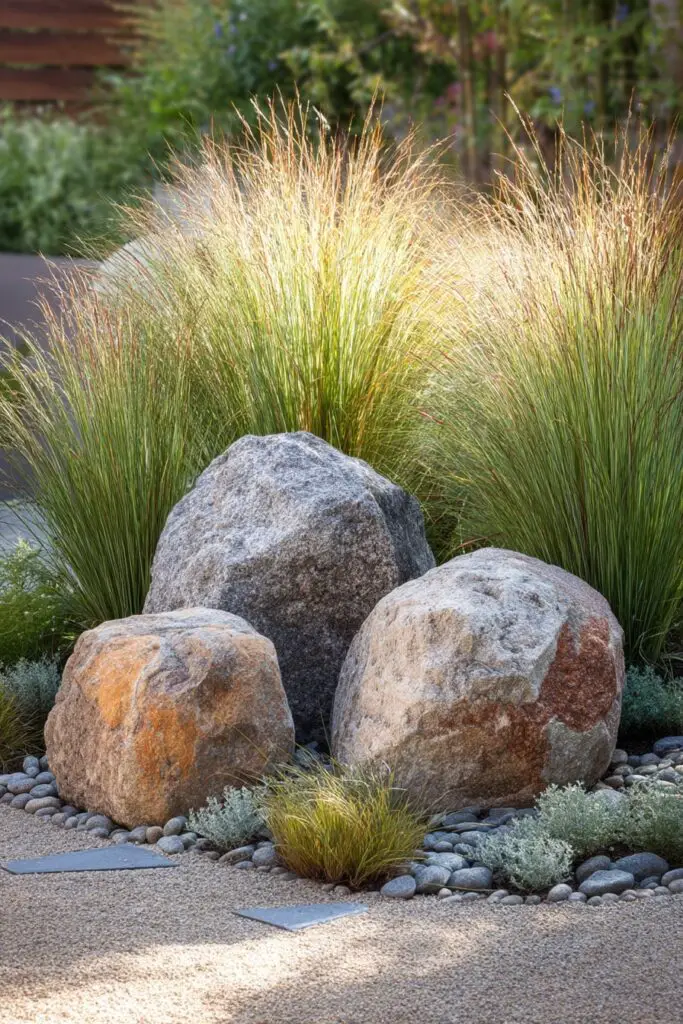
Grouping boulders in odd numbers — typically three or five — creates a more natural and visually balanced composition. Even-numbered groupings can feel too symmetrical or artificial.
- Arrange boulders in triangles or clusters
- Vary the size and orientation
- Combine with planting for a softened effect
This technique is commonly used in Japanese rock gardens and naturalistic settings for its visual rhythm and flow.
3. Pair Boulders with Complementary Plants
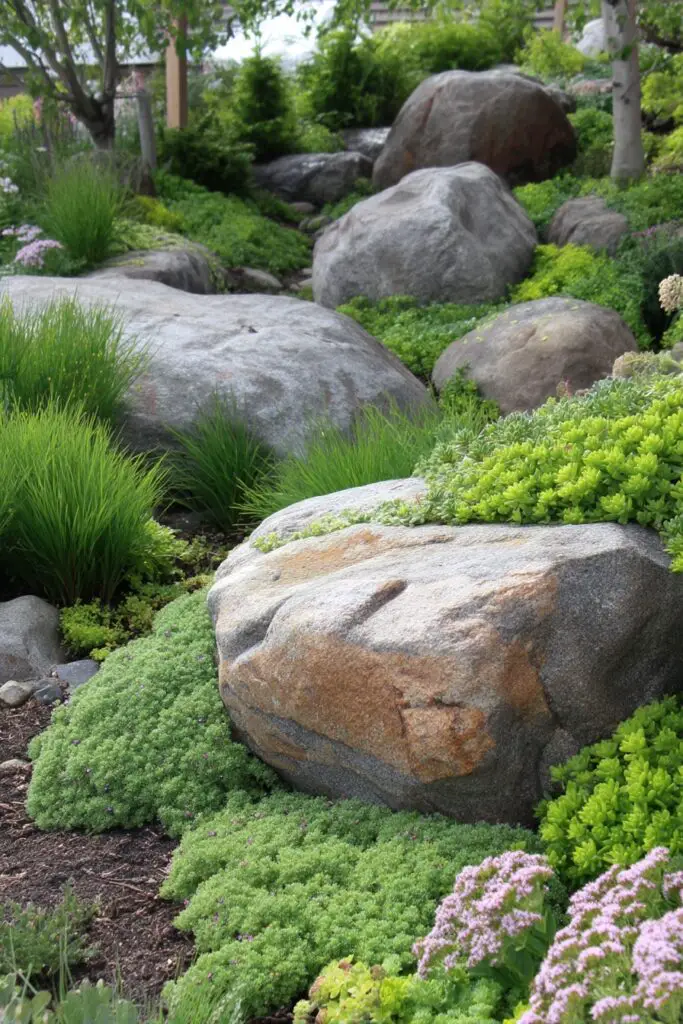
Planting around boulders helps soften hard edges and integrates them into your garden design. Choose plants that contrast with the size and color of the rock to highlight both elements.
- Use grasses, ground covers, or cascading plants like creeping thyme or sedum
- Tall perennials can frame and elevate a buried boulder
- Match foliage tones with the rock’s natural hues
This boulder landscaping trick makes the rocks look intentional and cohesive within a planting scheme.
4. Vary Sizes to Create Visual Depth
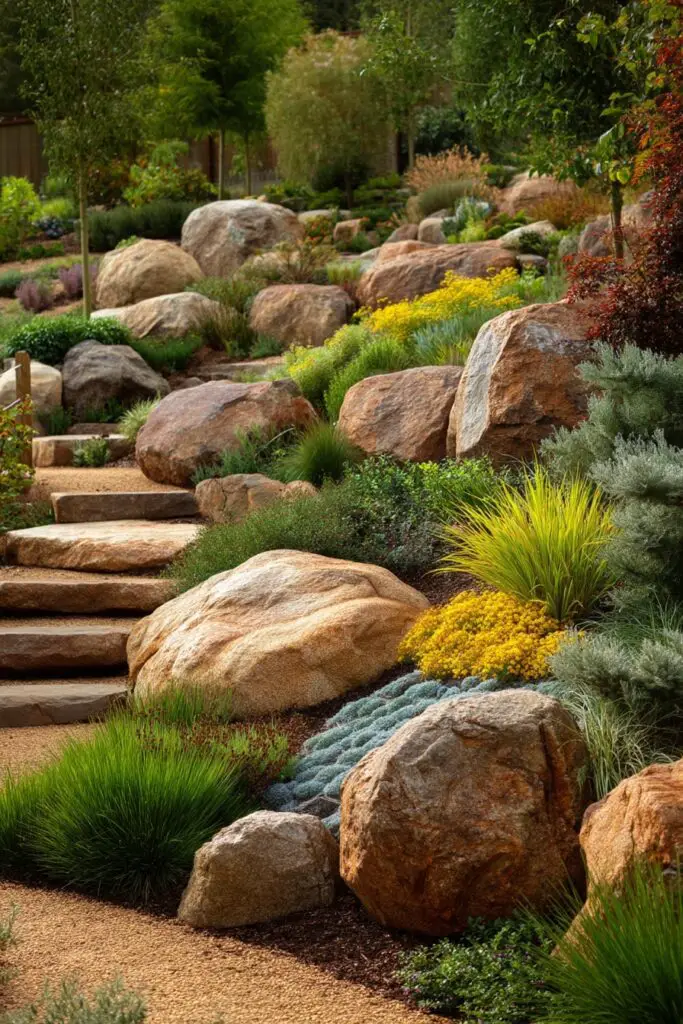
Using boulders of different sizes adds depth and dimension to your landscape. Avoid repeating the same size throughout, which can feel static or overly staged.
- Mix large statement boulders with smaller accent rocks
- Position larger stones at the back or center of beds
- Use smaller ones to lead the eye or fill edges
This layering technique works well in both structured and free-form garden styles.
5. Use Boulders to Define Space or Create Boundaries
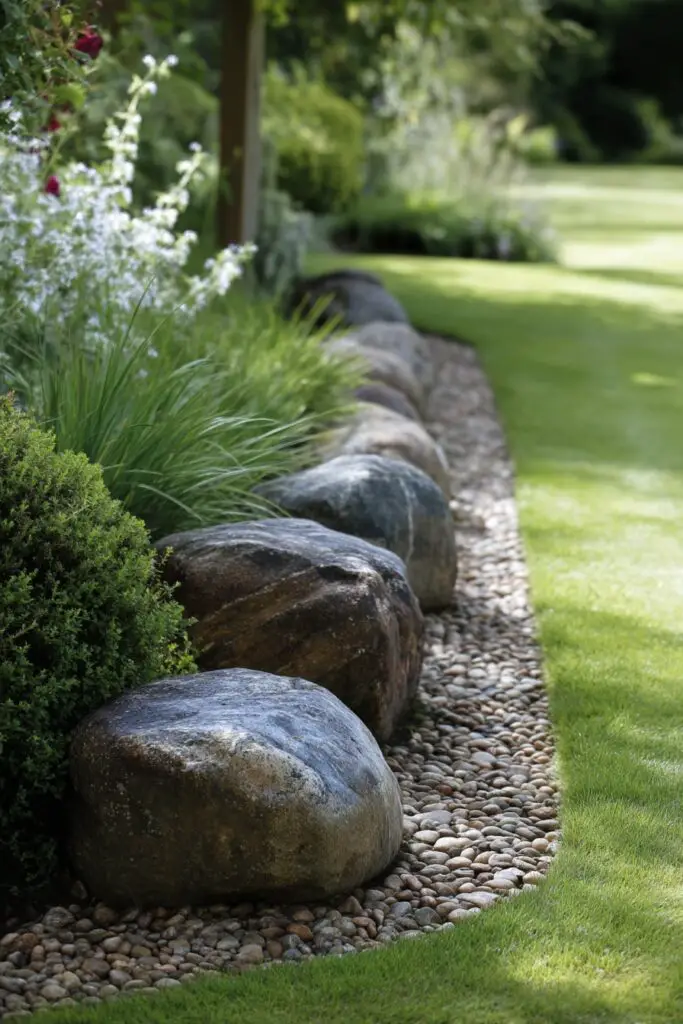
Boulders aren’t just decorative — they can be functional too. Use them to subtly divide areas of the garden or mark transitions between lawn, pathways, and beds.
- Anchor corners or entrances with tall boulders
- Create natural-looking borders without using fences
- Place them along edges to contain mulch or gravel
This boulder landscaping approach adds structure while preserving an organic feel.
6. Position Boulders to Capture Light and Shadow
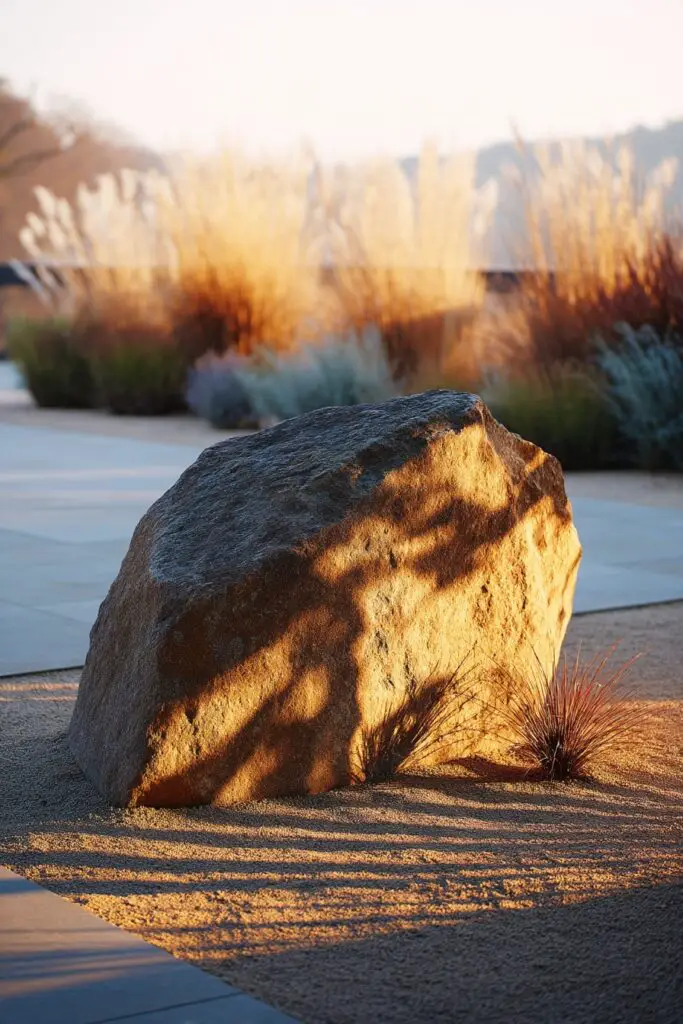
The way sunlight hits a boulder can emphasize its texture, color, and contours. Positioning rocks with light in mind adds dimension and interest to your garden throughout the day.
- Use angled placement to catch morning or afternoon sun
- Choose stones with rugged surfaces for dramatic shadow play
- Place near patios or seating areas for visual effect
This trick enhances mood and atmosphere, especially in minimalist or Zen-style gardens.
7. Integrate Boulders into Slopes and Retaining Areas
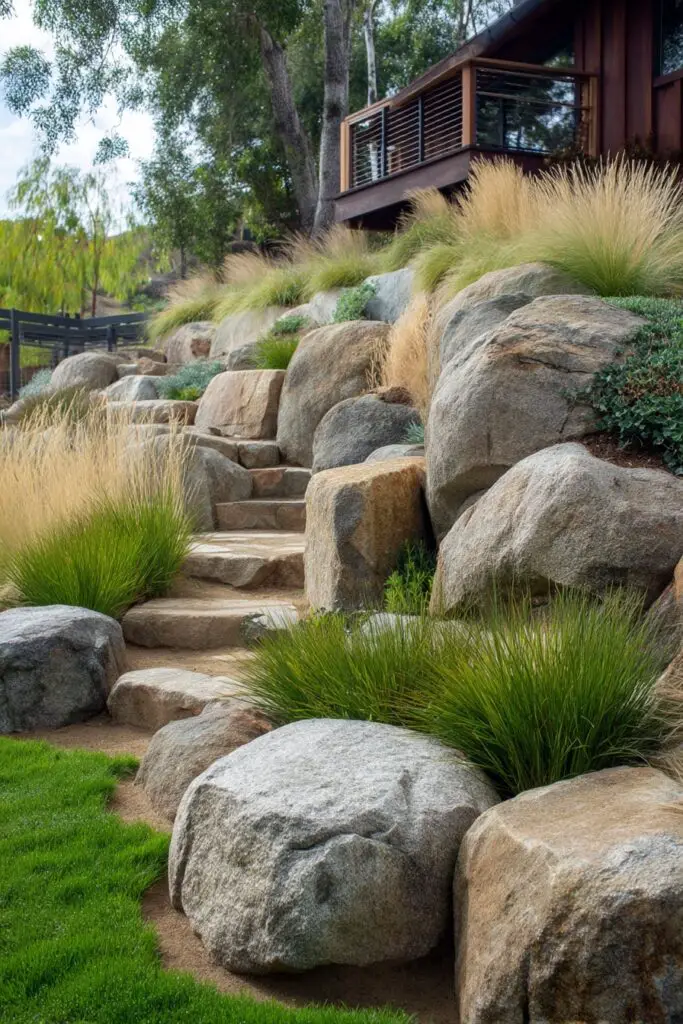
On sloped properties, boulders can help prevent erosion while looking completely natural. Use them to stabilize the terrain and break up retaining walls or terracing.
- Position boulders at different heights on a slope
- Tuck soil and plants between them to soften hard lines
- Combine with gravel or flagstones for hillside access paths
This boulder landscaping strategy is both practical and visually grounding in uneven or challenging plots.
8. Use Flat-Topped Boulders as Seating or Garden Steps
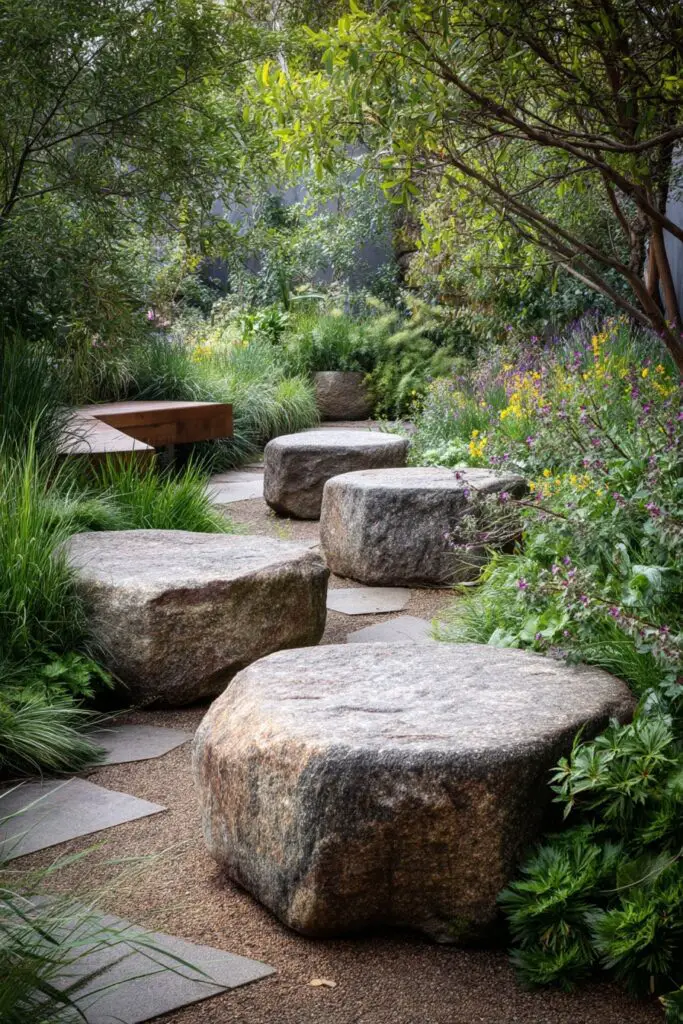
Boulders with broad, flat surfaces can double as informal seating or natural steps — perfect for rustic or low-intervention garden areas.
- Choose stones with at least one stable, level surface
- Place them securely into the soil to avoid wobbling
- Arrange in stepping-stone fashion along trails or water features
This adds functionality while preserving a rugged, organic look.
9. Make a Boulder the Focal Point
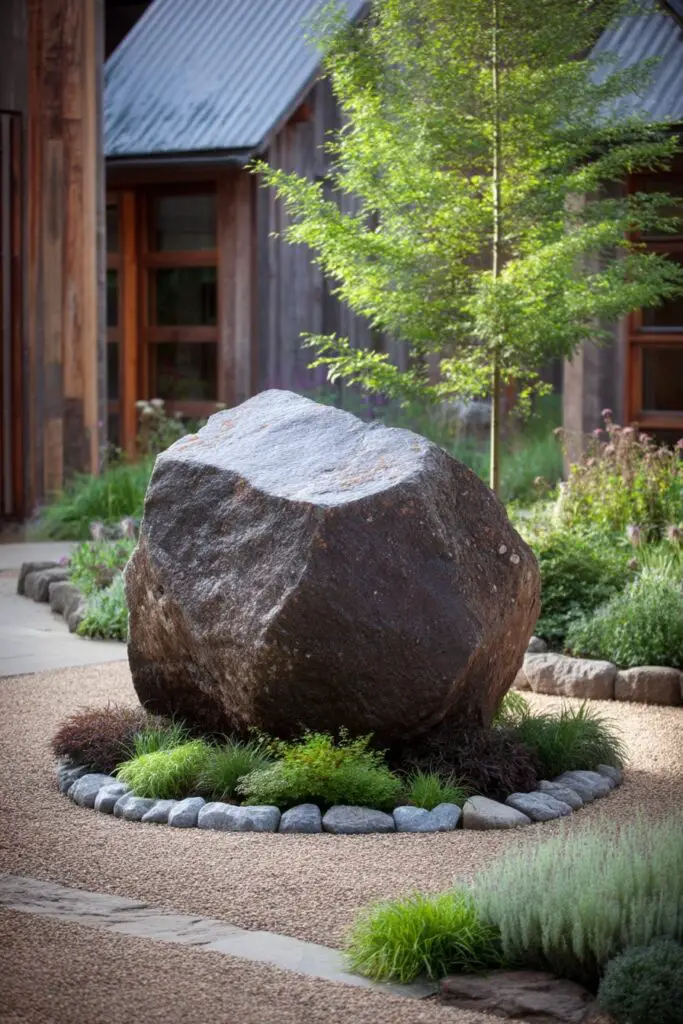
A single, well-chosen boulder can serve as a bold centerpiece in your landscape. Its mass and texture naturally draw the eye, especially when surrounded by simple planting or gravel.
- Choose a stone with interesting shape or color
- Position it in an open area or garden bed
- Uplight it at night for added drama
This focal-point approach to boulder landscaping works particularly well in minimalist gardens or xeriscaping where fewer elements carry more visual weight.
10. Complement Water Features with Boulders
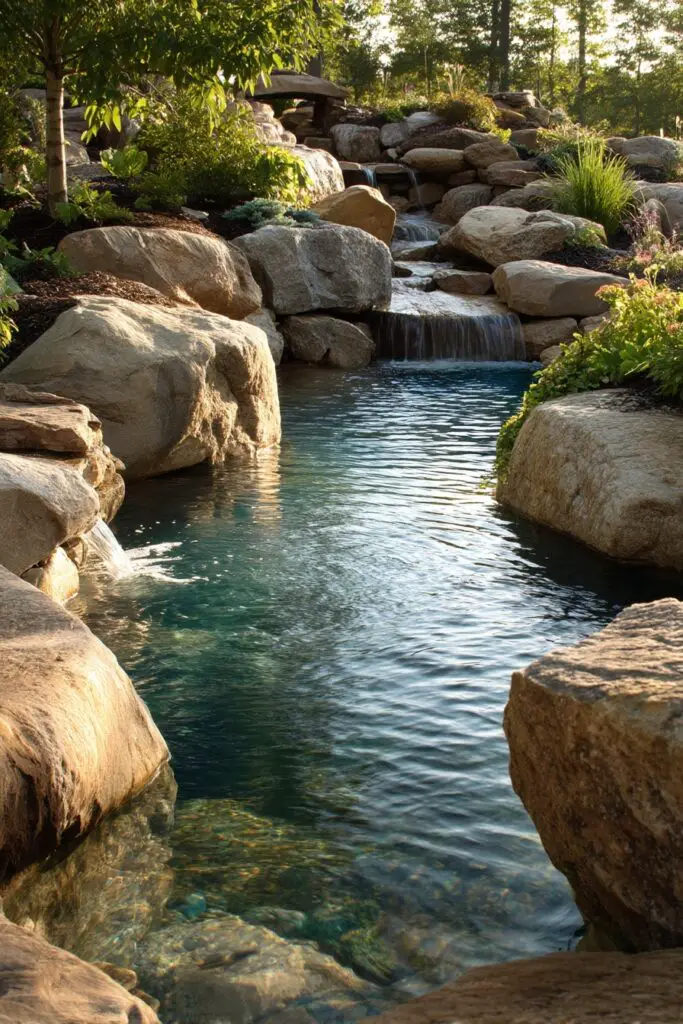
Boulders and water are a natural pairing. Use large stones to line ponds, frame fountains, or guide dry creek beds.
- Integrate mossy or water-worn stones for authenticity
- Position boulders to frame the flow of water
- Use smaller rocks to blend edges into the landscape
This trick adds sound, movement, and tranquility to your garden while maintaining a cohesive, earthy design.
Conclusion
When used thoughtfully, boulder landscaping can turn your yard into a sculptural, low-maintenance space full of character and natural elegance. From anchoring garden beds to enhancing slopes or framing water features, boulders add both aesthetic impact and functional structure.
Whether you’re working with a large plot or a small garden nook, these ten tricks will help you place and pair boulders in ways that feel organic, balanced, and dramatic. With the right placement and surrounding elements, rocks become more than decoration — they become a defining element of your garden’s design.