
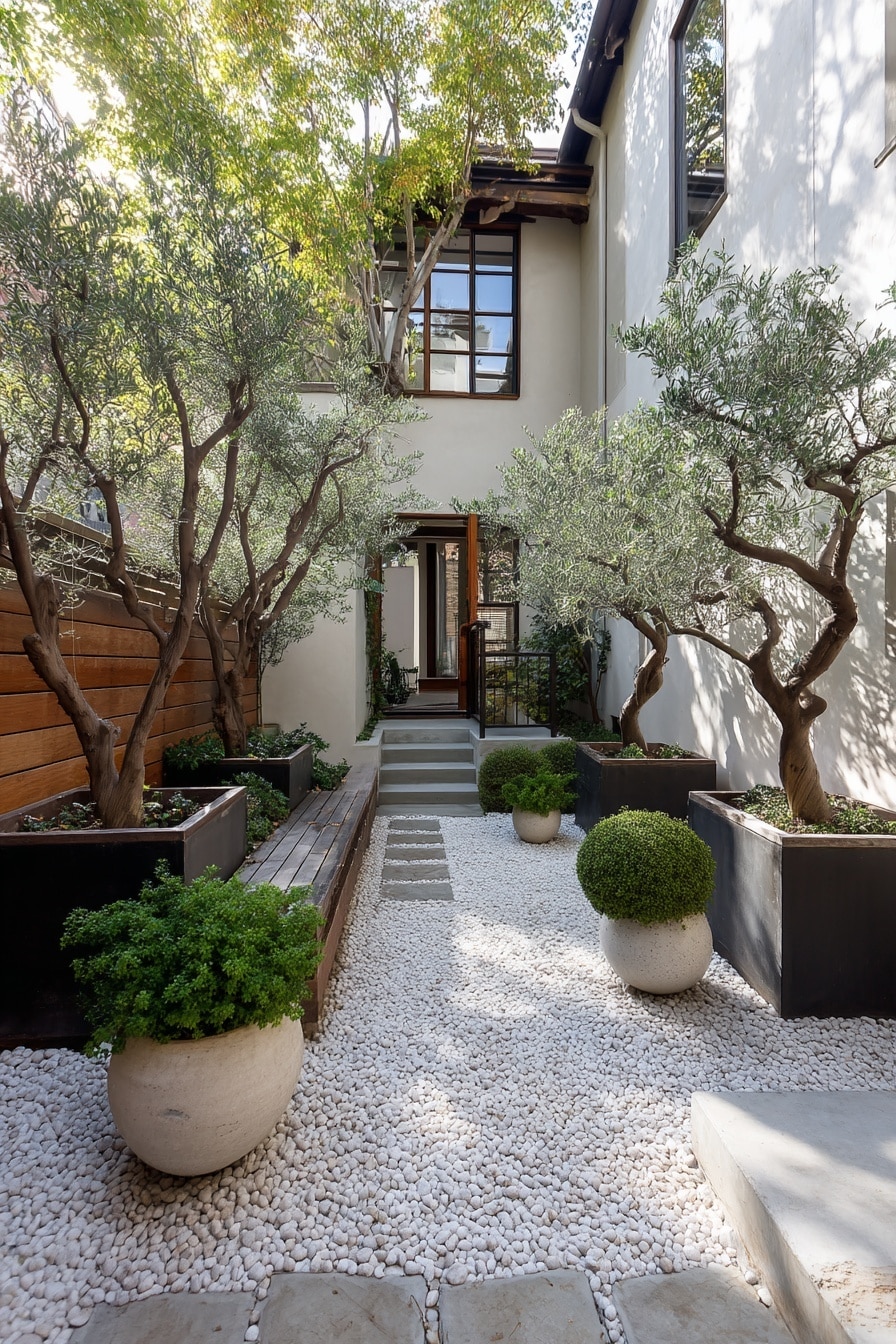
Backyard garden layout plays a big role in how functional and welcoming your outdoor space feels, especially when the area is small. A well‑planned layout can make a compact backyard feel larger, more organized, and easier to enjoy.
Whether you’re working with a courtyard, a paved patio, or a balcony, thoughtful arrangement of seating, planting zones, and structural elements will help you get the most out of every inch. By breaking your space into purposeful areas and using smart design techniques, you can turn even the tiniest patch into a multi‑functional retreat perfect for relaxing, hosting guests, or gardening
Table of Contents
1. Find the Light in a Courtyard Garden

Light is one of the most powerful tools in any backyard garden layout, especially in enclosed courtyards or walled spaces. These areas often have limited exposure to sun due to buildings, fences, or tall shrubs, making strategic placement essential.
Start by observing where sunlight hits your space throughout the day. Place seating, dining areas, or favorite plants in these sunlit spots to enhance comfort and growth. Mirrors, white walls, or pale surfaces can help reflect light into shaded corners, making the area feel brighter and more open.
Even in small backyards, playing with light adds depth and atmosphere, making the entire space feel more inviting and expansive.
2. Use Straight Lines and Structures for a Tapered Plot
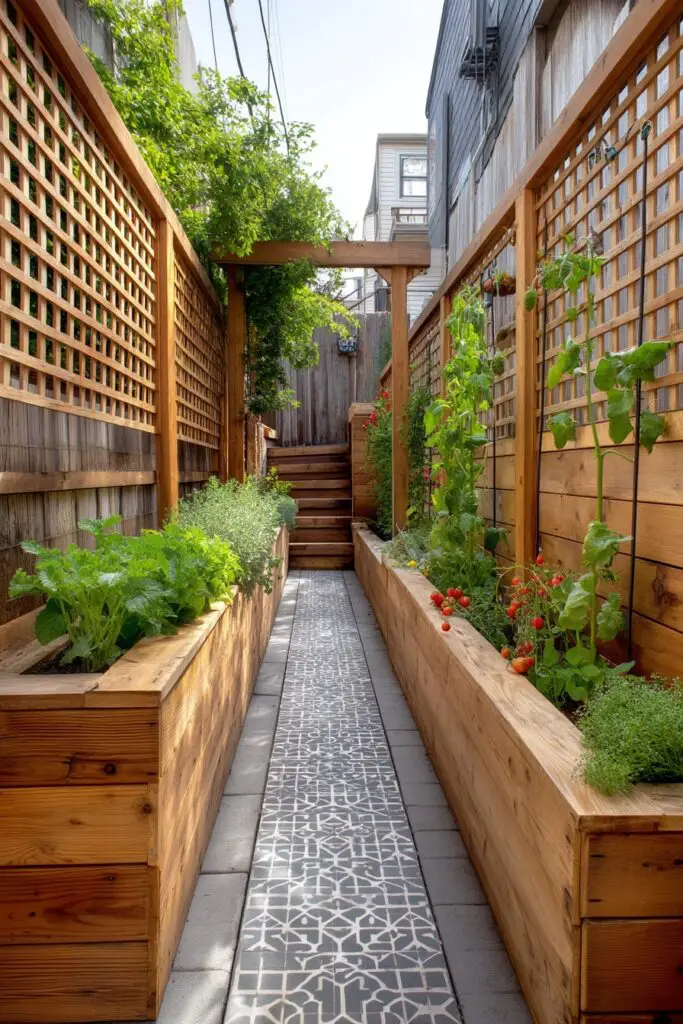
Designing a backyard garden layout in a narrow or tapered space can be challenging, but clean lines and well-placed structures can bring balance and visual flow. Instead of trying to disguise the narrowing, use straight paths, walls, or raised beds to lead the eye through the garden.
Install a pergola, trellis, or bench along one edge to create structure and purpose. Long, rectangular planters can also emphasize direction while dividing the space into clear zones. Repeating patterns in paving or fencing helps unify the layout and make it feel intentional.
With a little symmetry and smart structural elements, even awkward plots can feel spacious and cohesive.
3. Create a Multi-Zonal Space
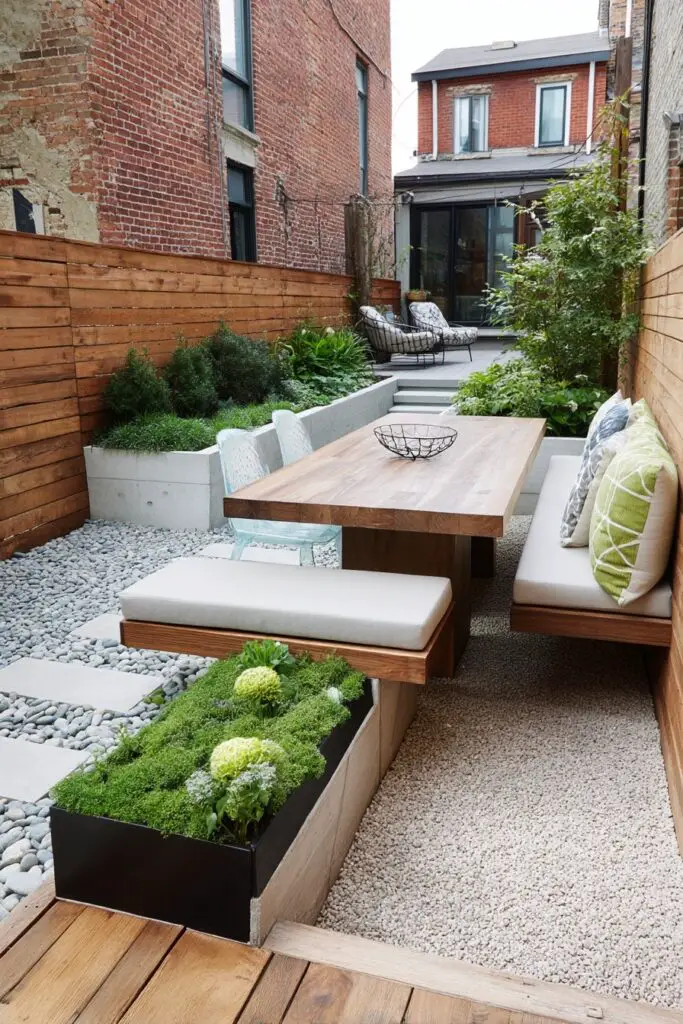
A smart backyard garden layout often includes more than one purpose-built area—even in small spaces. Creating zones for dining, relaxing, planting, and storage adds function without cluttering the design.
Use visual cues like stepping stones, raised platforms, or changes in paving to subtly define each zone. For example, a gravel patch can anchor a fire pit area, while a wooden deck frames an outdoor dining nook. Planting tall grasses or hedges between sections provides natural screening and privacy.
Multi-zonal layouts help maximize every inch and create a more dynamic garden experience, especially in compact urban settings.
4. Green Up a Paved Patio with a Living Wall
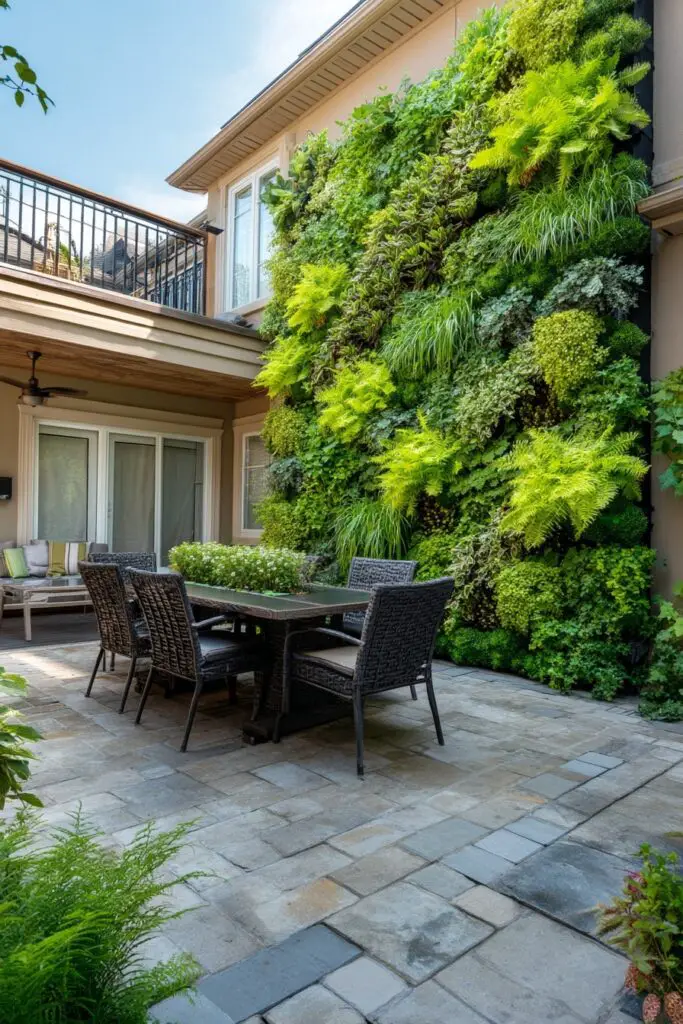
If your backyard garden layout includes a lot of paving or hardscaping, adding a living wall is a smart way to bring in greenery without sacrificing floor space. Vertical gardens work well on fences, blank walls, or even the side of a shed.
Choose trailing herbs, ferns, or flowering climbers that thrive in your light conditions. Use wall-mounted planters, stacked shelves, or a trellis system to support the plants. A living wall softens harsh surfaces, improves air flow, and adds a lush focal point in a tight area.
It’s an ideal way to introduce texture and life into patios or courtyards that feel too flat or gray.
5. Create Seating in a Compact, Urban Backyard
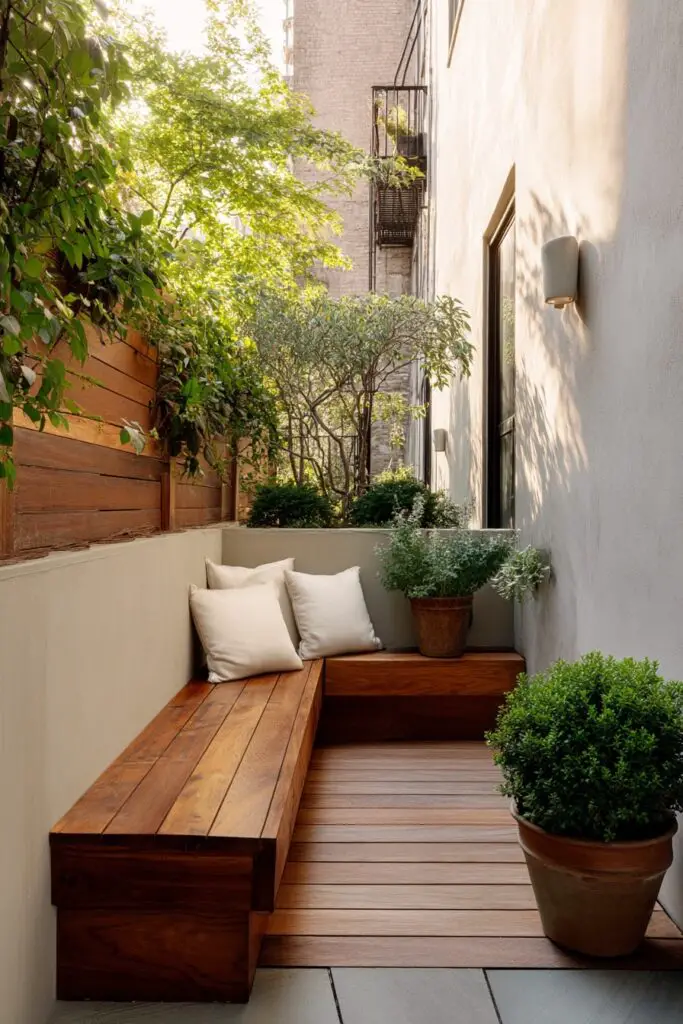
In a tight backyard garden layout, built-in or modular seating can make the most of limited square footage. Whether it’s a corner bench with hidden storage or a fold-down table attached to a fence, every inch counts in small urban gardens.
Choose materials that match the rest of your garden—wood for warmth, metal for modern lines, or stone for a timeless look. Add cushions or planters to soften the edges and create a cozy vibe.
When your seating is thoughtfully integrated, it feels like part of the architecture—not an afterthought. This approach turns even the smallest backyard into a functional, stylish retreat.
6. Green Up a Balcony with Plants at Different Heights
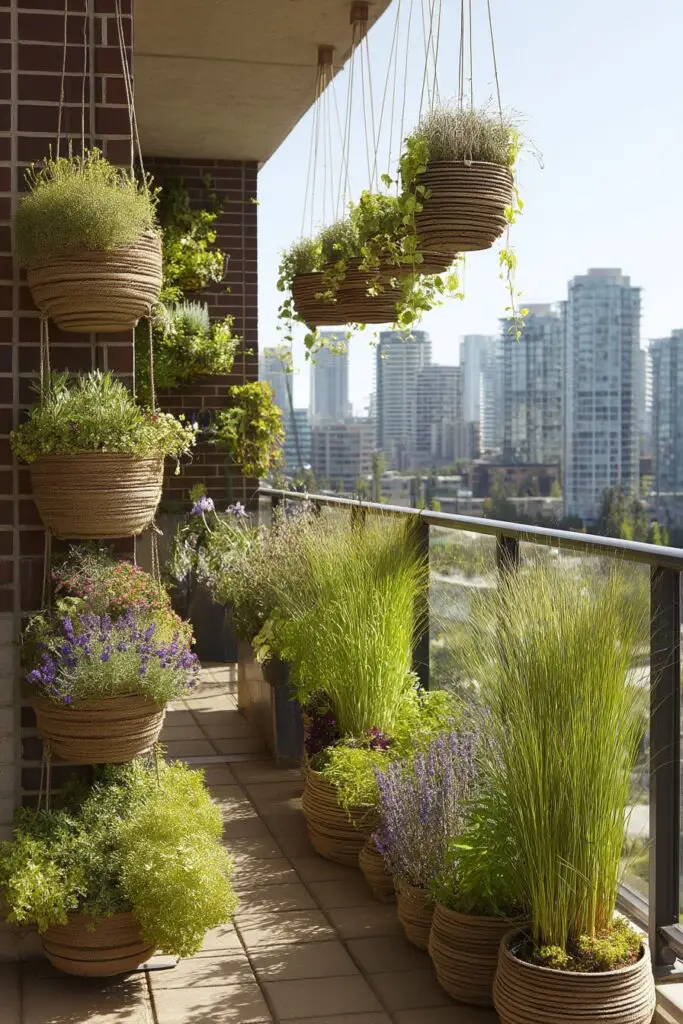
For those working with balconies or rooftop terraces, a layered backyard garden layout adds both beauty and balance. Using plants at varying heights creates depth, draws the eye upward, and makes a small space feel more abundant.
Combine tall containers with dwarf trees or ornamental grasses, mid-height herbs or shrubs, and low trailing plants that spill over edges. Tiered plant stands, hanging pots, and vertical shelving help maximize space without cluttering the floor.
This vertical layering not only improves the view from indoors, but also allows you to fit more greenery into compact outdoor areas.
7. Choose Small, Structural Trees for a Rectangular Plot
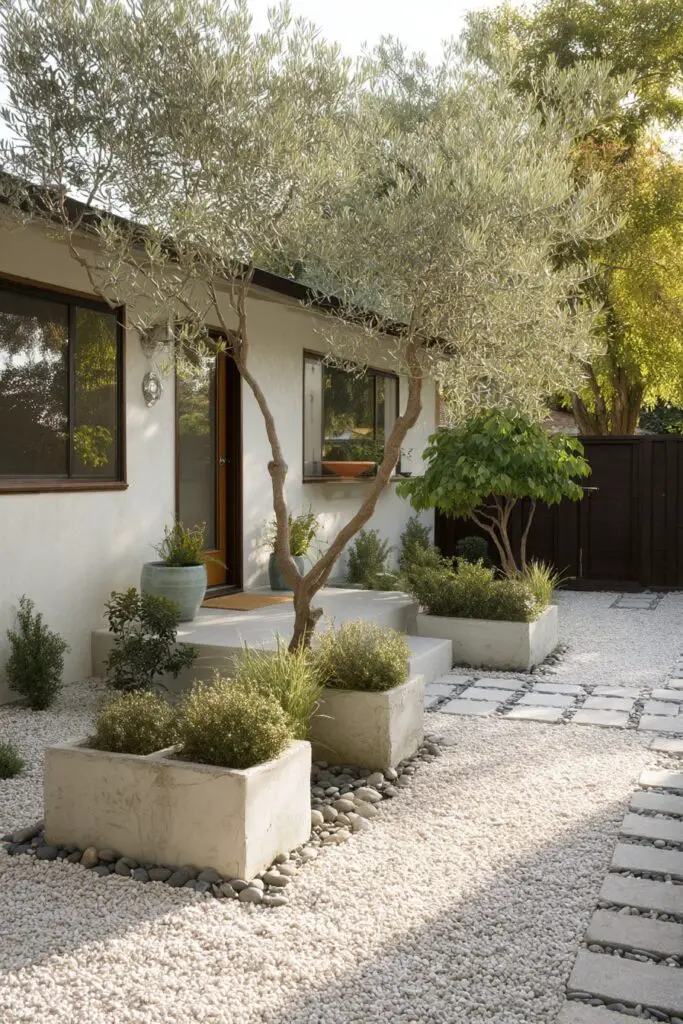
Adding trees to a backyard garden layout doesn’t require a large footprint. In rectangular or narrow spaces, small structural trees like olive, Japanese maple, or dwarf citrus can add vertical interest without overwhelming the area.
Place trees at focal points—such as at the end of a path, near seating, or beside a boundary wall—to define structure and soften hard edges. Choose species that grow upright rather than wide, and consider root-friendly containers for added flexibility.
These trees not only anchor your layout visually but also provide seasonal texture, privacy, and even edible rewards in a small garden.
8. Use Curved Features Like a Firepit for a Side Garden
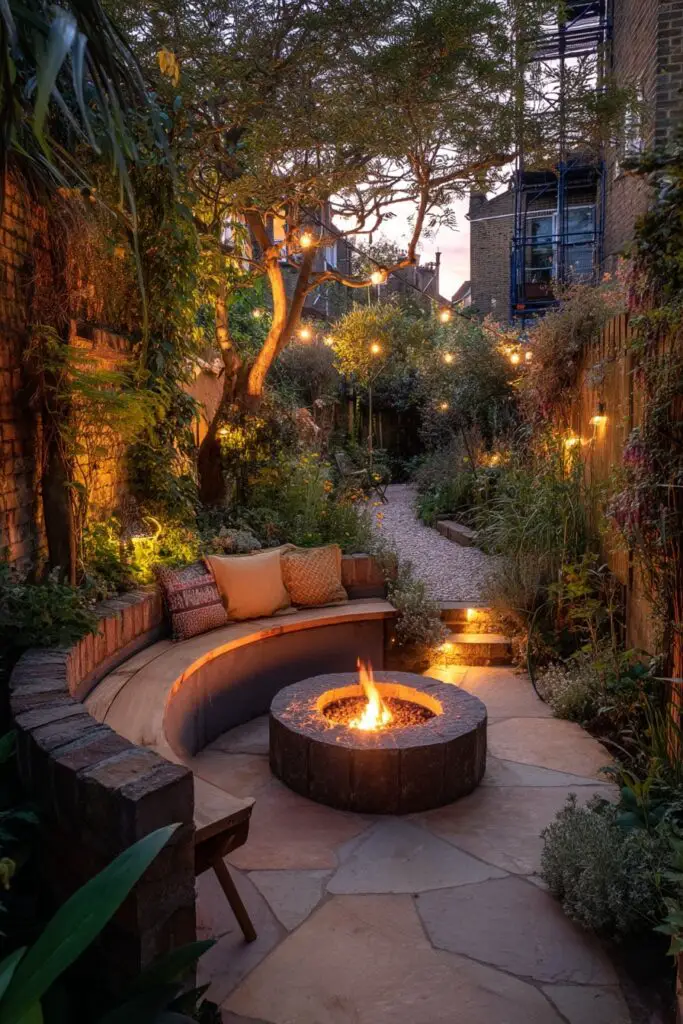
When designing a side yard or narrow outdoor passage, a curved feature like a firepit can soften the lines of your backyard garden layout and make the space feel more inviting. Straight boundaries often feel harsh—curved elements break up rigidity and create a more natural flow.
Consider placing a circular firepit, rounded seating, or an arched trellis in the center or corner of the space. Complement the shape with curved pavers or soft-edged planting beds to echo the geometry.
Curves help guide the eye, reduce visual congestion, and add warmth—both literally and stylistically—to overlooked garden areas.
9. Create Split-Level Decking or Sunken Seating Areas
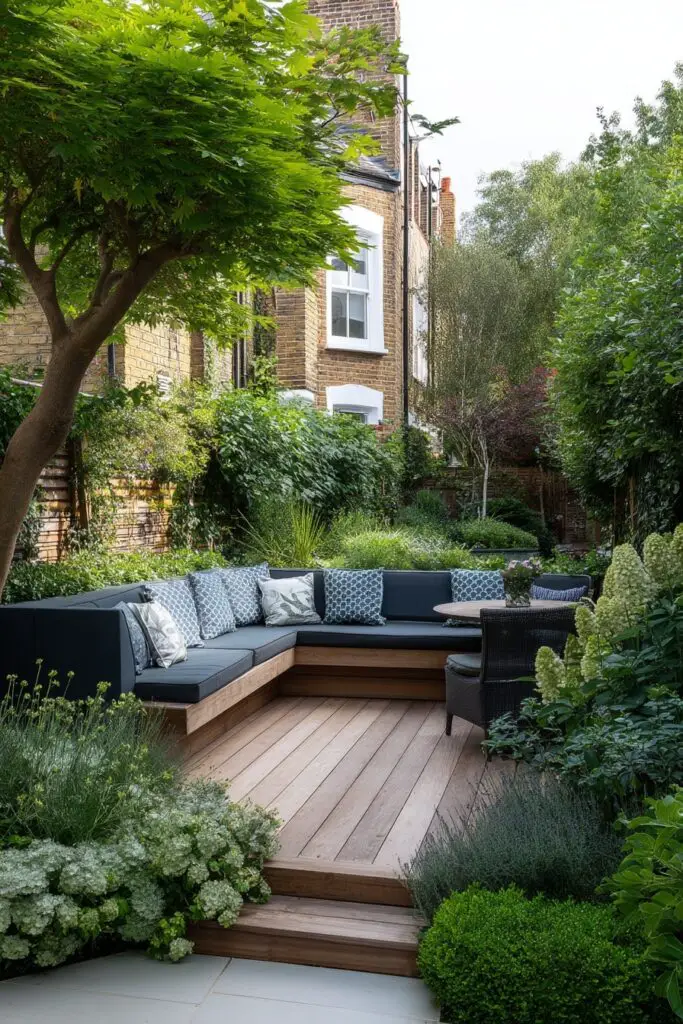
When space is limited, playing with elevation adds instant dimension to your backyard garden layout. Split-level decks or sunken seating zones divide the yard into distinct areas without the need for walls or fences.
A raised platform can serve as a dining area or viewing deck, while a sunken section adds intimacy and shelter from wind. Use steps, retaining walls, or built-in planters to create natural transitions between levels.
This multi-level design technique not only makes a small yard feel more dynamic, but also helps define spaces clearly without crowding the overall footprint.
Conclusion
Designing the right backyard garden layout can turn even the smallest outdoor space into a functional and stylish retreat. Whether you’re greening up a balcony, shaping a side yard, or adding zones to a city courtyard, thoughtful planning and creative structure go a long way.
Use light, height, and smart materials to define zones and guide movement. Mix in greenery vertically and horizontally, and don’t be afraid to experiment with levels, curves, or focal points. With these layout ideas, your backyard can become a personal escape—no matter its size.