
Garden layout ideas play a huge role in turning a simple backyard plot into a productive vegetable oasis.
A smart garden layout not only determines how much you can grow, but also how easy it is to tend and harvest your crops.
Raised bed gardens are one of the most effective ways to use limited space and improve soil conditions, helping you produce abundant vegetables with less effort.
With thoughtful design and strategic planning, even small gardens can yield impressive harvests and keep your plants healthy throughout the season.
Table of Contents
1. Classic Row Layout

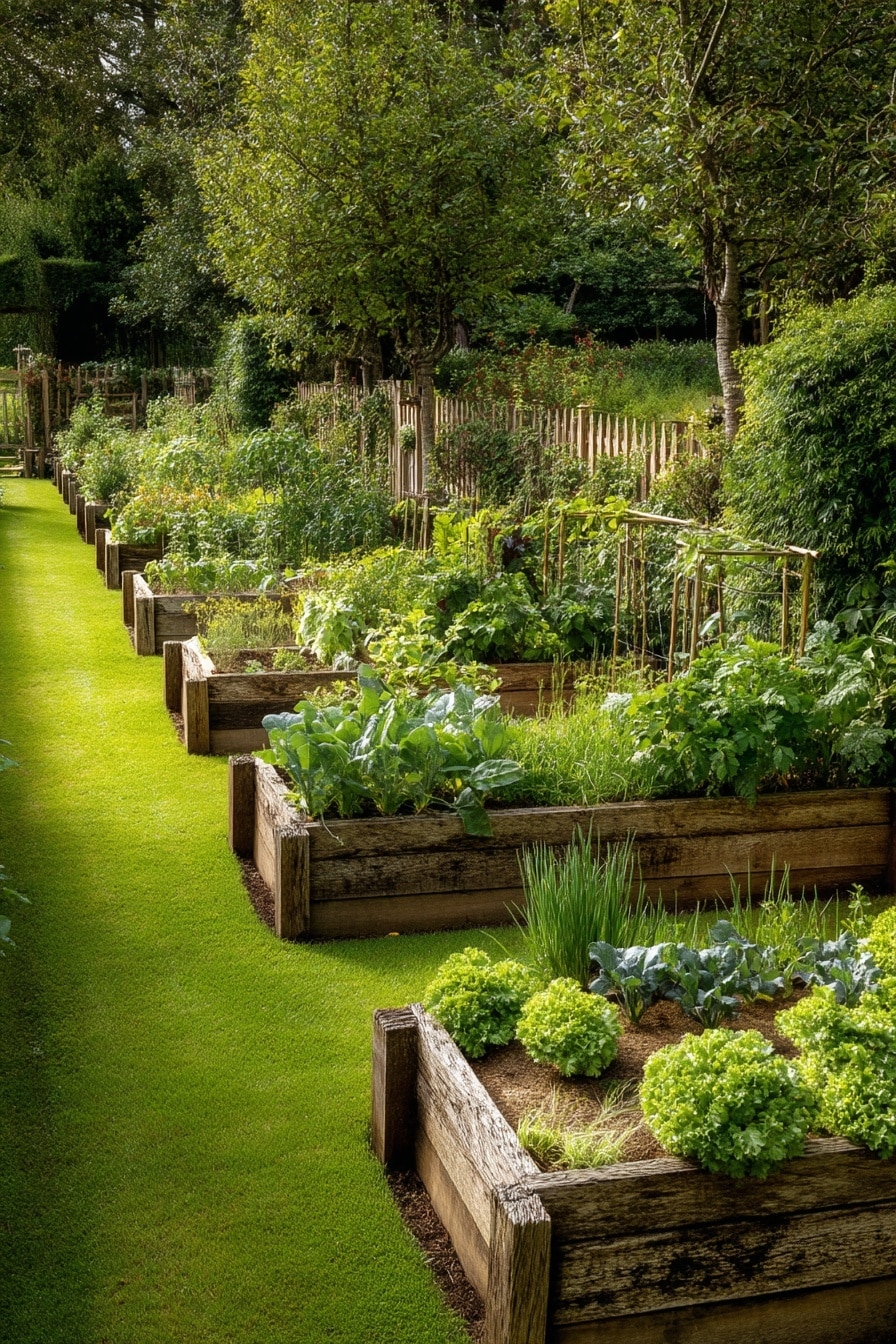
The classic row design remains one of the most straightforward garden layout ideas. Raised beds are arranged in neat rows with walking paths between them, allowing easy access for planting, watering, and harvesting.
Benefits
- Ideal for rectangular or narrow yards
- Maximizes airflow and sunlight exposure
- Great for succession planting
Leave at least 18 inches between beds to accommodate wheelbarrows or garden carts. This setup is perfect for gardeners who prefer structure and simplicity.
2. U-Shaped Raised Bed Design
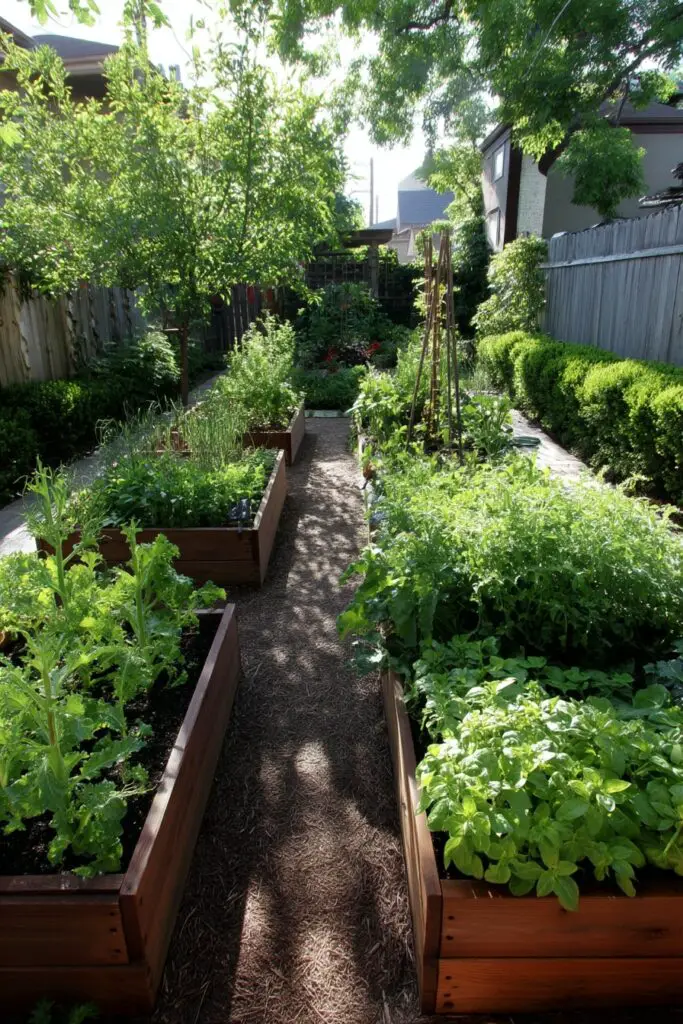
U-shaped beds are a space-saving solution that maximizes growing area while keeping the center reachable. They create a mini “garden room” effect, perfect for small yards or patios.
H3: Benefits
- All plants are within arm’s reach
- Easy to organize crop rotations
- Visually appealing and ergonomic
This layout is especially effective in small spaces where efficiency is key. You get more planting room without sacrificing accessibility.
3. Keyhole Garden Layout
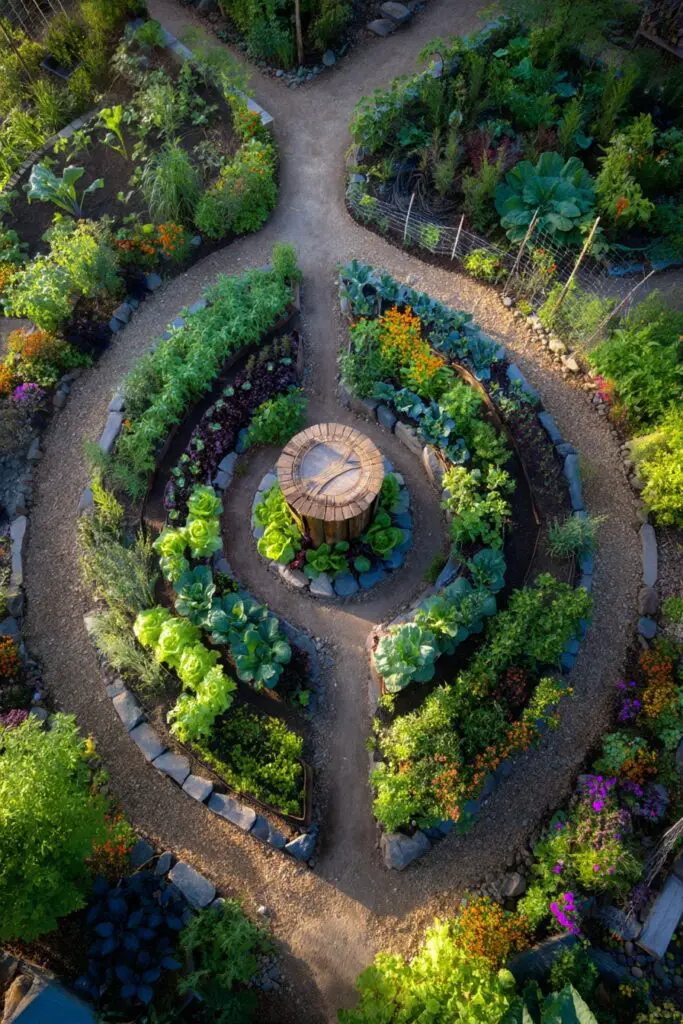
A keyhole layout integrates a circular bed with a central path, forming a shape like a keyhole. It’s a permaculture-inspired design that’s both functional and artistic.
Benefits
- Central composting basket nourishes surrounding soil
- Ideal for conserving space and water
- Great visual centerpiece for any garden
This is one of the most sustainable garden layout ideas, especially in dry or compact spaces.
4. Grid Square-Foot Gardening
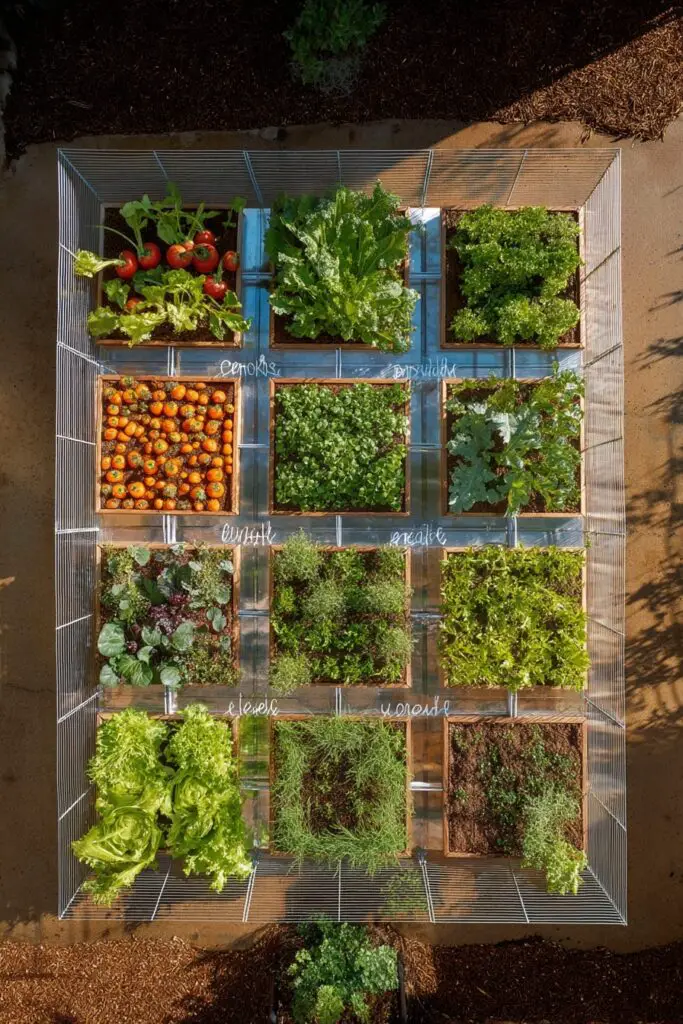
This layout divides each raised bed into a grid, typically 12″ x 12″ squares, to organize planting more precisely. It’s perfect for maximizing space and reducing waste.
Benefits
- Prevents overcrowding
- Simple crop planning and rotation
- Ideal for beginners and small beds
Use string or wooden slats to visually separate squares. This method brings structure to any raised bed layout.
5. L-Shaped Garden Design
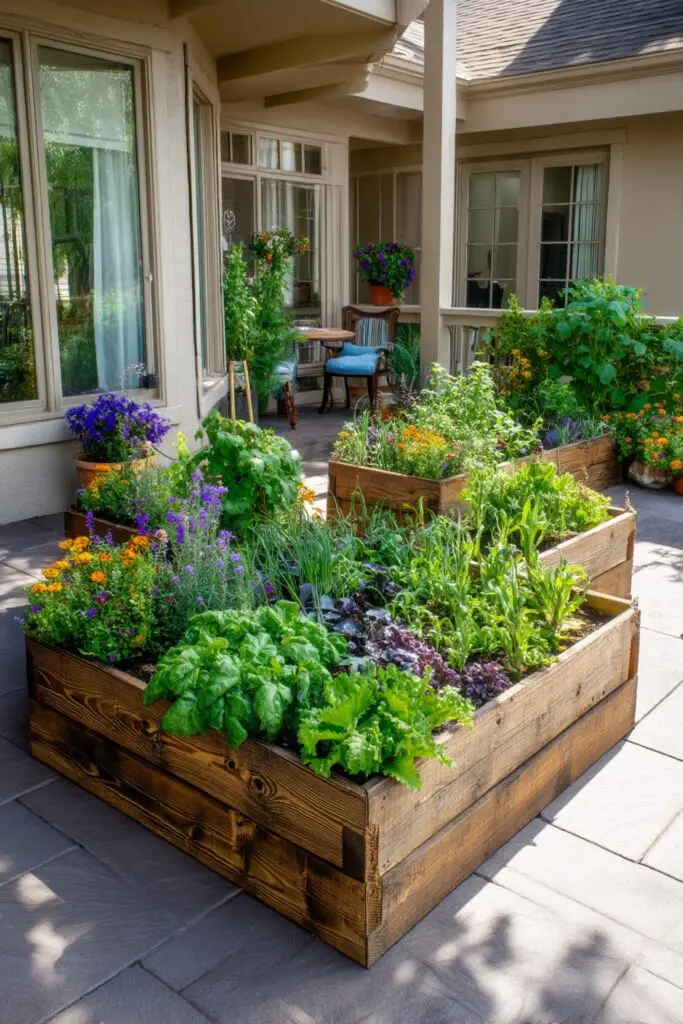
L-shaped beds are a great option for fitting into corner spaces or wrapping around patios. They allow plenty of planting room and add a decorative element to yard edges.
Benefits
- Efficient use of awkward spaces
- Provides more planting area than linear designs
- Can frame seating areas or patios for easy access
Among all garden layout ideas, this one balances form and function for both urban and suburban yards.
6. Spiral Raised Bed
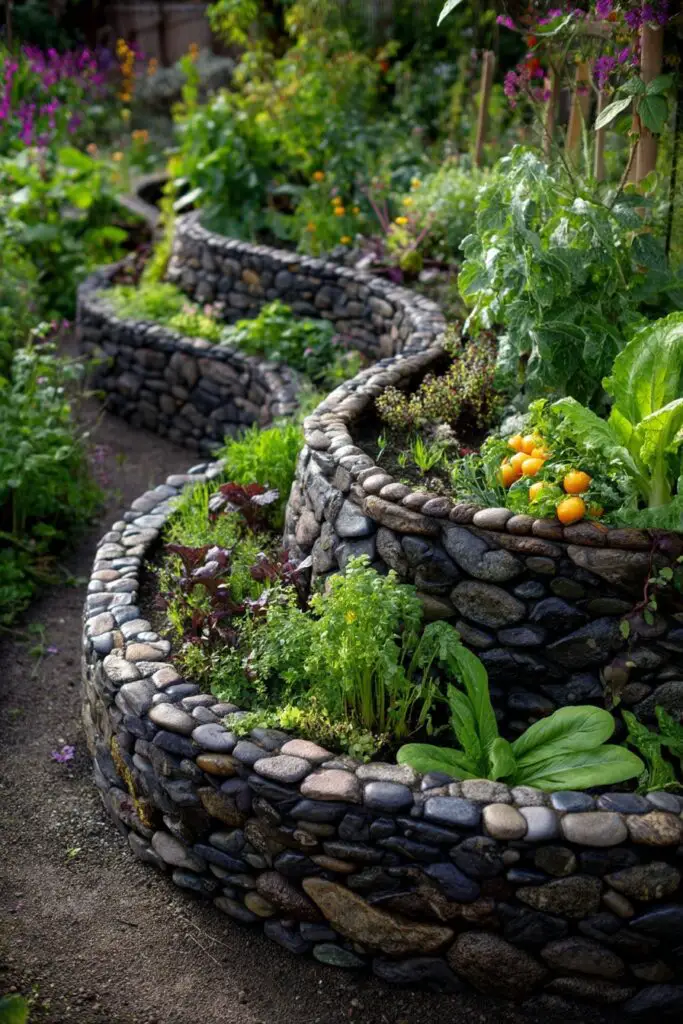
The spiral garden layout is a stunning, vertical design that uses a coiled structure to grow plants in layers. It’s excellent for herbs, leafy greens, and smaller vegetables.
Benefits
- Maximizes vertical space
- Offers different microclimates for various plant types
- Visually striking and great for small yards
This creative design ranks high among garden layout ideas for its beauty and functionality. Use stones or bricks to form the spiral shape.
This creative design ranks high among garden layout ideas for its beauty and functionality. Use stones or bricks to form the spiral shape.
7. Tiered Garden Bed Design
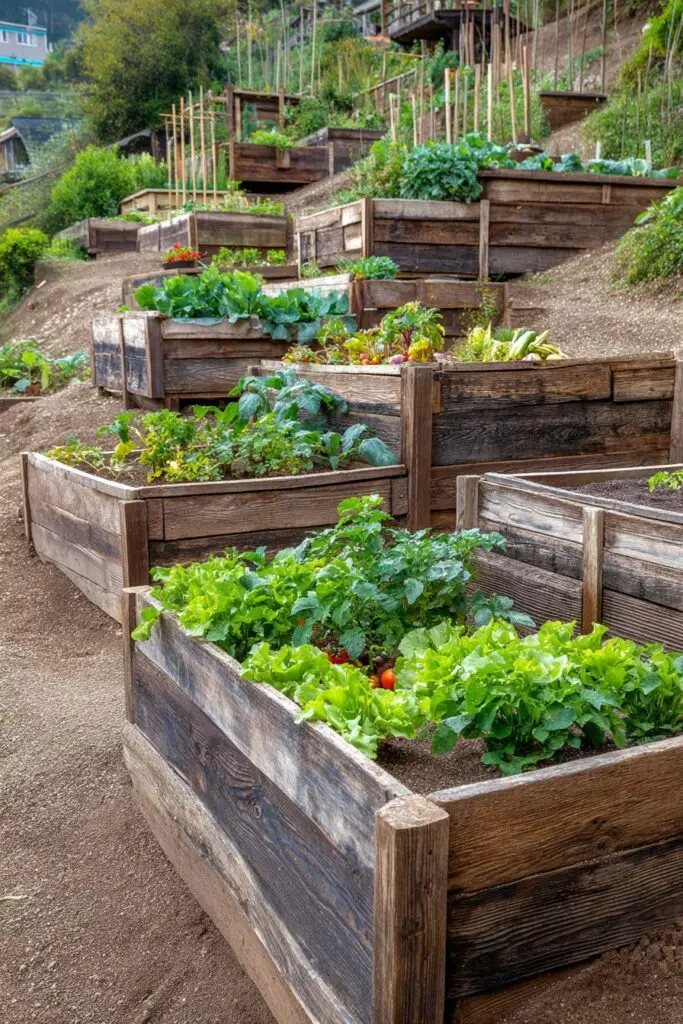
Tiered beds stack planting areas at different heights, creating levels that make the most of vertical space. This layout is perfect for sloped gardens or areas with elevation changes.
Benefits
- Easier access for gardeners with mobility needs
- Prevents soil erosion on uneven terrain
- Great for growing root vegetables on deeper tiers
With thoughtful plant placement, you can create a cascading effect while optimizing sunlight exposure for each level.
8. Mandala Garden Layout
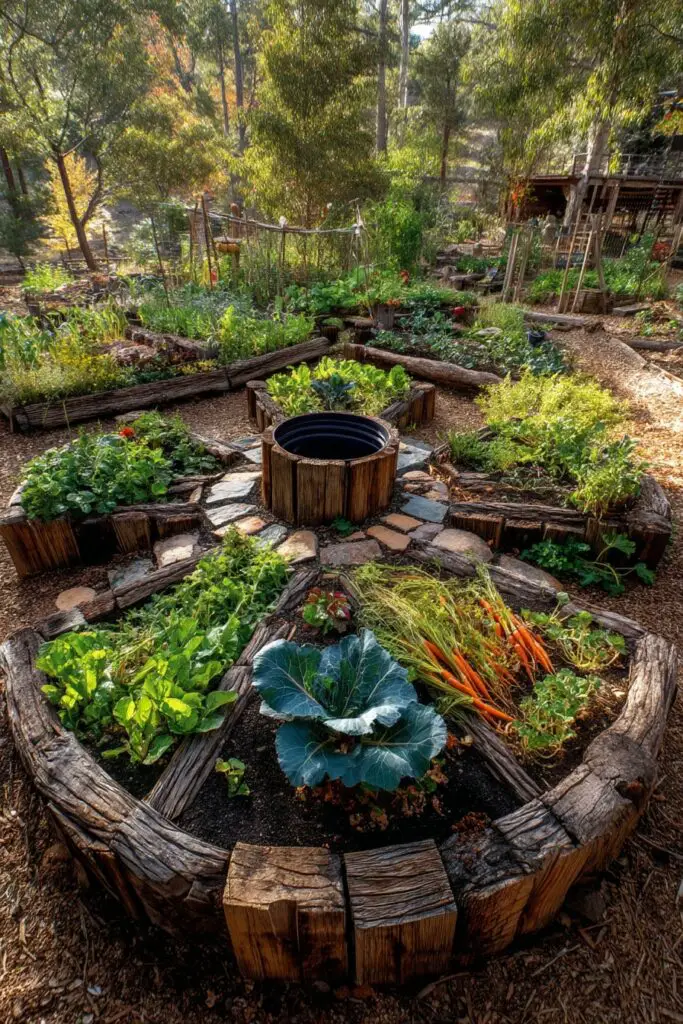
A mandala layout is a circular bed divided into symmetrical planting sections, often with a central feature like a compost bin or focal plant.
Benefits
- Encourages mindful gardening through symmetry
- Efficient paths and access to all areas
- Beautiful design with a strong permaculture base
This spiritual and functional layout turns gardening into an artful experience and supports companion planting techniques.
9. Raised Bed Border Garden
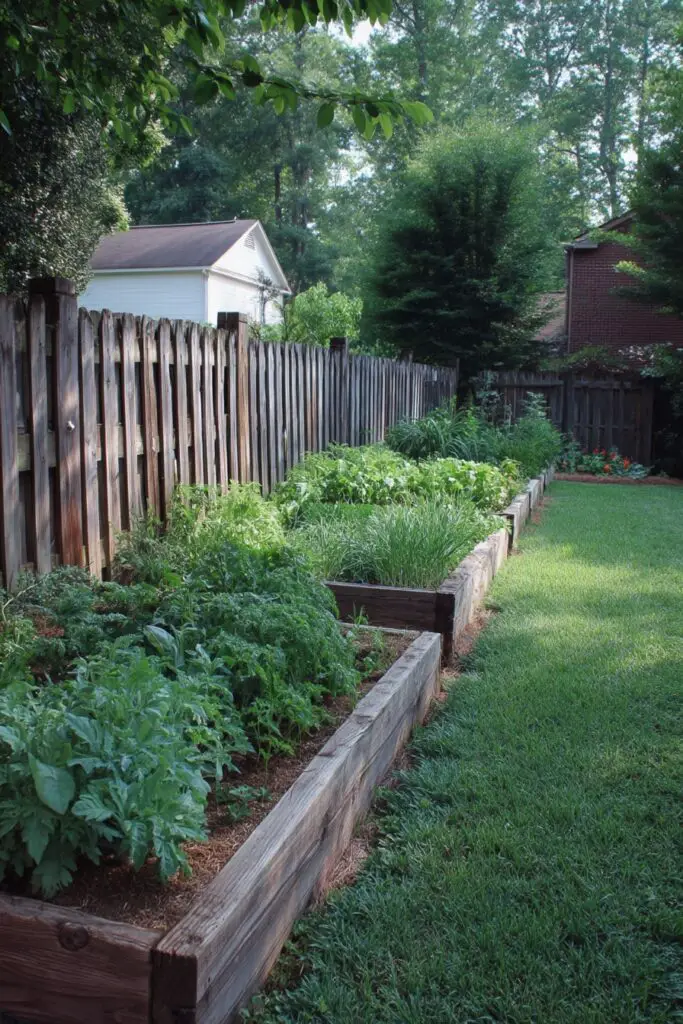
A border garden uses raised beds along the perimeter of your yard, fence, or patio. It’s an efficient way to use edge space while keeping the center of your garden open.
Benefits
- Makes use of underutilized boundaries
- Leaves central space for seating or tools
- Keeps taller plants from shading smaller ones
These garden layout ideas are ideal for urban homes or tight backyards with limited square footage.
10. Zigzag or Chevron Layout
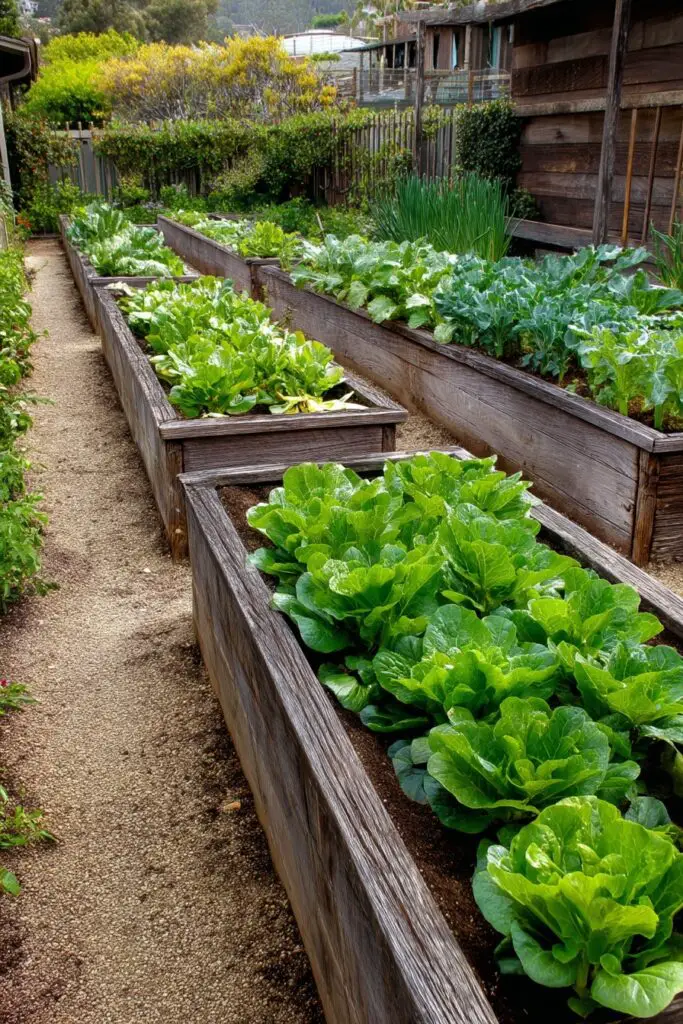
A zigzag or chevron layout arranges raised beds in a dynamic V-pattern, which not only looks stylish but also improves access and airflow.
Benefits
- Modern visual appeal
- Reduces wasted walking space
- Excellent for larger backyards or decorative edible gardens
This layout is a creative twist that can make your vegetable garden feel like a designed outdoor room.
Conclusion
The right garden layout ideas can drastically improve how much you grow and how easily you manage your space. From structured rows to artistic spirals and space-saving borders, raised bed designs offer endless possibilities. Choose the layout that best fits your space, lifestyle, and gardening goals—and enjoy higher yields with less effort season after season.