
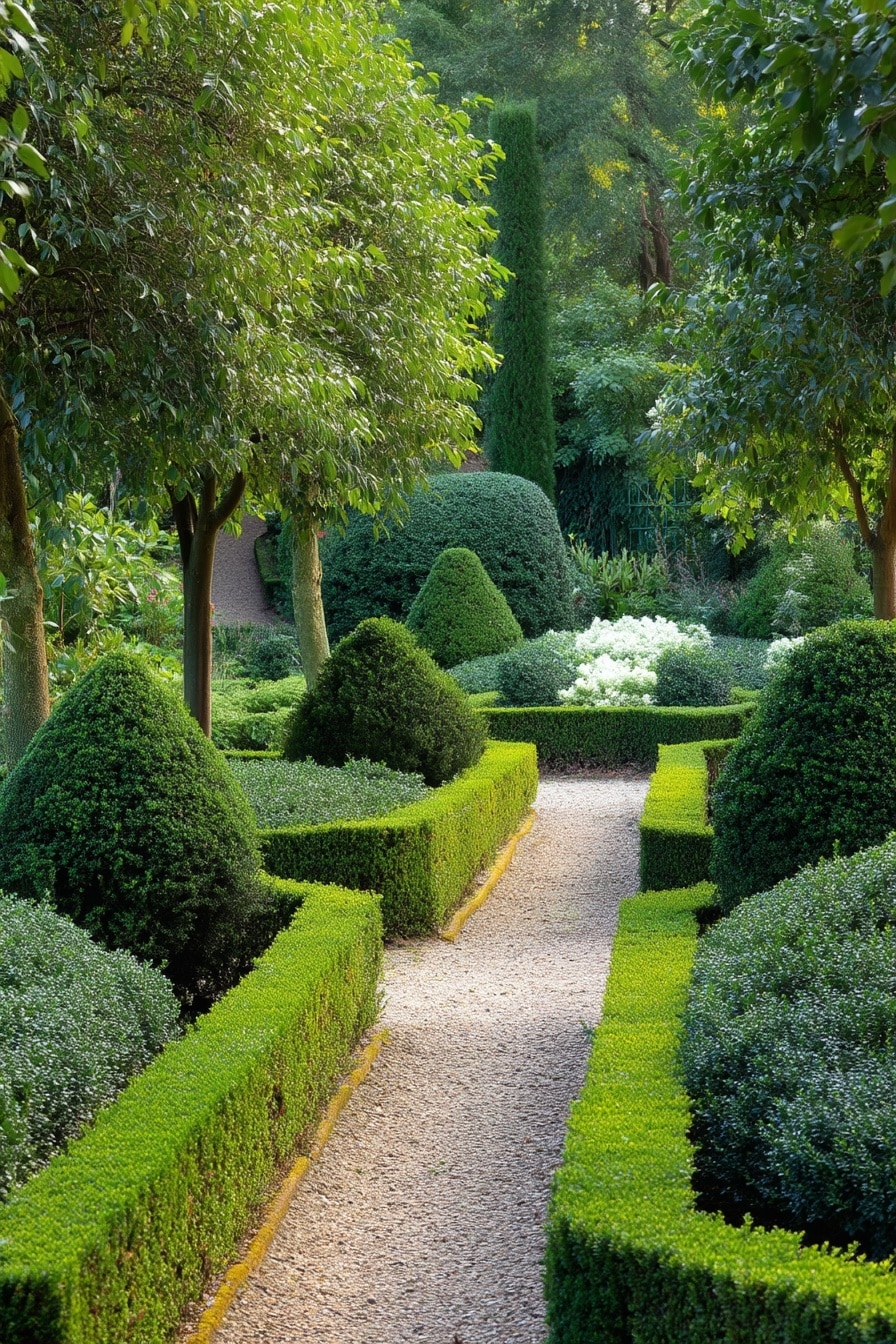
Evergreen landscape design is one of the most reliable ways to keep a garden attractive in every season. While many plants fade during colder months, evergreens maintain their foliage and structure, giving outdoor spaces a consistent framework all year long. A well-planned evergreen landscape provides depth, texture, and visual stability even when flowering plants are dormant.
Garden designers often treat evergreen shrubs and trees as the backbone of a planting scheme. They act as anchors that hold the design together while seasonal plants bring changing color and variety. A thoughtfully arranged evergreen landscape can also improve privacy, define garden zones, and highlight pathways or seating areas.
The ideas below show how to use evergreen plants creatively so your evergreen landscape remains lively, balanced, and visually appealing throughout the entire year.
Table of Contents
1. Use Evergreens for Screening and Privacy

One of the most practical ways to design an evergreen landscape is by using evergreen shrubs and trees as natural screens. Their dense foliage forms a living barrier that protects outdoor areas from neighboring views, road noise, and wind.
Unlike deciduous hedges that lose leaves in winter, evergreen screens maintain coverage throughout the year. This makes them ideal for creating secluded garden spaces.
Ways to Use Evergreens for Privacy
- Plant tall evergreen hedges along property lines
- Create a green wall near patios or outdoor seating areas
- Use layered shrubs to soften fences or walls
- Mix different evergreen varieties for texture and color
In many gardens, an evergreen landscape also divides outdoor areas into functional zones. For example, hedges can separate a dining area from a vegetable garden or pathway.
Good Evergreen Choices for Screening
Common privacy plants include:
- Yew
- Laurel
- Arborvitae
- Boxwood
- Holly
Combining several species helps create a fuller and more natural-looking evergreen landscape.
2. Add Fragrance with Scented Evergreen Shrubs
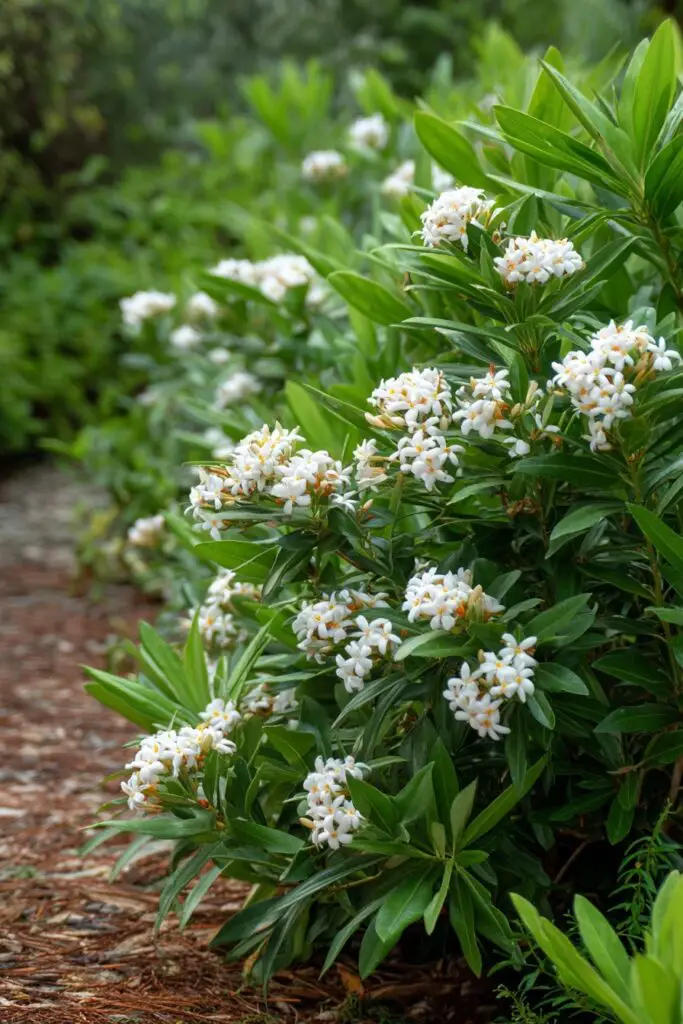
A garden that smells pleasant throughout the year adds another layer of enjoyment. Many plants used in an evergreen landscape produce delicate fragrance during different seasons, especially winter and early spring.
Planting scented shrubs near entrances, walkways, or patios allows the fragrance to be appreciated more easily.
Fragrant Evergreen Plants to Consider
Some evergreen shrubs release strong scent when they bloom:
- Winter sweet box
- Mexican orange blossom
- Daphne varieties
- Elaeagnus
Even small clusters of these plants can make a noticeable difference in a garden.
Placement Tips
For the best experience in an evergreen landscape, place scented shrubs:
- Near doors and windows
- Along garden paths
- Close to outdoor seating areas
This arrangement allows fragrance to drift naturally through frequently used areas.
3. Use Evergreens to Create Form and Rhythm
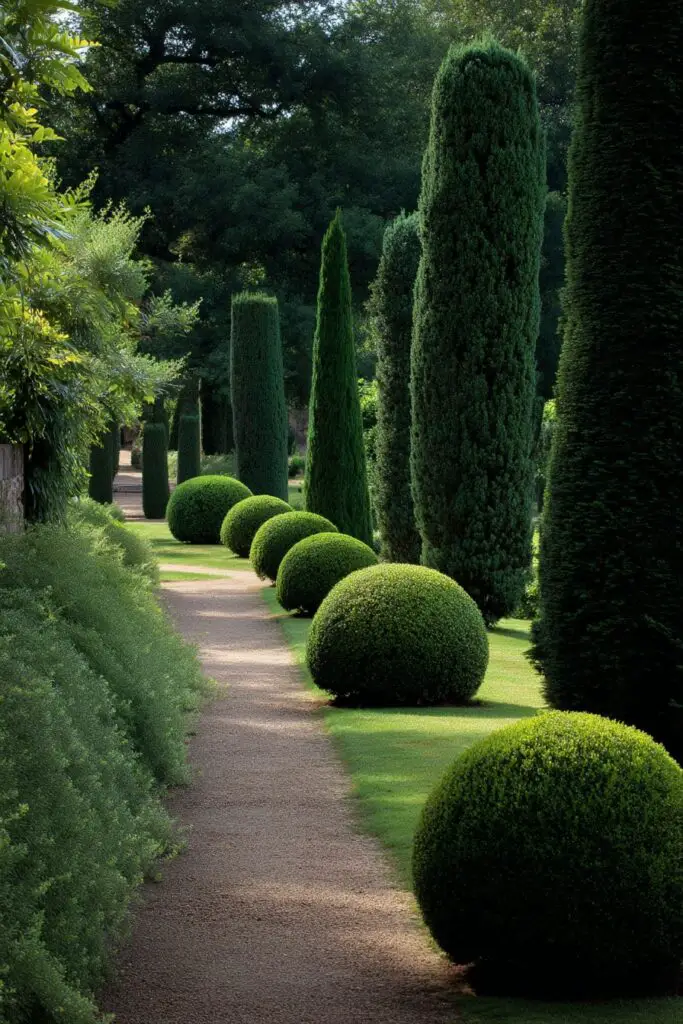
Structure plays a major role in a successful evergreen landscape. Evergreen shrubs with distinctive shapes can guide the eye through a garden and create visual rhythm.
Rounded shrubs, columnar conifers, and arching plants provide contrast when arranged carefully.
Designing with Shape and Repetition
Garden designers often repeat certain shapes throughout a planting bed to create harmony. For example:
- Rounded shrubs spaced along a pathway
- Upright conifers marking entrances
- Low mounds lining borders
Repeating forms is one of the simplest techniques for strengthening an evergreen landscape.
Popular Structural Evergreens
Plants commonly used for shaping garden structure include:
- Pittosporum
- Boxwood
- Sarcococca
- Small yew shrubs
When trimmed regularly, these plants maintain tidy forms that help define the layout of an evergreen landscape.
4. Plant an Evergreen Backdrop for Seasonal Flowers
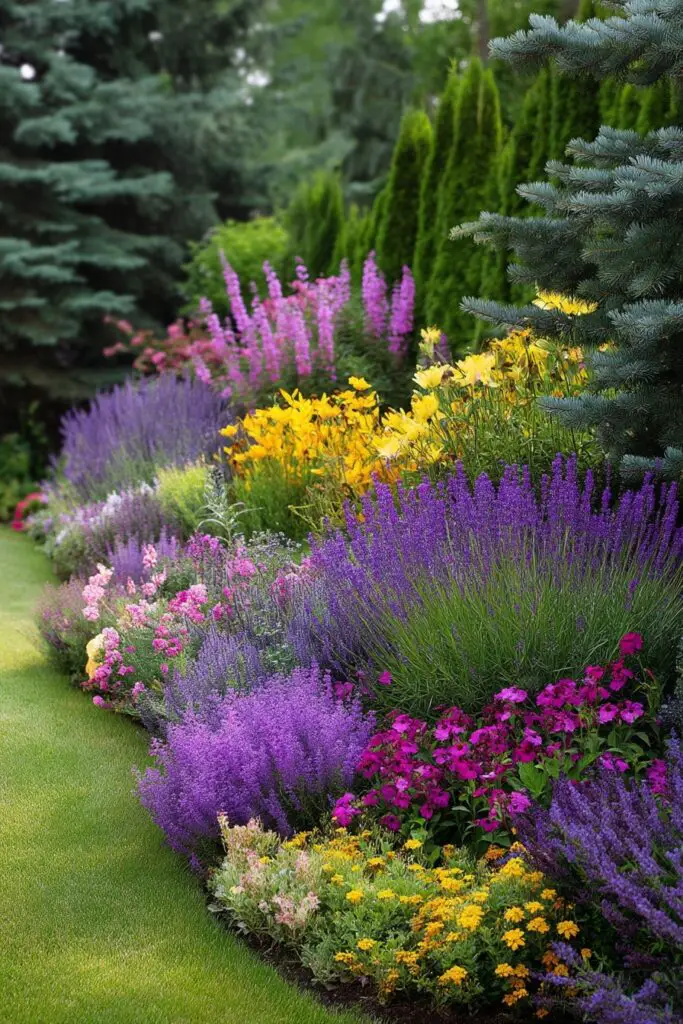
A dark green background can make colorful flowers stand out dramatically. Many gardeners build an evergreen landscape specifically to highlight seasonal blooms.
Tall shrubs or hedges placed behind flower beds provide contrast for perennials and annuals.
Benefits of an Evergreen Background
- Emphasizes flower color and texture
- Creates depth in planting beds
- Maintains visual interest in winter
Lavender, salvia, and ornamental grasses often look more vibrant when positioned in front of evergreen foliage.
Evergreen Plants That Work Well as Backdrops
Good backdrop plants include:
- Pittosporum
- Osmanthus
- Yew hedges
- Holly shrubs
These plants add long-term stability to an evergreen landscape while allowing seasonal plants to shine.
5. Landscape with Evergreen Hedges and Borders
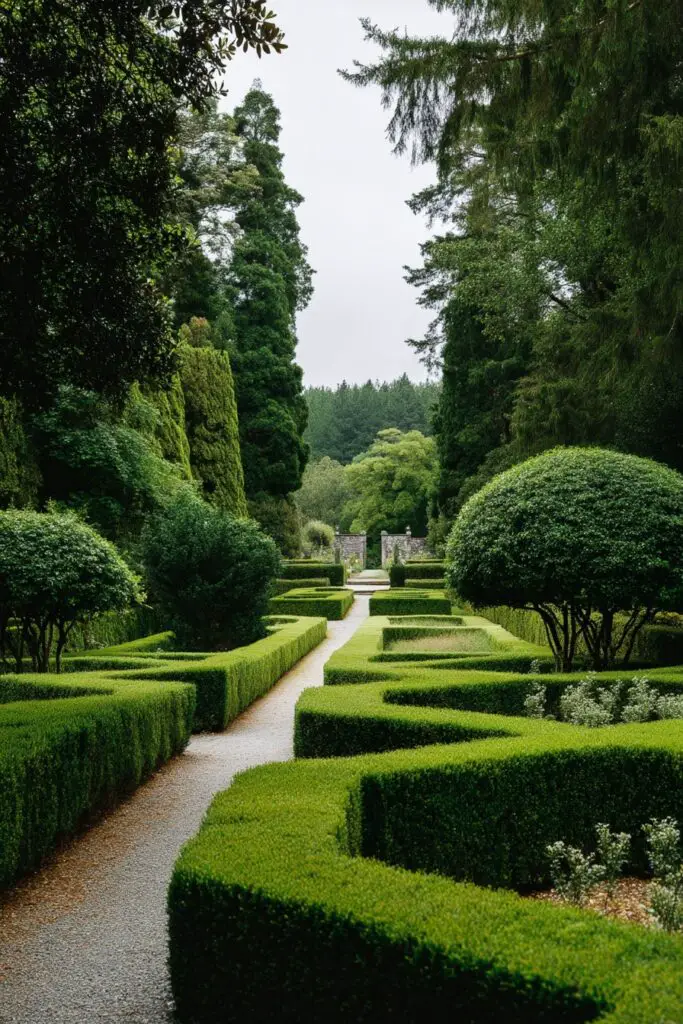
Formal hedges are a timeless element in many garden styles. A well-trimmed hedge strengthens the structure of an evergreen landscape and defines garden boundaries.
Evergreen hedges can outline vegetable beds, mark pathways, or frame lawns.
Advantages of Evergreen Borders
- Provide year-round structure
- Create clear garden boundaries
- Support wildlife such as birds and insects
Dense hedges also reduce wind exposure and protect delicate plants nearby.
Evergreen Plants Suitable for Hedges
Popular hedge plants include:
- English yew
- Viburnum tinus
- Portuguese laurel
- Photinia
- Privet
Choosing the right hedge height helps maintain balance in an evergreen landscape.
6. Create Structure with Evergreen Topiary
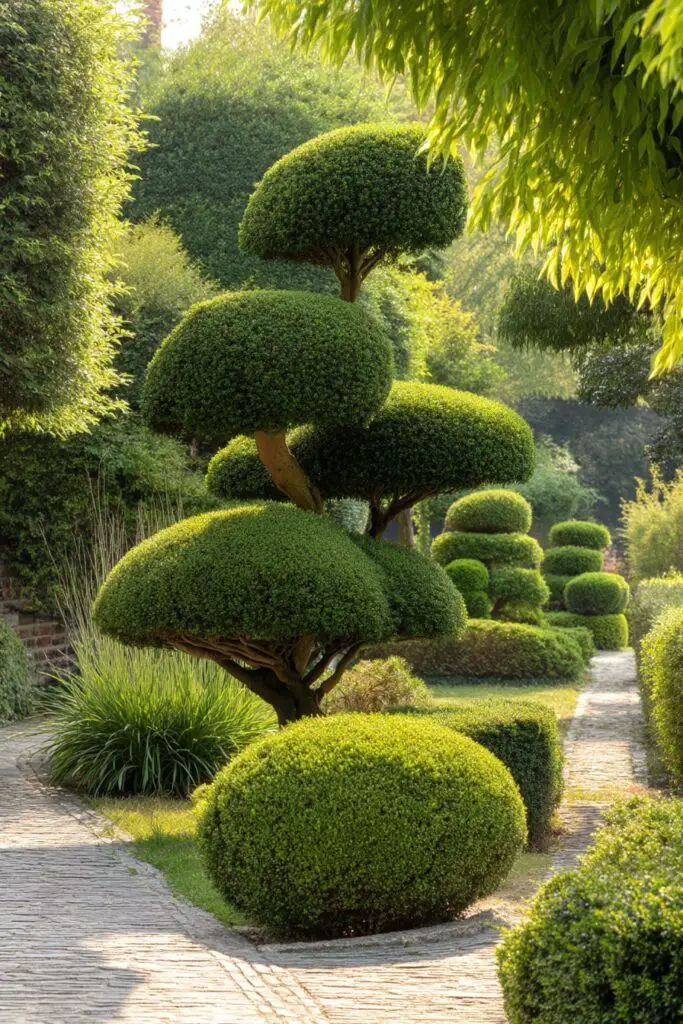
Topiary introduces artistic structure into a garden. Sculpted shrubs can be shaped into spheres, cones, spirals, or other decorative forms.
In an evergreen landscape, topiary acts as a focal point that draws attention even when flowers are absent.
Plants Commonly Used for Topiary
Several evergreen species respond well to pruning:
- Yew
- Boxwood
- Japanese holly
- Osmanthus
- Bay trees
These plants hold their shape after trimming, making them suitable for detailed designs.
Where to Place Topiary
Topiary features work best:
- Near garden entrances
- Along pathways
- In formal courtyard gardens
- In containers beside patios
Strategically placed topiary enhances the elegance of an evergreen landscape.
7. Brighten Shady Areas with Evergreen Plants
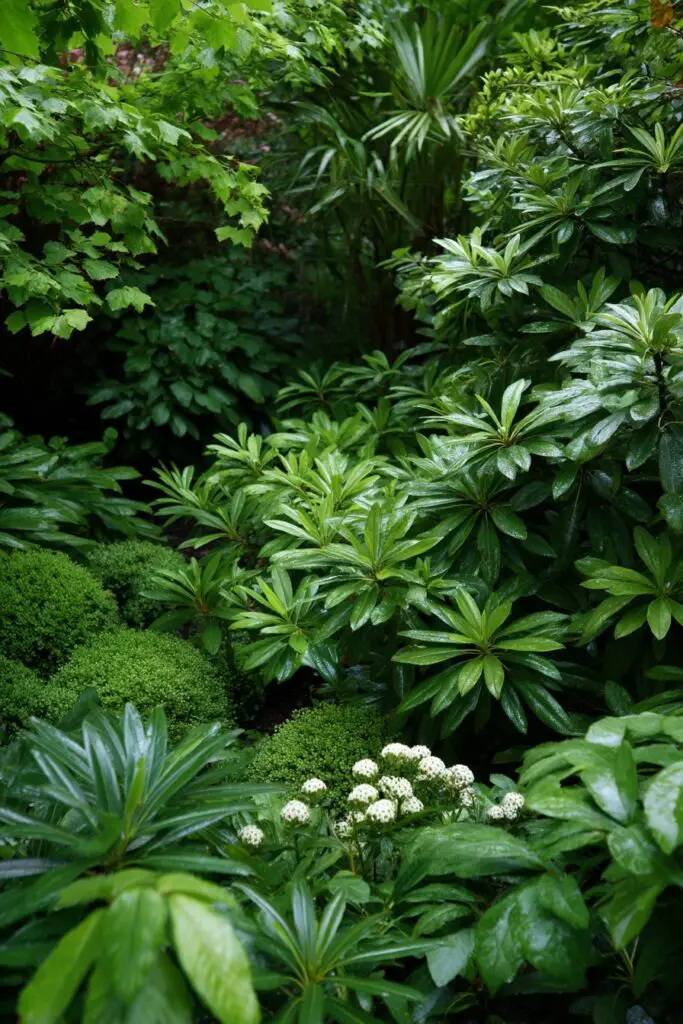
Dark corners can be challenging for many plants. Fortunately, several species suited to an evergreen landscape thrive in shade and add year-round interest.
Shade-tolerant evergreens often feature glossy leaves, colorful berries, or fragrant flowers.
Evergreen Plants for Shaded Spots
Consider these shade-friendly options:
- Viburnum davidii
- Aucuba japonica
- Daphne varieties
- Sarcococca
These shrubs remain attractive even in areas where sunlight is limited.
Design Tips for Shaded Evergreen Beds
To improve a shaded evergreen landscape:
- Combine different leaf textures
- Use plants with variegated foliage
- Add contrasting heights
This approach prevents shaded areas from appearing flat or dull.
8. Add Symmetry with an Evergreen Parterre
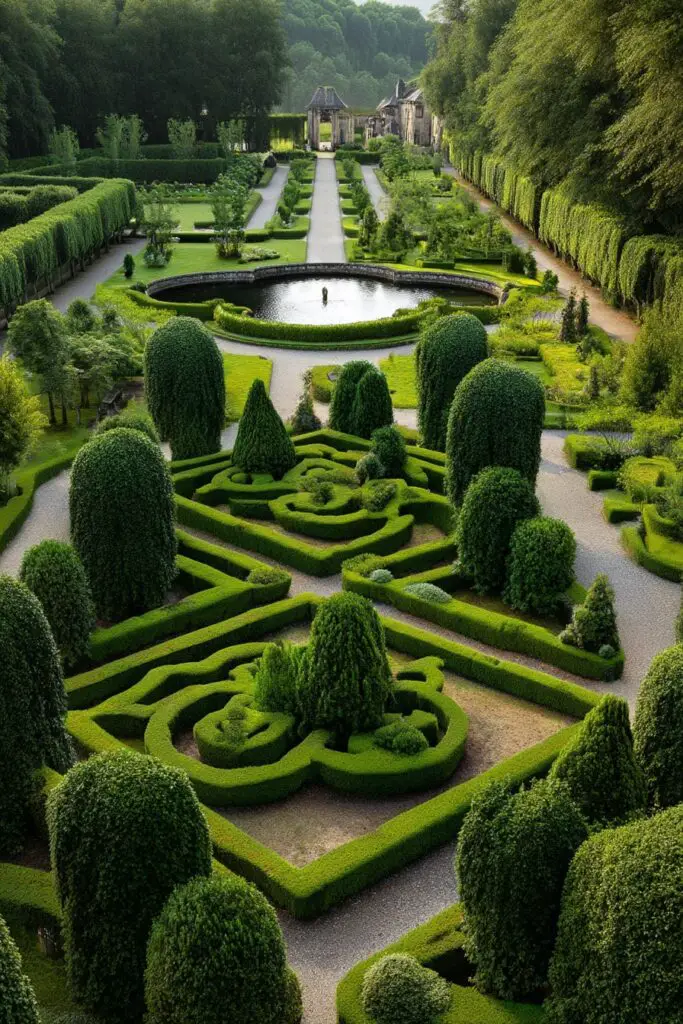
A parterre garden uses low hedges arranged in geometric patterns. This formal style is a striking way to design an evergreen landscape.
The hedges outline decorative shapes that may surround gravel paths, lawns, or flower beds.
Benefits of a Parterre Layout
- Creates strong visual symmetry
- Organizes garden beds clearly
- Maintains structure year round
Even small gardens can incorporate simplified parterre designs.
Suitable Plants for Parterre Hedges
Plants commonly used include:
- Yew
- Japanese holly
- Hebe
- Euonymus
These compact shrubs are ideal for shaping a tidy evergreen landscape.
9. Create a Tropical Look with Evergreen Plants
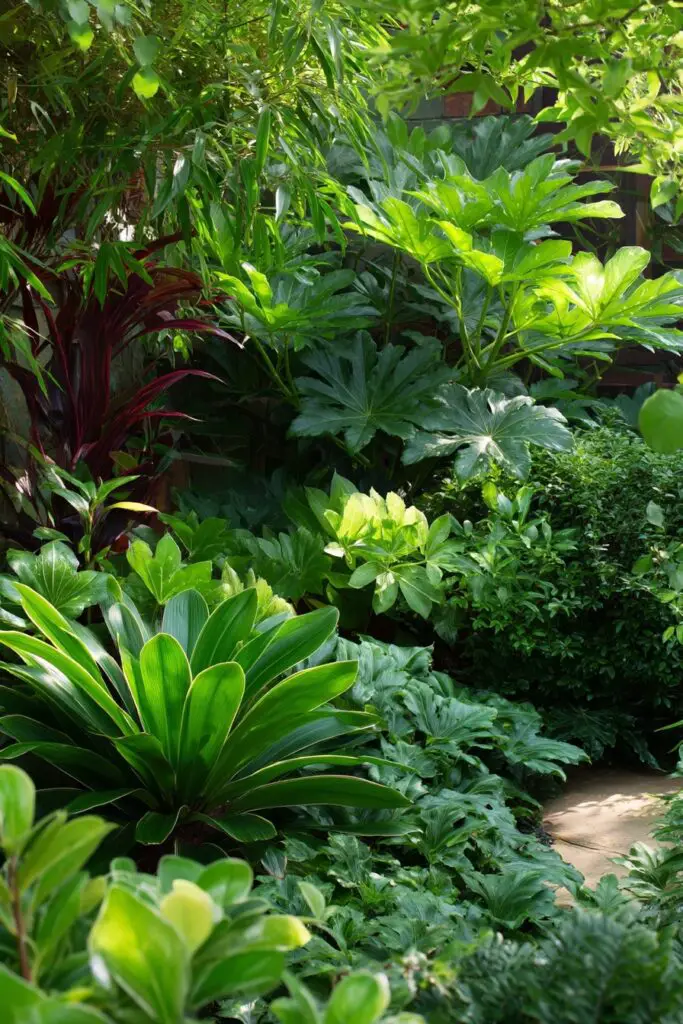
Evergreens can also produce bold, exotic garden styles. Large-leaf varieties introduce lush textures that mimic tropical landscapes.
An exotic evergreen landscape often combines dramatic foliage with layered planting.
Plants That Create a Tropical Feel
Popular choices include:
- Fatsia japonica
- Nandina domestica
- Pieris japonica
These plants add striking foliage color and unusual shapes.
Designing an Exotic Evergreen Garden
For a dramatic evergreen landscape:
- Mix large-leaf plants with fine textures
- Use layered planting heights
- Add shade-tolerant species
This combination produces a rich, jungle-like atmosphere in many gardens.
Conclusion
A thoughtfully planned evergreen landscape gives gardens structure, stability, and beauty throughout the entire year. From privacy hedges and fragrant shrubs to sculpted topiary and tropical foliage, evergreen plants offer endless design possibilities.
By combining different shapes, textures, and heights, gardeners can create an evergreen landscape that remains attractive even when seasonal flowers fade. With careful planning, these resilient plants become the lasting framework that supports a vibrant garden in every season.