
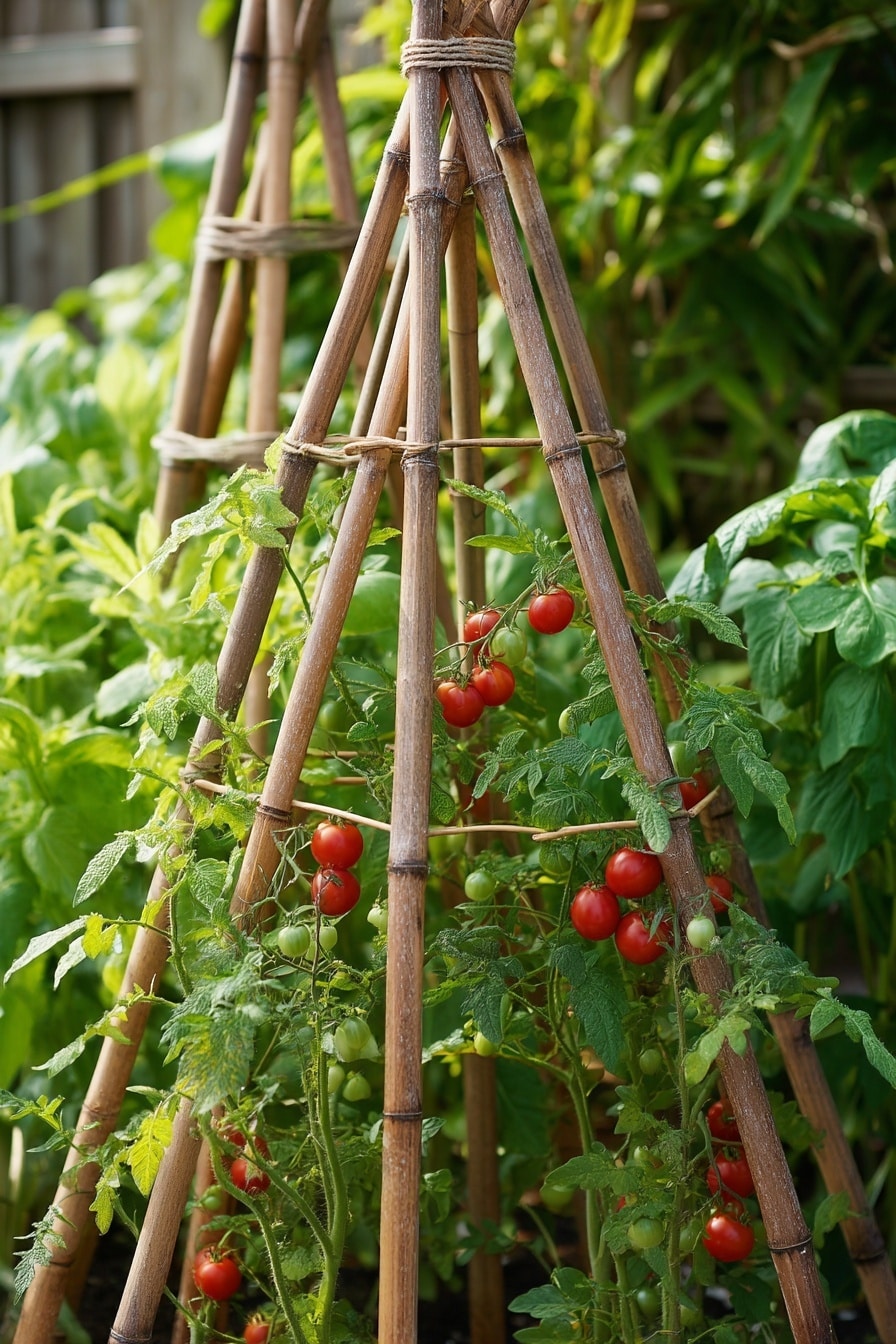
Tomato trellis systems play an important role in growing strong and productive tomato plants. When tomatoes grow without support, vines often sprawl across the ground, which can lead to disease, poor air circulation, and damaged fruit. A well-designed tomato trellis lifts plants upward, allowing sunlight to reach the leaves while keeping fruits clean and easy to harvest.
Many gardeners prefer building their own trellis because DIY options are affordable and customizable. Whether you have a backyard vegetable garden, raised beds, or containers, a simple tomato trellis can improve plant health and increase yields throughout the growing season.
The ideas below highlight eight practical ways to create a reliable tomato trellis using common materials. Each option supports growing vines while keeping your garden organized and productive.
Table of Contents
1. Classic Stake Trellis

A stake system is one of the simplest tomato trellis options for home gardens. It uses a sturdy stake placed beside each plant to support the main stem as it grows upward.
This method works especially well for gardeners who grow a small number of tomato plants.
How to Build It
- Drive a wooden or metal stake about 10–12 inches into the soil
- Place it a few inches from the tomato plant
- Tie the stem loosely to the stake using garden twine or plant clips
- Continue tying the plant every 10–12 inches as it grows
This basic tomato trellis keeps plants upright and prevents heavy fruit clusters from pulling stems toward the ground.
Best for
- Small gardens
- Determinate tomato varieties
- Container gardening
2. String Trellis System
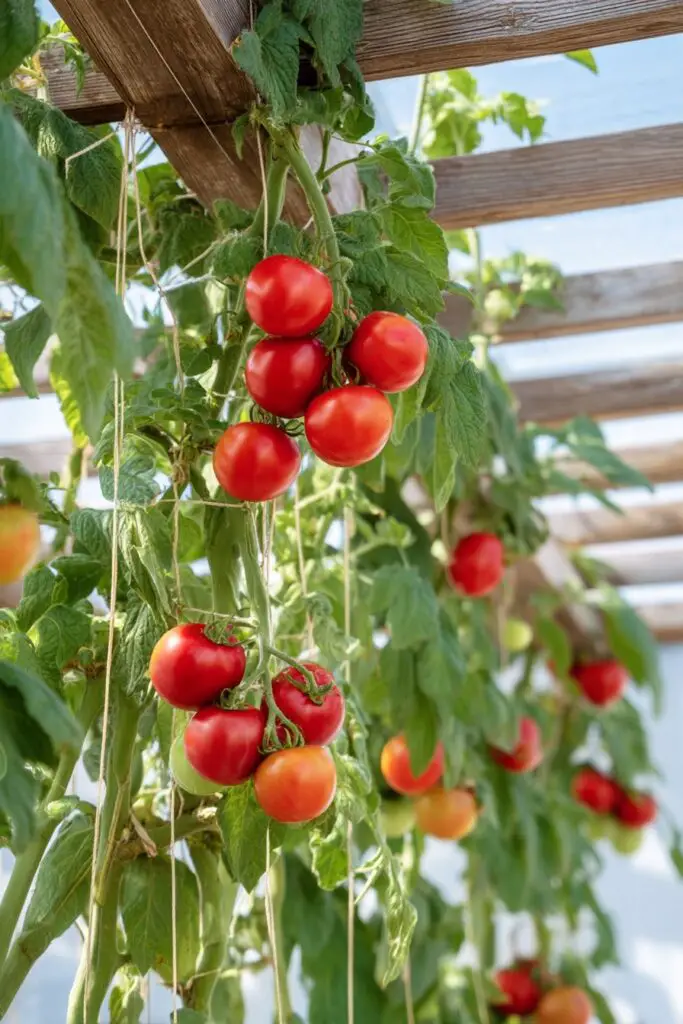
A string system is a vertical tomato trellis commonly used in greenhouse gardens. It supports vines with strong twine tied from the plant base to an overhead support.
How It Works
Gardeners attach durable string to a frame or beam above the plant. The tomato stem is gently wrapped around the string as it grows upward.
Materials Needed
- Garden twine or strong string
- Overhead frame or wooden beam
- Plant clips for support
This type of tomato trellis allows plants to grow tall while keeping stems neatly trained along a vertical line.
Benefits
- Saves garden space
- Improves airflow around plants
- Makes pruning easier
3. Wooden A-Frame Trellis
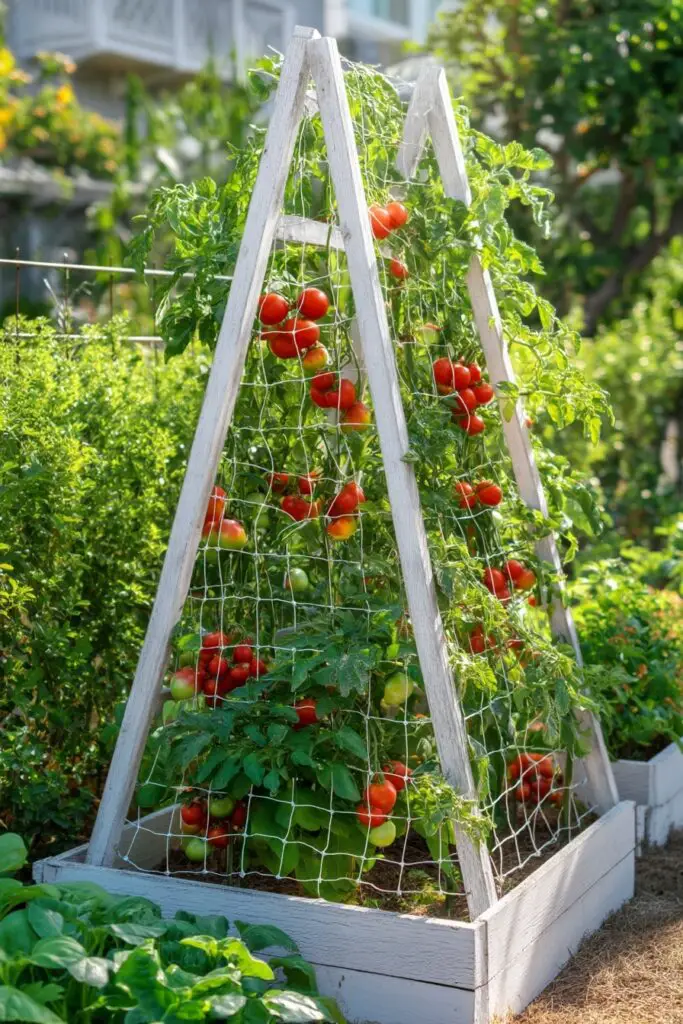
An A-frame structure provides strong support for multiple plants. It creates a stable tomato trellis that works well in raised beds or larger garden plots.
Building the Frame
Two wooden panels are joined at the top to form a triangle shape. Wire mesh or garden netting is attached to both sides so plants can climb upward.
Why Gardeners Like It
- Supports several tomato plants at once
- Allows vines to climb naturally
- Creates a tidy garden layout
A sturdy A-frame tomato trellis also makes harvesting easier because fruit hangs away from the ground.
4. Cattle Panel Trellis
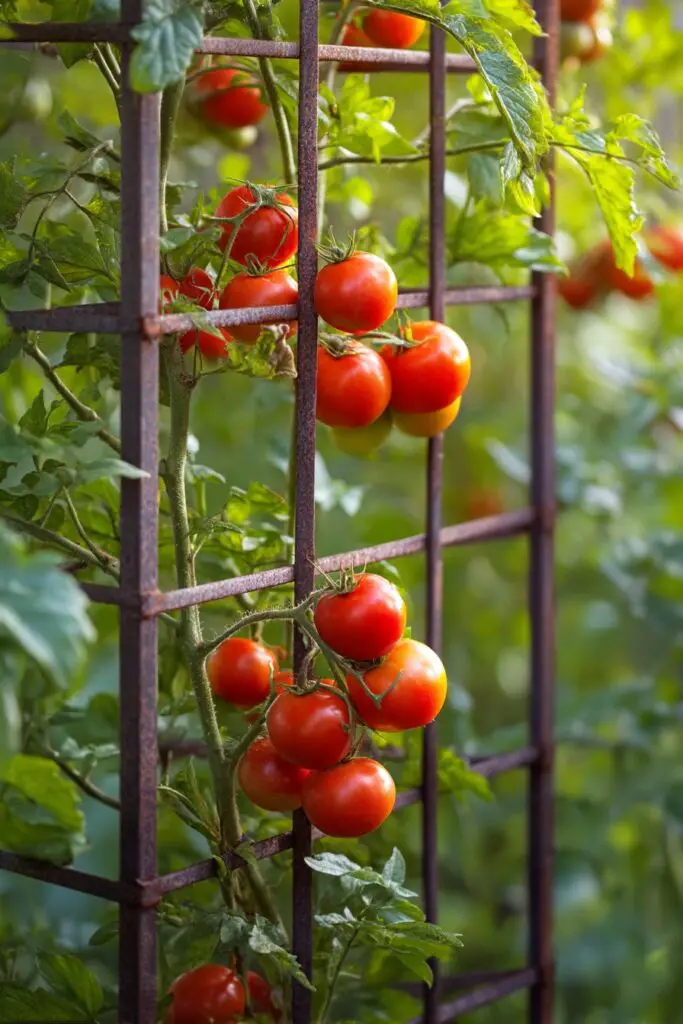
Cattle panels are heavy metal grids often used for fencing, but they also make excellent supports for climbing vegetables.
When placed vertically, they form a durable tomato trellis that can hold large, vigorous plants.
Installation Steps
- Secure the panel between two wooden or metal posts
- Position tomato plants along the base
- Train vines through the metal grid as they grow
This style of tomato trellis works particularly well for indeterminate tomato varieties that continue growing throughout the season.
Advantages
- Extremely strong and long-lasting
- Supports heavy fruit loads
- Requires minimal maintenance
5. Ladder Trellis
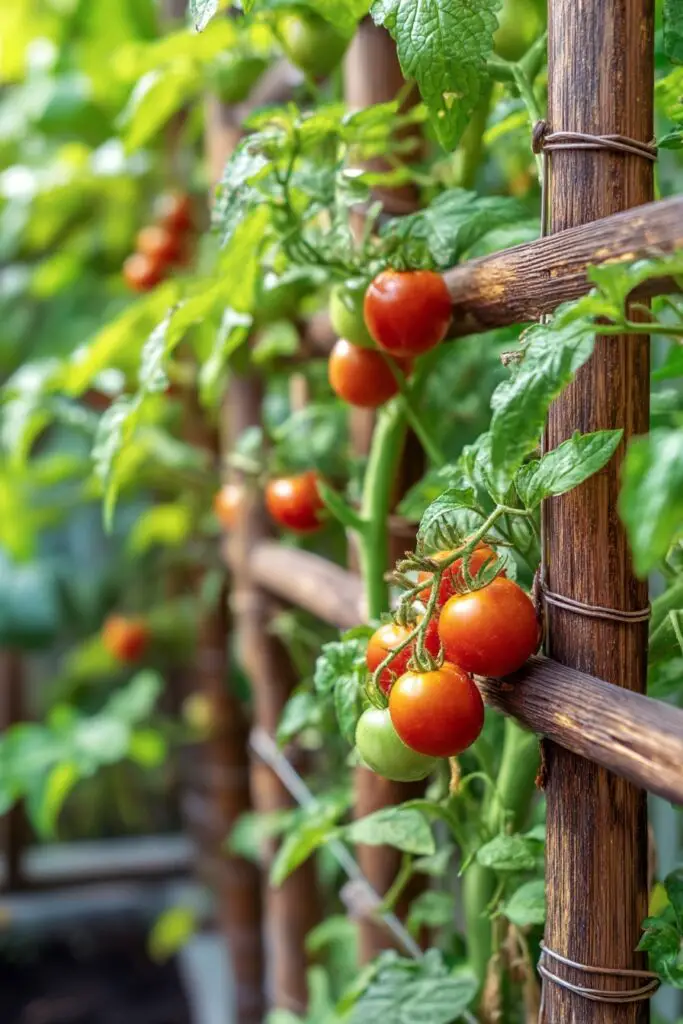
A ladder-style structure offers another simple tomato trellis idea for backyard gardens. Horizontal bars give plants multiple points to attach as they climb.
Construction Basics
- Build a wooden frame similar to a ladder
- Add evenly spaced horizontal slats
- Secure the frame firmly in the soil
As vines grow, they can be gently tied to the crossbars of the tomato trellis.
Why It Works Well
The ladder shape allows sunlight to reach the entire plant while keeping stems organized.
This tomato trellis also adds visual structure to vegetable beds.
6. Bamboo Teepee Trellis
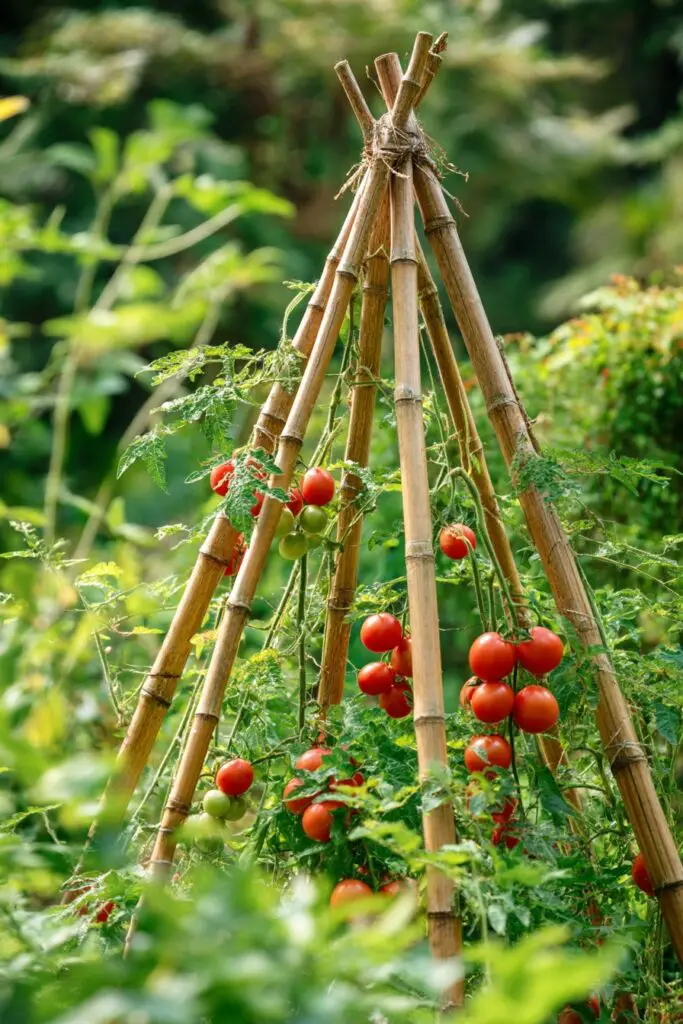
A bamboo teepee is a traditional and decorative tomato trellis design. Several bamboo poles are tied together at the top and spread around the plant base.
Building the Teepee
- Insert 3–5 bamboo poles into the soil around the tomato plant
- Tie the tops together securely with twine
- Add horizontal twine loops for extra climbing support
The resulting cone shape forms a natural tomato trellis that works well for smaller garden spaces.
Benefits
- Inexpensive materials
- Quick setup
- Attractive garden feature
7. Tomato Cage Trellis
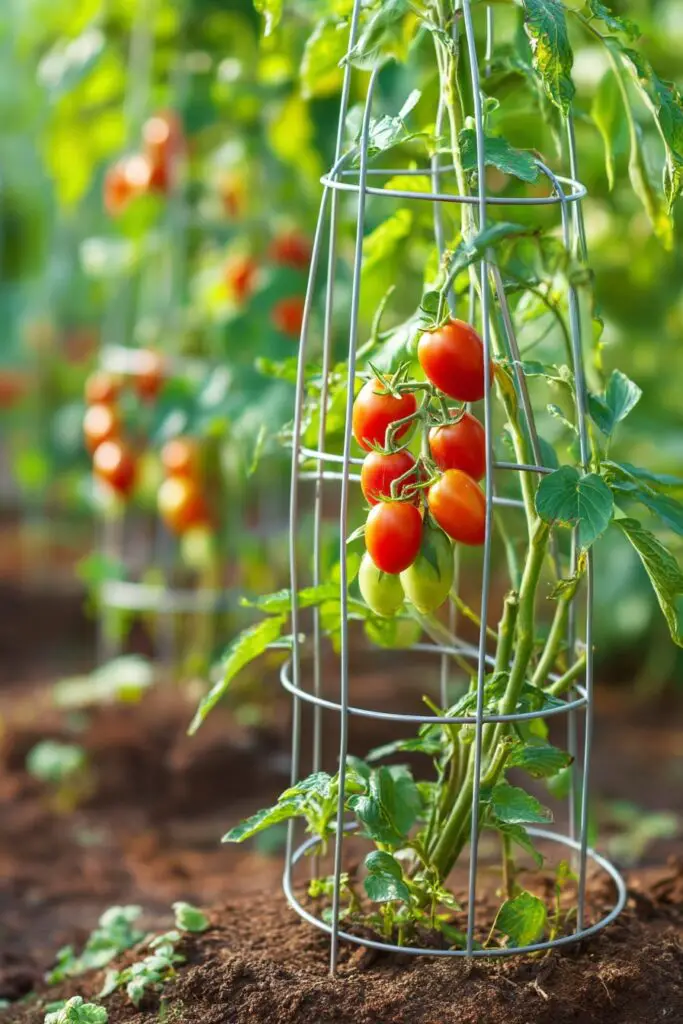
Tomato cages are widely used because they are simple and effective. A cage forms a cylindrical tomato trellis that surrounds the plant and supports it from all sides.
How to Use It
Place the cage over the plant early in the season so stems can grow through the openings.
As the plant grows, branches rest against the cage wires for support.
Advantages
- Very beginner-friendly
- No tying required
- Keeps fruit off the soil
Many gardeners combine cages with other tomato trellis methods when growing larger plants.
8. Wall or Fence Trellis
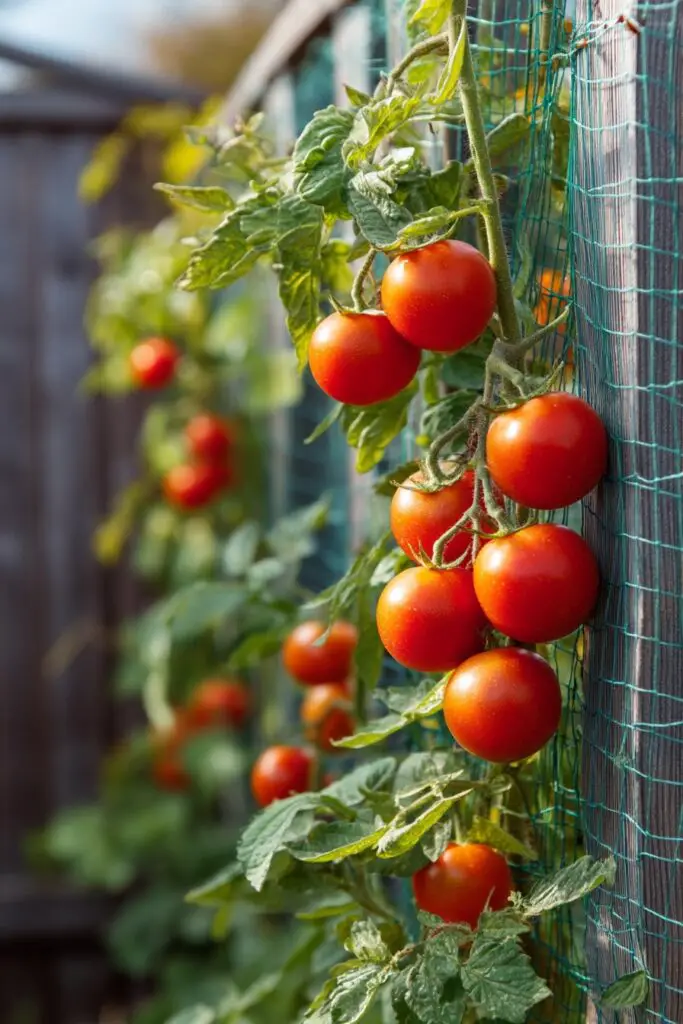
If your garden includes a fence or wall, it can easily become a vertical tomato trellis. Netting or wire mesh attached to the surface provides climbing support.
Setup Guide
- Install garden netting or wire along the fence
- Plant tomatoes several inches away from the base
- Guide stems toward the structure as they grow
This type of tomato trellis is ideal for small gardens because it uses existing space.
Why It’s Useful
- Saves valuable ground area
- Creates a neat vertical garden
- Improves sunlight exposure
Tips for Choosing the Right Tomato Trellis
Selecting the right tomato trellis depends on your garden size, tomato variety, and available materials.
Consider Plant Type
- Determinate tomatoes: smaller plants that benefit from cages or stakes
- Indeterminate tomatoes: tall vines that need stronger trellis systems
Provide Strong Support
Tomato plants can become heavy with fruit, so a tomato trellis should be anchored firmly into the soil.
Maintain Air Circulation
Proper spacing around the trellis helps reduce moisture buildup and plant disease.
Train Plants Regularly
Check your tomato trellis weekly and guide stems upward so they remain supported.
Conclusion
A reliable tomato trellis keeps tomato plants healthy, organized, and productive throughout the growing season. From simple stakes and bamboo teepees to sturdy cattle panels and A-frame structures, each method offers practical ways to support climbing vines.
Choosing the right tomato trellis depends on your garden size and tomato variety, but any vertical support can improve airflow, prevent disease, and make harvesting easier. With a little planning and a few basic materials, gardeners can create a trellis system that encourages stronger plants and better harvests.