
DIY raised garden bed projects are one of the easiest ways to start a productive and organized garden. By building your own raised beds, you gain better control over soil quality, improve drainage, and make planting and harvesting more comfortable.
A well-built DIY raised garden bed also helps maximize garden space while keeping plants neatly contained. Whether you have a small backyard, a patio, or a larger garden area, raised beds create a structured layout that supports healthy plant growth.
From simple wooden frames to creative recycled designs, there are many ways to build a DIY raised garden bed that suits your space and gardening style. These ideas combine practicality with visual appeal, helping you create a garden that is both productive and attractive.
Table of Contents
1. Classic Wooden DIY Raised Garden Bed

A classic wooden DIY raised garden bed is one of the most popular choices for home gardens. It is simple to build, durable, and works well for growing vegetables, herbs, and flowers.
Wooden boards are arranged into a rectangular frame and filled with nutrient-rich soil. This design creates a defined planting area that keeps your garden organized.
Why Choose a Wooden Raised Bed
- Easy construction for beginners
- Natural appearance that blends with gardens
- Affordable building materials
- Suitable for most vegetables and herbs
A wooden DIY raised garden bed also allows gardeners to customize the size and shape depending on available space.
Helpful Building Tips
- Use untreated cedar or redwood for durability
- Keep the bed about 3–4 feet wide for easy reach
- Ensure the ground underneath is level
- Add compost to improve soil quality
This simple DIY raised garden bed design works well in both large and small backyard gardens.
2. Tiered DIY Raised Garden Bed

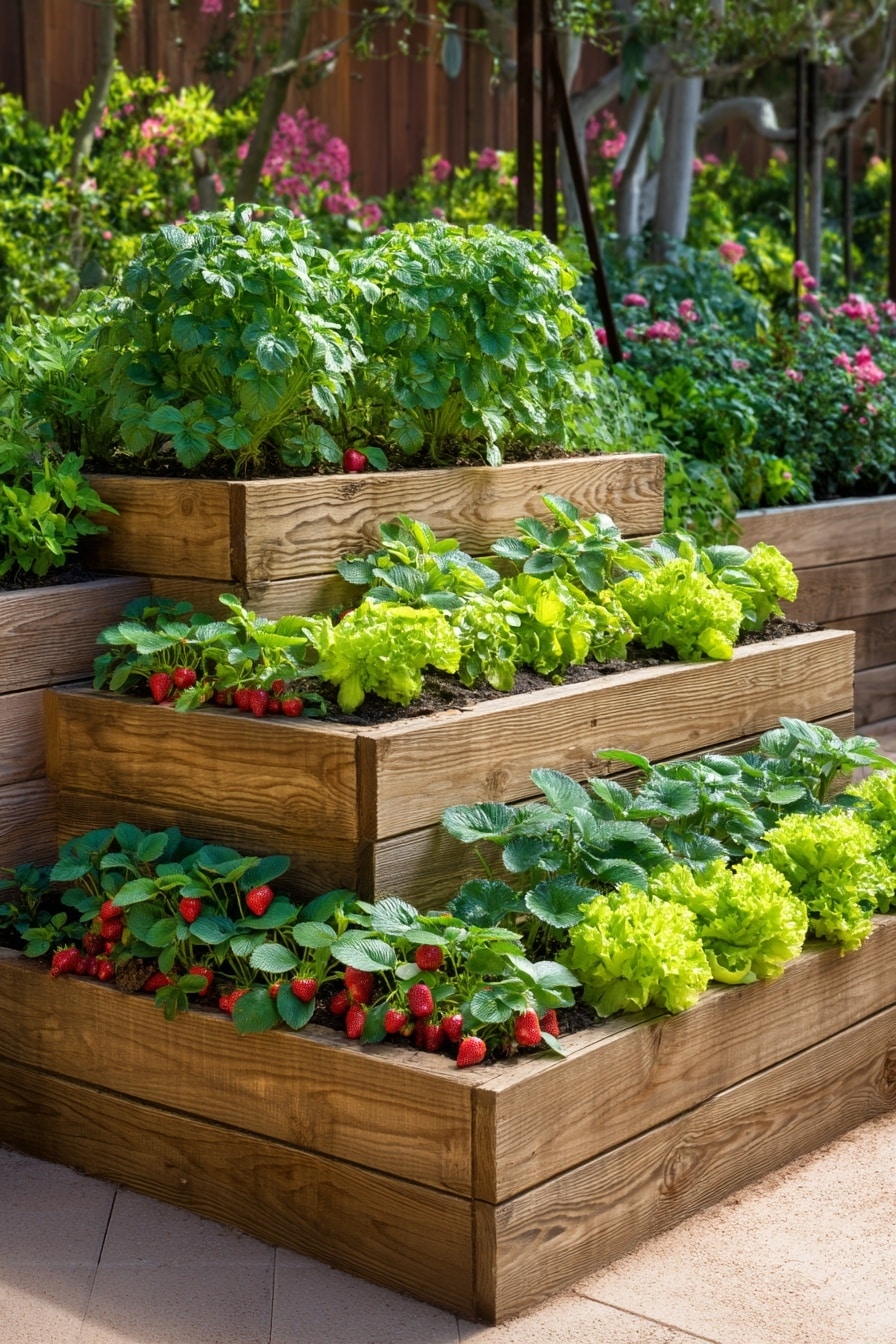
A tiered DIY raised garden bed features multiple levels stacked above each other. This layout creates visual interest while maximizing vertical planting space.
Tiered beds are especially useful for growing herbs, leafy greens, and smaller vegetables.
Benefits of Tiered Raised Beds
- Uses vertical space efficiently
- Improves garden organization
- Allows plants with different sunlight needs
- Adds decorative structure to the garden
A tiered DIY raised garden bed also works well in sloped gardens where flat planting space is limited.
Best Plants for Tiered Beds
- Lettuce
- Spinach
- Strawberries
- Basil and parsley
- Small flowering plants
With thoughtful planting, a tiered DIY raised garden bed can produce a variety of crops in a compact area.
3. DIY Raised Garden Bed with Trellis

Adding a trellis to a DIY raised garden bed allows climbing plants to grow vertically. This design saves space while improving airflow around plants.
A trellis can be attached directly to the back of the raised bed frame.
Vegetables That Grow Well with Trellises
- Cucumbers
- Tomatoes
- Peas
- Pole beans
- Climbing squash
This type of DIY raised garden bed is ideal for gardeners who want to grow vertical crops without taking up additional ground space.
Trellis Design Tips
- Use strong wooden or metal supports
- Secure the trellis firmly to the bed frame
- Place the trellis on the north side to avoid shading other plants
- Train vines as they grow
A trellis-enhanced DIY raised garden bed helps increase garden productivity in small spaces.
4. Stone or Brick DIY Raised Garden Bed

A stone or brick DIY raised garden bed creates a durable and decorative garden feature. These materials offer long-term strength and blend beautifully with natural landscapes.
Although construction takes more time than wooden beds, the result is a sturdy structure that lasts for many years.
Advantages of Stone or Brick Beds
- Highly durable and weather-resistant
- Attractive natural appearance
- Long lifespan
- Adds value to garden design
A stone DIY raised garden bed can also help regulate soil temperature, which benefits plant roots.
Construction Tips
- Prepare a solid foundation before stacking stones
- Use landscape adhesive for stability
- Ensure proper drainage at the base
- Keep the bed height manageable for planting
This style of DIY raised garden bed works especially well in decorative backyard gardens.
5. Recycled Material DIY Raised Garden Bed
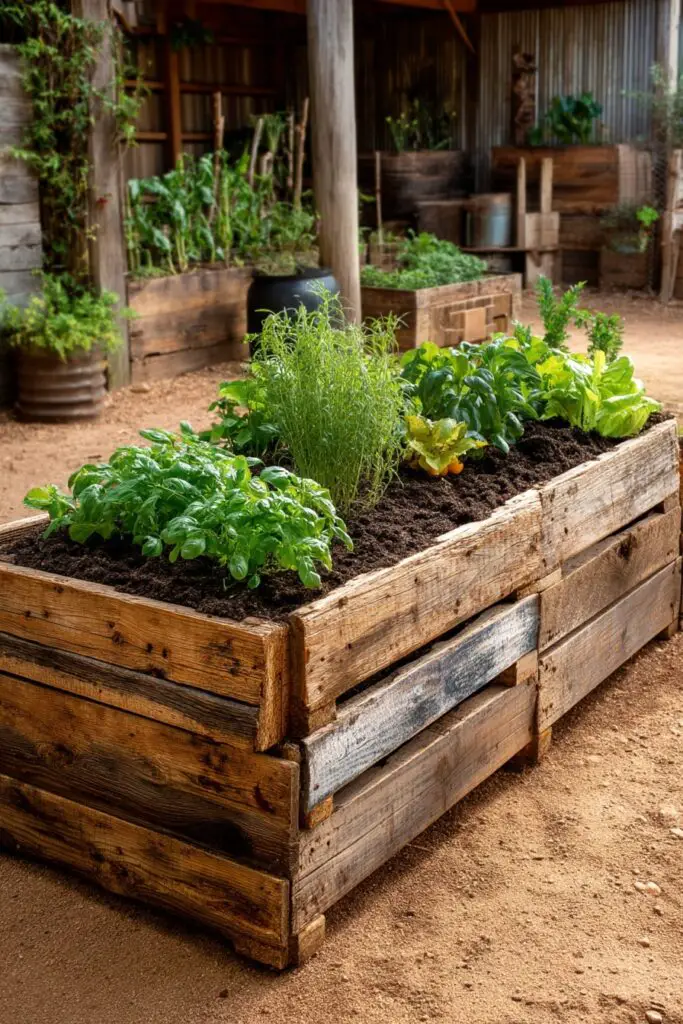
Using recycled materials is an eco-friendly approach to building a DIY raised garden bed. Old pallets, reclaimed wood, and repurposed containers can all become functional garden beds.
This option is perfect for gardeners who want to reduce waste while creating a unique garden design.
Recycled Materials You Can Use
- Wooden pallets
- Old barrels
- Reclaimed lumber
- Metal containers
- Large wooden crates
A recycled DIY raised garden bed often adds rustic charm to the garden while keeping costs low.
Safety Tips for Recycled Beds
- Avoid treated or chemically coated wood
- Ensure containers have drainage holes
- Sand rough edges before building
- Line beds with landscape fabric if needed
With creativity, a recycled DIY raised garden bed can become a distinctive garden feature.
Tips for Building a DIY Raised Garden Bed
Before starting your DIY raised garden bed, a few planning steps can help ensure success.
Important Planning Tips
- Choose a location with at least 6–8 hours of sunlight
- Ensure easy access to water for irrigation
- Leave walking space between garden beds
- Use high-quality soil and compost
- Plan plant spacing carefully
Good planning helps your DIY raised garden bed support healthy plants and consistent harvests.
Conclusion
Building a DIY raised garden bed is a practical way to improve your garden’s organization, soil quality, and productivity. From classic wooden frames to creative recycled designs, raised beds offer flexible solutions for gardeners with different spaces and budgets.
By choosing the right design and planning your planting layout carefully, a DIY raised garden bed can help you grow healthy vegetables, herbs, and flowers while creating an attractive garden space.