
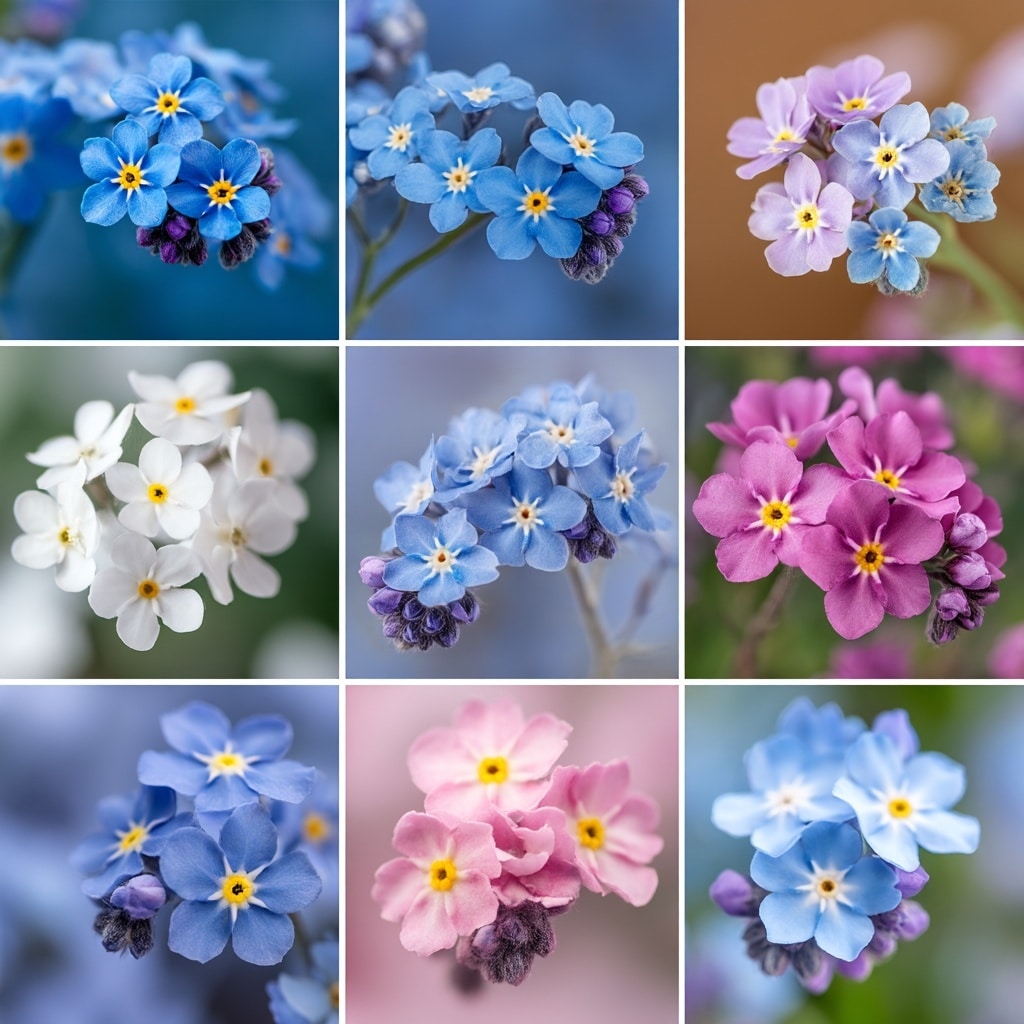
Forget me not flowers are a timeless garden favorite, known for their cheerful clusters of sky-blue blooms and gentle, spreading habit. These charming plants have long been symbols of remembrance and affection, but they’re also incredibly practical for gardeners of all skill levels. With the right care, forget me not flowers will reward you with a burst of early-season color that often reseeds and returns year after year. Whether nestled beneath taller perennials, lining garden borders, or spilling over container edges, their versatility and low-maintenance nature make them an excellent choice for any landscape.
Table of Contents
Forget-Me-Not Basics

Before you plant forget me not flowers, it helps to understand what makes these little blue beauties thrive. These herbaceous biennials (sometimes acting as annuals or short-lived perennials) belong to the Myosotis genus, which includes over 100 species. The name Myosotis means “mouse ear” — a nod to their small, fuzzy leaves.
The most popular garden variety is Myosotis sylvatica, also known as woodland forget-me-not. Native to Europe and parts of Asia, it’s widely cultivated for its ability to reseed and form lovely natural carpets of color.
Quick Facts:
- Botanical name: Myosotis sylvatica
- Common names: Forget-me-not, scorpion grass
- Plant type: Flowering biennial
- USDA zones: 3 to 8
- Bloom time: Spring to early summer
- Mature size: 6–12 inches tall and wide
- Light: Full sun to partial shade
- Soil: Moist, well-drained; tolerates sandy, loamy, and clay soils
- Soil pH: 6.0–8.0
- Water needs: Medium
- Spacing: 4–6 inches apart
These plants thrive in woodland-like conditions — cool, moist, and lightly shaded — but adapt surprisingly well to a range of garden environments. And while they’re sweet and small, don’t underestimate their ability to spread! In some regions, especially where they’re not native, they can become aggressive.
For gardeners in hotter climates or areas where Myosotis sylvatica is invasive, alternatives like Myosotis asiatica (alpine forget-me-not) offer a beautiful, native-friendly option with similar appeal.
Growing Conditions for Forget-Me-Not Flowers
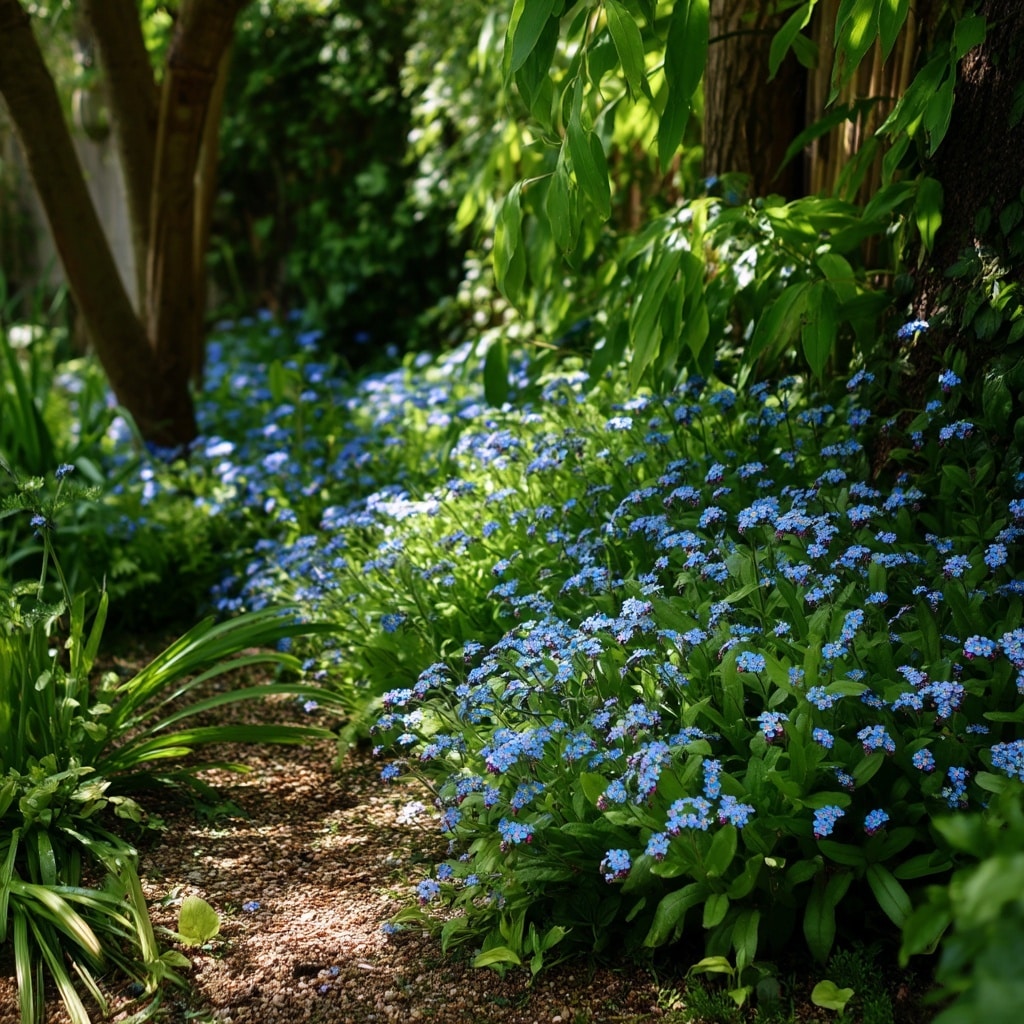
Creating the right environment is key to helping forget me not flowers thrive. While these plants are relatively low-maintenance, giving them the conditions they prefer will ensure a healthier, longer-lasting display of blooms.
Light Requirements
Forget me not flowers grow best in partial shade, especially in warmer climates. Morning sun followed by dappled or light afternoon shade is ideal. In cooler regions, they can tolerate more direct sun without issue. Too much intense sunlight—especially in dry areas—can lead to wilting or leaf scorch.
Soil Preferences
These adaptable plants will grow in sandy, loamy, or even clay soils, as long as the drainage is good. Moisture retention is important, but waterlogged roots can be fatal. For best results, amend heavy or poor soil with compost to improve structure and nutrition. A soil pH between 6.0 and 8.0 — slightly acidic to mildly alkaline — works well.
Temperature and Humidity
Forget me not flowers prefer cooler conditions and perform best in spring and early summer. They’re hardy in USDA Zones 3 to 8, depending on species and cultivar. In high heat or dry climates, plant them in more shaded, moisture-retentive areas of the garden. They enjoy moderate to high humidity and will go dormant if conditions become too hot or dry.
Watering Needs
Consistent moisture is crucial. The soil should stay evenly moist, like a wrung-out sponge — never soggy, but not dry either. During blooming season, water regularly to support flower production. Applying a layer of mulch helps lock in moisture and keeps roots cool. Once forget me not flowers have finished blooming, they can tolerate short dry spells but may go dormant early.
Fertilizer
These little blooms don’t need much feeding if your soil is rich. However, in less fertile areas, you can apply a balanced or low-nitrogen fertilizer (like 5-10-10) once a month in spring to encourage healthy blooms. Avoid high-nitrogen fertilizers, which promote leaf growth at the expense of flowers.
Growing Forget-Me-Not Flowers in Containers
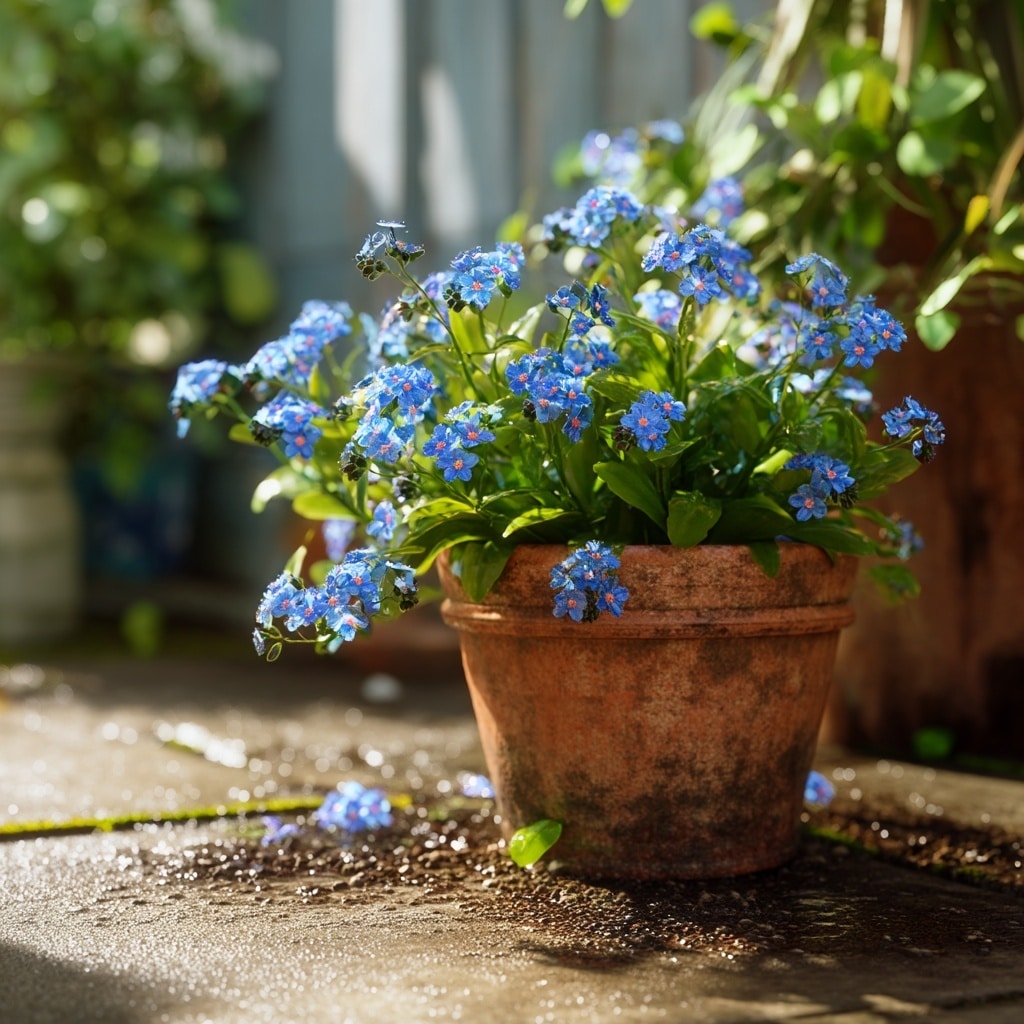
Forget me not flowers aren’t just for garden beds — they make excellent container plants, especially when paired with other spring bloomers or used as a soft, colorful border in pots. Their compact size and spreading habit make them ideal for small spaces like patios, balconies, or window boxes.
Choosing the Right Container
Pick a pot that has good drainage holes to prevent soggy soil, which can lead to root rot. A container that’s at least 8 inches deep will provide enough room for roots to develop. Shallow, wide containers also work well for showcasing their natural spread.
Soil and Watering
Use a well-draining potting mix that retains moisture but doesn’t stay wet. You can mix in some compost or organic matter to boost nutrients and help hold moisture without becoming compacted.
Since pots dry out faster than garden soil, check the moisture level regularly — especially in warmer weather. Water whenever the top inch feels dry, keeping the soil consistently damp but not soaked.
Light and Placement
Place containers in a spot that gets morning sun and afternoon shade, or dappled light throughout the day. This mimics their natural woodland habitat and encourages lush blooms without stressing the plants.
Fertilizer for Potted Plants
Container-grown forget me not flowers benefit from a light monthly feeding during spring and early summer. Use a diluted, balanced fertilizer, such as 5-10-10, to encourage blooming rather than excessive leafy growth.
Popular Cultivars of Forget-Me-Not Flowers
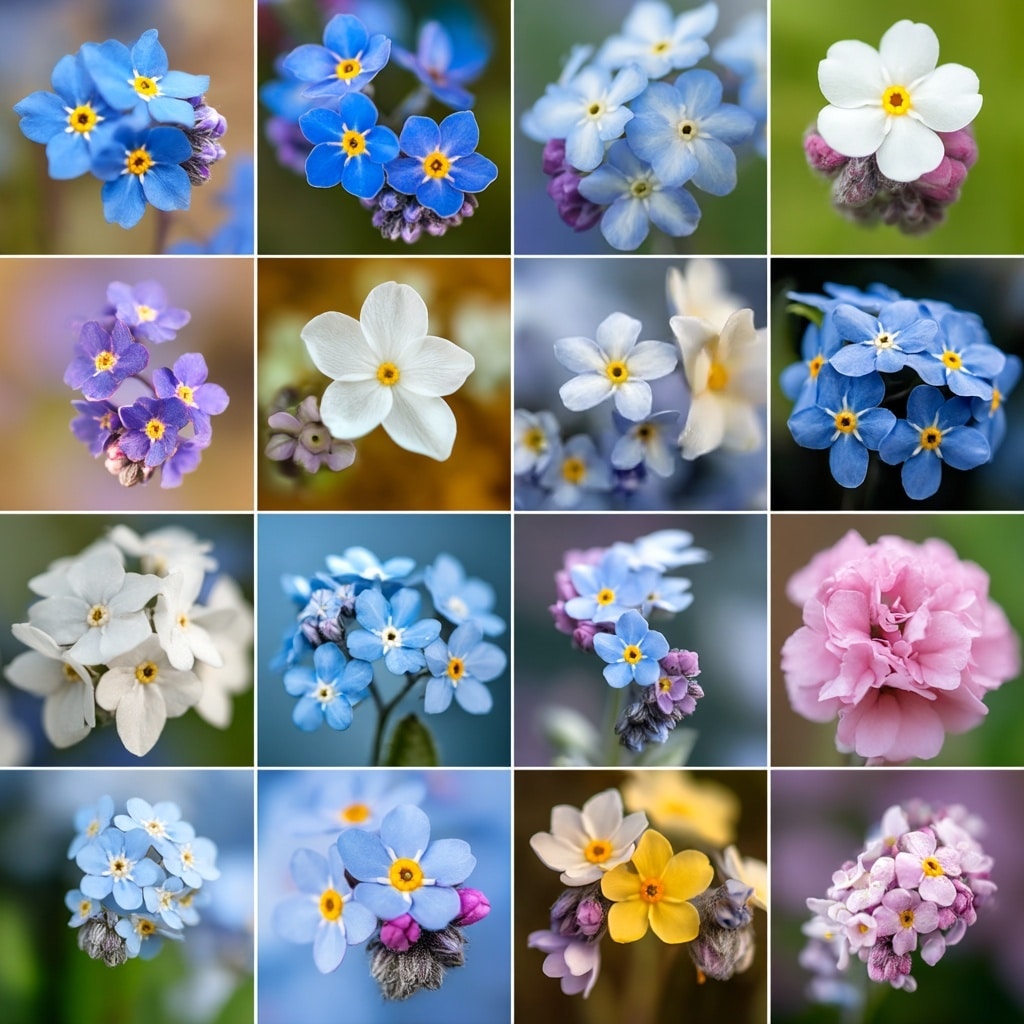
While the classic sky-blue variety is the most recognized, forget me not flowers come in a handful of beautiful cultivars that can add variety and texture to your garden. Whether you’re after pastel tones or compact growth for containers, there’s a type to suit nearly every setting.
‘Bluesylva’
A compact, spreading cultivar with bright blue blooms and yellow centers, ‘Bluesylva’ is ideal for borders, containers, or mass plantings. It belongs to the popular Sylva series and thrives in cool spring conditions.
‘Snowsylva’
If you’re looking for something unexpected, ‘Snowsylva’ offers pure white flowers with a classic yellow eye. It blooms from early spring through late summer and works beautifully in mixed color schemes.
‘Victoria Blue’
A favorite for cottage gardens, ‘Victoria Blue’ features petite, true-blue blossoms on a compact, mounding plant. It’s perfect for edging paths or planting beneath taller spring bulbs like tulips and daffodils.
‘Victoria Pink’
For a twist on tradition, ‘Victoria Pink’ delivers soft pink flowers with white centers, adding a delicate touch to spring beds or containers. It pairs beautifully with white or lavender companions for a pastel-themed display.
Mixed Color Blends
Several seed suppliers offer blended packs that combine pink, blue, and white cultivars. These mixes create a cheerful, naturalized look and are great for attracting pollinators like bees and butterflies.
Maintenance Tips for Forget-Me-Not Flowers
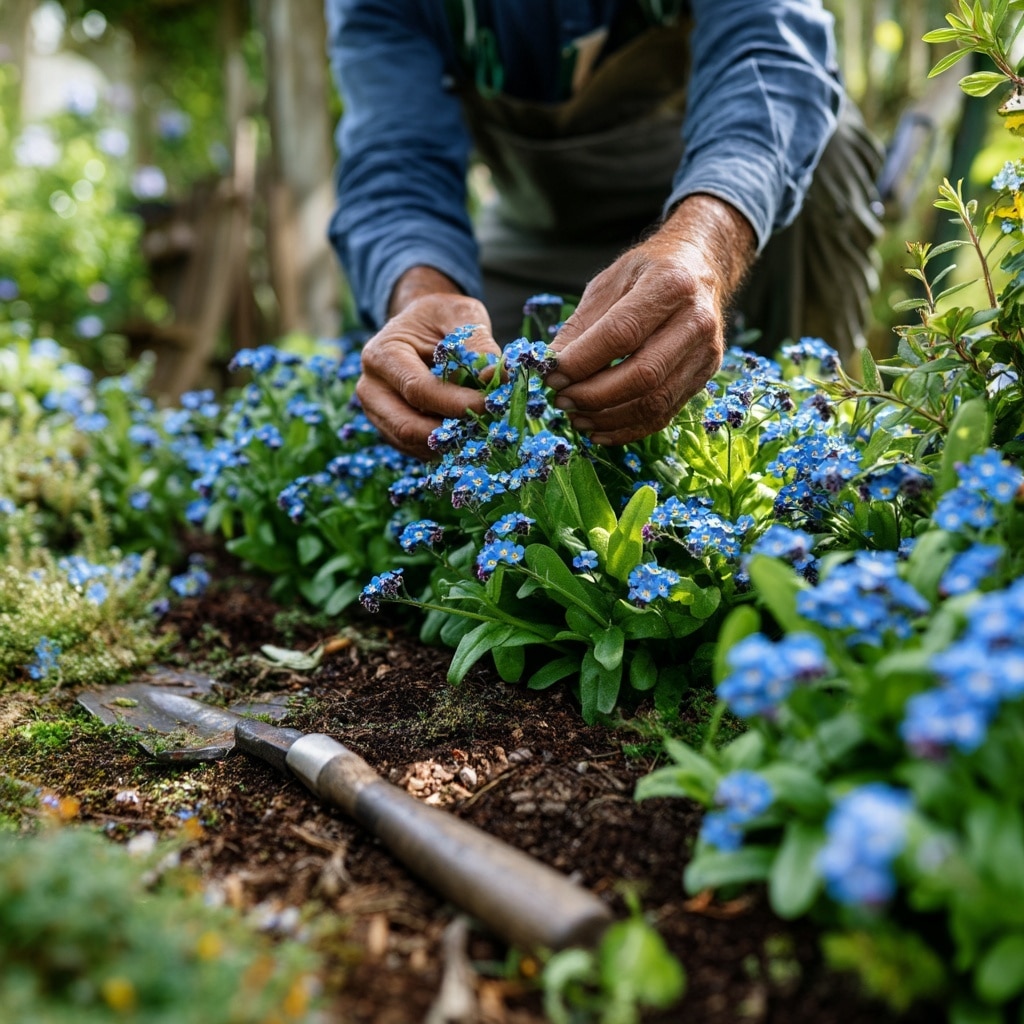
Caring for forget me not flowers is refreshingly simple, making them a great choice for low-maintenance gardens. With just a little seasonal upkeep, these plants will continue to brighten your landscape year after year.
Deadheading and Controlling Spread
One of the main chores is deadheading — removing spent blooms before they go to seed. This helps reduce unwanted self-seeding, especially if you don’t want forget me not flowers spreading too aggressively. In some regions, they can naturalize quickly and crowd out other plants if left unchecked.
If you enjoy their wild, self-sowing charm, feel free to let them scatter seed freely. Just be aware that they can pop up in unexpected spots next season.
Dividing Older Plants
While most forget me nots are biennials, some can live longer under the right conditions. If your plants return for a third or fourth year, you can divide them every 3 to 5 years in early fall or after flowering in spring. This helps refresh older clumps and prevents overcrowding.
To divide, gently dig up the root ball, separate it into smaller clumps by hand, and replant them in moist, well-prepared soil.
Seasonal Cleanup
In late summer or early fall, remove any dead or declining foliage. This helps prevent disease and tidies up the garden for the next planting season. You can also mulch around the base to retain moisture and suppress weeds.
How to Propagate Forget-Me-Not Flowers
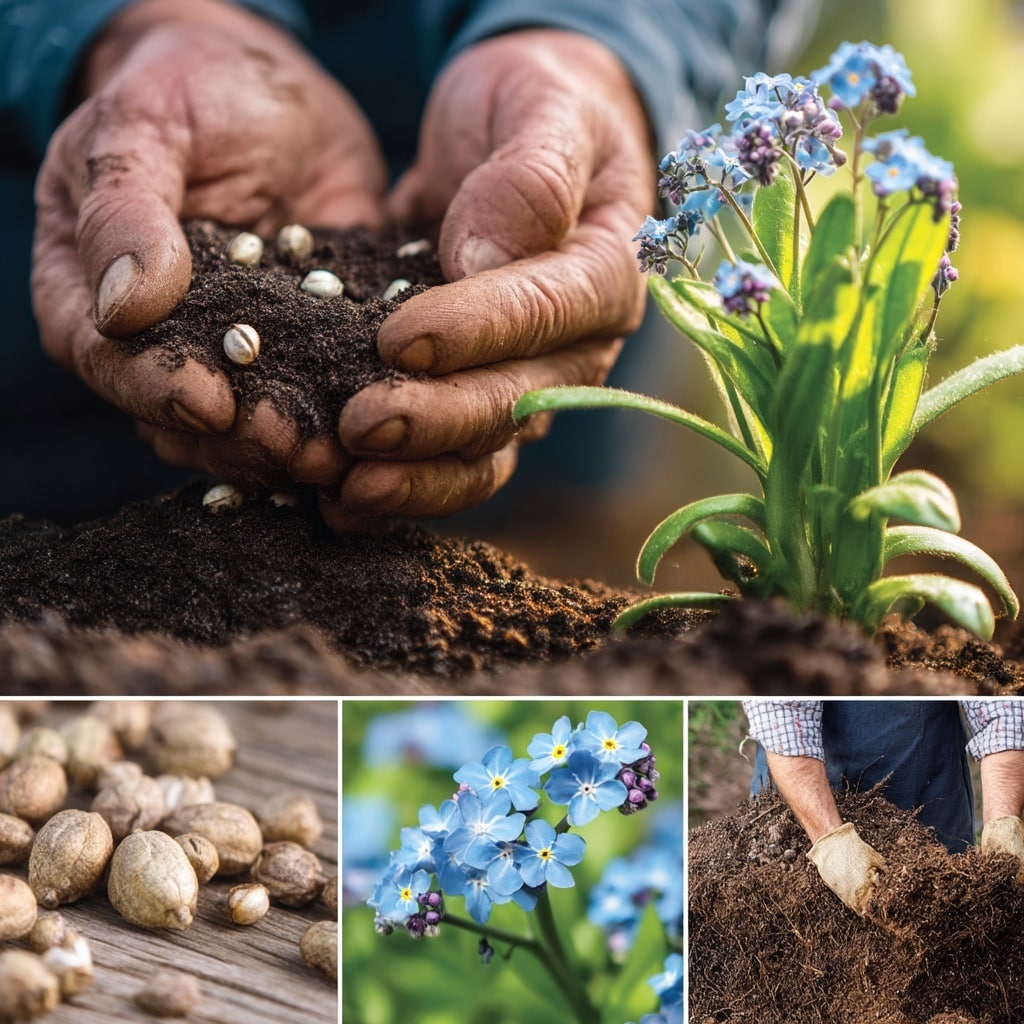
If you’d like to expand your patch of forget me not flowers, you’re in luck — these dainty blooms are incredibly easy to propagate. Whether you start from seed or divide existing plants, the process is beginner-friendly and rewarding.
Propagation by Seed
Most gardeners grow forget me not flowers from seed, either by letting them self-sow or by direct sowing in midsummer. These biennials typically bloom in their second year, but if started early indoors, you may see flowers in the first season.
Direct Sowing:
- Loosen and lightly rake the soil surface.
- Sprinkle seeds evenly across moist soil, or space them about 4 inches apart.
- Do not bury the seeds — they need light to germinate.
- Water gently and keep soil consistently moist.
Seedlings usually sprout in the fall and overwinter as rosettes, then bloom the following spring.
Starting Indoors:
- Start seeds 8 to 10 weeks before your last frost date.
- Use a seed-starting mix in small trays or pots.
- Press seeds into the surface; don’t cover.
- Keep in a warm, dark spot (64–68°F) and maintain even moisture.
- Germination takes 2–3 weeks.
- Once seedlings have two sets of true leaves, begin hardening off before transplanting outdoors.
Propagation by Division
Although forget me not flowers are biennial, some varieties behave like short-lived perennials. If your plants return for a second or third year, you can divide them in early fall or after spring flowering.
Here’s how:
- Dig up the entire clump carefully.
- Gently pull apart the roots by hand into smaller sections.
- Replant each section in well-prepared soil and water thoroughly.
Transplanting Tips
If you’re transplanting seedlings or nursery plants:
- Choose a site with moist, well-draining soil and partial shade.
- Water thoroughly before and after transplanting.
- Dig a hole just large enough for the root ball.
- Backfill and press gently; avoid piling soil against the stems.
With a little care, your transplanted forget me not flowers will settle in quickly and bloom beautifully next season.
Best Uses for Forget-Me-Not Flowers in Your Garden
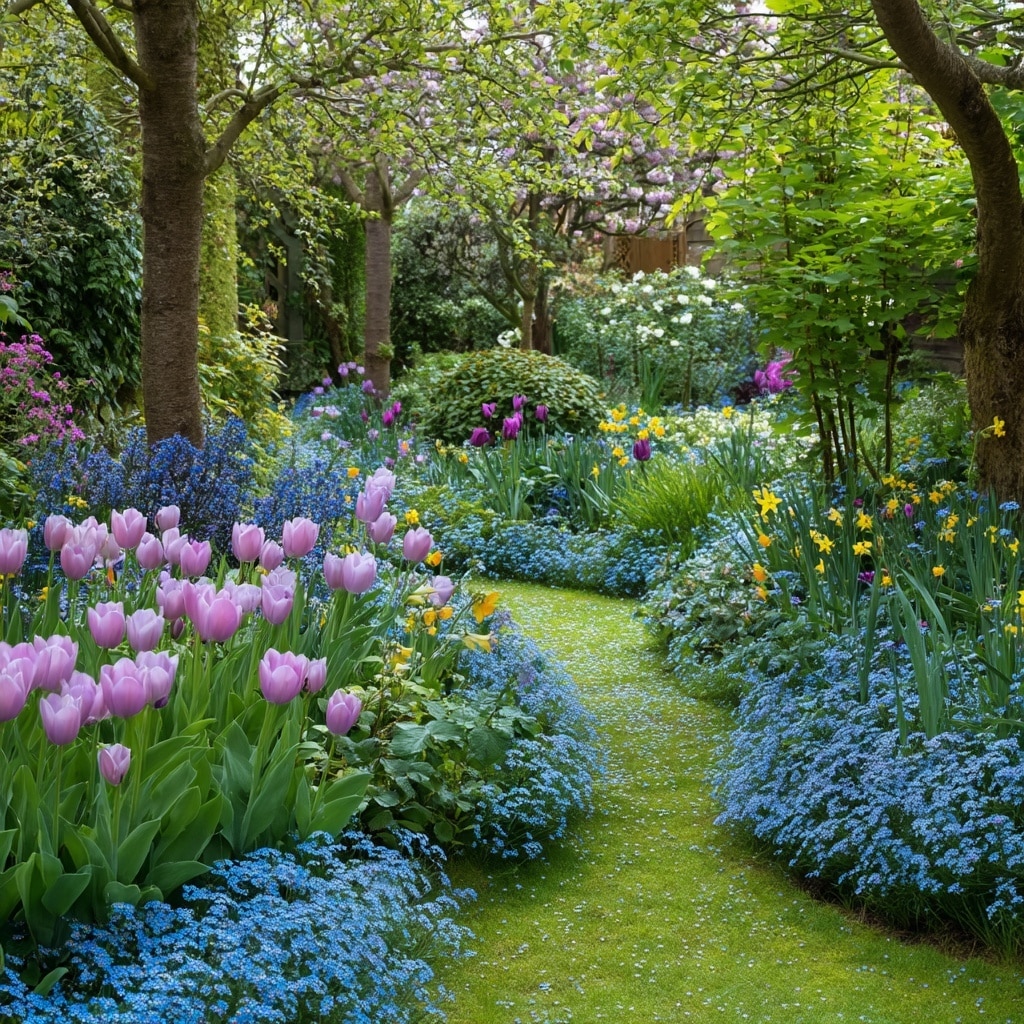
Whether you’re designing a romantic cottage garden or just want a splash of early color, forget me not flowers are endlessly versatile. Their soft, natural look complements nearly every style and planting scheme.
Underplanting Spring Bulbs
One of the most classic and effective ways to use forget me not flowers is as a carpet beneath tulips, daffodils, or hyacinths. As the bulbs rise and bloom, the blue, pink, or white forget-me-nots create a soft underlayer that enhances visual interest.
Edging and Borders
Thanks to their compact height and spreading habit, they make excellent border plants along pathways, raised beds, or flower garden edges. When massed, they create a gentle wave of color that guides the eye through the landscape.
Ground Cover on Slopes or Shady Areas
Forget me not flowers are perfect for naturalizing shady corners, woodland gardens, or sloped areas where other plants may struggle. They self-seed easily and form dense mats of color without much effort.
Container Accents
Use them in containers to soften the edges of pots or as companions to upright spring bloomers like snapdragons or pansies. They’re especially charming in rustic containers or vintage-style planters.
Pollinator Gardens
Bees and butterflies are drawn to forget me not flowers, especially the blue varieties. Add them to your pollinator-friendly garden to support local wildlife and encourage healthy plant pollination.
Conclusion
Forget me not flowers are more than just a symbol of remembrance — they’re practical, beautiful, and easy to grow in gardens of all sizes. With their soft textures, vibrant blooms, and ability to reseed naturally, they offer long-lasting charm with minimal effort. Whether tucked under spring bulbs, planted en masse in borders, or grown in containers, they bring timeless appeal to any landscape.
Give them the right conditions — partial shade, moist soil, and a little space to spread — and these resilient little flowers will return year after year with their gentle message: don’t forget me.