
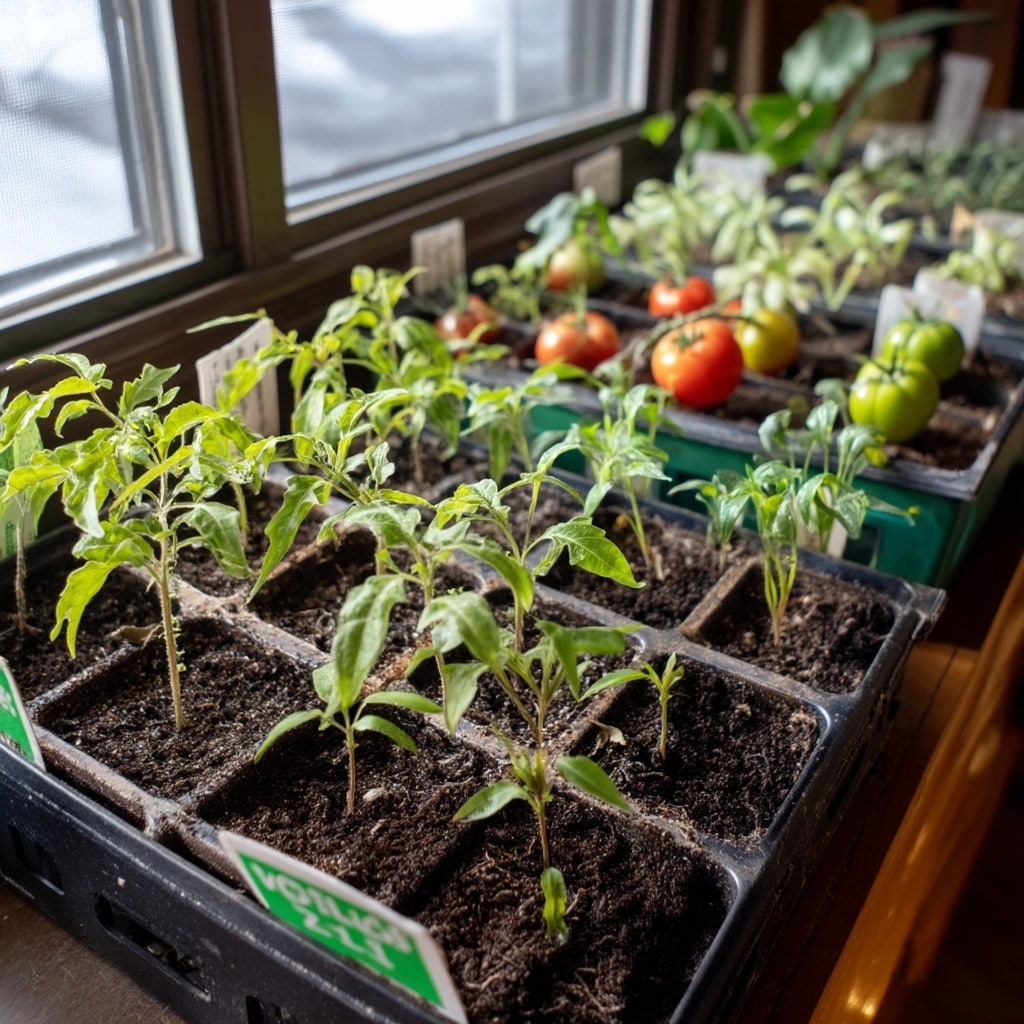
Seed starting indoors is one of the most rewarding and practical steps any gardener can take to get a head start on the growing season. Whether you’re a beginner or seasoned green thumb, learning how to start seeds inside can save you money, improve crop success, and allow you to enjoy fresh produce earlier in the season. By giving your plants a strong start, you’ll be setting the stage for a healthy, productive garden all year long.
In this guide, we’ll walk through everything you need to know about seed starting indoors—from timing and tools to the best vegetables to start inside. Plus, we’ll share expert tips for hardening off seedlings and knowing exactly when they’re ready to go into the ground.
Table of Contents
🌿 Why Seed Starting Indoors Is Worth It

If you’ve ever asked yourself whether seed starting indoors is really worth the effort, the answer is a confident yes. Starting seeds inside isn’t just about getting a jump on the season—it’s also about saving money, ensuring healthier plants, and giving you more control over your garden’s success.
Here are the top reasons why gardeners choose to start seeds indoors:
✅ Extend the Growing Season
Starting seeds indoors allows you to begin the growing process weeks or even months before your outdoor soil is ready. This means your vegetables are more mature by transplant time and will start producing sooner.
✅ Save Money
Buying nursery seedlings can add up fast, especially if you grow a lot of vegetables. Starting from seed is far cheaper, especially when you consider the long-term return. One packet of seeds can produce dozens of plants at a fraction of the cost of store-bought seedlings.
✅ Better Variety and Control
Nurseries offer limited plant varieties. With seed starting indoors, you can choose heirloom, organic, or rare varieties that you won’t find locally. You also control what soil, fertilizer, and pest management are used, ensuring a healthier garden.
✅ Earlier Harvests and Faster Growth
Because your plants already have a solid root system and leaf growth by the time they go outdoors, they’ll produce fruit faster than direct-sown plants. That means enjoying tomatoes, cucumbers, and more while others are still waiting on blooms.
✅ Healthier Plants from the Start
Growing your own seedlings allows you to monitor plant health from day one. No surprises, no pests hitchhiking from the store, and no mystery chemicals. You’ll know exactly how each plant was nurtured.
Seed starting indoors gives you an edge—on timing, cost, and success. And with just a little planning, anyone can do it!
🗓️ When to Start Seeds Indoors
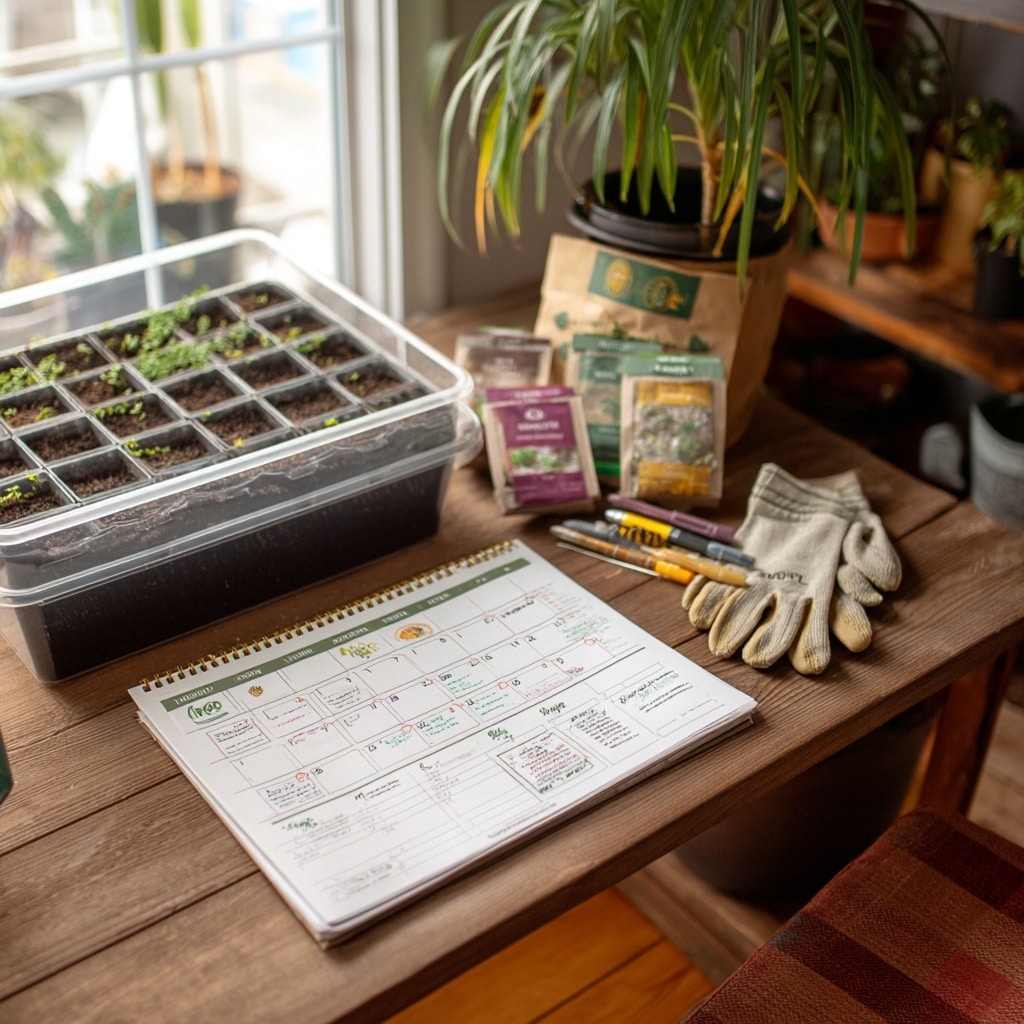
Timing is everything when it comes to seed starting indoors. Starting too early can lead to leggy, root-bound plants, while starting too late might not give your vegetables enough time to mature before the end of the season.
📅 General Rule of Thumb
Most seeds should be started 6 to 8 weeks before your area’s last expected frost date. This gives your seedlings enough time to grow strong before it’s time to transplant them outdoors.
💡 Example: If your last frost date is April 20, aim to start seeds between February 20 and March 6.
You can check your last frost date by ZIP code using tools like the USDA Plant Hardiness Zone Map.
🌡️ Consider Your Climate
Gardeners in warmer zones (like USDA zones 8–10) may be able to start seeds even earlier, giving their plants a significant head start. In colder regions, stick to the 6–8 week rule or slightly longer for slow-growing crops like peppers or eggplant.
🪴 Some Plants Benefit from a Longer Head Start
While 6–8 weeks is average, some vegetables may require a 10–12 week head start, especially:
- Peppers
- Eggplant
- Leeks
- Onions
Just be prepared to pot them up into larger containers if they outgrow their starting cells before it’s time to transplant.
🧰 What You Need to Start Seeds Indoors
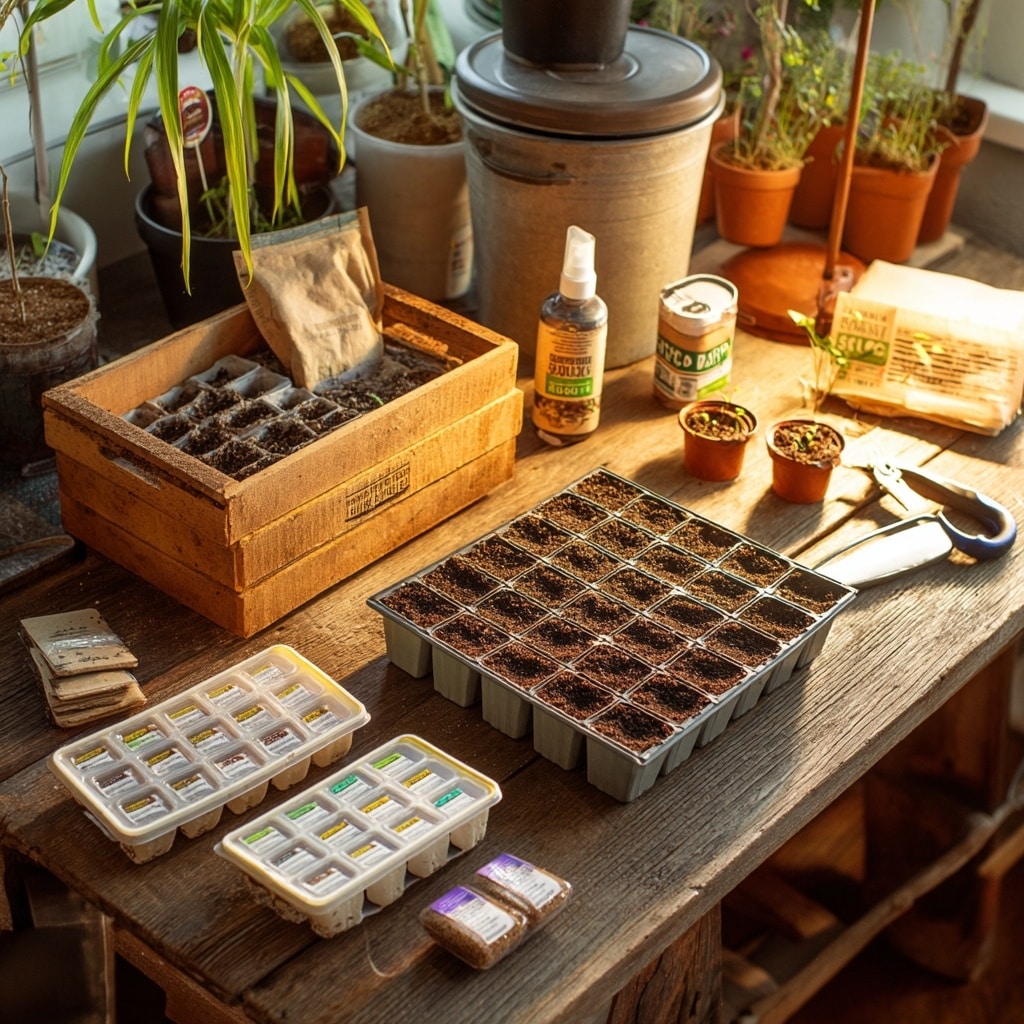
You don’t need a fancy greenhouse or expensive equipment to be successful with seed starting indoors. With a few basic supplies and the right conditions, you can grow strong, healthy seedlings right on your windowsill or kitchen counter.
Here’s what you’ll need to get started:
🪴 1. Containers for Seed Starting
You can get creative here—just make sure whatever you use has good drainage and is deep enough for root growth.
- Reusable seed trays or plug trays are great for starting multiple plants.
- DIY options: Egg cartons, yogurt cups, or repurposed food containers (poke drainage holes at the bottom).
- Biodegradable pots made from peat or coconut coir can be planted directly into the soil, reducing transplant shock.
🌱 2. Potting Mix or Seed-Starting Mix
Don’t use garden soil for seed starting—it’s too dense and may contain pests or diseases. Use a lightweight, well-draining mix designed for seed germination.
- Look for a mix labeled “seed-starting mix” or use mushroom compost for a natural option.
- You can also make your own blend with peat moss, vermiculite, and perlite.
Avoid using fertilizer-heavy soil at this stage. Young seedlings can be burned by too much nutrient content early on.
💡 3. Light Source
Seeds need plenty of light to grow strong. Without it, they become leggy and weak.
- Place trays near a south-facing window that gets 6–8 hours of sunlight.
- If natural light is limited, invest in LED grow lights. These mimic sunlight and provide consistent light for photosynthesis.
- Hang the lights just a few inches above the seedlings, adjusting as they grow.
🌡️ Bonus Tools (Optional but Helpful)
- Heat mat: Keeps soil at the optimal temperature (65–75°F) for faster germination.
- Humidity dome or plastic wrap: Helps retain moisture until seeds sprout.
- Labels: Keep track of what you planted and when—trust us, you’ll forget!
🧑🌾 Step-by-Step: How to Start Seeds Indoors
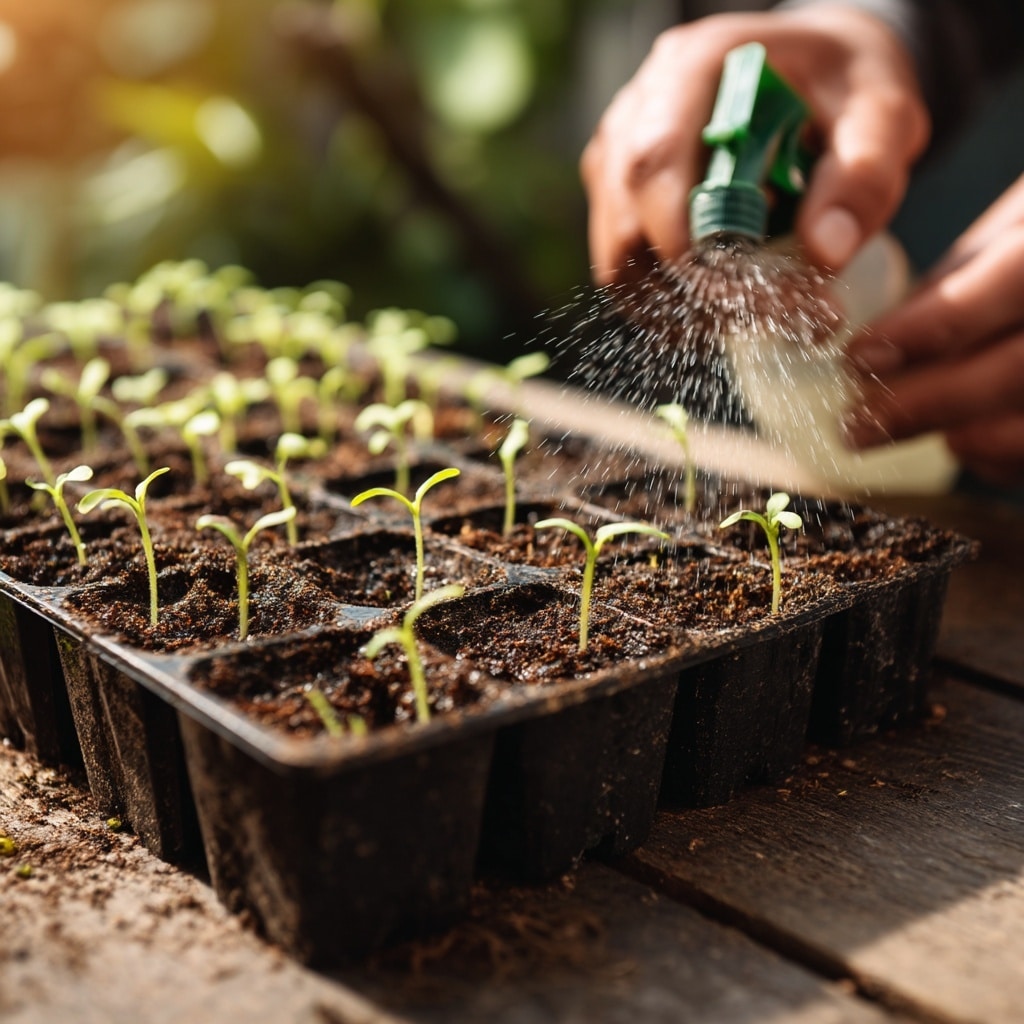
Once you’ve gathered your supplies, it’s time to put them to use. While seed starting indoors is a simple process, following these best practices will help ensure strong germination and healthier transplants.
1. 🌾 Check Planting Depth
Every seed type has specific depth requirements. Too deep, and the seed might not sprout. Too shallow, and it could dry out or wash away.
- Read the seed packet—it will tell you the recommended depth.
- A general rule: plant seeds two to three times as deep as their size.
2. 🏷️ Label Your Seeds
It’s easy to forget which tray holds which variety once everything is sprouting. Use labels or markers to keep things organized.
- Write the plant name and date planted on each label.
- Waterproof markers or plant tags work best to avoid fading.
3. 💧 Water Gently and Thoroughly
After planting, give your seeds a good initial soak—but not a flood. The goal is to moisten the soil without drowning the seeds.
- Water from the bottom by setting trays in a shallow pan of water for 20–30 minutes.
- Or use a spray bottle or watering can with a fine nozzle to moisten the surface.
Keep soil consistently damp but not soggy throughout the germination stage.
4. ☀️ Provide Ample Light and Warmth
Place your seed trays in a sunny location or under grow lights immediately after planting. Seeds don’t need light to germinate, but seedlings do.
- Maintain a temperature of 65–75°F for most vegetables.
- Use a heat mat if needed for heat-loving plants like tomatoes and peppers.
- Keep lights on for 12–16 hours per day and close to the seedlings (1–2 inches above) to prevent legginess.
5. 🕒 Monitor and Thin Seedlings
Once your seeds sprout, keep an eye on their growth.
- If more than one seed germinates per cell, thin them out by snipping the weaker ones at the soil line.
- This allows the strongest seedling to grow without competition.
🥕 Best Vegetables for Seed Starting Indoors
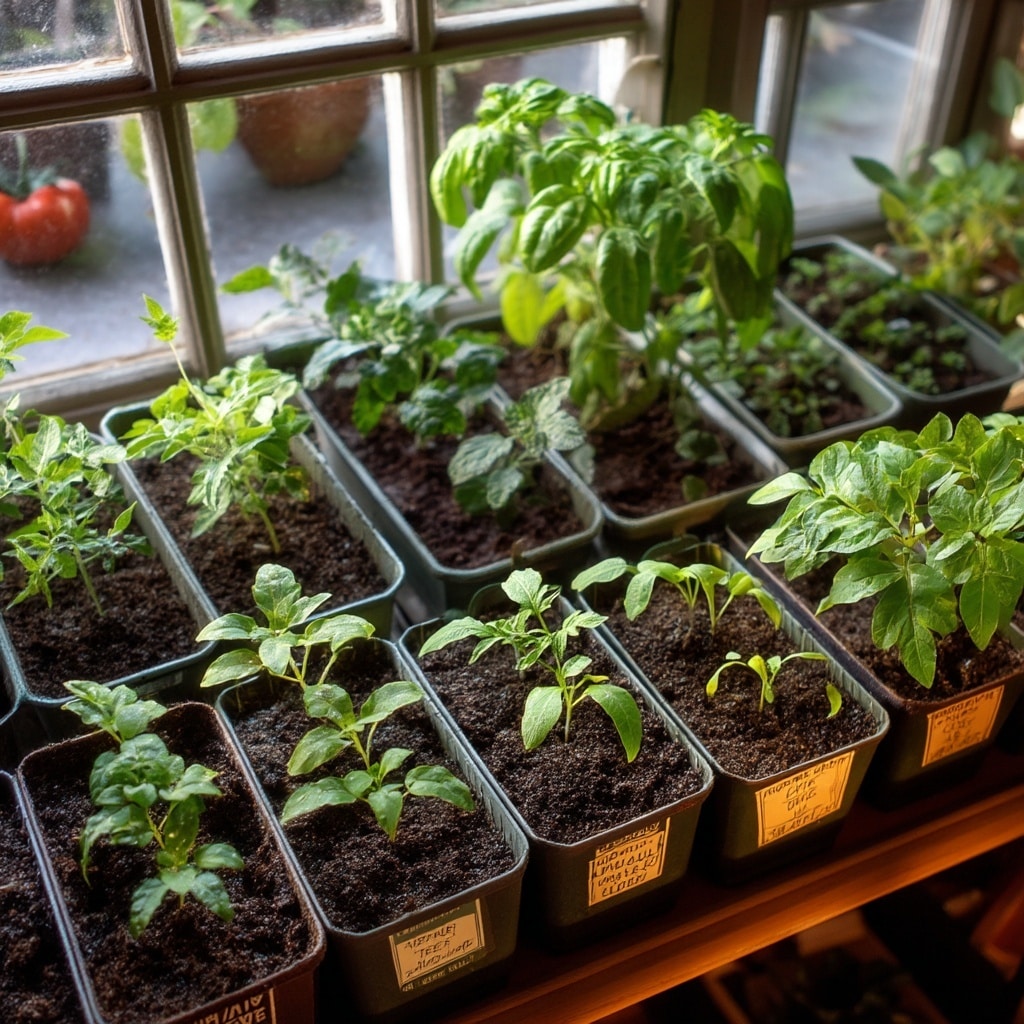
Not all vegetables are suited for transplanting. Some do best when sown directly into the garden, while others thrive when started indoors. When it comes to seed starting indoors, these are the crops that give you the biggest rewards for your effort.
🥦 1. Cruciferous Vegetables (Cool-Season Crops)
These include broccoli, cauliflower, cabbage, and brussels sprouts. They have a long growing season and are sensitive to heat, so an early indoor start is ideal.
- Start indoors 8 weeks before your last frost.
- Keep them in a cooler indoor spot—they don’t like high temperatures.
- Transplant outdoors when soil temps are around 50°F.
🛑 Tip: Cruciferous plants hate competition. Use mulch (like the Back to Eden method) to suppress weeds and retain moisture.
🍅 2. Tomatoes, Cucumbers, Melons, and Zucchini (Warm-Season Crops)
These are heat-loving crops that thrive with an early indoor start. While their seed packets might say 60–70 days to maturity, that’s often from transplant—not from seed.
- Start indoors 6–8 weeks before your last frost.
- Use large pots or transplant them once into larger containers before they outgrow seed trays.
- Maintain warm soil temps (70–80°F) for best germination.
⚠️ Always harden off before moving these outdoors—they’re sensitive to temperature shock.
🍆 3. Eggplant
Eggplant requires a long, warm growing season and does much better indoors than direct-seeded outside.
- Start seeds 8–10 weeks before your last frost.
- Soak seeds in warm water for 24 hours before planting to improve germination.
- Keep them warm and give plenty of light—eggplants are sun-lovers!
🌶️ 4. Peppers
Peppers—both sweet and hot—are notoriously slow to germinate and grow. Starting them indoors is almost essential in cooler zones.
- Begin 10–12 weeks before last frost, especially in short growing seasons.
- Keep indoor temps around 75°F for strong germination.
- Use bottom heat (heat mats) for best results.
🌡️ Cold temps can stunt pepper growth. Only transplant when nighttime lows stay above 55°F.
🌱 5. Peas (With Care)
While peas are often direct-sown, you can start them indoors—just be gentle when transplanting.
- Start 3–4 weeks before your last frost.
- Use biodegradable pots to avoid disturbing roots during transplant.
- Harden off thoroughly, and plant outdoors as soon as the soil can be worked.
🌤️ Hardening Off Seedlings Before Transplanting
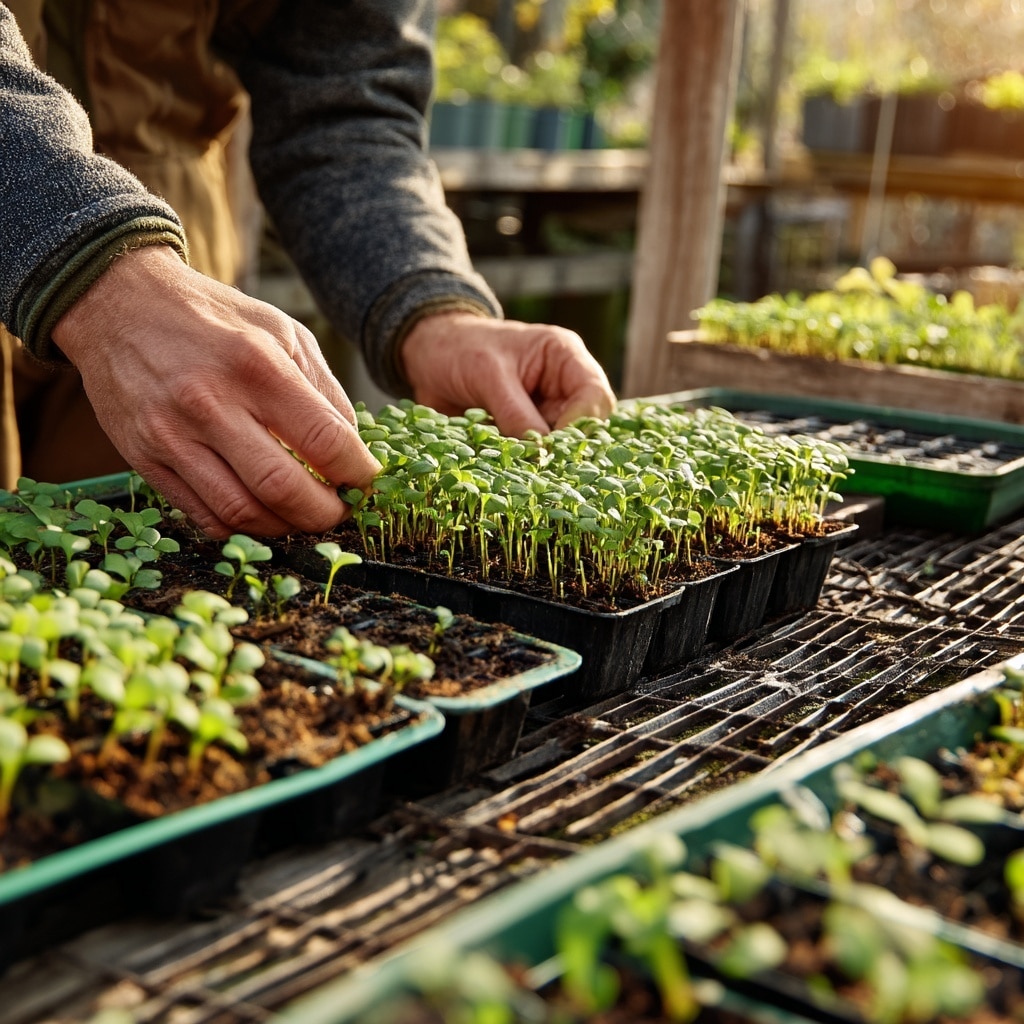
After weeks of seed starting indoors, it might be tempting to rush your healthy seedlings straight into the garden—but don’t skip this step. Hardening off is essential to help your plants adjust to life outside and avoid transplant shock.
🌱 What Is Hardening Off?
Hardening off is the gradual process of introducing indoor-grown seedlings to outdoor conditions like sunlight, wind, and fluctuating temperatures. Plants raised indoors are tender and not used to the intensity of real-world conditions.
Without hardening, even strong seedlings can become sunburned, wind-damaged, or stunted when moved outdoors too abruptly.
🔄 How to Harden Off Seedlings
Here’s how to transition your plants successfully over 7–10 days:
Day 1–2:
- Place seedlings in a shaded, sheltered spot outdoors for 1–2 hours.
- Bring them back inside after the session.
Day 3–4:
- Increase time outside to 3–4 hours.
- Start exposing them to early morning or late afternoon sun.
Day 5–6:
- Leave them outside for 6+ hours in partial sun.
- Begin exposing to light breezes (or mimic wind indoors by gently brushing your hand across the tops daily).
Day 7–10:
- Leave outside for a full day, including some direct sunlight.
- On final day, leave them overnight if temperatures are above 50°F.
✅ Only Harden Off Warm-Season Crops
Cool-season vegetables (like broccoli or cabbage) are more cold-tolerant and don’t need as long to acclimate. But warm-weather plants like tomatoes, peppers, and eggplant should always be hardened off before planting.
🌾 When and How to Transplant Seedlings
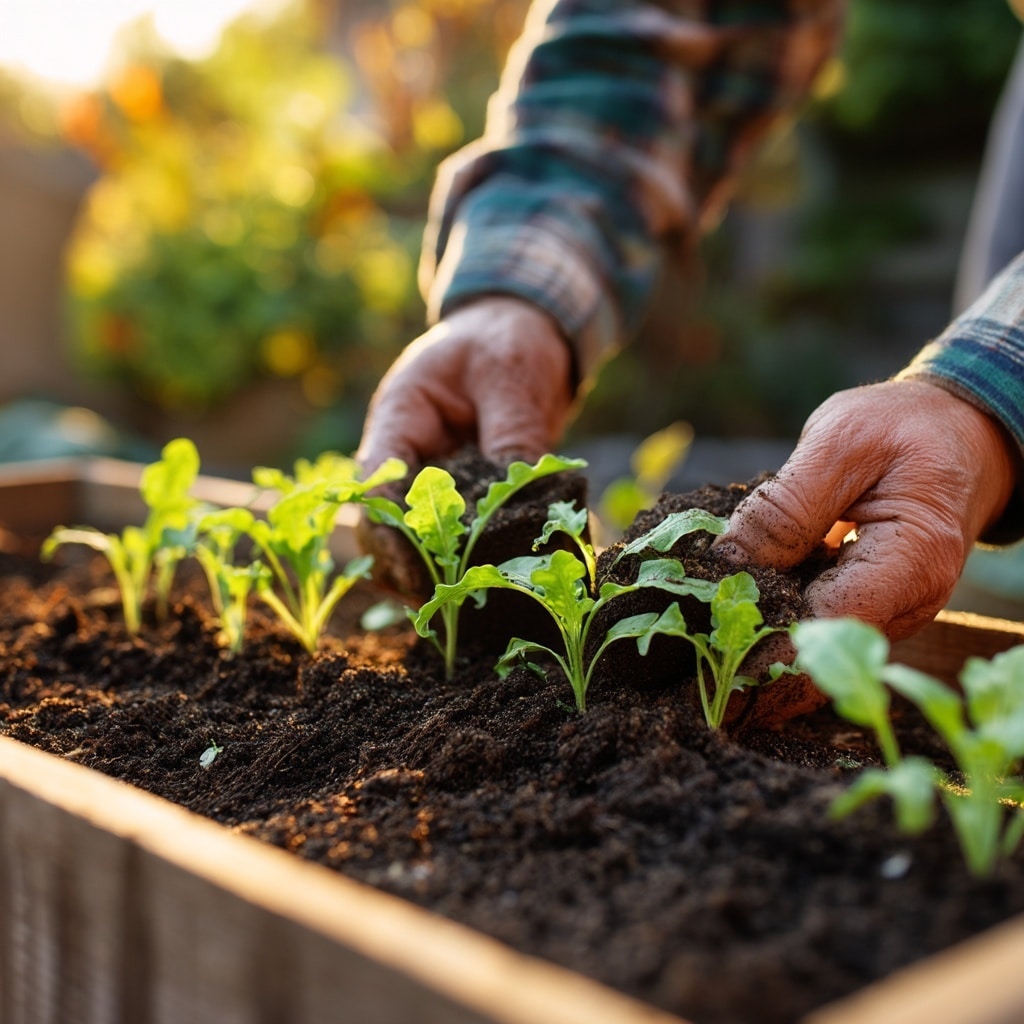
Once your seedlings are strong, hardened off, and the weather is right, it’s time to move them into their permanent home. This is the moment all your seed starting indoors work has been leading up to—successful transplanting.
🕒 When to Transplant
Two main factors determine timing:
1. Weather Conditions
- Warm-season crops like tomatoes, peppers, and melons should be transplanted after all danger of frost has passed and when soil temps are 60–70°F.
- Cool-season crops such as broccoli and cabbage can go out earlier, as long as the soil is at least 50°F and consistently above freezing at night.
🌡️ Use a soil thermometer to check temperatures at planting depth.
2. Seedling Age and Maturity
- Cool-weather crops: Transplant when 3–4 weeks old and they have 2–3 sets of true leaves.
- Warm-weather crops: Wait until 6–8 weeks old, with strong stems and 4–6 sets of true leaves.
🪴 How to Transplant Seedlings Properly
Follow these steps to avoid shock and encourage healthy root establishment:
- Choose a calm, overcast day or transplant in the late afternoon to avoid harsh sun.
- Water seedlings thoroughly a few hours before transplanting.
- Dig a hole twice the width of the root ball and as deep as needed.
- Gently remove the seedling from its container, disturbing roots as little as possible.
- Plant at the same depth as it was in the tray (except for tomatoes, which can be buried deeper).
- Firm soil around the base and water well to settle roots.
- Add a layer of mulch to retain moisture and reduce transplant stress.
By transplanting at the right time and using the proper technique, your indoor-
🌼 Final Thoughts on Seed Starting Indoors
Seed starting indoors isn’t just a method—it’s a mindset. It gives you control over your garden, allows you to grow varieties you love, and gets your hands in the soil long before spring arrives. Whether you’re starting broccoli in a windowsill or nurturing heat-loving peppers under grow lights, the rewards are well worth the effort.
With the right timing, tools, and care, you can raise healthy seedlings and give your garden its strongest possible start.
Happy planting—and may your harvests be bountiful!