
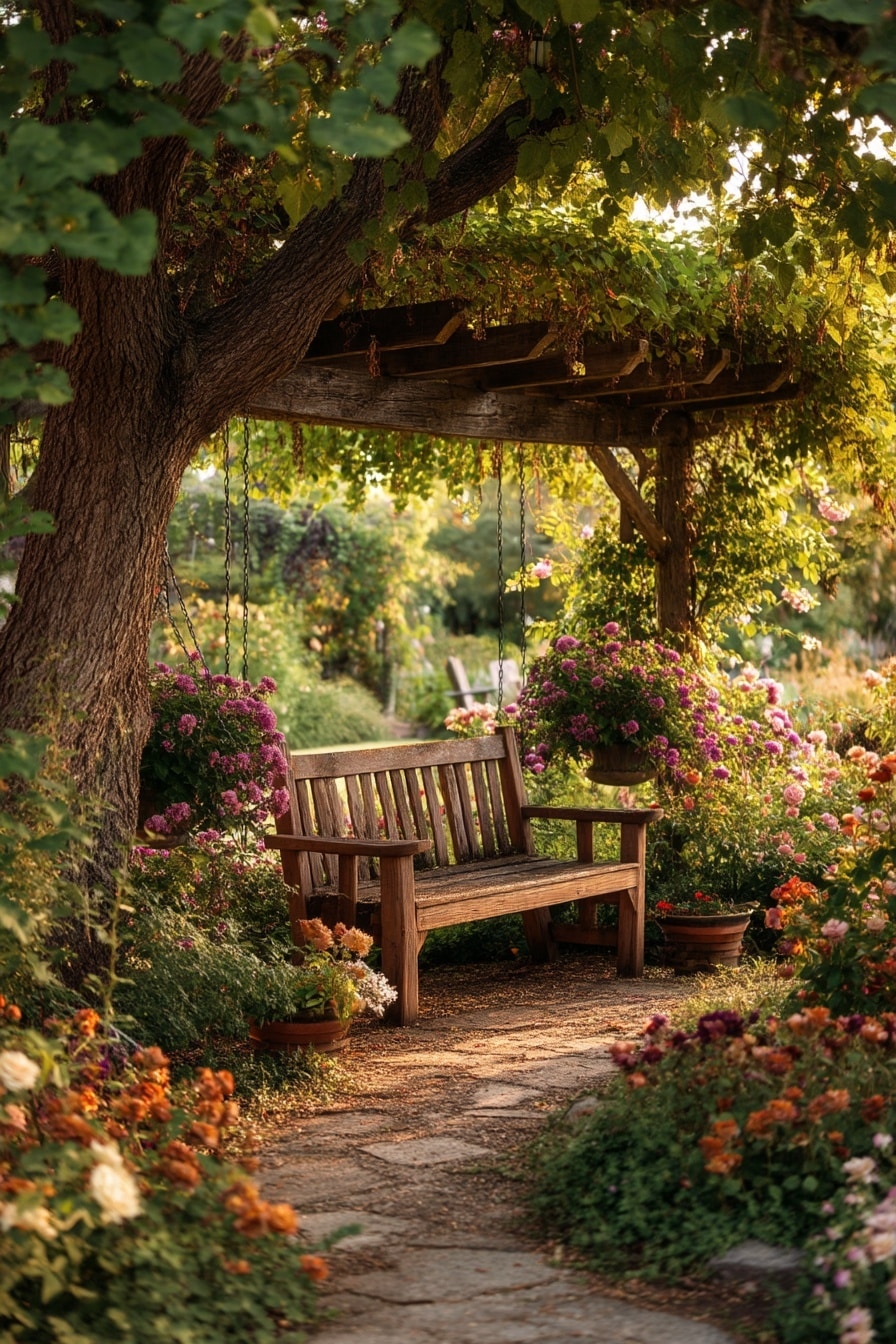
Rustic gardens bring warmth, texture, and natural beauty into outdoor spaces by blending untamed plantings with weathered materials and vintage charm. If you love the look of old farmhouses, winding stone paths, and overflowing flower beds, rustic gardens offer a timeless design style that feels welcoming and relaxed.
Unlike highly structured modern landscapes, rustic gardens celebrate imperfection. They combine natural stone, reclaimed wood, heirloom plants, and soft, layered greenery to create a lived-in atmosphere. Whether you have a sprawling backyard or a compact patio, you can incorporate rustic touches that make your garden feel authentic and inviting.
In this guide, you’ll find six practical and inspiring rustic garden design ideas to help you create a space that feels both grounded and beautiful.
Table of Contents
1. Incorporate Natural Stone Pathways

One of the defining elements of rustic gardens is the use of natural materials, especially stone. A winding stone pathway instantly creates a countryside feel while adding structure to your landscape.
Instead of perfectly aligned pavers, opt for irregular flagstone, fieldstone, or cobblestone. The slightly uneven texture enhances the charm of rustic gardens and makes the space feel organic rather than engineered.
Tips for Designing a Rustic Stone Path
- Choose stones with varied shapes and earthy tones
- Allow groundcovers like creeping thyme or moss to grow between stones
- Let the path gently curve rather than forming sharp angles
- Edge the walkway with native grasses or wildflowers
Stone pathways also improve functionality. They guide visitors through planting areas while protecting soil from compaction. For added visual interest, consider lining the edges with flowering perennials that soften the hardscape and enhance the layered look rustic gardens are known for.
If your yard is small, even a short stepping-stone path from the patio to a garden bed can dramatically enhance the overall aesthetic.
2. Use Reclaimed Wood and Vintage Accents
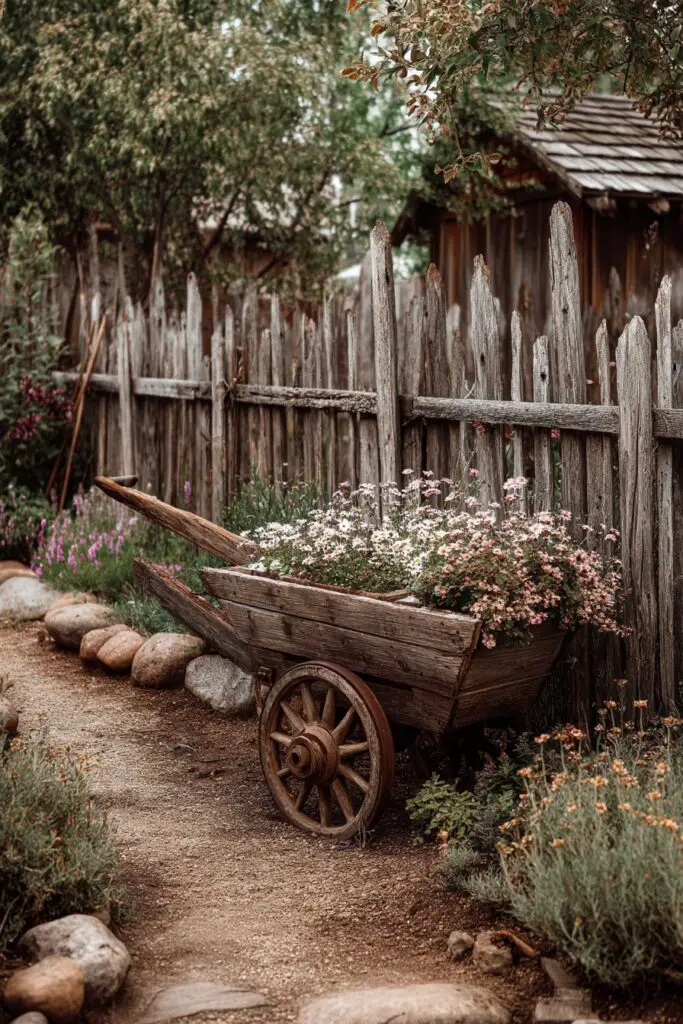
Rustic gardens feel authentic when they incorporate aged materials that tell a story. Reclaimed wood, antique finds, and weathered finishes create the relaxed, countryside atmosphere that defines this style.
Instead of sleek, modern furniture, choose pieces made from distressed timber or wrought iron. Old wooden crates, ladders, and barrels can be repurposed into planters or display shelves. These imperfect details are what make rustic gardens feel lived-in rather than staged.
Ideas for Adding Reclaimed Elements
- Install a reclaimed wood fence or arbor
- Turn an old wheelbarrow into a flower planter
- Use wooden crates for raised herb beds
- Add a weathered bench beneath a tree
The key is balance. Rustic gardens should feel natural, not cluttered. Select a few standout vintage elements and let surrounding greenery soften the look. When wood ages naturally outdoors, it develops texture and character that enhance the overall charm of rustic gardens.
For more ideas on building character into your yard, you might also link internally to an article about DIY garden structures or creative planter ideas on your site.
3. Plant Heirloom Flowers and Native Perennials
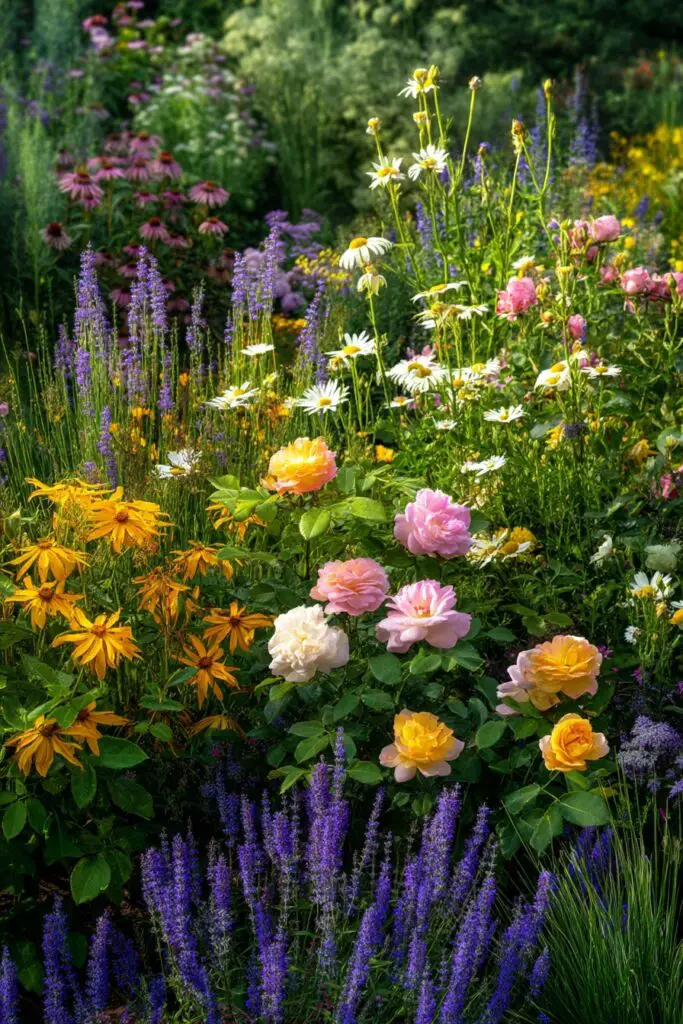
Plant selection plays a major role in shaping rustic gardens. Instead of sleek ornamental grasses or highly structured shrubs, focus on heirloom varieties and native perennials that feel timeless and slightly wild.
Rustic gardens often feature layered planting beds filled with soft textures, gentle color palettes, and blooms that spill naturally over edges. Think of old-fashioned flowers that might surround a farmhouse or country cottage.
Best Plant Choices for Rustic Gardens
- Heirloom roses
- Coneflowers and black-eyed Susans
- Lavender and salvia
- Peonies and hollyhocks
- Native grasses for movement
Mix taller plants toward the back and shorter blooms at the front to create depth. Allow plants to intermingle slightly rather than spacing them in rigid rows. This relaxed arrangement enhances the organic feel that defines rustic gardens.
Native plants also support pollinators and require less maintenance once established. If you have an article on your site about native plants for pollinators or low-maintenance flower beds, linking to it here would strengthen your internal SEO structure.
Layered plantings ensure that rustic gardens look beautiful across seasons, with continuous texture even when certain flowers fade.
4. Add Rustic Water Features
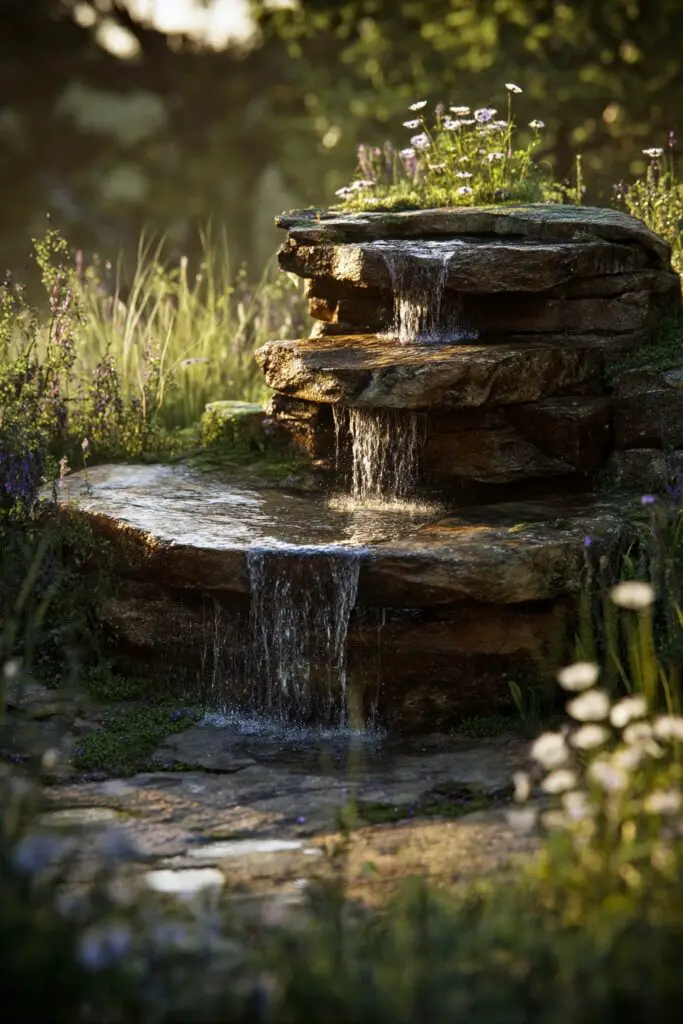
Water elements bring movement and sound into rustic gardens while reinforcing the natural, countryside atmosphere. Instead of sleek fountains or geometric pools, opt for features that feel handmade and slightly aged.
A simple stone fountain, a repurposed wooden barrel turned into a water feature, or even a small wildlife pond can transform rustic gardens into peaceful retreats. The goal is subtle charm rather than bold statement pieces.
Rustic Water Feature Ideas
- A stacked stone fountain with gentle water flow
- A reclaimed barrel converted into a bubbling fountain
- A natural pond edged with rocks and native plants
- A vintage hand pump feature for farmhouse appeal
Position your water feature where it can be enjoyed from a seating area or garden path. Surround it with soft plantings like ferns, ornamental grasses, or flowering perennials to blend it into the landscape.
In rustic gardens, water features should appear as though they’ve always belonged there. Slight irregularities and natural finishes enhance authenticity. Even small spaces can accommodate tabletop fountains or compact barrel features without overwhelming the design.
5. Create Cozy Seating Areas with a Country Feel
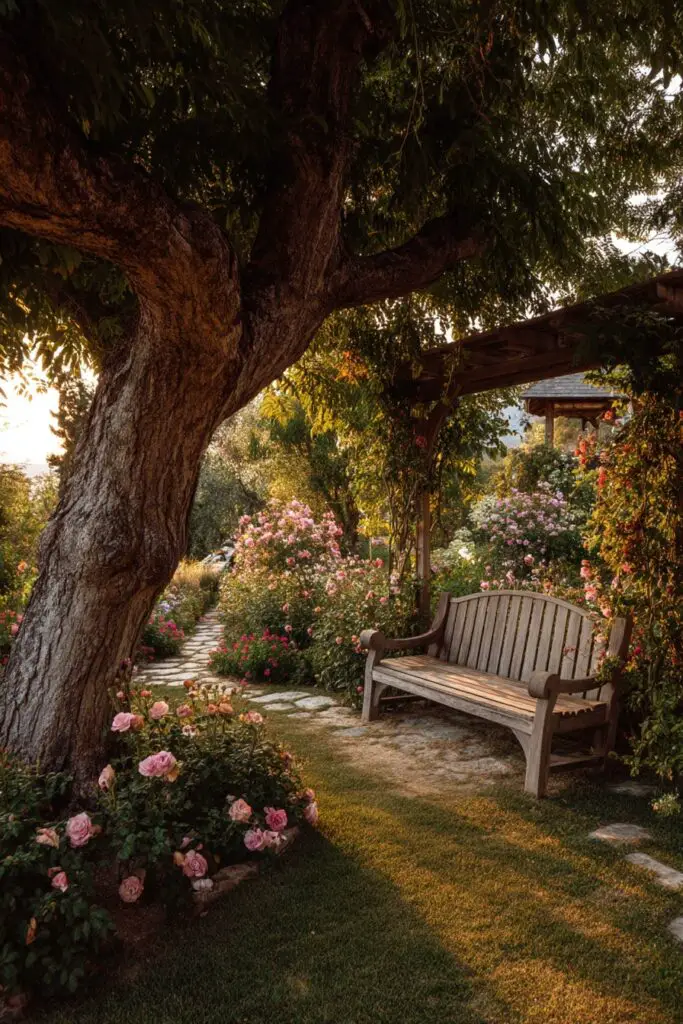
Comfortable seating is essential in rustic gardens because the goal isn’t just visual appeal—it’s creating a space where people want to linger. A thoughtfully placed bench or small patio corner can transform rustic gardens into welcoming outdoor rooms.
Choose materials that reflect the natural character of rustic gardens, such as wood, wrought iron, or stone. Avoid overly polished finishes. Weathered textures help the seating blend seamlessly with surrounding greenery.
How to Design a Rustic Seating Nook
- Place a wooden bench beneath a shade tree
- Add climbing roses or vines to a pergola overhead
- Use outdoor cushions in muted, earthy tones
- Surround the area with layered plantings for privacy
Position seating areas along pathways or near focal points like water features or flower beds. In rustic gardens, seating should feel tucked into nature rather than isolated from it.
If your site includes articles on backyard patio design ideas or pergola landscaping inspiration, linking internally here will strengthen your content structure and keep readers engaged.
Well-placed seating turns rustic gardens from simple landscapes into relaxing destinations.
6. Embrace Natural Borders and Layered Edging
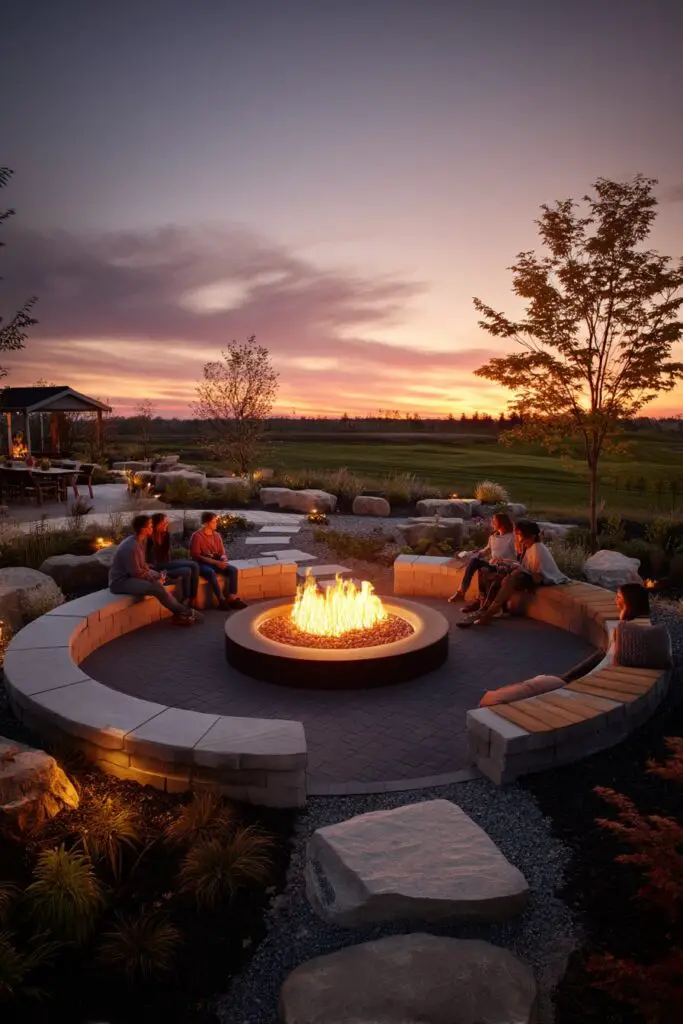
Clean, sharp edging rarely fits the character of rustic gardens. Instead, allow borders to feel soft and blended, using plants and natural materials to create gentle transitions between lawn and garden beds.
Rustic gardens benefit from layered edges that look as though they evolved over time. Stacked stones, fallen logs, or dense plant groupings can define spaces without appearing rigid.
Ideas for Rustic Garden Borders
- Use stacked fieldstone as informal edging
- Line beds with reclaimed logs
- Plant wildflowers along fence lines
- Blend ornamental grasses with flowering perennials
Allow certain plants to spill over pathways or edges slightly. This softens transitions and enhances the relaxed structure that rustic gardens are known for.
Layering is key. Combine taller plants, mid-height shrubs, and low-growing groundcovers to create dimension. When borders feel full and natural, rustic gardens appear lush and established rather than newly installed.
Conclusion
Rustic gardens combine natural materials, heirloom plants, and vintage details to create outdoor spaces that feel warm and welcoming. From stone pathways and reclaimed wood accents to layered flower beds and cozy seating areas, each element works together to form a relaxed, countryside atmosphere.
By focusing on texture, softness, and organic structure, you can design rustic gardens that feel timeless and personal. Start with one feature—such as a winding stone path or a small seating nook—and gradually layer in additional details to build depth and character over time.