
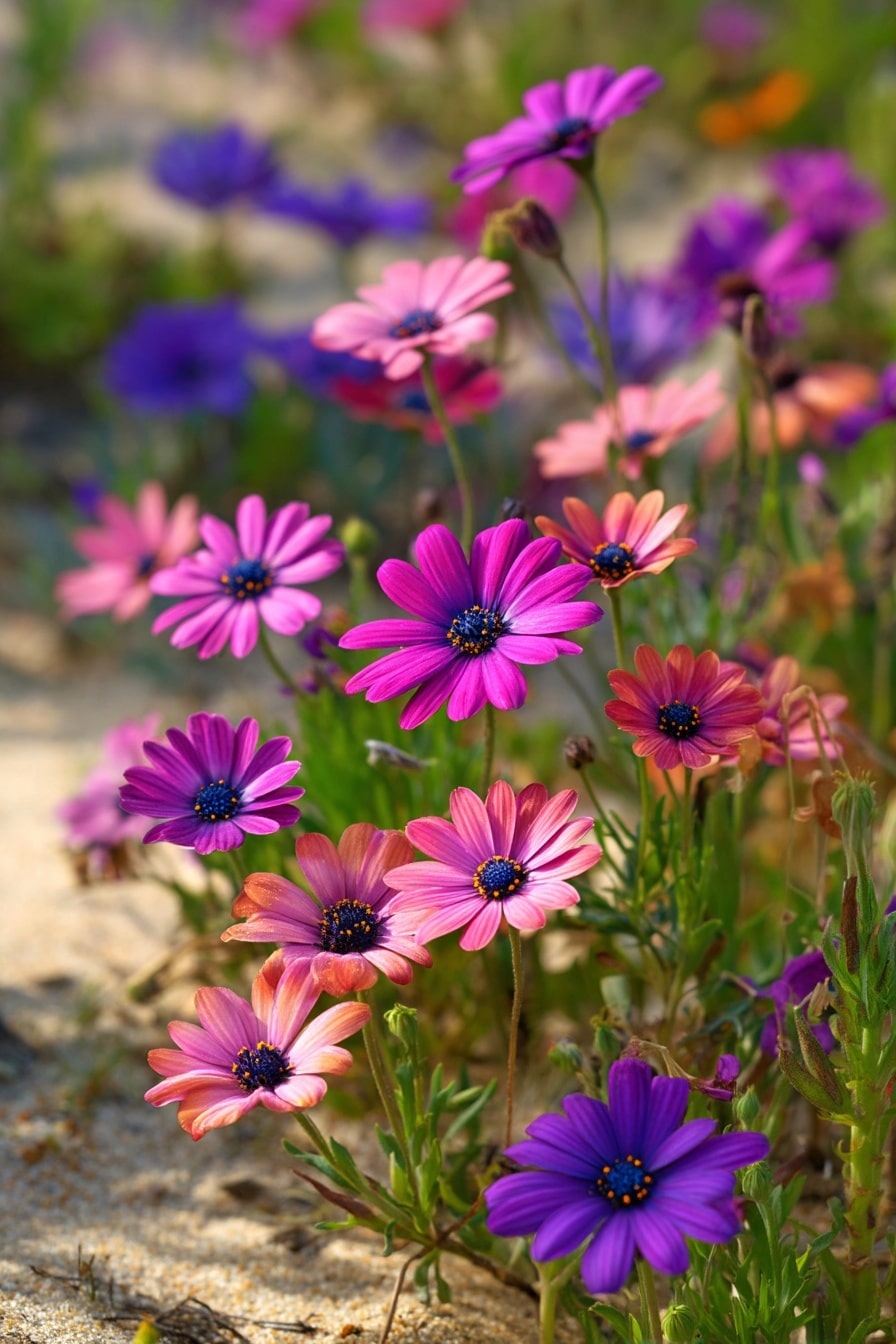
Daisies are among the most cheerful and versatile flowers found in gardens around the world. Known for their classic white petals and sunny yellow centers, these blooms come in many forms—each with unique colors, sizes, and growth habits. If you’re building a flower bed or just love learning about plants, understanding the different types of daisies can help you choose the right variety for your space.
In this article, we’ll look at five common types of daisies, from classic favorites to bold, colorful showstoppers—all ideal for beginner and experienced gardeners alike.
Table of Contents
🌼 1. Shasta Daisy (Leucanthemum × superbum)

Shasta daisies are perhaps the most iconic type of daisies you’ll find in home gardens. With their bright white petals and golden yellow centers, they bloom in tidy clumps and bring a fresh, clean look to perennial borders and cottage-style landscapes.
These hardy perennials typically bloom from early summer through fall and can reach heights between 2 to 4 feet, depending on the variety. Shasta daisies thrive in full sun and well-drained soil, and they’re a great choice for low-maintenance flower beds. Deadheading spent blooms encourages more flowering and keeps the plant looking tidy.
Key Features:
- Bloom time: Early summer to fall
- Height: 2–4 feet
- Sun: Full sun
- USDA Zones: 5–9
- Best for: Perennial borders, pollinator gardens, cut flower arrangements
Whether planted in masses or mixed with other perennials, Shasta daisies offer lasting color and easy care—making them a favorite for gardeners of all levels.
🌺 2. Gerbera Daisy (Gerbera jamesonii)

Among all daisies, Gerbera daisies are the showstoppers. Known for their large, vividly colored blooms, they come in striking shades of red, orange, pink, yellow, and even bi-color varieties. These eye-catching flowers are often used in bouquets, but they can also add a bold pop of color to flower beds, containers, or indoor displays.
Gerbera daisies prefer full sun to partial shade and well-drained, rich soil. In cooler zones, they’re typically grown as annuals or brought indoors during colder months. Their blooms rise above the foliage on sturdy stems, making them excellent as cut flowers.
Key Features:
- Bloom time: Late spring to fall
- Height: 10–18 inches
- Sun: Full sun to partial shade
- USDA Zones: 8–11 (annual elsewhere)
- Best for: Containers, bouquets, bright garden borders
With their dramatic colors and bold structure, Gerbera daisies are perfect for gardeners who want a vibrant, modern look in their floral displays.
🌼 3. Oxeye Daisy (Leucanthemum vulgare)
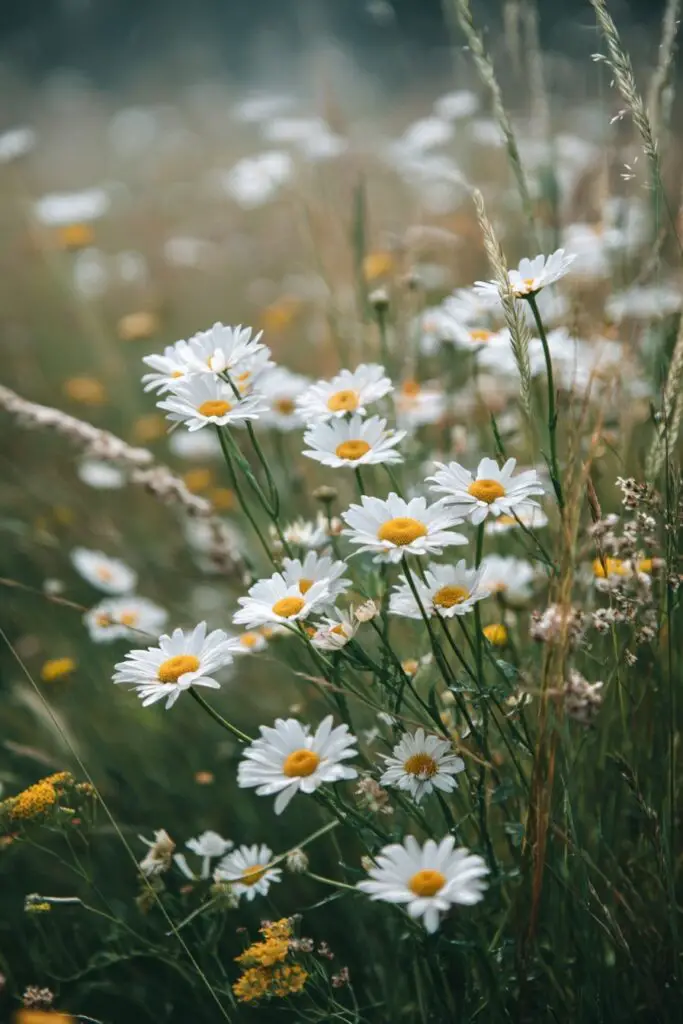
Oxeye daisies are a classic wildflower often seen naturalizing in meadows, along roadsides, and in open fields. They resemble the Shasta daisy but tend to be smaller and more delicate in appearance. With narrow white petals and a bright yellow center, they bring a charming, informal feel to any garden.
These daisies are hardy and self-seeding, which makes them excellent for naturalistic plantings or low-maintenance wildflower gardens. However, in some regions, they’re considered invasive—so it’s important to check local guidelines before planting.
Oxeye daisies thrive in full sun and poor to average soil. Once established, they require little care and can tolerate drought, making them a favorite among eco-conscious gardeners.
Key Features:
- Bloom time: Late spring to midsummer
- Height: 1–3 feet
- Sun: Full sun
- USDA Zones: 3–9
- Best for: Wildflower meadows, cottage gardens, pollinator habitats
For a more natural look, Oxeye daisies add a carefree charm and support beneficial insects like bees and butterflies.
🌸 4. African Daisy (Osteospermum)
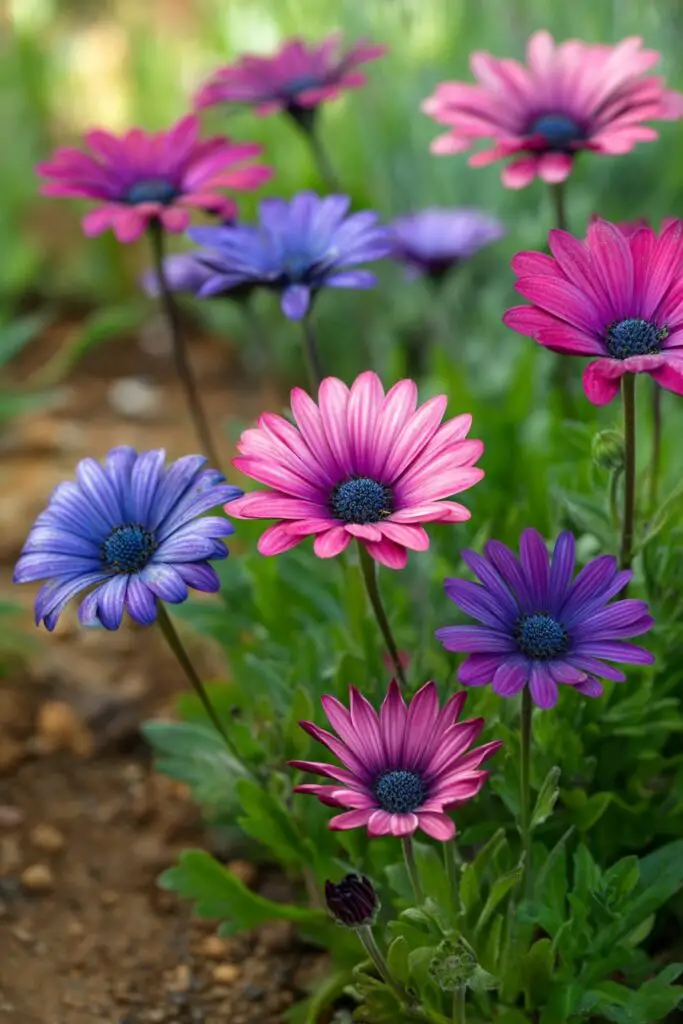
If you’re looking for daisies that stand out with vibrant color and an exotic look, African daisies are a striking option. Native to South Africa, these flowers boast bold, jewel-toned petals in shades of purple, orange, pink, and white—often with a blue or purple center. Some varieties even feature spoon-shaped petals that give them a truly unique appearance.
African daisies thrive in full sun and prefer well-drained soil. They are more heat- and drought-tolerant than other types of daisies, making them ideal for warmer climates or dry garden beds. They bloom profusely in late spring and early summer, and will continue flowering into fall if regularly deadheaded.
These daisies are typically grown as annuals in cooler zones but can be perennial in frost-free regions.
Key Features:
- Bloom time: Spring to fall (with regular deadheading)
- Height: 1–2 feet
- Sun: Full sun
- USDA Zones: 9–11 (annual in cooler areas)
- Best for: Containers, sunny borders, drought-tolerant landscapes
African daisies offer intense color and bold texture—perfect for gardeners looking to make a statement with their summer blooms.
🌼 5. English Daisy (Bellis perennis)
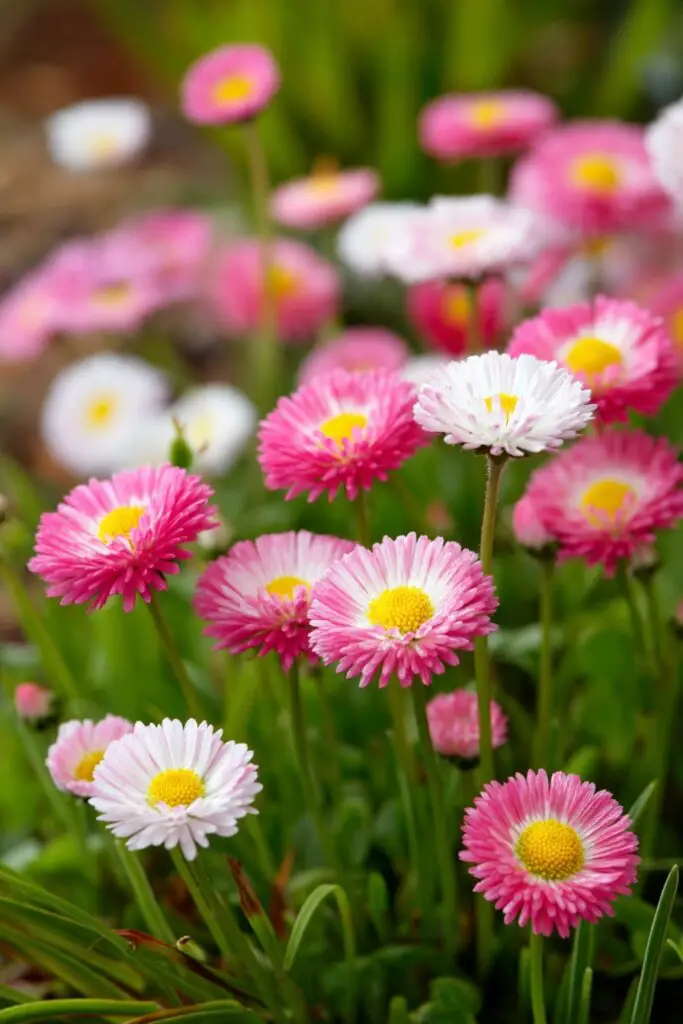
English daisies are small but charming flowers often associated with traditional lawns and early spring gardens. With button-like blooms that come in white, pink, or red, they create a soft, cottage-style feel and are often planted in mass for the best effect.
These daisies are biennials or short-lived perennials, most commonly grown in cooler climates where they thrive during spring and fall. They prefer moist, well-drained soil and partial sun. Because of their compact size and early bloom time, English daisies are often used as edging plants, in containers, or scattered among bulbs and other early bloomers.
They may self-seed in the right conditions, allowing them to return year after year with little intervention.
Key Features:
- Bloom time: Early spring to early summer
- Height: 4–6 inches
- Sun: Partial sun to light shade
- USDA Zones: 4–8
- Best for: Borders, containers, spring flower beds
For gardeners looking for dainty, low-growing daisies that add early-season color, English daisies are a timeless and endearing choice.
🌿 Conclusion
With so many varieties to choose from, daisies offer something for every garden style—from bold Gerbera blooms to the soft charm of English daisy clusters. Whether you’re building a wildflower meadow, brightening a container garden, or designing a drought-tolerant space, the different types of daisies can bring color, texture, and joy to your landscape. By choosing the right type for your climate and style, you’ll enjoy reliable blooms and low-maintenance beauty for seasons to come.