
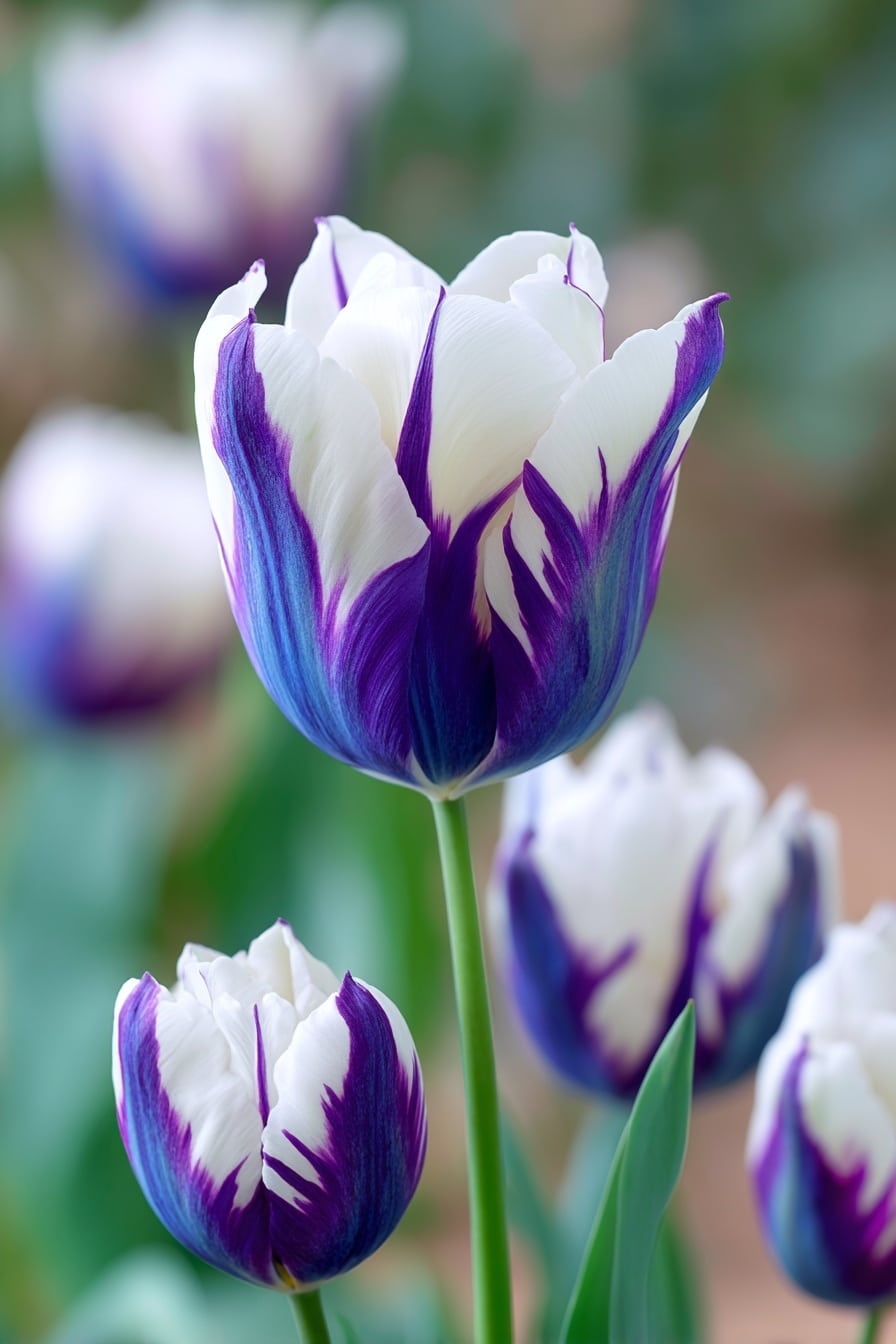
Blue tulips are the stuff of gardening dreams—rare, mysterious, and endlessly intriguing. As one of the most sought-after flower colors, blue stands out in garden beds, floral arrangements, and even fantasy. But despite their allure, many gardeners find themselves asking: do blue tulips really exist in nature, or are they simply clever marketing and artificial coloring?
With hundreds of tulip cultivars on the market, and several bearing names like ‘Blue Wow’ or ‘Blue Diamond,’ the line between purple, violet, and blue can feel blurred. In this article, we’ll uncover the truth about blue tulips, what causes flower color, and which varieties come closest to that elusive blue hue.
Table of Contents
🌼 Do Blue Tulips Exist in Nature?
The Short Answer
No, blue tulips do not occur naturally. Despite the abundance of tulip varieties with “blue” in their names, none of them are truly blue in the botanical sense. Most are actually shades of purple, violet, or burgundy, and some are even dyed or digitally enhanced to give the illusion of a blue bloom.
Botanists and flower color experts agree: a true blue tulip does not exist. If you see one that appears to be blue, it’s either creatively named, artificially colored, or perceived differently due to lighting or personal color interpretation.
The Long Answer
To understand why blue tulips don’t exist in nature, it helps to look at the science behind flower color. Blue is one of the rarest colors in the plant world—fewer than 10% of all flowering species can produce it naturally. That’s because the pigment responsible for blue tones, called anthocyanin, usually appears red or purple unless altered by specific pH levels and molecular reactions.
Flowers like hydrangeas or morning glories can produce blue blooms because their cellular makeup and environmental conditions allow the anthocyanins to shift toward blue. Tulips, however, lack the chemical mechanisms needed for this transformation.
While some tulip petals might have a bluish tint under certain light or at specific stages of bloom, they do not contain the pigment combinations required to produce a true, naturally occurring blue.
🌈 What Counts as “True Blue”?
In the world of flowers, “true blue” is more than just a name—it’s a rare and specific hue that only a few plant species can achieve. When it comes to blue tulips, the confusion often stems from how humans perceive color and how growers label their cultivars.
Color perception varies from person to person. Our eyes detect color based on light wavelengths and how cone receptors in our retinas process them. What one person sees as purple, another may interpret as blue—especially in natural lighting, where subtle shifts in shade can occur throughout the day.
To bring consistency, horticulturists often use the Royal Horticultural Society (RHS) Color Chart, which includes over 900 standardized flower pigments. According to these standards, no tulip has ever been classified as a true blue. Even varieties with a bluish appearance tend to fall into lavender, violet, or deep purple categories under scrutiny.
So when tulips are described as “blue,” it’s usually due to:
- Marketing strategies that play on rarity
- Loose interpretations of color
- How light interacts with the flower’s surface
In short, blue tulips are a mix of optical illusion and poetic license—but not a reflection of botanical truth.
🛒 Why Are Some Tulips Marketed as Blue?
Even though true blue tulips don’t exist, you’ll still find tulip varieties with names like ‘Blue Beauty’ or ‘Blue Wow’ in garden catalogs and online stores. So, why do breeders and marketers use the term blue so freely?
The answer is simple: blue sells.
Blue is one of the most desired flower colors among gardeners because of its calming, rare, and striking appearance in the landscape. Knowing this, tulip growers often give new hybrids creative names that imply a blue hue—even when the actual color leans more toward purple, violet, or lilac.
There’s also a broader, industry-wide tolerance for using the word “blue” loosely in ornamental horticulture. Since flower color perception can vary under different lighting conditions or personal interpretation, the term blue has become more subjective than scientific in many cases.
These naming choices aren’t meant to deceive—they’re often just the result of:
- Consumer demand for blue blooms
- Color shifts that occur in different lighting
- Acceptable flexibility within the horticultural trade
So while blue tulips might sound exotic and magical, their names often reflect a hopeful interpretation rather than a botanical fact.
🌷 Popular Tulip Varieties That Look Blue
While you won’t find a naturally occurring blue tulip, some cultivars get close enough to satisfy the eye—especially under the right light. Below are several varieties often labeled or perceived as “blue,” each with unique tones, textures, and garden appeal.
Tulipa ‘Blue Wow’

Despite its name, ‘Blue Wow’ blooms in a deep grape-purple color that intensifies over time. Its densely layered petals give it an artichoke-like shape, making it a true standout in the garden. Under full sun, its cool undertones may hint at a bluish cast.
- Height: 18–24 inches
- Bloom Time: Mid to late spring
- Form: Double, densely packed
- Zone: 3–8
Tulipa ‘Blue Beauty’
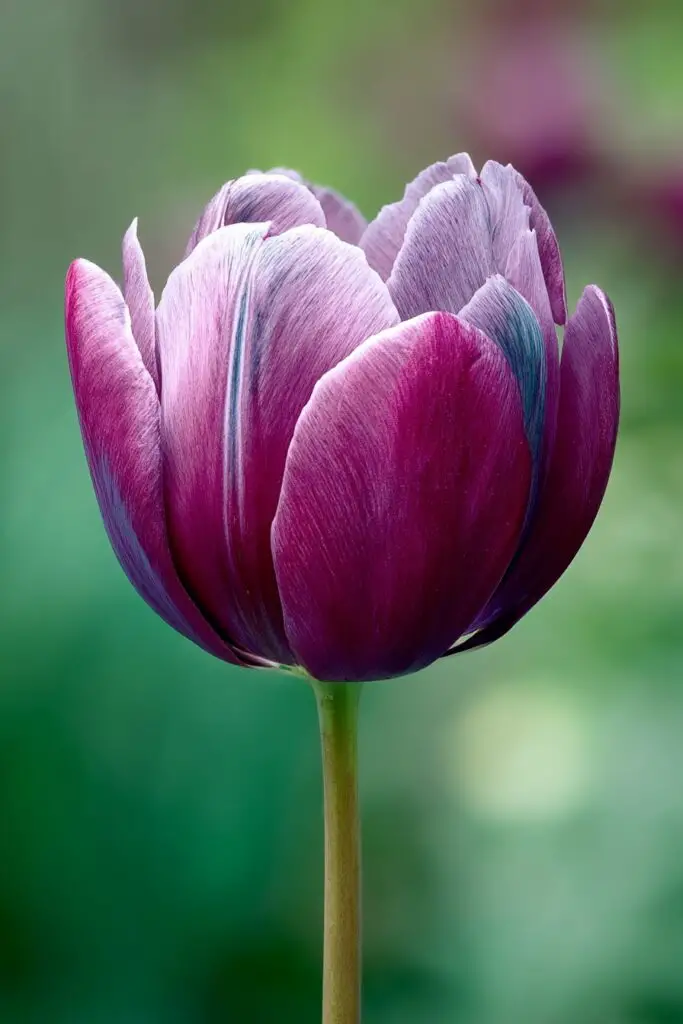
This tulip starts with deep rose petals that reflect blue glints in sunlight. A member of the Triumph group, it offers a classic tulip shape with smooth, single-petal blooms and sturdy stems.
- Height: 16–18 inches
- Bloom Time: Mid spring
- Form: Single, cup-shaped
- Zone: 3–8
Tulipa ‘Blue Aimable’
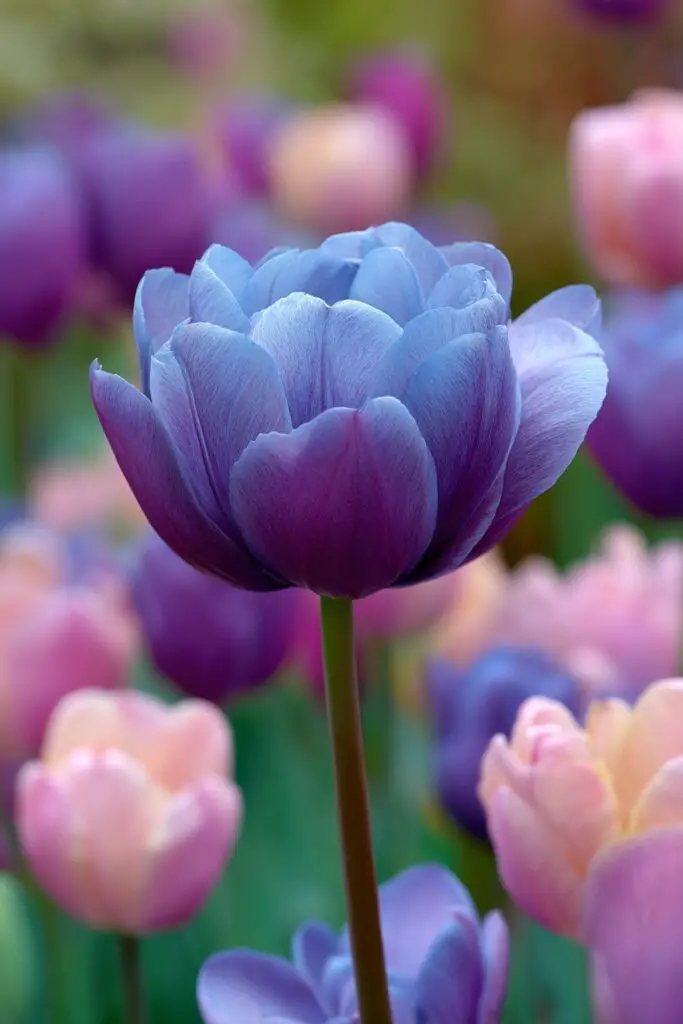
‘Blue Aimable’ can appear lavender-blue or cornflower-toned in certain light, though it’s officially violet. It features tall, elegant stems and a long bloom time, making it perfect for cut arrangements or pastel borders.
- Height: 22–24 inches
- Bloom Time: Mid to late spring
- Form: Single late
- Zone: 3–8
Tulipa ‘Blue Diamond’
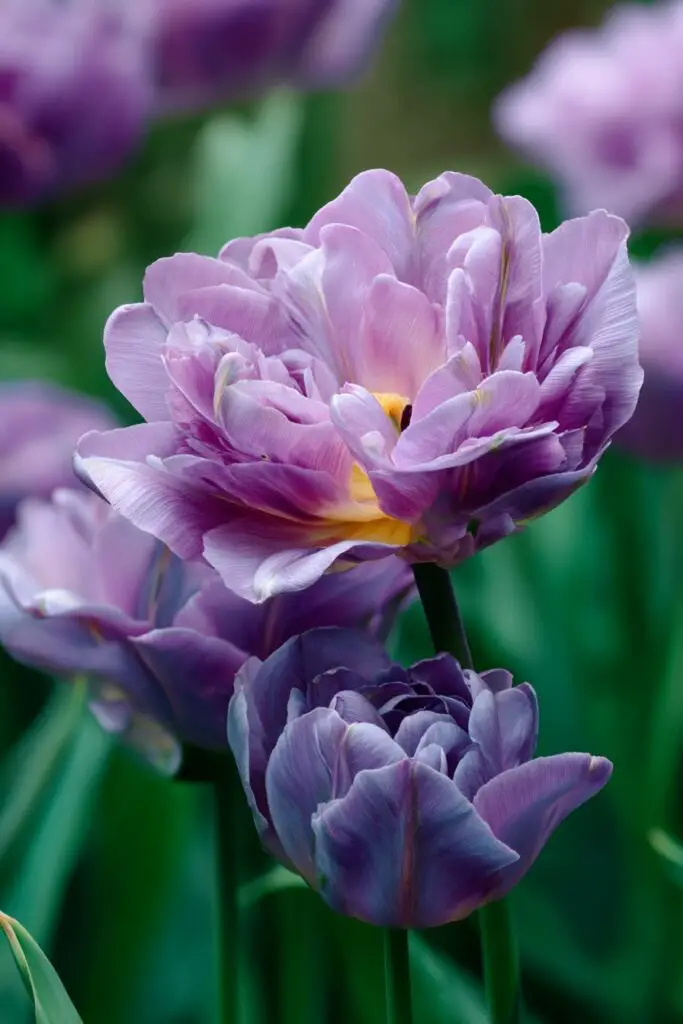
With large, peony-style blooms in lilac-purple, ‘Blue Diamond’ sometimes takes on a cool, bluish glow—especially at the petal edges. Yellow centers and curved petals add contrast and dimension.
- Height: 16–20 inches
- Bloom Time: Mid to late spring
- Form: Double, peony-like
- Zone: 3–8
Tulipa ‘Blue Parrot’
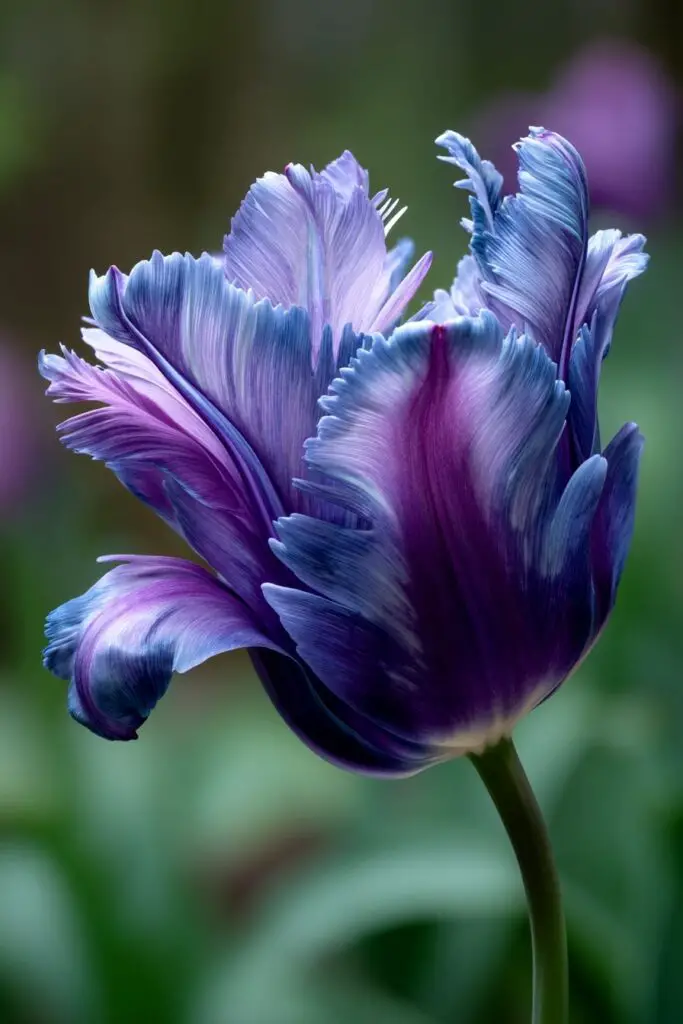
This ruffled tulip shows streaks of cornflower blue against a lilac backdrop. Its dramatic petals curl inward at night and flatten by day, giving it dynamic garden appeal. Best planted with some wind protection due to its delicate structure.
- Height: 16–24 inches
- Bloom Time: Late spring
- Form: Parrot-style, ruffled
- Zone: 3–8
Tulipa ‘Cummins’
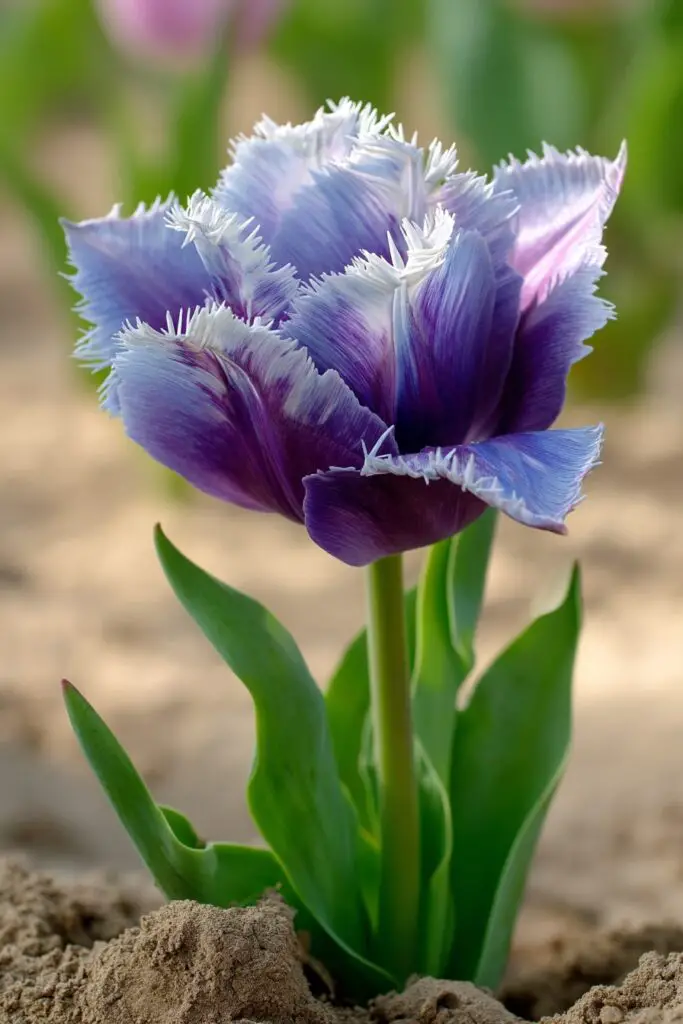
Classified as royal lavender blue, ‘Cummins’ features purple petals that reflect blue in direct sun, with white fringed edges for extra texture. It’s striking when planted en masse or used in elegant bouquets.
- Height: 18–20 inches
- Bloom Time: Mid to late spring
- Form: Fringed
- Zone: 3–8
Tulipa ‘Blueberry Ripple’
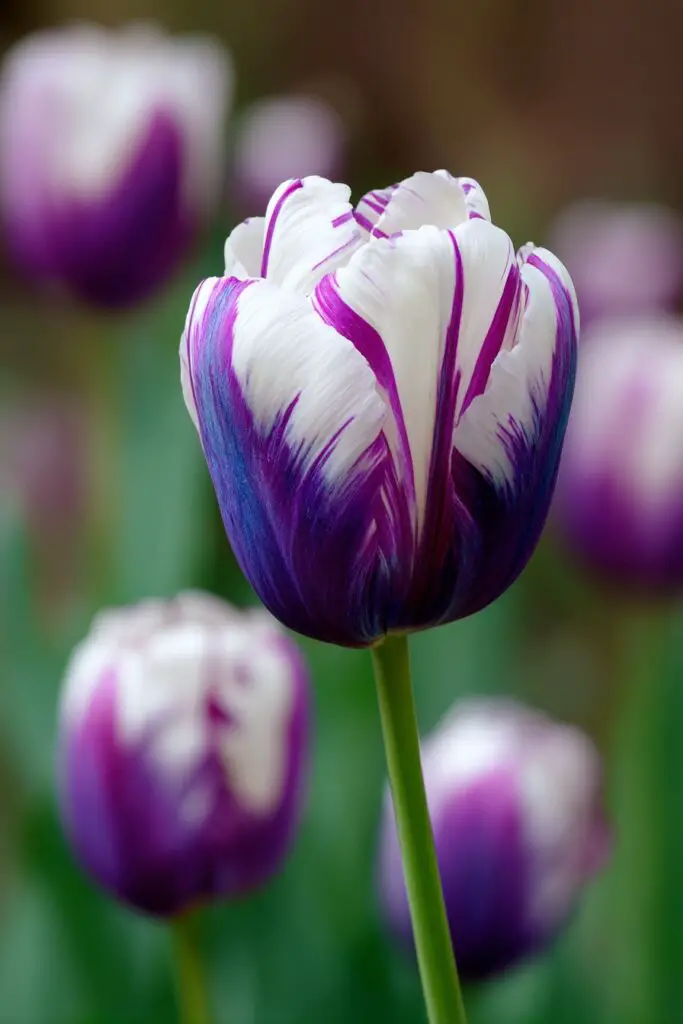
This bi-color tulip has cobalt violet streaks on white petals, offering the most visually convincing “blue” illusion in certain light. Its sweet fragrance and unique flame-like pattern make it a favorite for containers and pathways.
- Height: 16–20 inches
- Bloom Time: Late spring
- Form: Triumph, bi-color
- Zone: 3–8
Final Thoughts
While the dream of planting blue tulips may be tempting, the reality is that nature hasn’t quite delivered one yet. Despite clever names and creative lighting, no tulip produces a true blue bloom—at least not without artificial dyes or digital enhancement.
Still, gardeners have many stunning near-blue tulip varieties to enjoy. With hints of violet, lavender, and cornflower, these cultivars bring cool, moody elegance to spring displays. Whether you’re planting in borders, containers, or creating bouquets, these almost-blue tulips offer beauty and charm—just don’t expect a unicorn.