
Designing a vegetable garden layout is key to ensuring your plants thrive, especially when space is limited or you’re new to gardening. The right layout will help optimize sunlight, water access, and plant health, resulting in a bountiful harvest. In this guide, we’ll walk through five effective ways to design the perfect vegetable garden layout that suits your space and needs.
Table of Contents
1. Consider Sunlight and Space Requirements

When designing your vegetable garden layout, understanding the sunlight and space needs of each plant is crucial. Most vegetables require 6 to 8 hours of full sun each day, so choose a spot that offers ample sunlight. Additionally, plan for enough space to allow your plants to grow without overcrowding. Space-saving techniques like raised beds can also improve drainage and soil quality, which are essential for healthy plant growth.
2. Incorporate Companion Planting
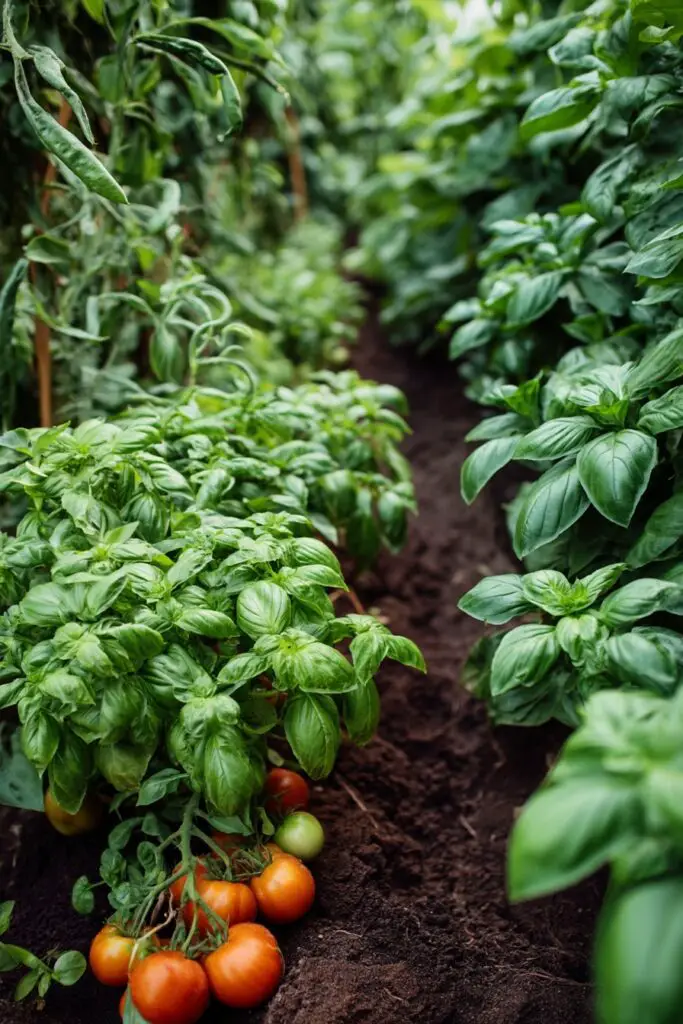
Companion planting can significantly boost your garden’s productivity by positioning plants together that benefit each other. Some plants help deter pests, while others enrich the soil or provide shade. For example, tomatoes and basil grow well together, as basil repels insects that might otherwise harm tomatoes. Use companion planting principles to create a balanced ecosystem that reduces the need for pesticides and increases your yield.
3. Organize Your Garden Using Blocks
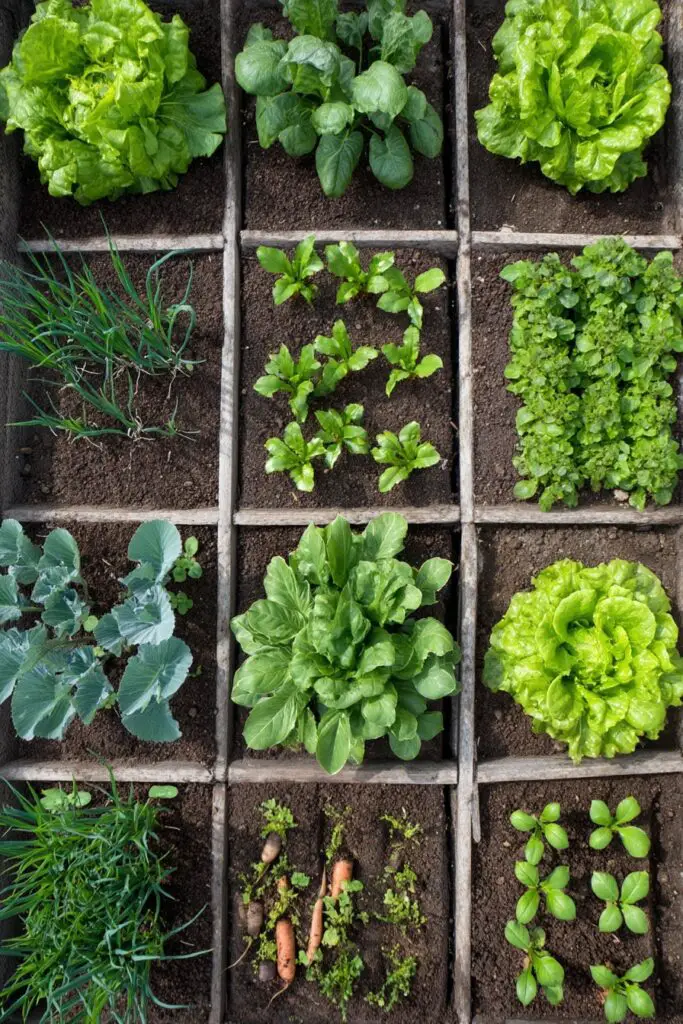
One effective layout technique is planting in blocks. By dividing your garden into square sections, you can dedicate each area to vegetables that benefit from companion planting. Blocks also make crop rotation easier, as you can move plant families from one block to another each year. This method helps maintain soil health and ensures that different plant types don’t deplete the soil of specific nutrients.
4. Plant in Rows for Efficient Sunlight Use
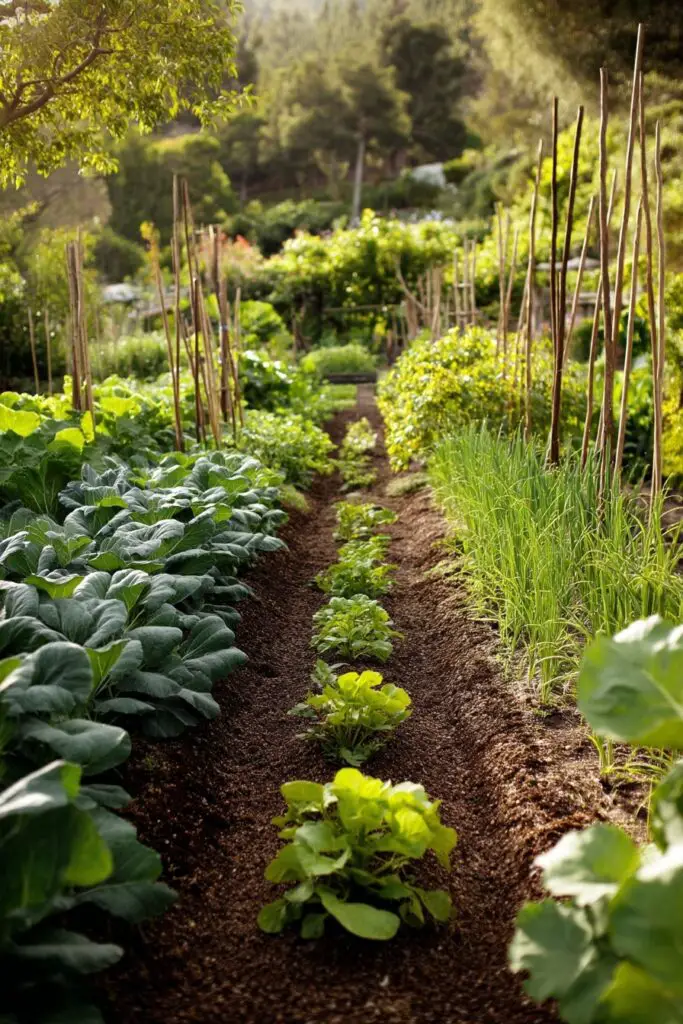
Traditional row planting is another common method for vegetable garden layouts. Arrange your rows in a north-south direction to ensure all plants get optimal sunlight exposure. Taller plants should be placed at the north end of each row, with smaller plants following behind. This layout helps prevent shading and ensures every plant receives enough light to thrive. Regularly spaced rows also make it easier to maintain and harvest crops.
5. Optimize Space with Vertical Gardening
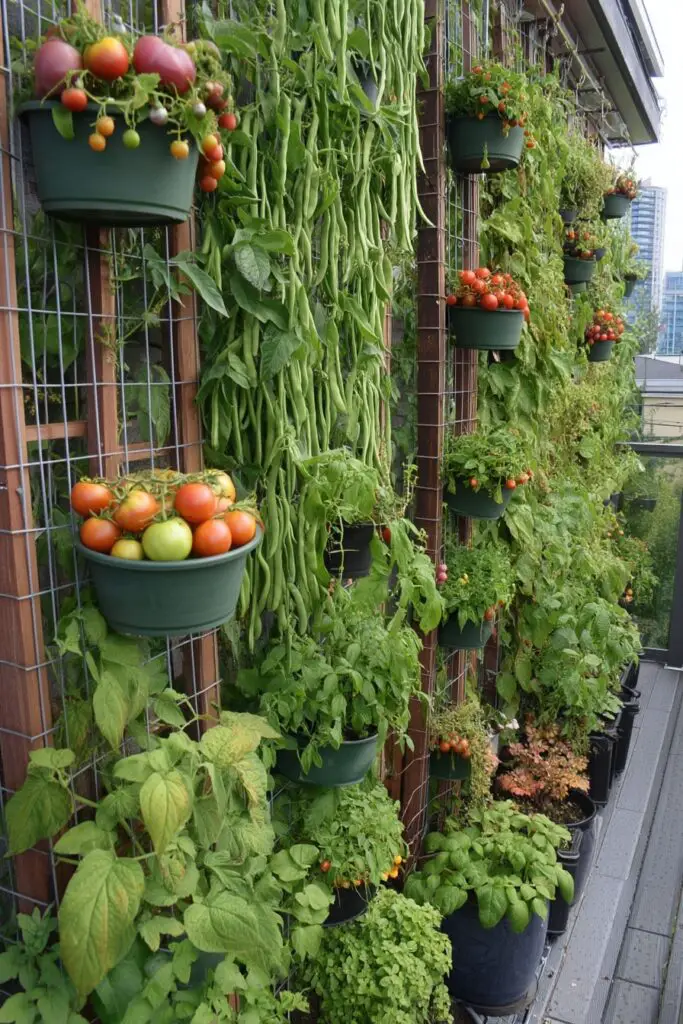
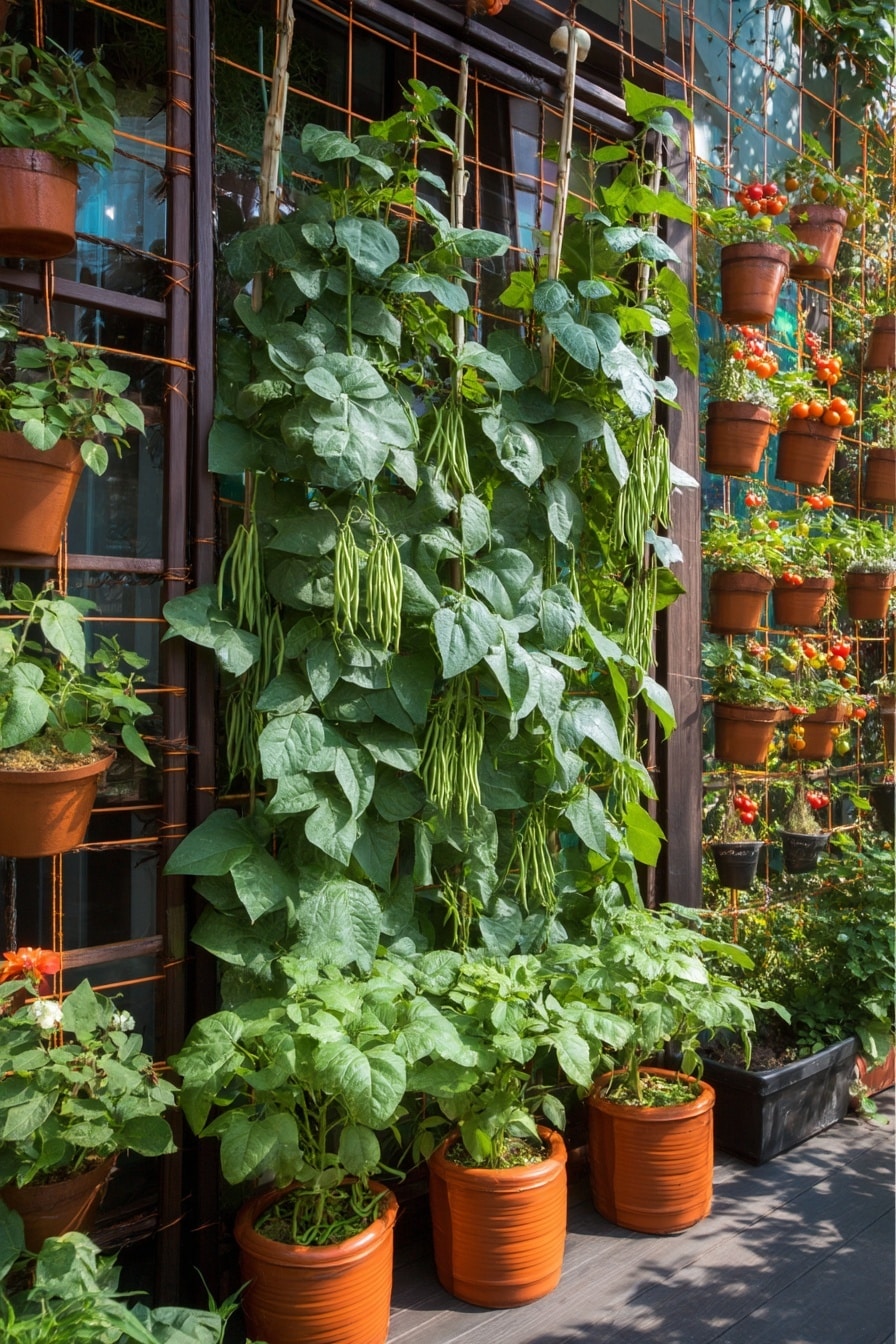
If you’re dealing with limited space, vertical gardening is a great solution. Grow climbing vegetables like beans, peas, and cucumbers on trellises or use hanging baskets for smaller plants like cherry tomatoes and strawberries. Vertical gardening maximizes the use of space and helps keep plants organized, ensuring they don’t compete for precious ground space. Plus, it adds a decorative element to your garden.
Conclusion
Designing a vegetable garden layout doesn’t have to be complicated. By considering sunlight, space, companion planting, and layout methods like block planting, row planting, and vertical gardening, you can create a garden that is both functional and beautiful. Whether you have a large backyard or a small patio, these layout ideas will help you maximize your garden’s potential for a fruitful harvest.