
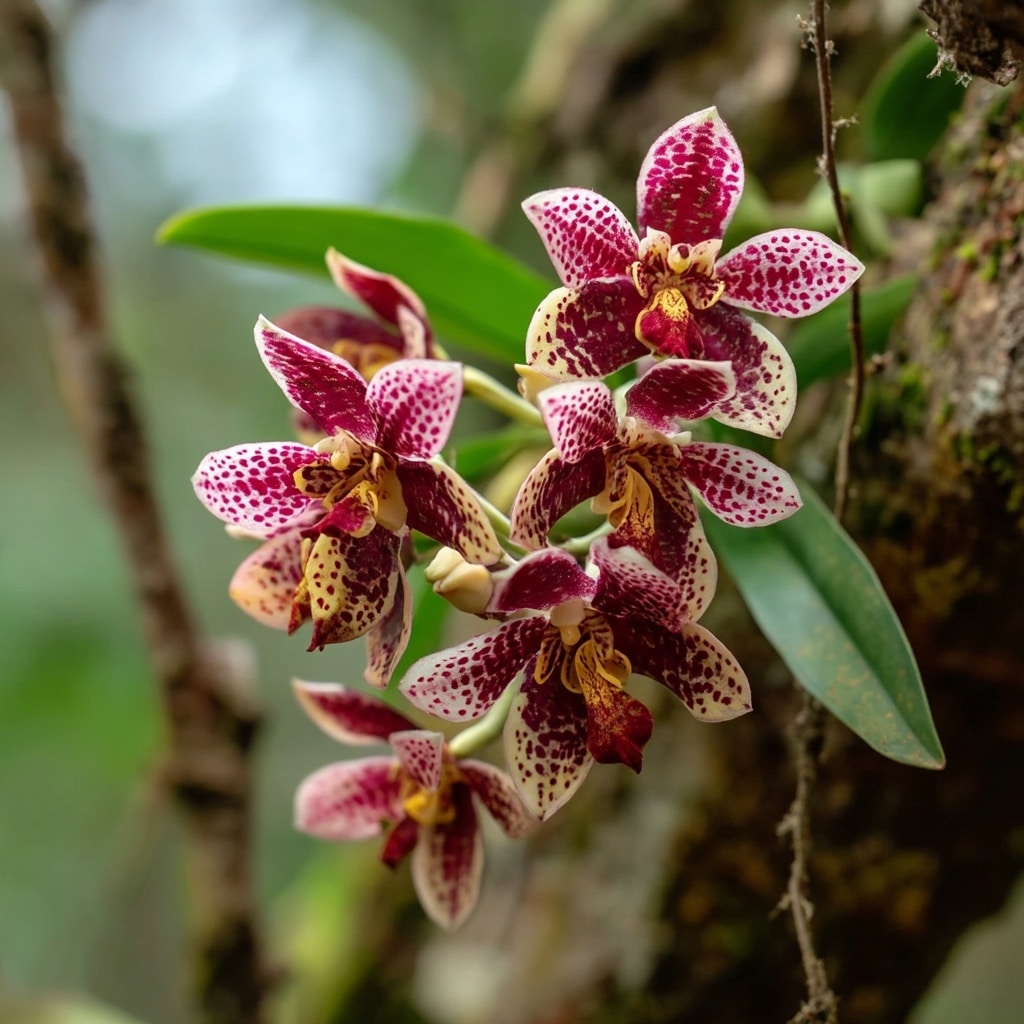
Rare flowers are more than just beautiful — they’re living testaments to nature’s uniqueness and diversity. In the Philippines, a country known for its rich tropical biodiversity, several rare blooms grow wild in forests, mountains, and even remote valleys. These aren’t your everyday garden flowers. Some are endangered, some grow high in trees, and others are so peculiar they don’t even have leaves or stems.
In this guide, we’ll look at six extraordinary floral species found across the Philippine islands. From orchids that trick insects to giant flowers that smell like decay, these natural wonders are as strange as they are stunning.
Table of Contents
1. 🌿 Jade Vine (Strongylodon macrobotrys)

Among the most striking rare flowers in the Philippines is the jade vine, locally known as Tayabak. Its claw-shaped blooms glow in a surreal aquamarine or turquoise hue, a color rarely seen in the plant world. These flowers hang in long cascading clusters, almost resembling glowing chandeliers in tropical forests.
Native to the rainforests of Luzon, the jade vine is more than just a visual marvel — it’s also endangered. Its survival is closely tied to specific pollinators like bats and birds, whose declining populations threaten the plant’s ability to reproduce naturally.
This woody climber grows best when supported on trellises or archways in humid climates. Though it’s been cultivated in greenhouses abroad, it thrives most naturally in its native tropical habitat.
2. 🌸 Sacred Garlic Pear (Crateva religiosa)
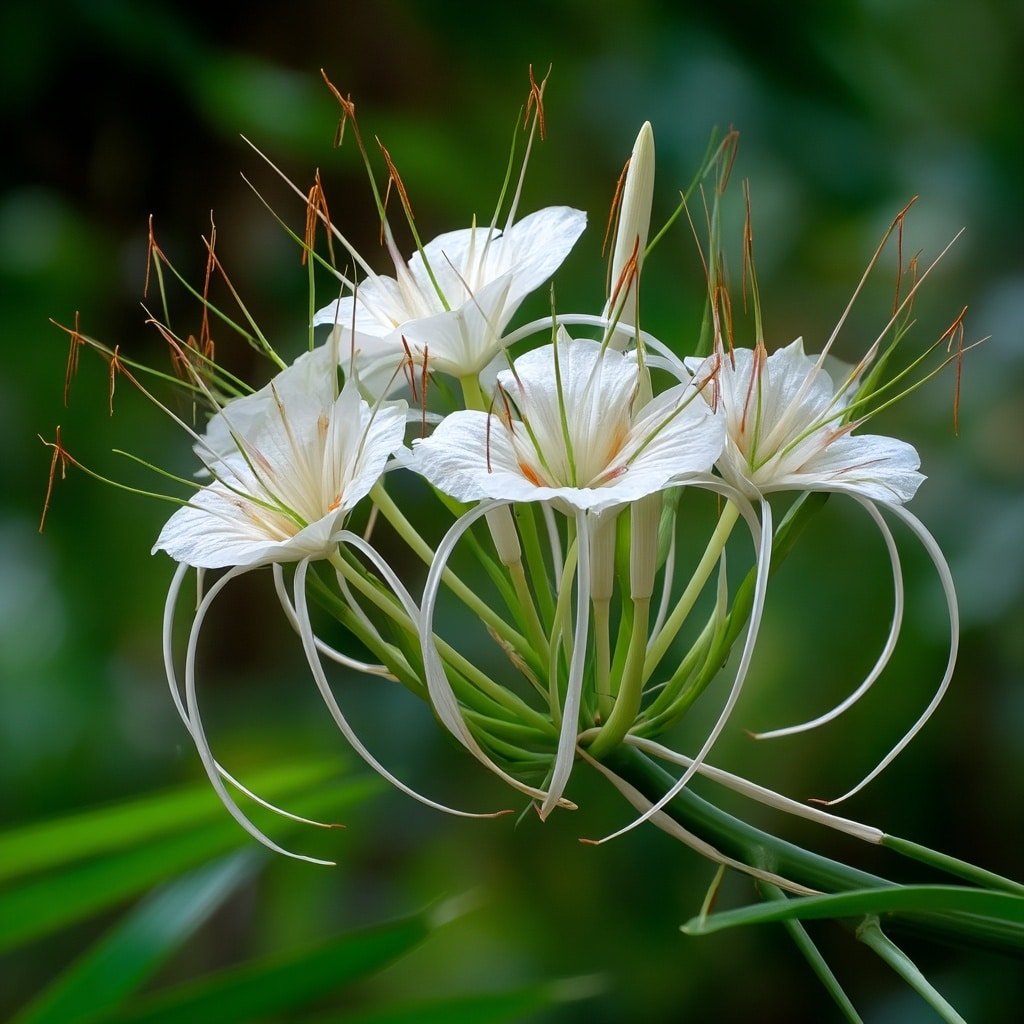
The Sacred Garlic Pear, or Salingbobog, is one of the lesser-known rare flowers that bloom in the Philippines. Its large, showy blossoms can measure over 10 centimeters across and feature a unique “spider-like” appearance — thanks to the dozens of slender stamens that stretch beyond the delicate white or yellow petals.
While its beauty is unmistakable, it’s the plant’s fruit that gives it its name. The berries of the Sacred Garlic Pear release a pungent, garlic-like scent and are used in some regions as spice or traditional herbal medicine.
The tree is often found in lowland forests and riverbanks, where it thrives in moist soil. Its unusual appearance and cultural uses make it both a visual and botanical treasure.
3. 🌺 Corpse Lily (Rafflesia spp.)
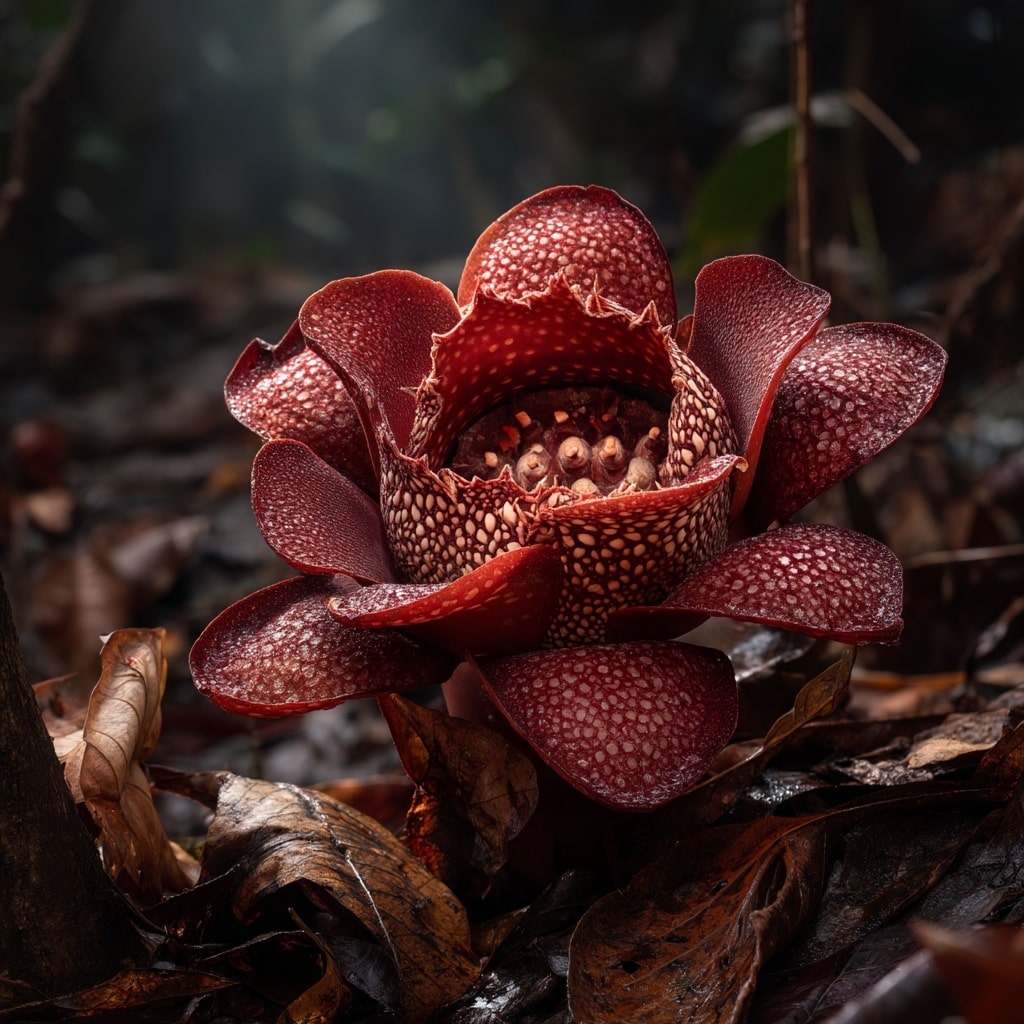
The Corpse Lily is perhaps the most bizarre and fascinating of all rare flowers found in the Philippines. Belonging to the Rafflesia genus, this giant parasitic bloom can grow up to 80 centimeters in diameter, making it one of the largest flowers in the world.
But size isn’t its only claim to fame — the Corpse Lily is notorious for its foul odor, which mimics rotting meat to attract carrion flies for pollination. Unlike most plants, it has no stems, leaves, or roots of its own. Instead, it lives entirely off the vines of Tetrastigma plants.
Two species, Rafflesia manillana and Rafflesia schadenbergiana, are native to the Philippines, with the latter being found in the forests of Mindanao. These flowers are so elusive they often bloom only for a few days a year.
4. 🌷 Lady’s Slipper Orchid (Paphiopedilum spp.)
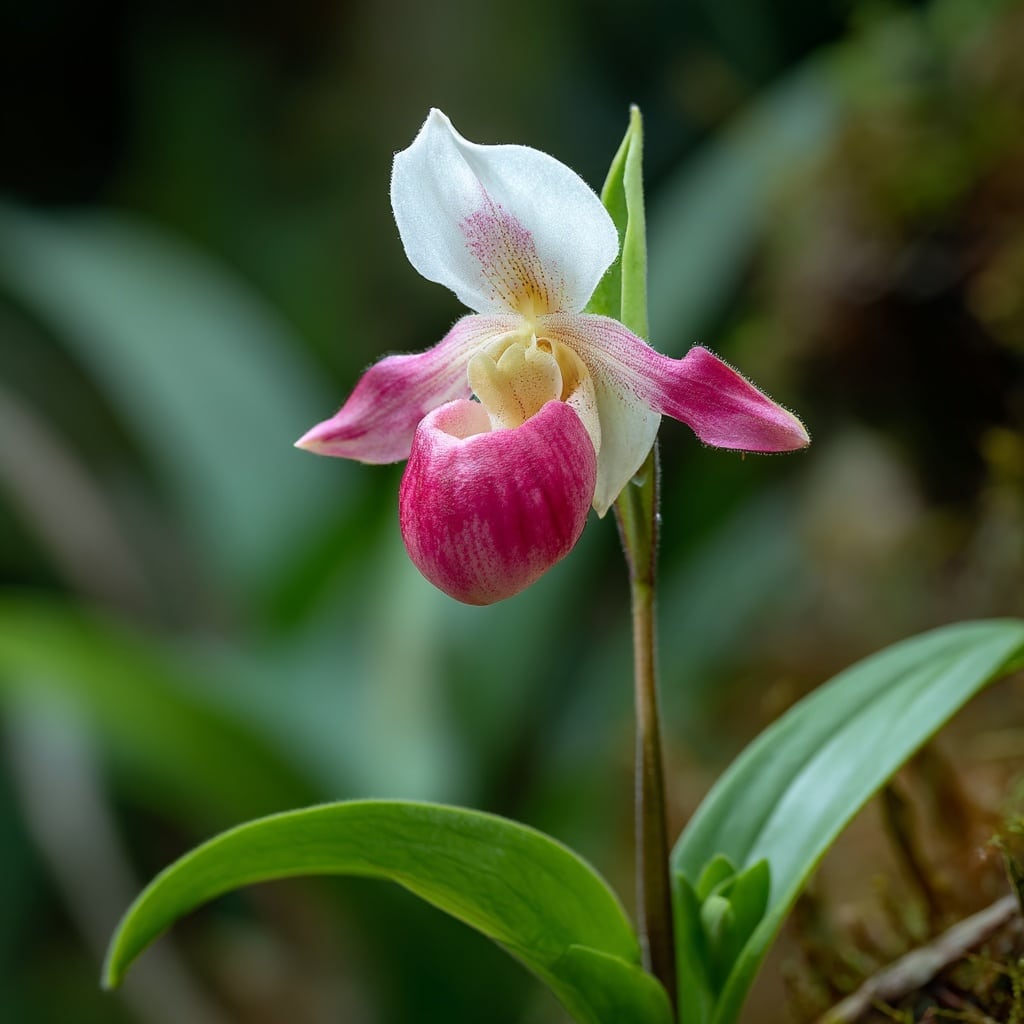
One of the most elegant rare flowers native to the Philippines is the Lady’s Slipper Orchid. These striking orchids are known for their unique pouch-like bottom petal, which resembles a slipper — a clever design that traps insects, forcing them to brush against the flower’s pollen as they escape.
The Philippines is home to several native species in this group. Paphiopedilum philippinense is admired for its long, twisted side petals, while P. fowliei, found only in Palawan, has a more compact form. Some species even have a fine layer of fuzz on their petals, adding to their unusual charm.
Lady’s Slippers thrive in humid environments and are often found clinging to shaded forest slopes. Due to habitat loss and overcollection, many species are now considered endangered.
5. 💐 Rose Grape (Medinilla magnifica)
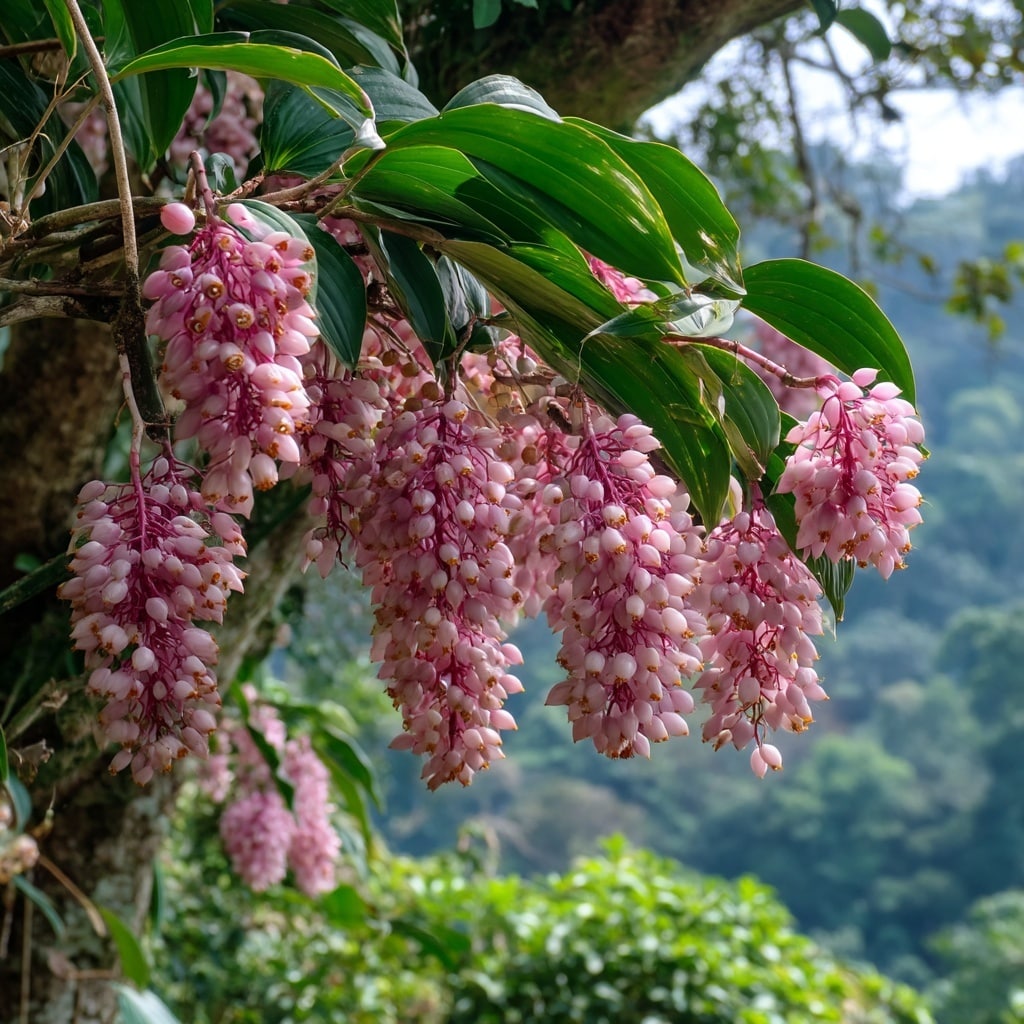
The Rose Grape, locally known as Kapa-Kapa, is one of the most ornamental rare flowers in the Philippines. Its cascading clusters of pink blossoms resemble a delicate chandelier, earning it the nickname “Chandelier Plant.” Each flower cluster can reach up to 30 centimeters long, framed by large pink bracts that make the plant even more eye-catching.
Although it grows wild in mountain forests, the Rose Grape is also cultivated as a dramatic houseplant in tropical regions. Unlike parasitic plants, it’s an epiphyte — meaning it grows on trees but doesn’t harm them.
This flower once caught the attention of King Boudewijn of Belgium, who was so captivated by it that he had it featured on the old 10,000 Belgian franc banknote. It’s a true showpiece with royal appeal.
6. 🌸 Waling-Waling (Vanda sanderiana)
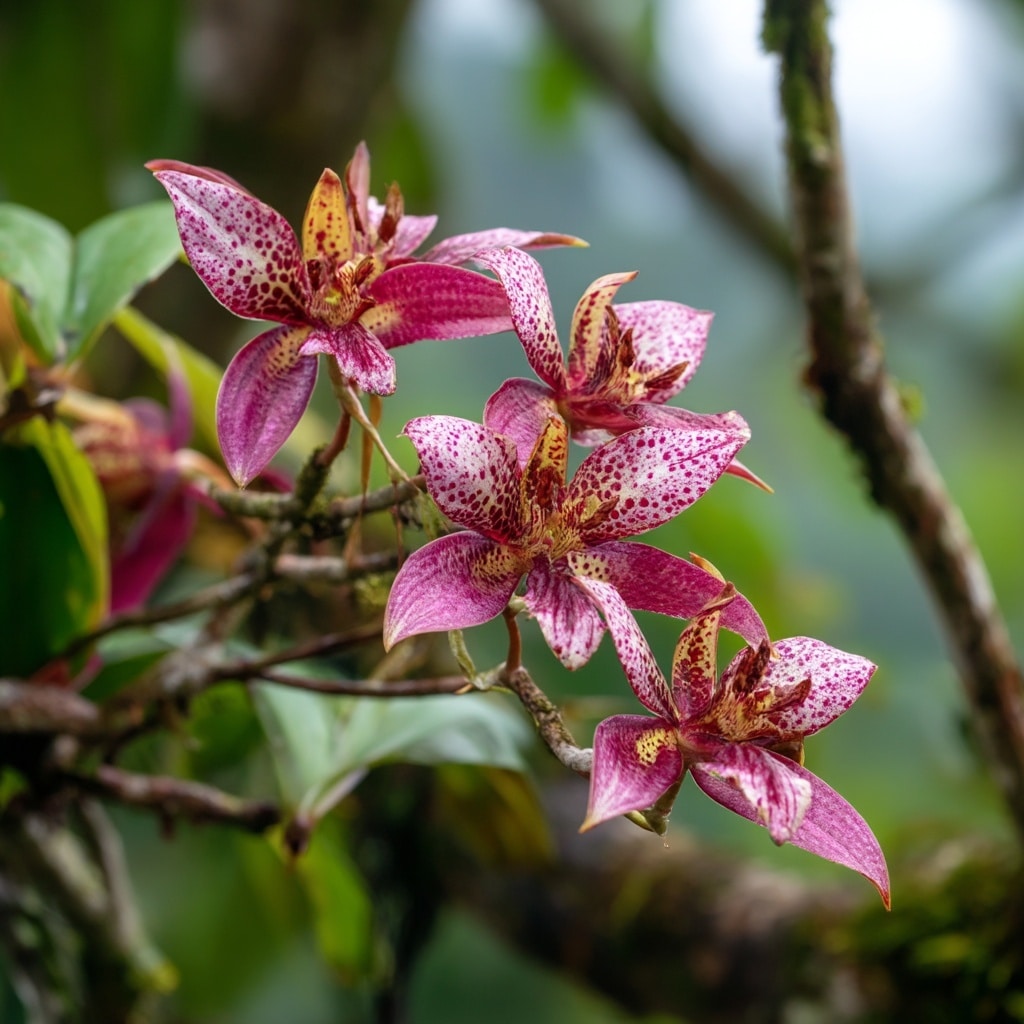
Regarded as the “Queen of Philippine Orchids,” the Waling-Waling is one of the most majestic rare flowers native to the country. Its large, velvety petals often feature soft pink hues covered in rich maroon speckles, though some varieties bloom in purplish tones. Each flower can grow up to 15 centimeters wide, making it a standout in any collection.
This orchid doesn’t grow in soil—it prefers lofty homes on tree branches, sometimes perched over 12 meters above the ground in Mindanao’s forests. Because of its beauty and rarity, the Waling-Waling was once considered as a candidate for the national flower of the Philippines.
Due to overharvesting and habitat loss, it’s now a protected species, and efforts are underway to propagate it through conservation programs and orchid farms.
🌿 Conclusion
The Philippines is home to some of the most breathtaking and rare flowers in the world — each with its own story, habitat, and charm. From the towering Waling-Waling orchid to the aquamarine glow of the Jade Vine, these blooms reflect the country’s rich biodiversity and natural beauty.
While many of these species are hard to cultivate, raising awareness about them can support conservation efforts and inspire deeper appreciation for the plants native to our islands. Whether you’re a gardener, nature lover, or simply curious, these rare flowers offer a glimpse into the Philippines’ hidden floral treasures.