
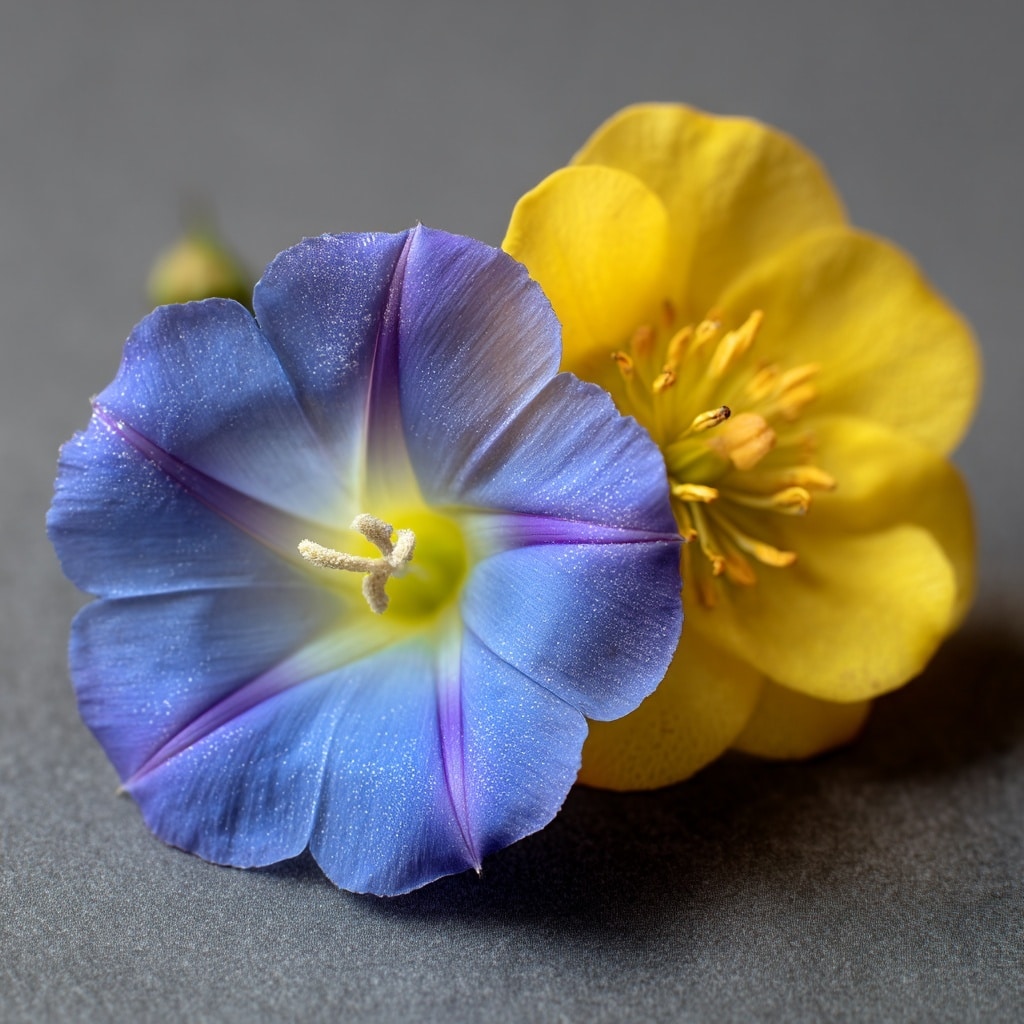
Flower types play a vital role in how we experience beauty, symbolism, and biodiversity in the plant world. With over 250,000 known species, flowers vary widely in form, color, and function—each adapted to attract specific pollinators and thrive in unique environments. Whether you’re a gardening enthusiast, a florist, or simply someone who loves blooms, understanding the different types of flowers can enhance your appreciation for nature and help you make informed choices for your garden or floral arrangements. From simple daisies to complex orchids, every flower has a structure and story worth knowing.
Table of Contents
🌼 Complete vs. Incomplete Flower Types

When exploring different flower types, one of the key distinctions lies in their basic structure—specifically, whether they are complete or incomplete.
🌸 Complete Flowers
A complete flower contains all four main floral parts:
- Sepals
- Petals
- Stamens (male parts)
- Pistils (female parts)
Flowers like lilies, roses, and hibiscus fall into this category. Their structure allows for self-contained reproduction, making them common in both natural and cultivated gardens.
🌱 Incomplete Flowers
On the other hand, incomplete flowers are missing one or more of those essential parts. For example:
- Elms and willows may lack petals.
- Plantains might miss sepals or even reproductive organs.
An incomplete flower can still function reproductively if it has both stamens and pistils. In such cases, it’s considered a perfect flower—even if incomplete.
This classification helps gardeners understand the flowering and pollination behavior of various species, which is crucial when planning companion planting or selecting flowers for pollinator support.
🌺 Unisexual vs. Bisexual Flower Types
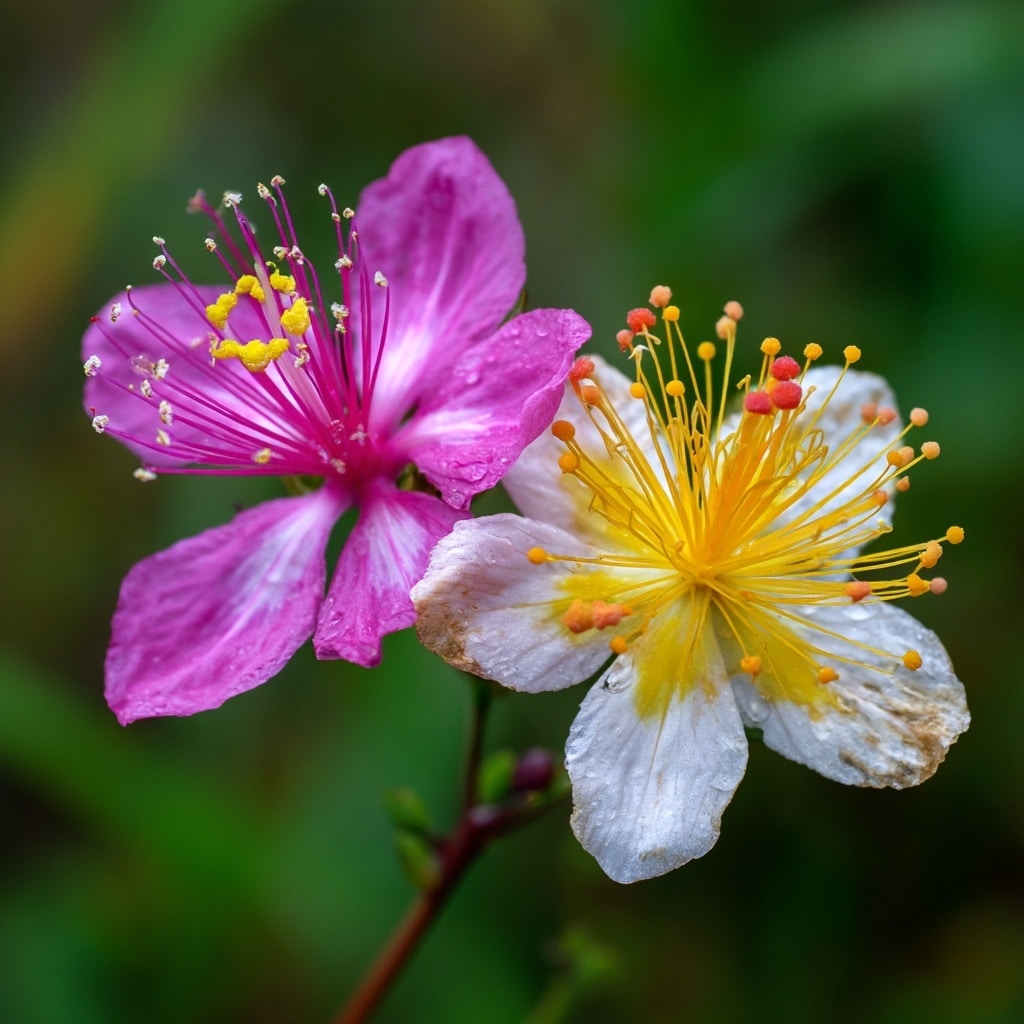
Another important classification within flower types is whether a flower is unisexual or bisexual. This distinction focuses on the presence—or absence—of male and female reproductive parts.
🌼 Unisexual Flowers
Unisexual flowers have either stamens (male) or pistils (female), but not both. These flowers are always imperfect by definition.
There are two subcategories:
- Staminate flowers – contain only stamens (male), like those on corn plants.
- Pistillate flowers – contain only pistils (female), as seen in the willow tree.
Depending on how unisexual flowers appear on a plant, we also get:
- Monoecious plants: Both male and female flowers grow on the same plant. Examples include walnut trees and corn.
- Dioecious plants: Male and female flowers grow on separate plants, such as asparagus and kiwi vines.
🌸 Bisexual Flowers
Bisexual flowers, also known as perfect flowers, contain both stamens and pistils in one bloom. Many common garden favorites like roses, daylilies, and sunflowers fall into this group.
Understanding this classification helps gardeners:
- Encourage cross-pollination
- Choose the right mix of plant types
- Plan for fruiting in species that require both sexes
🌸 Superior vs. Inferior Ovaries in Flower Types
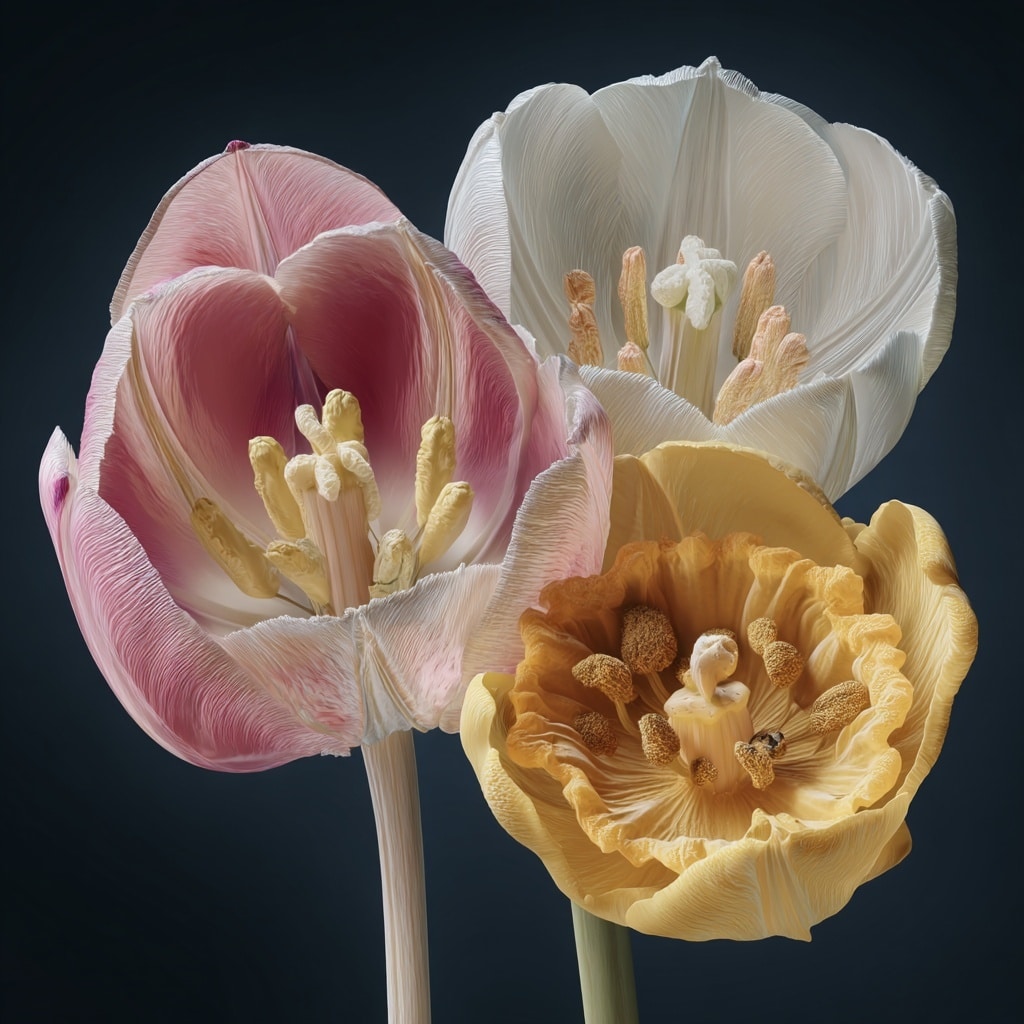
When classifying flower types, the position of the ovary—the part of the flower that becomes fruit—is another key feature. This characteristic not only influences how a flower looks but also how it develops after pollination.
🌼 Superior Ovaries
Flowers with superior ovaries have the ovary positioned above the point where the petals, sepals, and stamens are attached. These parts grow below the ovary.
Common examples include:
- Tulips
- St. John’s wort
- Snapdragons
In these hypogynous flowers, the ovary is fully exposed, which often results in straightforward pollination and fruit development.
🌻 Inferior Ovaries
In contrast, inferior ovaries are located below the attachment point of other floral parts. The petals, sepals, and stamens appear to grow from the top of the ovary.
Examples of flowers with inferior ovaries:
- Daffodils
- Sabatia
- Iris
These are known as epigynous flowers, and their structure offers more protection to the ovary—a helpful adaptation in harsher climates or for long-term fruiting.
🌺 Intermediate Types
Some flower types feature an in-between ovary position called perigynous, where floral parts attach around a cuplike structure that surrounds the ovary. The ovary sits partly inside this structure.
Examples:
- Peach
- Cherry
- Almond
These perigynous flowers blur the line between superior and inferior ovary types and are commonly found in fruiting trees and shrubs.
🌼 Hypogynous, Epigynous, and Perigynous Flower Types
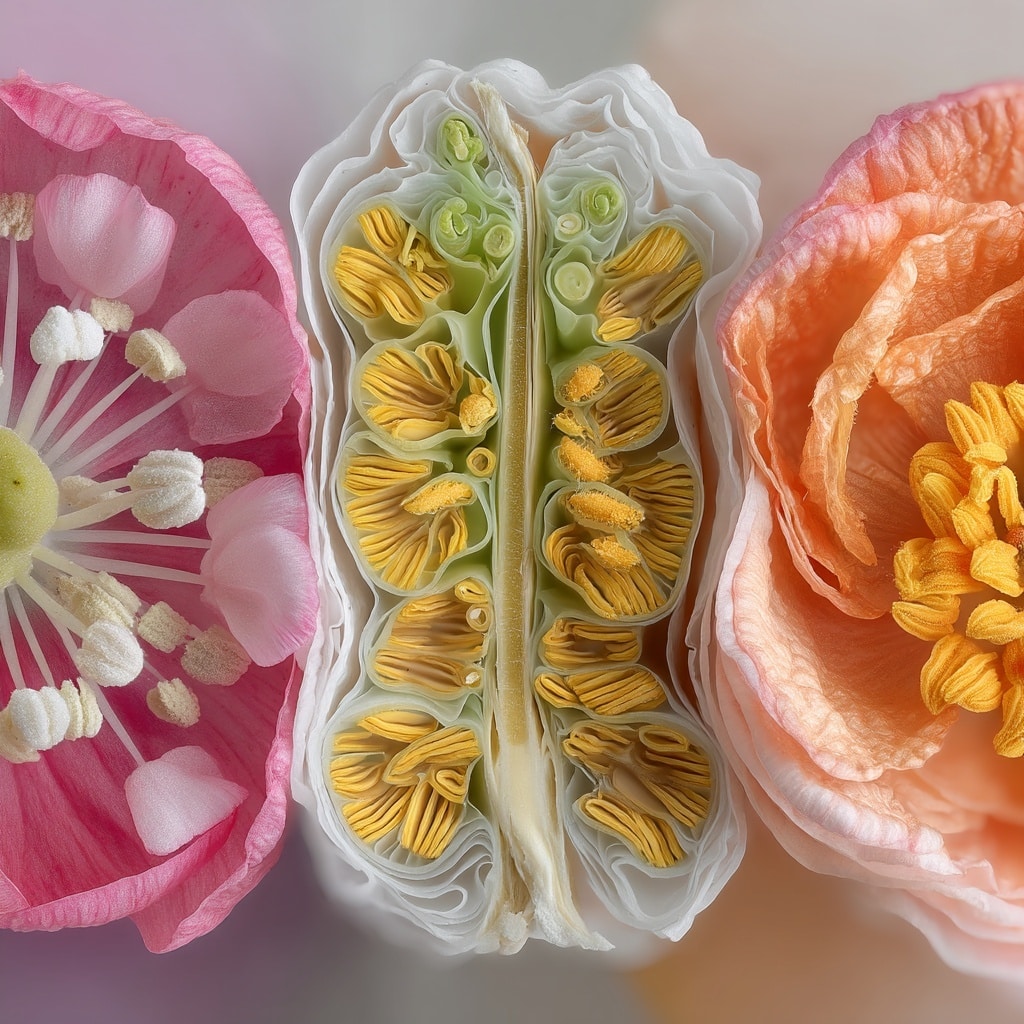
The way a flower’s reproductive and decorative parts are attached can tell you a lot about its classification. In the world of flower types, this structural feature helps define whether a flower is hypogynous, epigynous, or perigynous—all terms that describe the position of the ovary in relation to the other flower parts.
🌸 Hypogynous Flowers (Superior Ovary)
In hypogynous flowers, the sepals, petals, and stamens are attached below the ovary. This gives the ovary a superior position.
Examples include:
- Geranium (Pelargonium)
- Silene
- Tomato
These flowers often have a clean, open structure that’s easily pollinated by insects or wind.
🌺 Epigynous Flowers (Inferior Ovary)
In epigynous flowers, the petals, sepals, and stamens appear to be attached above the ovary. This makes the ovary inferior, buried within the receptacle.
Examples:
- Daffodil (Narcissus)
- Dogwood (Cornus)
- Apple blossoms
This structure helps protect the developing ovary and is common in many fruit-bearing plants.
🌸 Perigynous Flowers (Partially Enclosed Ovary)
Perigynous flowers are a middle ground. Their sepals, petals, and stamens attach to a cup-like hypanthium that partly surrounds the ovary, which remains superior.
Examples:
- Cherry
- Peach
- Rose
These flower types are especially notable in ornamental gardening and fruit cultivation due to their showy blooms and productive fruit sets.
Understanding these distinctions isn’t just for botanists—knowing how a flower is structured can help gardeners anticipate how a plant blooms, how it fruits, and how best to care for it.
🌺 Fused vs. Distinct Floral Parts in Flower Types
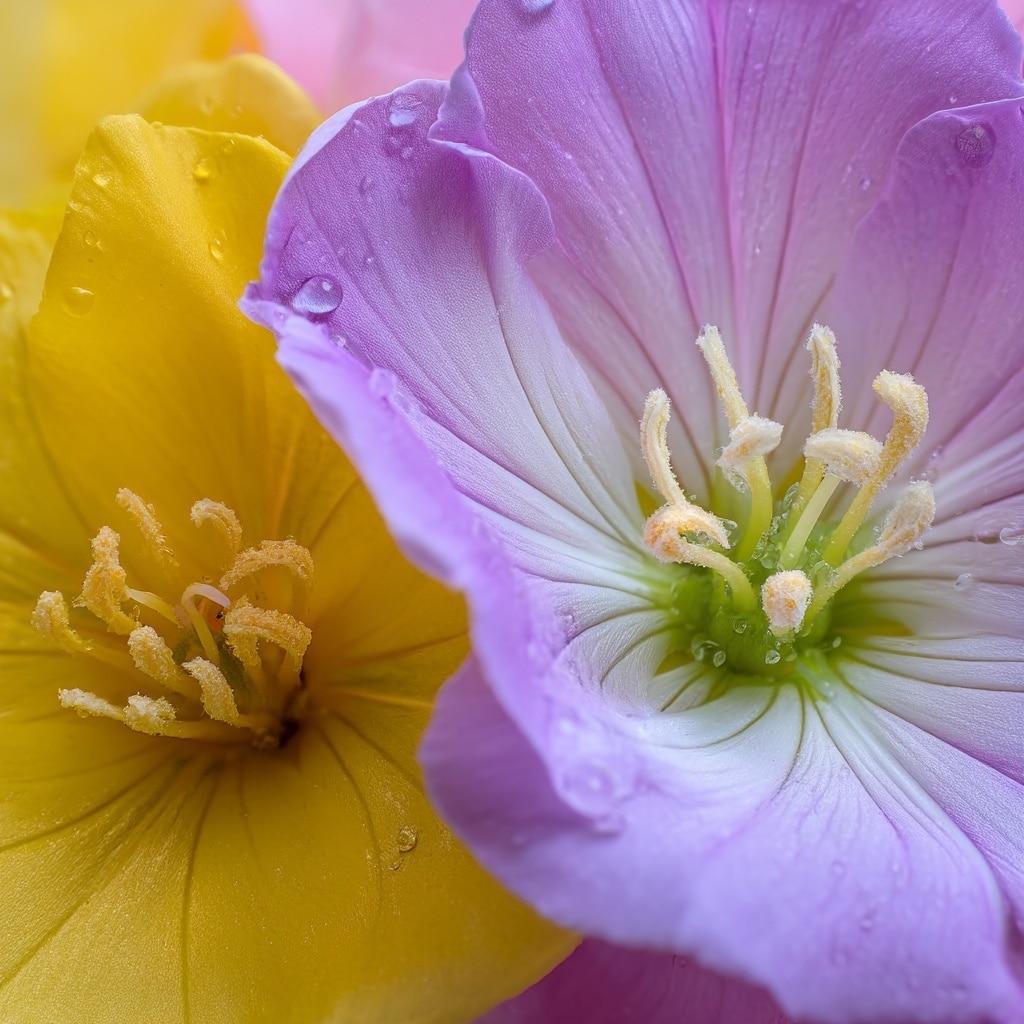
Another way to classify flower types is by looking at how the different parts—like petals and stamens—are connected or separated. This structural detail may seem small, but it plays a big role in how flowers function and evolve.
🌸 Fused Floral Parts (Connation & Adnation)
When floral parts are fused, they can be united in two main ways:
- Connation: Fusion of like parts, such as petals joined to other petals. Think of morning glories—their trumpet shape comes from fused petals.
- Adnation: Fusion of unlike parts, such as stamens fused to petals. This is common in some mint family flowers and snapdragons.
These fused structures often create special pathways for pollinators, guiding bees or butterflies in specific directions, and ensuring better pollination efficiency.
🌼 Distinct Floral Parts
In contrast, distinct floral parts remain separate. Each petal, sepal, or stamen stands on its own.
Examples:
- Buttercups
- Magnolias
- Poppies
These flowers tend to be more open and symmetrical, making them easily accessible to a wide range of pollinators.
Some plants may even start with distinct parts that gradually fuse as the flower matures—a fascinating trait in floral development.
Recognizing whether a flower’s parts are fused or distinct not only helps with identification but also gives clues about its pollination strategy and evolutionary background.
🌼 Regular vs. Irregular Flower Types (Symmetry)
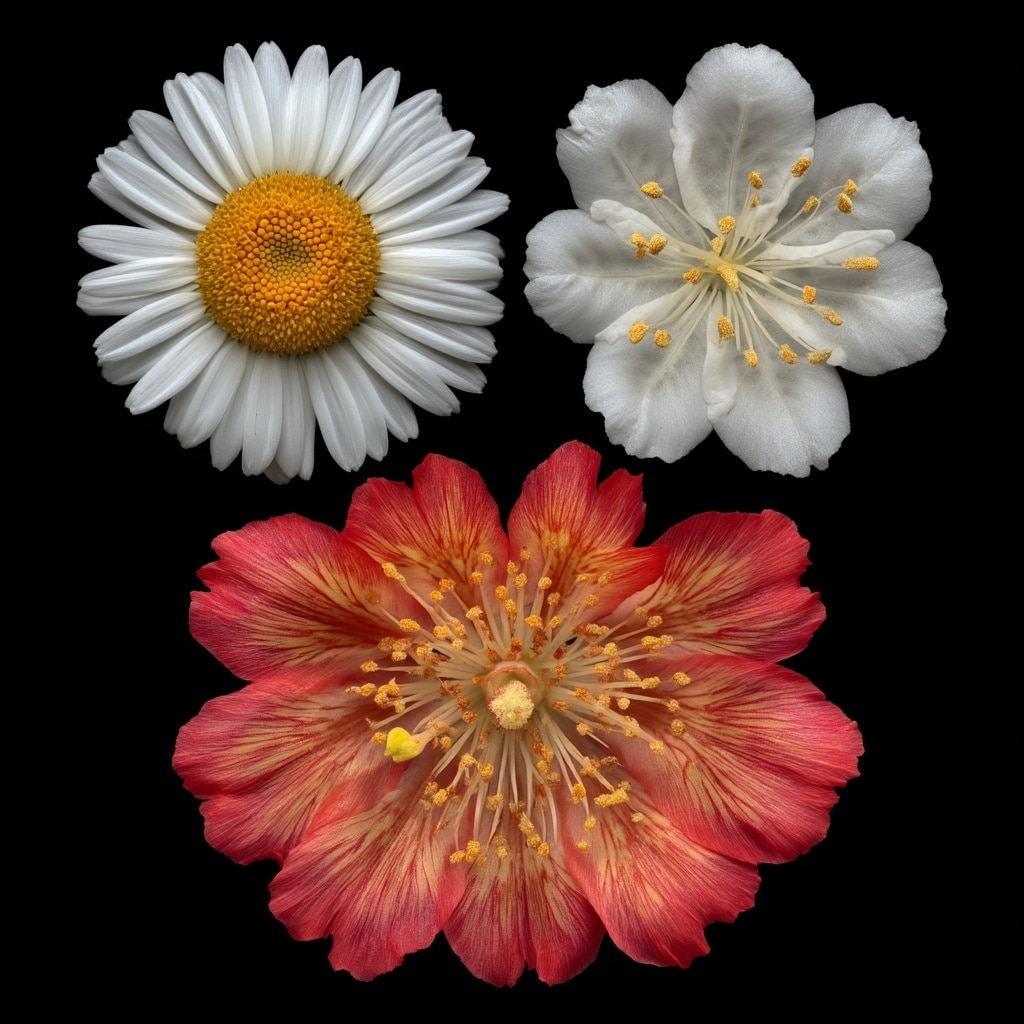
Symmetry is one of the most noticeable features when looking at different flower types. It tells us how a flower’s parts are arranged and how balanced the bloom appears. This trait is more than aesthetic—it influences how pollinators interact with the flower.
🌸 Regular Flowers (Radial Symmetry)
Regular flowers, also called actinomorphic, have radial symmetry. This means:
- The flower can be divided into two identical halves along multiple planes.
- The petals are usually evenly spaced and similar in shape.
Common examples:
- Daisies
- Stonecrop (Sedum)
- Morning glories
These symmetrical flowers are often easier for pollinators like bees and butterflies to approach from any direction, increasing the likelihood of pollination.
🌺 Irregular Flowers (Bilateral Symmetry)
Irregular flowers, or zygomorphic, have bilateral symmetry. That means:
- Only one line can divide the flower into mirror-image halves.
- The petals and other parts are uneven or uniquely shaped.
Examples:
- Snapdragons
- Peas
- Orchids
These flower types often guide pollinators to enter in a specific way, ensuring pollen transfer is more targeted.
🌼 Asymmetrical Flowers
Rarely, a flower may lack symmetry altogether. These asymmetrical flowers don’t have a balanced form and can appear irregular in all directions. While less common, they still play a role in biodiversity.
Understanding flower symmetry is not just helpful for plant identification—it’s also key when planning a visually harmonious garden or selecting blooms for floral design.
🌸 Corolla Shapes and Their Role in Flower Types
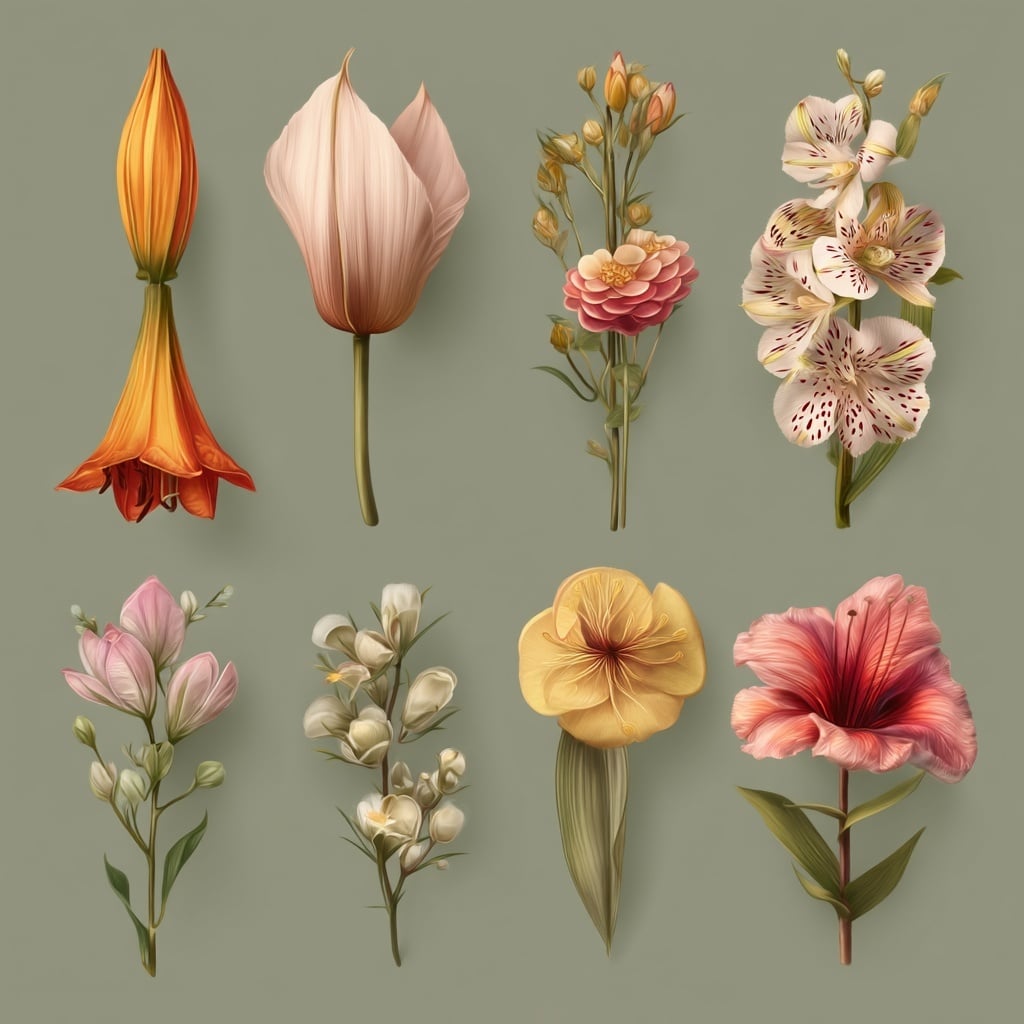
The corolla—the collective name for all the petals of a flower—is often what catches your eye first. In many flower types, the corolla is the most colorful and visually striking part, designed to attract pollinators like bees, butterflies, and hummingbirds. But its shape also tells a story about the flower’s identity and function.
🌼 Common Corolla Shapes
Here are some popular corolla shapes and examples of where they appear:
- Tubular – Long and narrow, like in honeysuckle or trumpet vine. Ideal for pollinators with long proboscises.
- Bell-shaped (campanulate) – Wide at the base and flaring at the mouth, as in bluebells or lilies.
- Funnel-shaped – Gradually widens from the base, seen in morning glories.
- Salverform – Narrow tube that opens into a flat, spreading shape (e.g., phlox).
- Ligulate – Strap-shaped, often found in dandelions and sunflowers.
- Papilionaceous – Butterfly-shaped, typical of pea family flowers, including sweet peas and lupines.
🌸 Why It Matters
The shape of the corolla isn’t just decorative. It plays a key role in:
- Pollinator attraction and access
- Protection of reproductive organs
- Adaptation to specific environments
By identifying the corolla shape, gardeners and botanists can better understand a plant’s ecological role and how to care for it.
🌿 Flower Types in Monocots and Dicots
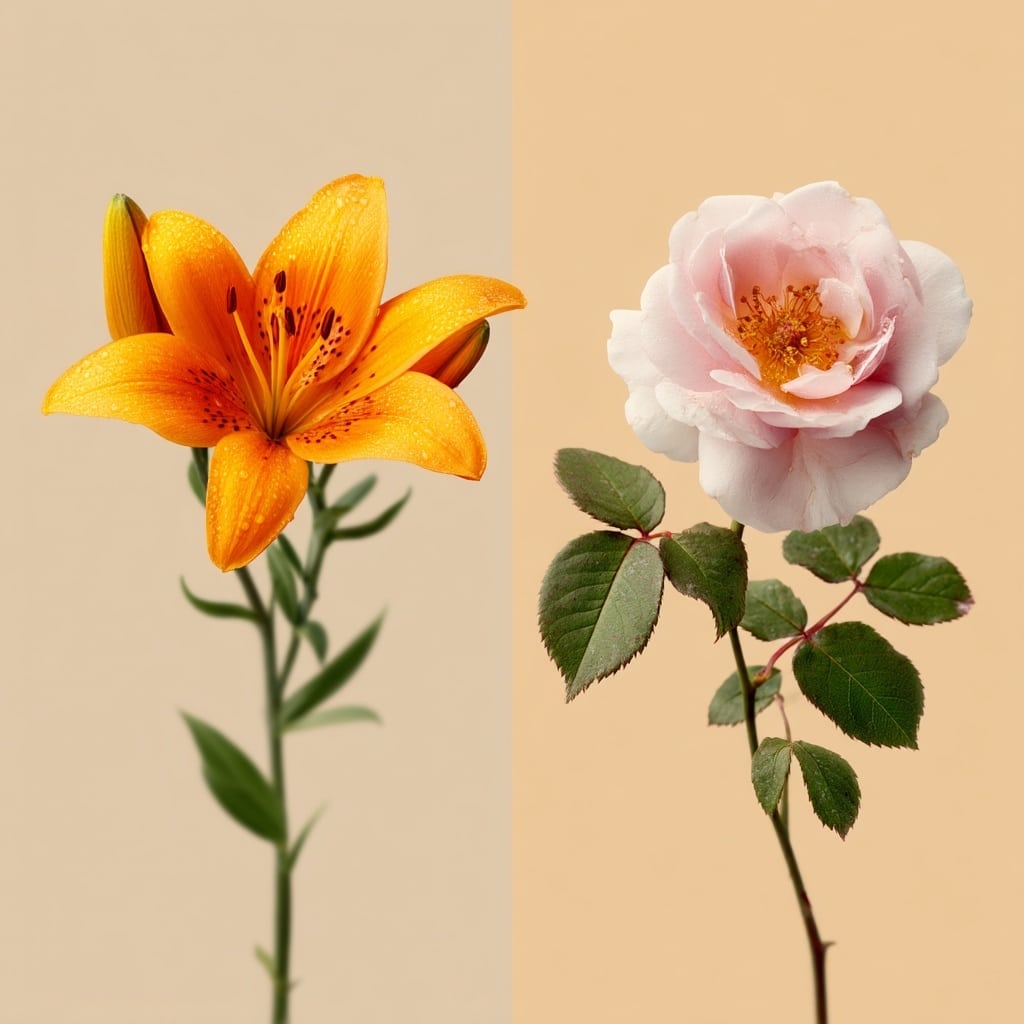
When classifying flower types, one of the foundational distinctions in botany is whether a plant is a monocot or a dicot. These two groups refer to the number of cotyledons (seed leaves) present in the plant embryo—but they also reflect key differences in flower structure.
🌼 Monocot Flowers
Monocotyledons (monocots) typically have:
- Flower parts in multiples of three (e.g., 3, 6, 9 petals or stamens)
- Parallel-veined leaves
- Fibrous root systems
Common monocot flower examples:
- Lilies
- Orchids
- Irises
- Grasses (like wheat and corn)
Monocot flowers often appear more symmetrical and simple in structure. Their elegance and simplicity make them popular in ornamental gardens.
🌸 Dicot Flowers
Dicotyledons (dicots) usually have:
- Flower parts in multiples of four or five
- Net-veined leaves
- Taproot systems
Examples of dicot flower types:
- Roses
- Sunflowers
- Peas
- Geraniums
Dicot flowers tend to show more variation in form and complexity. They make up the majority of flowering plants and are beloved for their diverse colors and forms.
🌿 Why This Classification Matters
Knowing whether a plant is a monocot or dicot helps gardeners:
- Understand how the plant grows
- Anticipate blooming patterns
- Choose appropriate care methods
Whether you’re planting for beauty or biodiversity, this distinction gives insight into how different flower types behave and thrive in various garden settings.
🌸 Types of Inflorescence in Flower Types
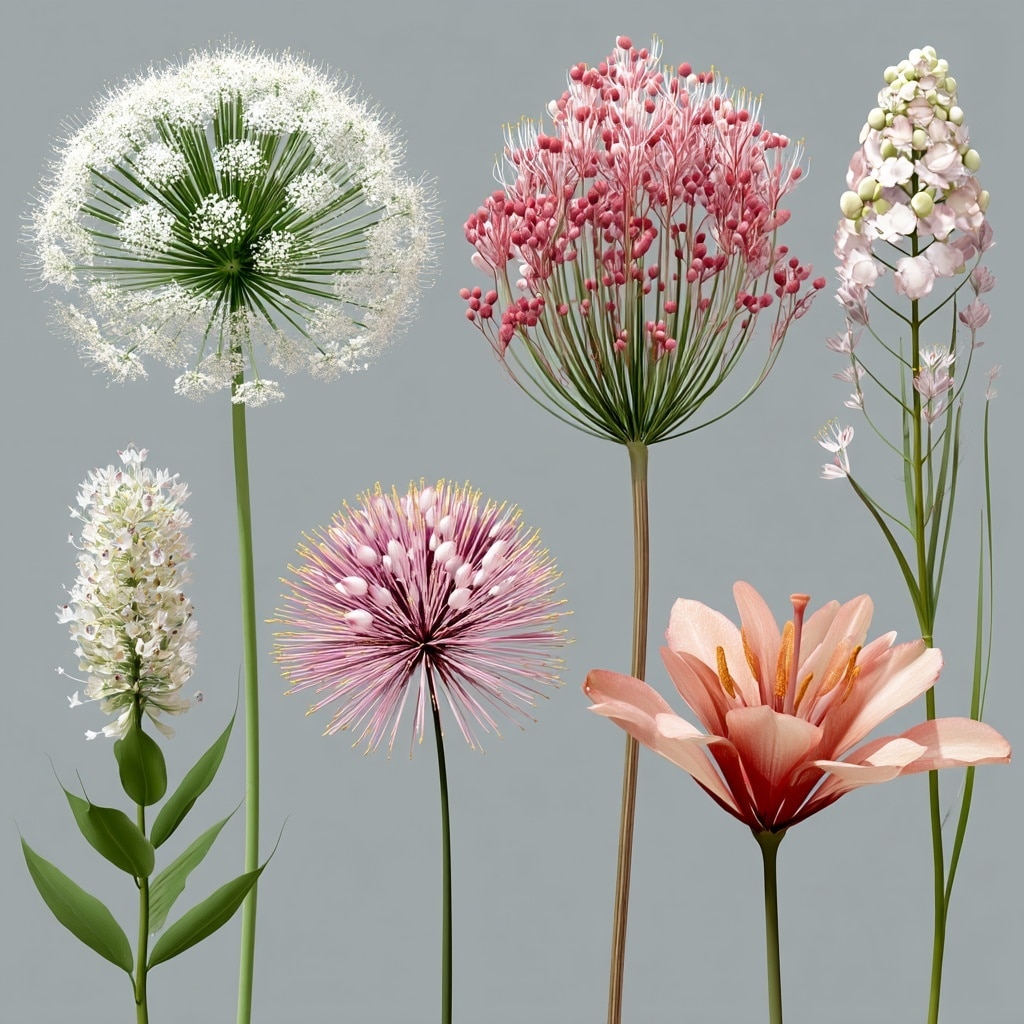
In many flower types, blooms don’t appear alone—they often grow in clusters called inflorescences. Understanding these structures helps gardeners recognize plant patterns, predict blooming habits, and create more dynamic visual arrangements in their landscapes.
🌼 What Is an Inflorescence?
An inflorescence is a group or cluster of flowers arranged on a stem. The stem that holds the cluster is called a peduncle, while each individual flower may be attached by a smaller stalk called a pedicel.
Inflorescences can be simple or complex, and their arrangement plays a role in pollination efficiency and ornamental appeal.
🌿 Common Types of Inflorescence
Here are some widely recognized forms:
- Raceme – Flowers are borne on short pedicels along a central axis (e.g., lupine, snapdragon).
- Spike – Like a raceme but flowers are directly attached without pedicels (e.g., lavender, veronica).
- Umbel – All flower stalks emerge from a single point, forming an umbrella shape (e.g., parsley, Queen Anne’s lace).
- Corymb – Outer flowers bloom first, and pedicels are different lengths to form a flat-topped cluster (e.g., yarrow).
- Head (Capitulum) – A dense cluster of sessile flowers on a flattened base (e.g., sunflowers, daisies).
- Panicle – A branched, compound inflorescence often seen in hydrangeas or oats.
🌸 Why Inflorescence Type Matters
Different inflorescence types influence:
- Bloom time and duration
- Pollination strategy
- Visual impact in garden design
When planning your garden, choosing a mix of inflorescence types can enhance the aesthetic appeal and ecological value of your space.
🌺 Conclusion
Understanding the wide range of flower types—from complete and perfect flowers to various ovary positions, floral part arrangements, and inflorescence forms—empowers gardeners to make smarter choices in planting, design, and care. Whether you’re growing a vibrant perennial border or creating pollinator-friendly spaces, knowing how flowers are classified helps you work with nature more effectively. The beauty of flowers lies not only in their appearance but in their complexity and adaptability, making every bloom a small marvel of biology and design.