
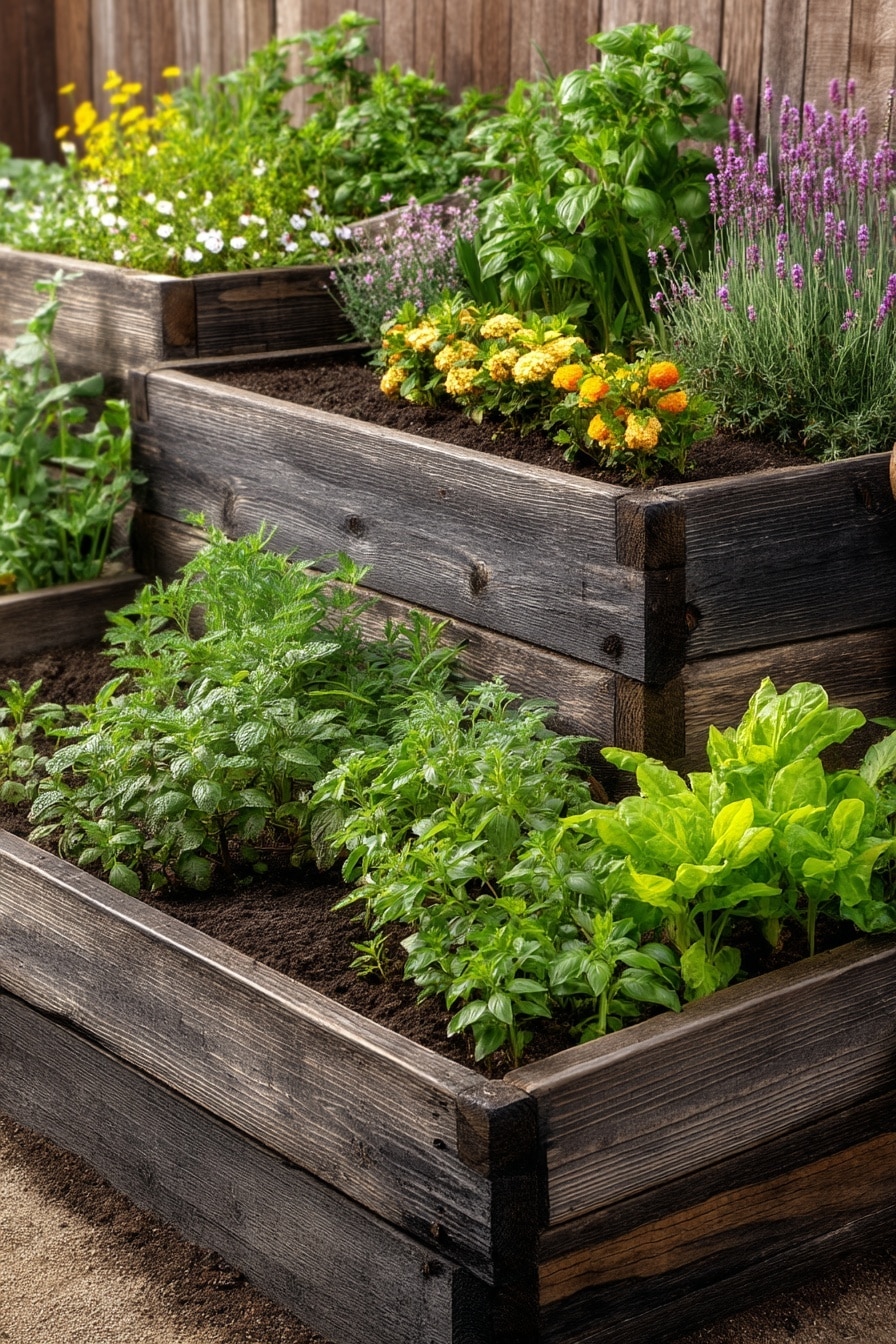
Raised garden bed plans are essential for gardeners who want elevated, organized, and productive planting spaces. These plans help you design beds that suit your space, plants, and style — whether you’re growing vegetables, herbs, flowers, or a mix. Raised garden beds make gardening more accessible by reducing bending and improving soil quality. They also help with drainage and weed control.
In this guide, we’ll walk through six practical raised garden bed plans you can build yourself. Each plan includes key features, benefits, and tips to tailor it to your outdoor area.
Table of Contents
1. Simple Rectangular Raised Garden Bed Plan

A classic layout is one of the most practical raised garden bed plans for beginners and experienced gardeners alike. The rectangular design is easy to build, cost-effective, and adaptable to almost any yard size.
This plan typically uses untreated cedar or redwood boards assembled into a sturdy frame and filled with nutrient-rich soil.
Why Choose a Rectangular Design?
Among all raised garden bed plans, rectangular beds are popular because they:
- Maximize planting space
- Fit neatly along fences or property lines
- Allow easy crop rotation
- Work well in rows for larger gardens
A standard size is 4 feet wide so you can reach the center without stepping into the bed. Length can vary depending on available space.
Building Tips
Use corrosion-resistant screws and corner brackets for durability. Position the bed in a location that receives at least six hours of sunlight daily.
If your site has poor soil, add a layer of landscape fabric underneath before filling. Simple raised garden bed plans like this one provide a strong foundation for vegetables, herbs, or flowering ornamental plants.
2. Elevated Raised Garden Bed with Legs
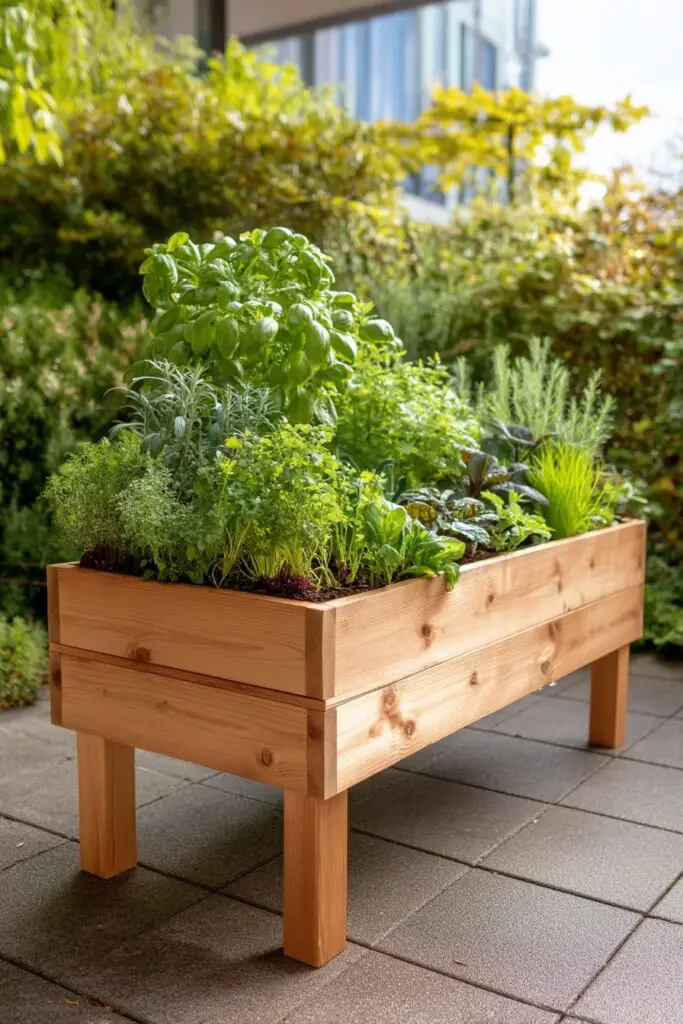
Elevated designs are highly practical raised garden bed plans for gardeners who want easier access and improved ergonomics. Unlike ground-level beds, these sit on sturdy legs, bringing the planting surface closer to waist height.
This style works well on patios, decks, or compact yards where bending and kneeling can be difficult.
Benefits of an Elevated Design
Many homeowners choose elevated raised garden bed plans because they:
- Reduce back and knee strain
- Improve drainage
- Limit pest access
- Fit well in small outdoor spaces
They are especially helpful for growing herbs and shallow-rooted vegetables.
Construction Considerations
Use pressure-treated lumber rated for outdoor use or naturally rot-resistant wood like cedar. Reinforce the legs with cross supports for stability.
Include drainage holes at the bottom and line the interior with breathable landscape fabric.
Elevated raised garden bed plans are ideal for patios and pair nicely with articles on indoor outdoor herbs if you’re creating related internal links.
3. Tiered Raised Garden Bed Plan
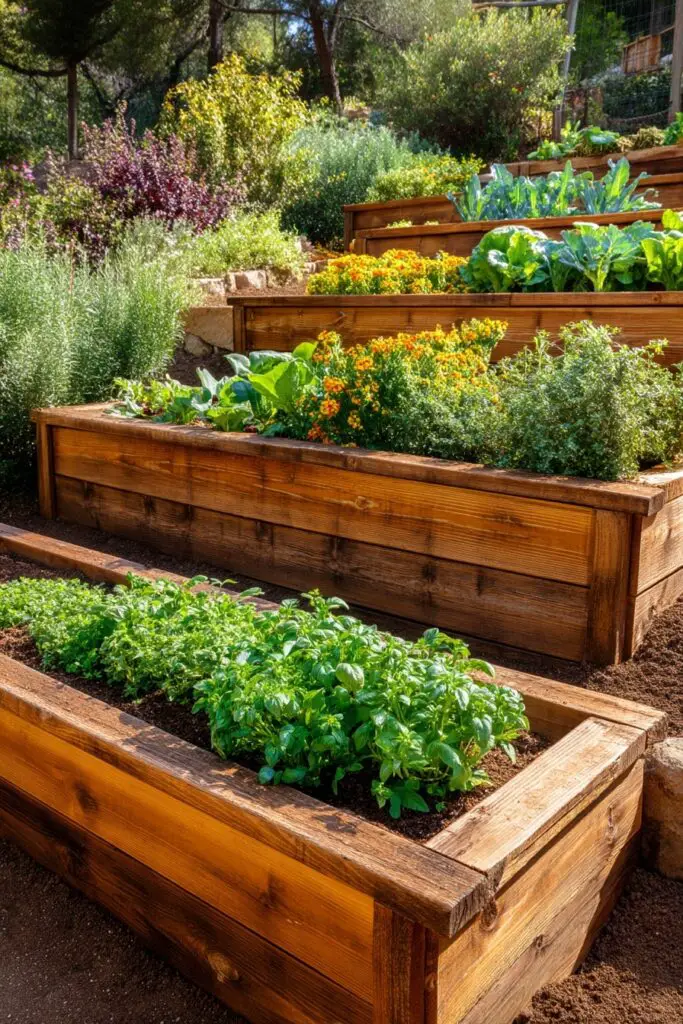
Tiered layouts are space-efficient raised garden bed plans that allow you to grow multiple plants at different heights. This design stacks planting areas in levels, making it ideal for sloped yards or gardeners who want visual variety.
It also helps separate plant types based on sunlight and watering needs.
Why Choose a Tiered Structure?
Tiered raised garden bed plans are beneficial because they:
- Maximize vertical space
- Improve drainage between levels
- Create natural organization for crops
- Add architectural interest to your garden
Lower levels can hold larger vegetables, while upper tiers work well for herbs or compact flowers.
Building Tips for Stability
Anchor the bottom tier securely and ensure each level is properly supported. Use thick boards to handle the added weight of soil.
Install irrigation tubing between levels for even watering. Tiered raised garden bed plans are particularly effective in small gardens where efficient use of space is essential.
4. Raised Garden Bed Plan with Built-In Seating
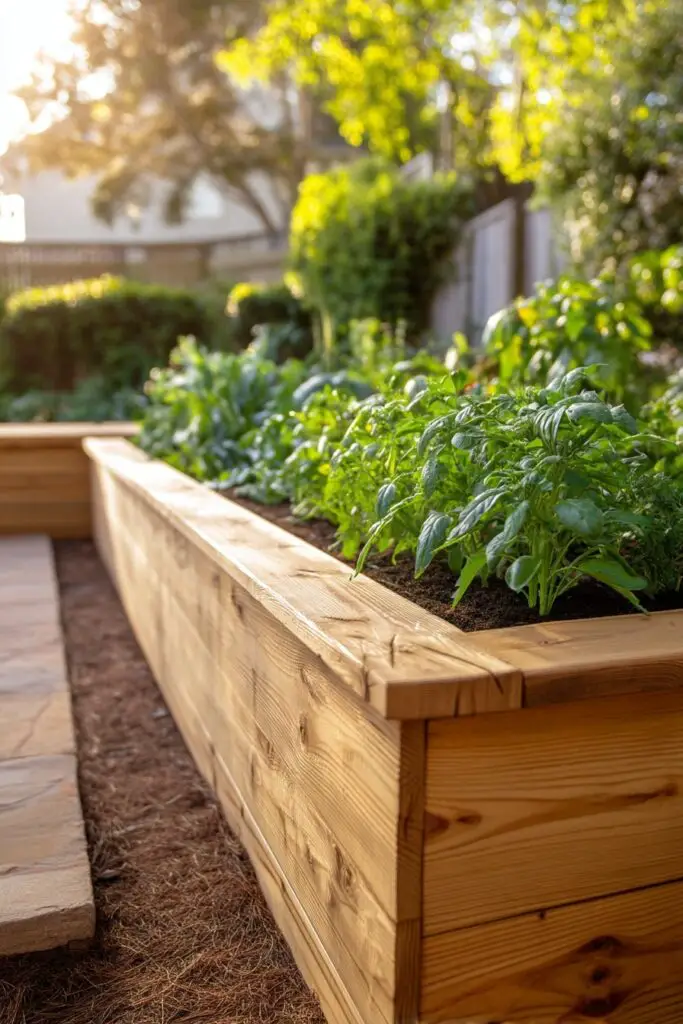
Combining function and comfort, this style of raised garden bed plans integrates seating along the edges of the frame. Wide top boards double as benches, creating a relaxing spot to enjoy your garden.
This design works well in backyard layouts where you want your planting area to serve as both a growing space and a gathering area.
Benefits of Integrated Seating
Many gardeners choose seating-style raised garden bed plans because they:
- Provide a convenient resting place
- Define garden borders clearly
- Add visual structure to the landscape
- Make harvesting more comfortable
This design is especially useful near patios or outdoor entertaining spaces.
Construction Tips
Use wider, reinforced boards along the top edge to support weight safely. Secure joints with heavy-duty brackets and weather-resistant screws.
Apply a protective outdoor sealant to extend the lifespan of the wood. Raised garden bed plans with seating create a multifunctional space that blends gardening with outdoor living.
5. U-Shaped Raised Garden Bed Plan
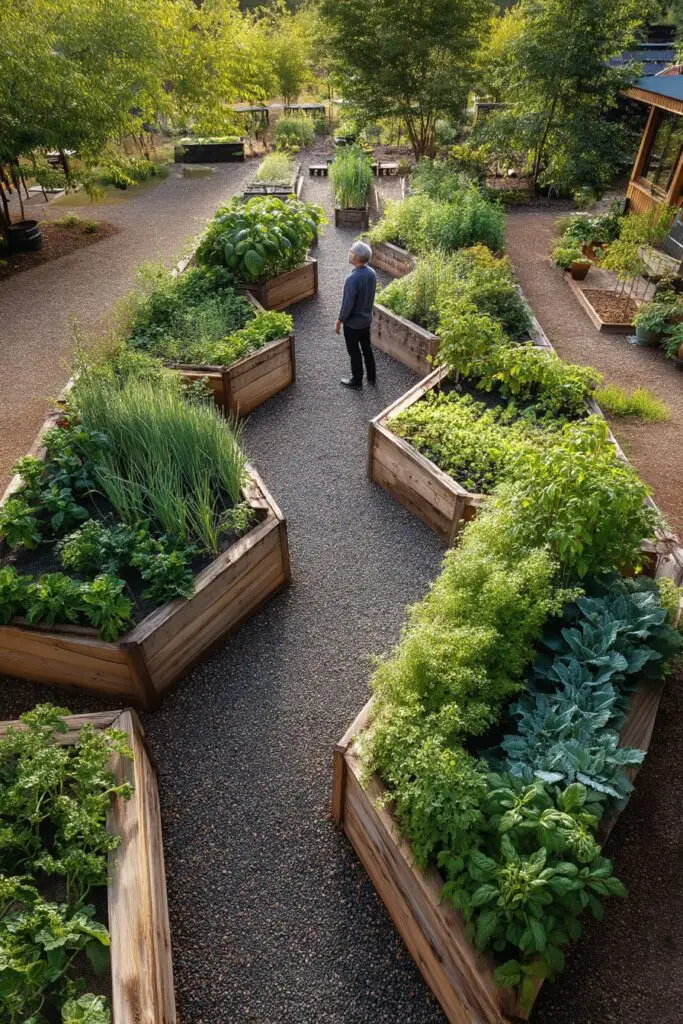
U-shaped layouts are efficient raised garden bed plans designed for accessibility and productivity. This structure creates three connected sides with an open center, allowing you to stand in the middle and reach all planting areas comfortably.
It’s an excellent choice for gardeners who want to maximize space while minimizing strain.
Why Choose a U-Shaped Design?
Many growers prefer U-shaped raised garden bed plans because they:
- Provide easy access to all plants
- Reduce the need to walk around beds
- Create organized planting zones
- Work well in larger backyard gardens
This layout supports companion planting and crop rotation by dividing sections naturally.
Building Considerations
Keep each side no more than 4 feet wide for comfortable reach. Reinforce corners carefully since the structure supports more soil than single beds.
Add pathways with gravel or stepping stones in the center for stability. U-shaped raised garden bed plans are ideal for vegetable gardens where frequent harvesting is required
6. Keyhole Raised Garden Bed Plan
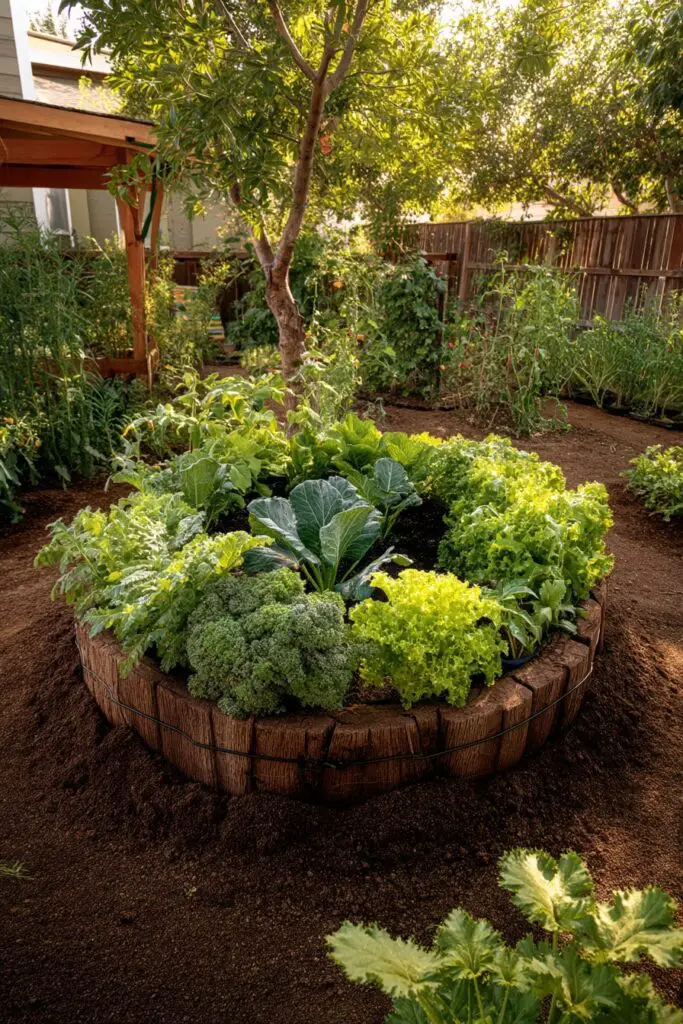
Keyhole layouts are innovative raised garden bed plans that combine efficiency with sustainable gardening. This circular design includes a small notch or “keyhole” opening that allows easy access to the center of the bed.
It’s especially popular among gardeners focused on composting and water conservation.
How the Keyhole Design Works
Keyhole-style raised garden bed plans typically feature:
- A circular planting bed
- A central compost basket
- A narrow access path into the center
- Layered soil for improved drainage
Kitchen scraps can be added to the compost basket, feeding the surrounding plants naturally.
Why Gardeners Love This Design
The circular layout promotes even watering and nutrient distribution. It also reduces the distance you need to reach when planting or harvesting.
Because of its compact footprint, this option works well in medium-sized yards or community garden spaces.
Keyhole raised garden bed plans are excellent for vegetable gardens and can support herbs, leafy greens, and flowering plants in one cohesive structure.
Conclusion
Raised garden bed plans give gardeners the flexibility to build productive, organized, and accessible planting spaces. Whether you prefer a simple rectangular bed, an elevated design, a tiered layout, built-in seating, a U-shaped structure, or a keyhole system, each option supports healthy soil and efficient gardening.
By choosing raised garden bed plans that match your space and goals, you can create a thriving garden that’s both practical and visually appealing.