
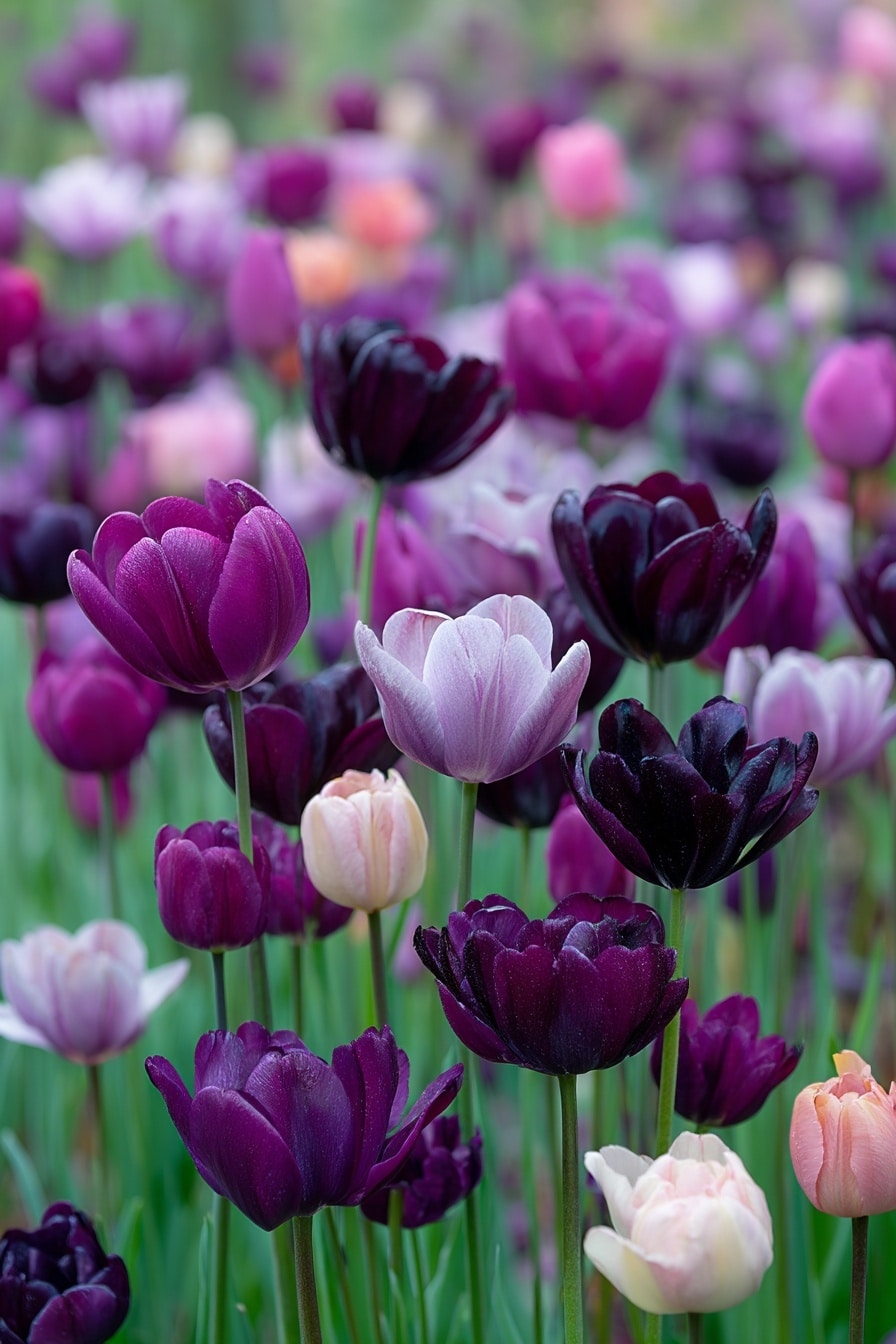
Purple tulips bring a regal energy to spring gardens with their deep, luxurious hues and graceful presence. Often seen as symbols of royalty and admiration, these spring bloomers combine timeless beauty with striking color to create powerful visual statements in borders, beds, and floral arrangements.
Their vibrant tones—ranging from soft lavender to rich plum—blend effortlessly into classic or modern garden designs. Whether planted in bold clusters or paired with contrasting blooms, purple tulips offer elegance, structure, and meaning to every outdoor space.
In this guide, we’ll explore the charm, planting care, and design possibilities that make purple tulips a favorite for spring gardeners and flower lovers alike.
Table of Contents
🌿 Quick Facts About Purple Tulips

Before adding purple tulips to your spring display, it helps to understand their growing habits and basic needs. These bulbs are both elegant and relatively easy to manage when planted correctly.
- Botanical Name: Tulipa spp. and hybrids
- Family: Liliaceae (Lily family)
- Native Region: Central Asia and Turkey
- Plant Type: Spring-flowering bulb, upright and clump-forming
- Hardiness Zones: USDA 3–8 (treat as annuals in warmer zones)
- Bloom Time: Early to late spring, depending on variety
- Bloom Duration: Around 1–3 weeks outdoors; 5–7 days in a vase
- Sun Requirements: Full sun (6+ hours); light afternoon shade can help extend bloom time
- Soil: Well-drained, sandy or loamy soil; avoid waterlogged areas
- Watering Needs: Water after planting and during growth; keep soil dry in summer dormancy
- Toxicity: Bulbs are toxic to cats and dogs—plant with care
Purple tulips are technically perennials but are often treated as annuals in warmer or wetter regions where bulbs may not reliably return.
🎨 Visual Appeal: Shades of Purple That Transform a Garden
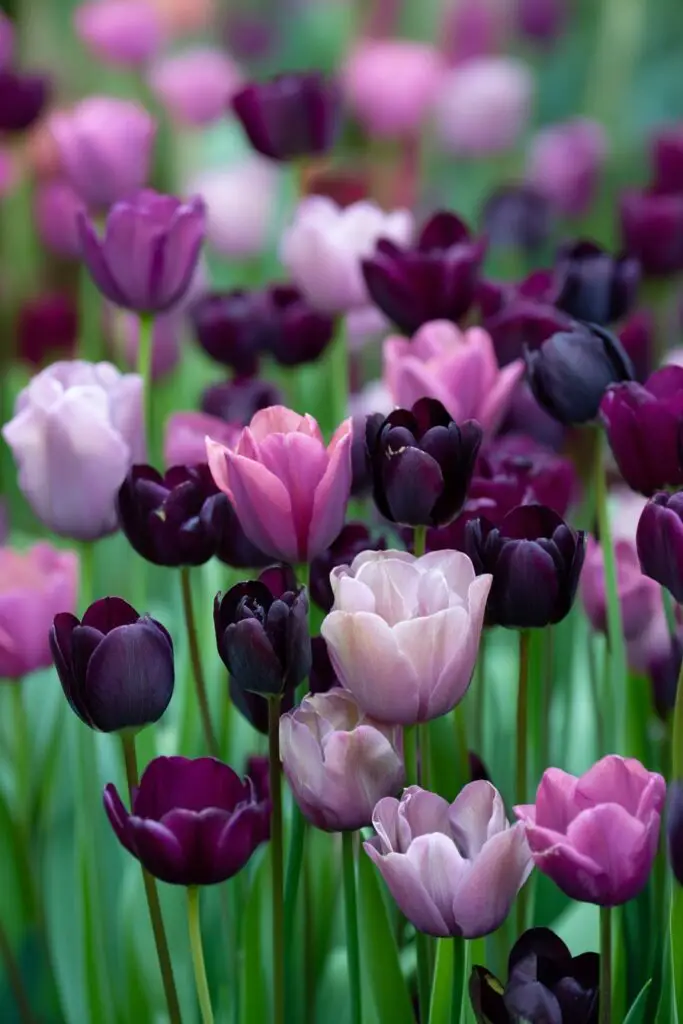
Few spring flowers are as captivating as purple tulips. Their smooth, cup-shaped petals and bold coloring bring a sense of richness and depth to any outdoor setting. From soft lavender tones to dramatic, near-black purples, the variety within this color group is stunning.
Lighter shades like lilac or mauve can soften a planting scheme and pair beautifully with pastel companions. Deeper hues, such as plum or eggplant, make a strong statement and work well as focal points in flower beds or along borders.
The tall, elegant stems of purple tulips add vertical interest, especially when planted in clusters. Their strong silhouettes contrast beautifully with low-growing groundcovers or airy spring perennials.
Whether you’re designing a formal flower bed or a casual cottage garden, purple tulips contribute texture, height, and visual drama—making them as functional as they are beautiful.
💜 Symbolism and Meaning Behind Purple Tulips
More than just a visual delight, purple tulips carry powerful symbolic meaning. Historically associated with royalty and nobility, their rich tones represent dignity, admiration, and a quiet kind of strength.
In the language of flowers, purple tulips are often used to express deep respect or lasting appreciation. They’re a thoughtful choice for celebrating milestones, honoring loved ones, or conveying feelings that go beyond everyday sentiment.
Beyond admiration, purple tulips also evoke spirituality and devotion, making them a meaningful addition to memorial gardens or reflective outdoor spaces. Their mysterious, velvety hues bring a sense of calm and contemplation that few other flowers can match.
Whether gifted in a bouquet or planted with intention in your landscape, purple tulips tell a story of elegance, reverence, and timeless grace.
🌱 How to Plant and Care for Purple Tulips
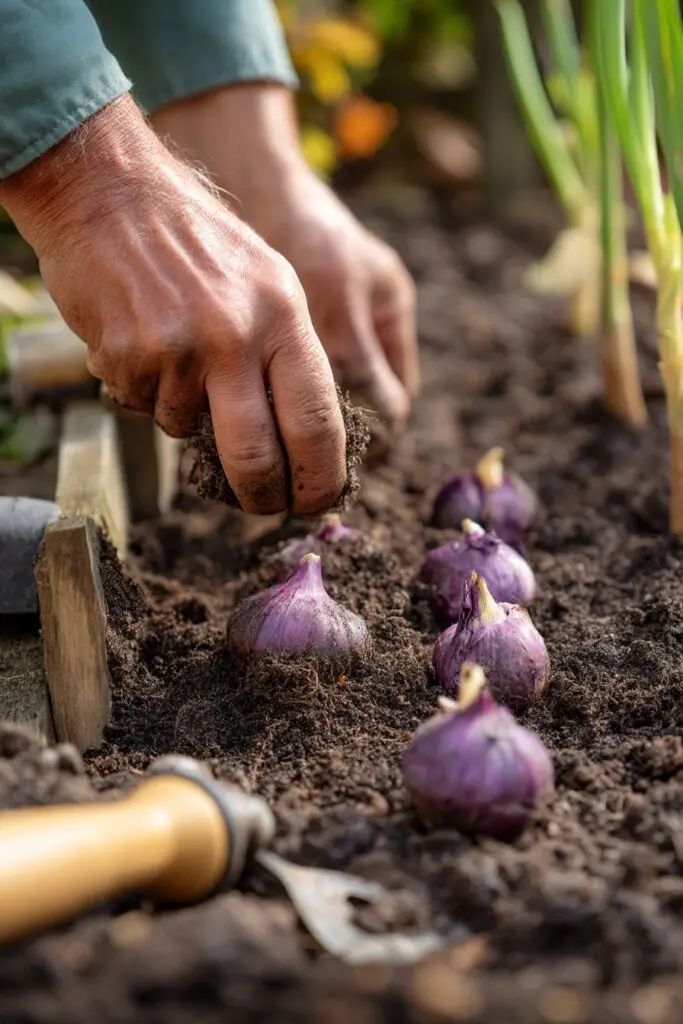
Growing purple tulips successfully starts with proper planting in the fall. These spring-flowering bulbs need time to establish roots before the ground freezes, ensuring strong growth and bold blooms when warmer weather arrives.
Planting Tips:
- When to Plant: In fall, 6–8 weeks before the first hard frost
- Depth & Spacing: Plant bulbs 6–8 inches deep and 4–6 inches apart, pointed end facing up
- Soil Conditions: Use well-drained soil; sandy or loamy textures work best
- Sunlight: Choose a location with full sun for the strongest color and stem growth
Care After Planting:
- Watering: Water once after planting, then keep soil moderately moist during spring growth
- Fertilizer: Use a balanced fertilizer (10-10-10) at planting time and again as shoots emerge
- Post-Bloom Care: Deadhead faded flowers, but allow foliage to yellow naturally so bulbs can recharge for next season
In warmer climates (zones 8–10), purple tulips may need to be treated as annuals or pre-chilled in a refrigerator for 12–16 weeks before planting.
With proper care, your purple tulips will deliver breathtaking blooms and return year after year in cooler climates.
🎯 Design Ideas: What to Plant With Purple Tulips
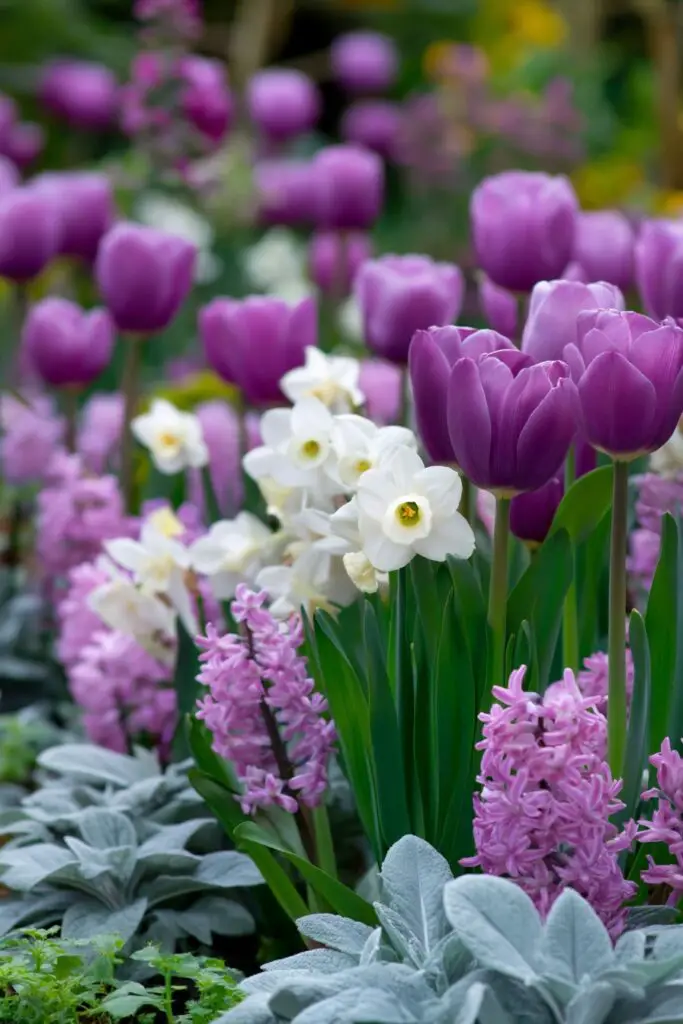
To make the most of your purple tulips, thoughtful companion planting can enhance both color and structure in your spring garden. Their bold hues stand out beautifully when paired with lighter or contrasting blooms.
Great Companion Plants:
- White daffodils – Their bright, clean tones make purple tulips pop and add a fresh contrast.
- Soft pink hyacinths – These pastel blooms balance deeper purples with fragrance and fullness.
- Silver-leaf plants (like lamb’s ear or artemisia) – Their cool-toned foliage highlights the richness of purple without competing for attention.
You can also plant purple tulips in containers alongside trailing ivy or pansies for a dynamic, layered effect on porches or balconies. In formal beds, arrange them in repeating color blocks for strong visual impact.
For a more naturalistic look, tuck them into cottage-style borders among perennials that bloom slightly later—like alliums or hardy geraniums—to extend interest through the season.
Well-paired combinations can elevate your tulip display from simple to stunning, whether you’re working with a backyard plot or a patio planter.
🐾 Wildlife and Safety Tips for Growing Purple Tulips
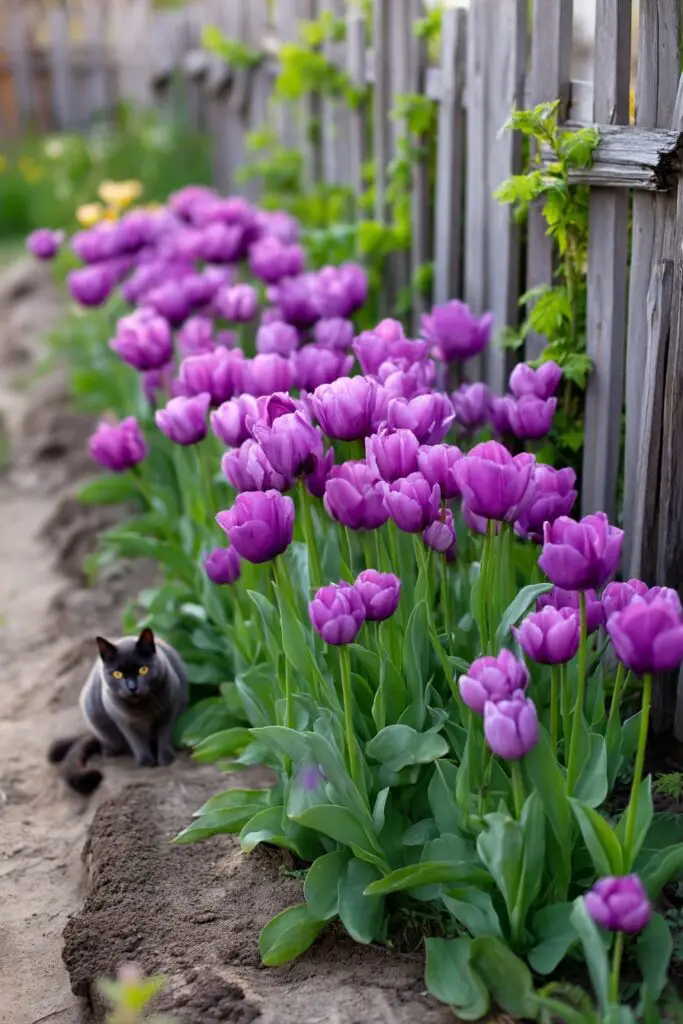
While purple tulips bring elegance to your garden, they also attract attention—from both helpful and unwanted visitors. Understanding how these flowers interact with wildlife and pets is key to maintaining a safe and thriving space.
Wildlife Considerations:
- Pollinators: Bees and other early-season pollinators may visit the blooms, especially on warm spring days.
- Pests: Tulip bulbs are a favorite snack for rodents like squirrels and voles, and deer may nibble emerging shoots.
- Protection Tips: Use bulb cages, chicken wire, or sprinkle crushed gravel around plantings to deter digging. In deer-prone areas, plant tulips closer to the house or among strongly scented plants like allium or lavender.
Pet Safety:
Tulips—especially the bulbs—are toxic to cats and dogs, containing compounds (tulipalin A and B) that can cause vomiting, drooling, or more serious symptoms if ingested.
If you have curious pets, consider planting purple tulips in raised beds, containers, or behind barriers to minimize exposure.
With a few precautions, you can enjoy their beauty while keeping your garden safe for everyone—two-legged and four-legged alike.
📚 The History and Cultural Legacy of Purple Tulips

The story of purple tulips stretches far beyond the garden. These elegant blooms have been admired for centuries, particularly during the 17th-century Tulip Mania in the Netherlands, when tulip bulbs—especially rare colors like deep purples—became so valuable they were traded like currency.
Originating from Central Asia and introduced to Europe via the Ottoman Empire, tulips quickly captured the imagination of aristocrats and botanists alike. Their vibrant hues, including rich purples, symbolized wealth, sophistication, and exclusivity.
In many cultures, purple tulips have come to represent mystery, spiritual depth, and refined taste. Today, they are still used in formal gardens, memorial spaces, and elegant floral designs, connecting us to centuries of fascination and admiration.
Planting purple tulips isn’t just about seasonal color—it’s a nod to a global legacy rooted in beauty, symbolism, and human desire for rare and meaningful things.
🌸 Final Thoughts on Purple Tulips
From their rich symbolism to their dramatic visual impact, purple tulips bring timeless elegance to spring gardens. Whether you’re planting a few bulbs in containers or designing sweeping garden borders, their luxurious hues and graceful form make them an unforgettable choice.
With proper care, thoughtful placement, and a touch of creativity, these regal blooms can elevate any outdoor space—adding beauty, meaning, and a connection to centuries of floral tradition.
If you’re planning a spring refresh, start with purple tulips—and watch your garden bloom with elegance.