
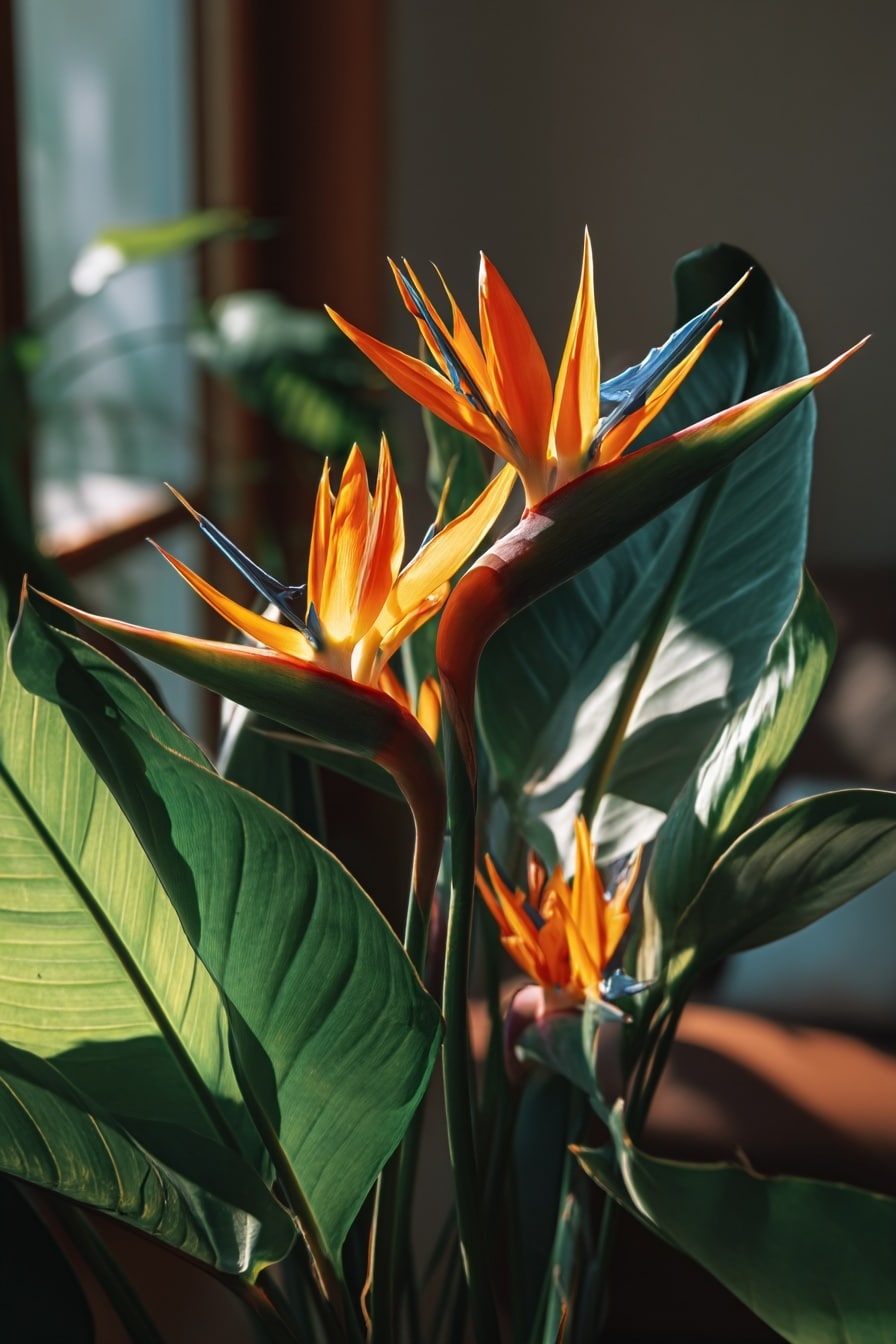
Bird of paradise plant is a striking tropical beauty that instantly elevates any indoor space with its bold, architectural leaves and exotic appeal. Often mistaken for a banana plant due to its lush, paddle-shaped foliage, this plant is more than just a visual delight—it’s a statement piece for modern interiors.
Native to South Africa, the bird of paradise plant thrives in warm, bright conditions and has become a favorite among plant lovers looking for an indoor showstopper. While flowering indoors is rare, its lush greenery and sculptural form make it a rewarding addition to any plant collection, even without the iconic blooms.
Table of Contents
Common Questions About the Bird of Paradise Plant

Will My Bird of Paradise Plant Bloom Indoors?
It’s possible, but not common. The bird of paradise plant needs strong, direct sunlight, high humidity, and time—usually 4 to 5 years of maturity—before it can flower. Even then, indoor conditions often don’t match the tropical environment it needs to bloom. But don’t worry—its bold foliage alone makes it worth growing.
Why Are the Leaves Splitting or Damaged?
Splits along the leaves of your bird of paradise plant are normal and not always a sign of poor health. In nature, these slits help the plant withstand wind by making the leaves more aerodynamic. However, if you notice dry edges, curling, or browning, it could be a sign of underwatering or low humidity.
When Should I Repot My Bird of Paradise Plant?
Repot your bird of paradise plant when it becomes rootbound or stops producing new growth. Choose a pot that’s about 5 cm larger in diameter than the current one. Repotting is best done in spring or early summer to support healthy growth in the active season.
How to Care for a Bird of Paradise Plant
Light
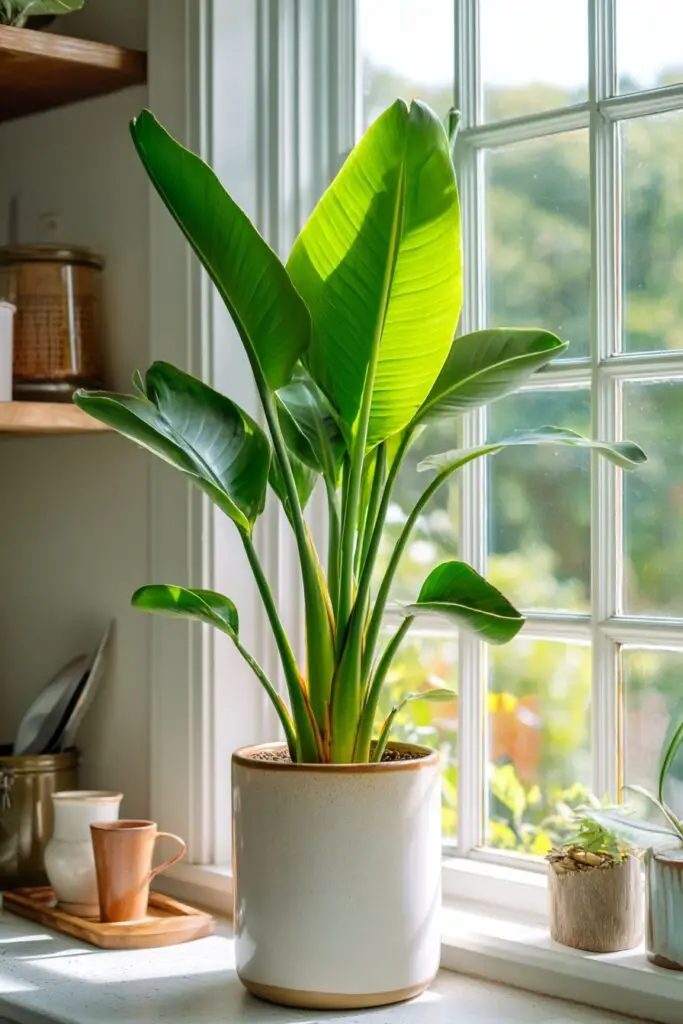
The bird of paradise plant thrives in bright, direct sunlight. A spot near a south-facing window is ideal. While it can tolerate medium light, lower exposure will slow growth and reduce its chance of flowering. Rotate the pot occasionally to ensure even leaf development.
Watering
Water only when the top 2–3 inches of soil feel dry. During warmer months, this could mean once a week; in winter, less often. Always allow excess water to drain—bird of paradise plants dislike soggy soil and standing water. Use filtered or dechlorinated water when possible to avoid leaf spotting.
Temperature & Humidity
Keep your bird of paradise plant in a warm, stable environment between 18°C and 30°C. It prefers higher humidity, so misting the leaves or using a humidifier can help. Avoid placing it near drafts, heaters, or air conditioners, which can cause stress and leaf damage.
Feeding
Feed monthly during spring and summer with a diluted liquid houseplant fertilizer. Skip feeding during fall and winter when the plant’s growth slows down.
Cleaning & Maintenance
Wipe the large leaves regularly with a damp cloth to remove dust and improve light absorption. Occasional misting keeps the plant looking fresh and supports humidity needs. These little touches keep your bird of paradise plant looking vibrant year-round.
Where to Place Your Bird of Paradise Plant Indoors
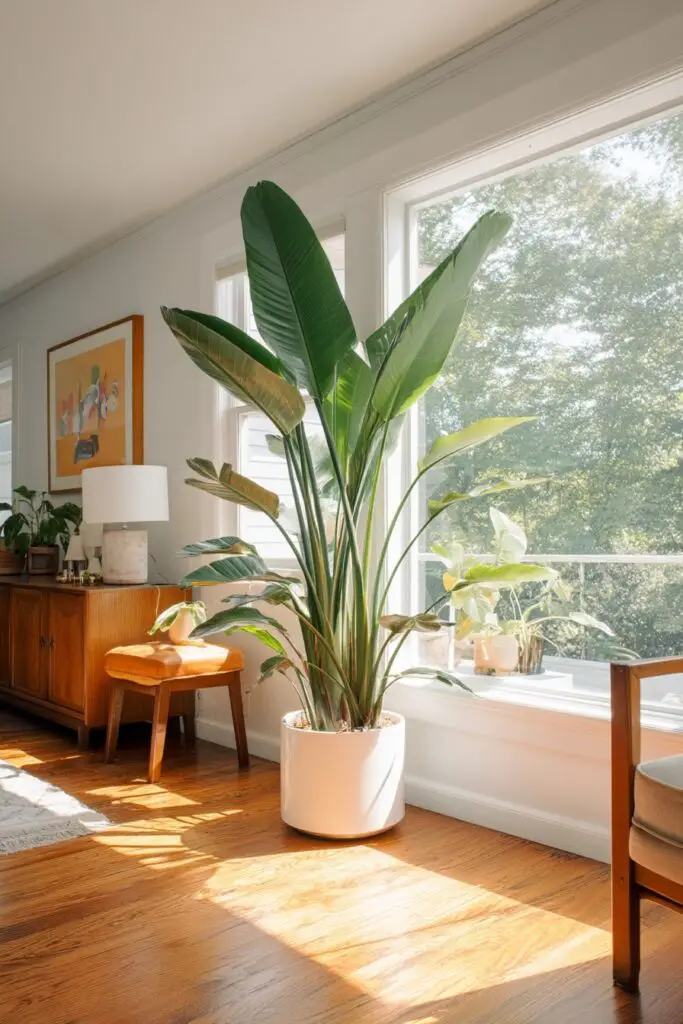
The bird of paradise plant is a bold, upright grower that needs space and sunlight to thrive. Choose a bright room with plenty of natural light—ideally near a large south- or west-facing window. Living rooms, sunrooms, and conservatories are excellent choices.
Make sure the area isn’t too cramped. This plant can grow up to 5 feet tall indoors, so give it room to spread its broad leaves without brushing against furniture or walls.
Avoid placing it near vents or drafty windows. Even though it’s hardy, cold drafts and sudden temperature drops can stress the plant and damage its foliage.
With the right placement, your bird of paradise plant becomes a living sculpture that instantly elevates your indoor space.
Where to Buy a Bird of Paradise Plant Online
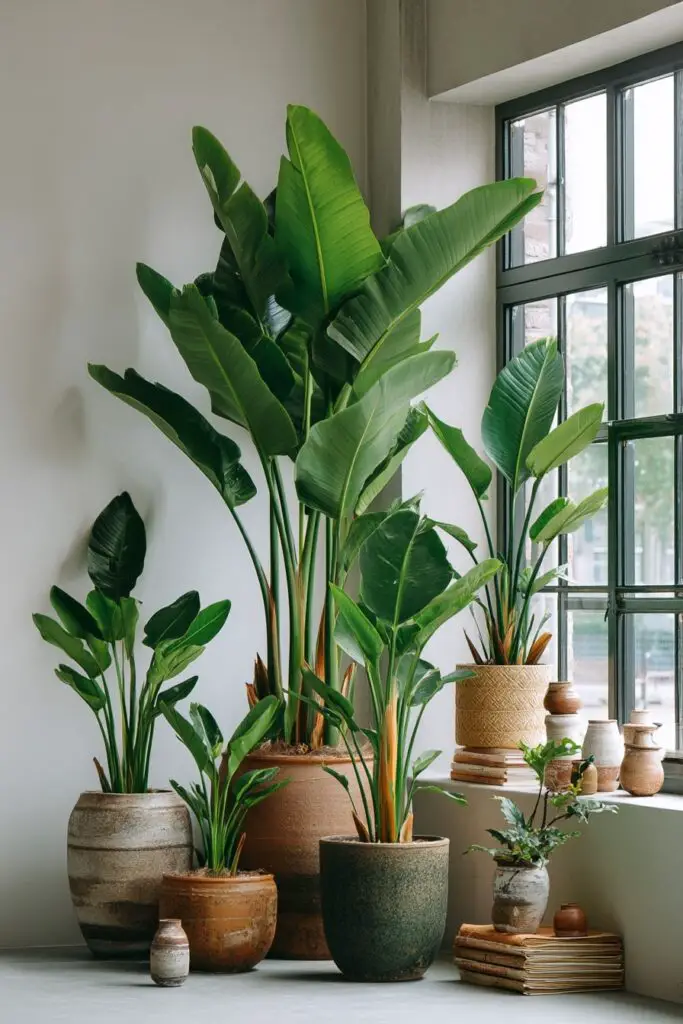
If you’re ready to bring home a bird of paradise plant, you’ll find plenty of options online from reputable plant shops. Sizes typically range from smaller, leafy specimens without flowers to larger plants that may bloom when mature.
When buying online, look for sellers who provide clear photos, size details, and care instructions. It’s also helpful to choose a plant that’s already potted in well-draining soil, especially if you’re new to indoor plant care.
Whether you’re expanding your indoor jungle or starting with a single statement piece, a bird of paradise plant offers timeless beauty and tropical charm that fits into almost any home style.
Final Thoughts
The bird of paradise plant is more than just a pretty face—it’s a low-maintenance tropical gem that brings structure, style, and lush greenery into your home. With proper care, it can thrive for years and become a true focal point in your indoor garden.
Whether you’re drawn to its banana-like leaves or just want a bold plant to anchor your space, this plant deserves a spot in your collection.