
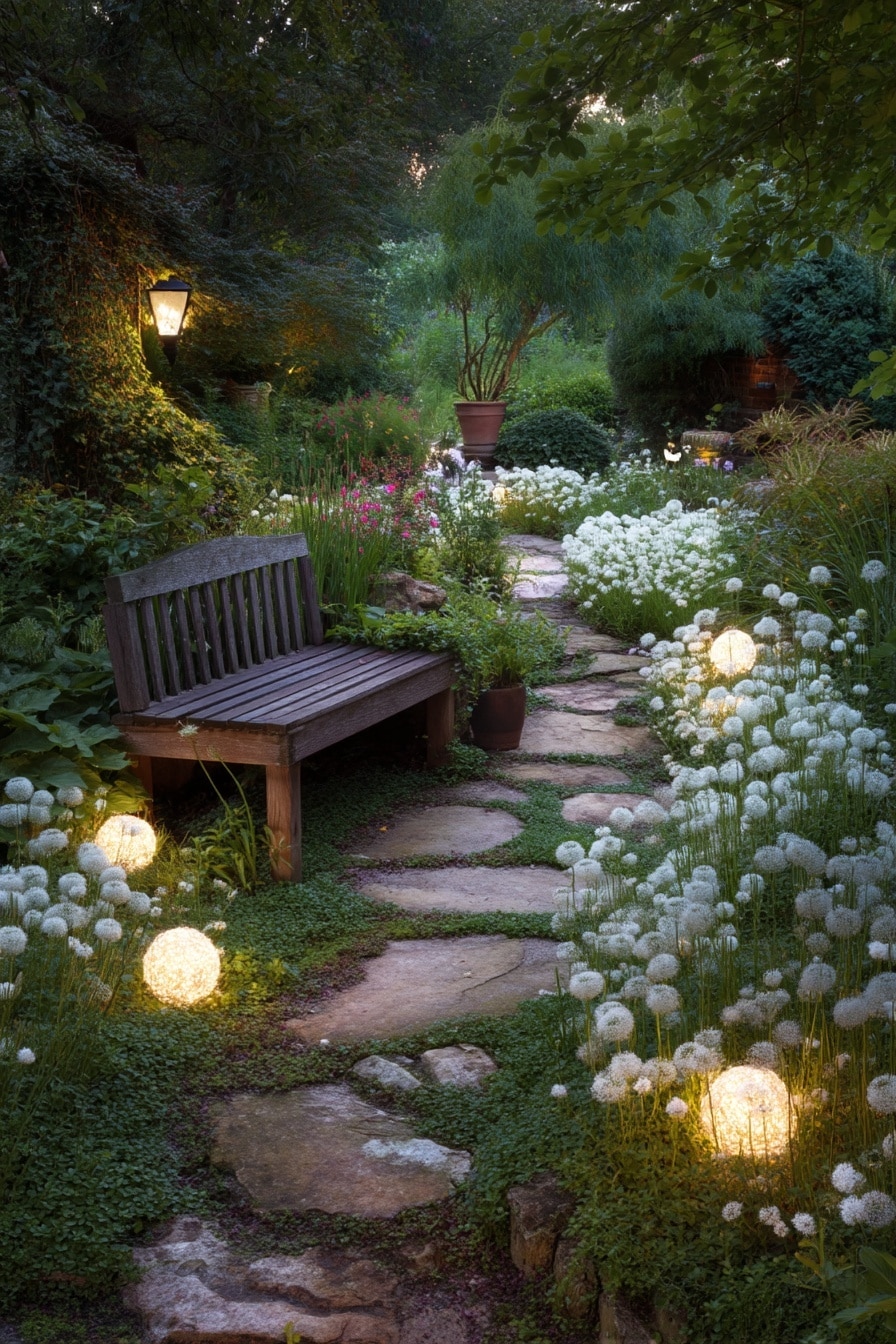
moon garden is a themed outdoor space designed to create a peaceful, enchanting atmosphere after dusk that can be enjoyed by the soft glow of the moon. This style of garden emphasizes plants, foliage, and features that reflect moonlight and appeal to all the senses in evening hours.
With thoughtful planning and plant selection, a moon garden becomes a tranquil retreat where silvery foliage and pale blooms shimmer and night‑scented blossoms release fragrance as the light fades. Whether you’re enhancing a small patio or adding a nighttime dimension to a larger garden, this trend brings a dreamy, celestial quality to your outdoor living space.
Table of Contents
What Is a Moon Garden?

A moon garden is a carefully curated garden space designed to come alive after dark. Unlike traditional gardens focused on daylight appeal, moon gardens highlight plants and features that respond to moonlight—either by reflecting it, emitting fragrance, or adding gentle movement that catches the eye in low light.
The focus is on light-colored or white flowers, silvery foliage, and soft textures. These plants become visible in dim conditions, offering a magical glow under the moon’s shine. Fragrant night-bloomers, like jasmine or evening primrose, elevate the sensory experience, making moon gardens not only visually stunning but also immersive and relaxing.
This type of garden is ideal for those who enjoy spending time outside in the evenings, whether for quiet reflection, dinner parties, or simply appreciating a cooler, calmer part of the day.
Key Plants for a Moon Garden
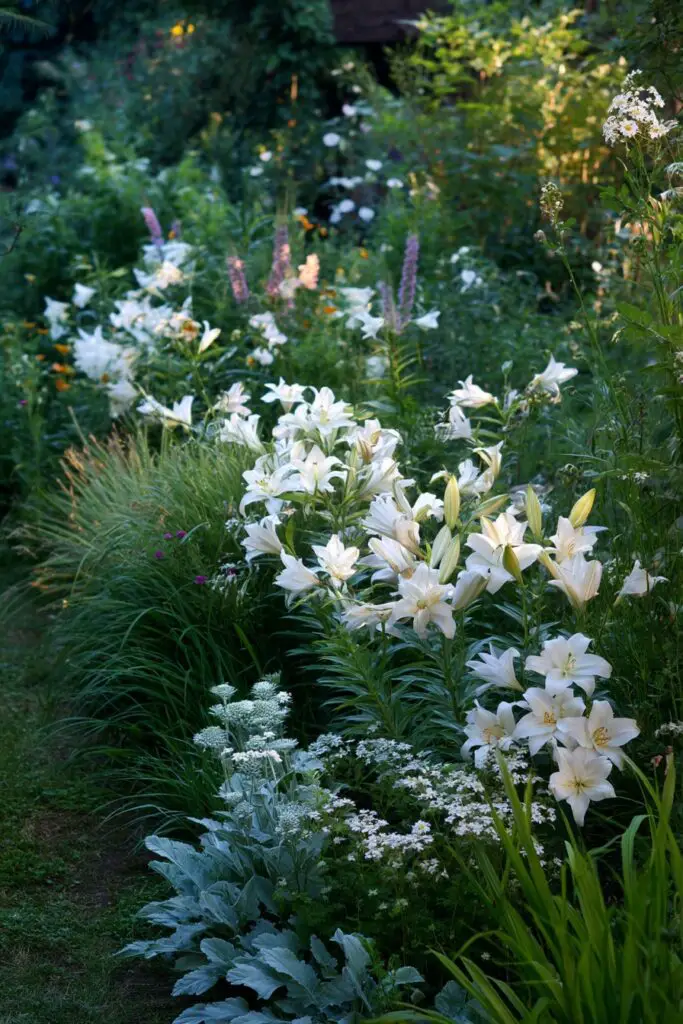
When planning a moon garden, plant selection is key to creating the soft, reflective beauty that defines this nighttime retreat. The most effective moon garden plants share a few characteristics: pale-colored blooms, silvery or variegated foliage, and evening fragrance.
🌼 Ideal Flowering Plants
- White lilies – dramatic and fragrant
- Evening primrose – opens at dusk, attracts pollinators
- Moonflower (Ipomoea alba) – large white blooms, opens in the evening
- Night phlox – sweet-smelling and compact
- Nicotiana (flowering tobacco) – tubular blossoms and heady scent
🌿 Foliage for Glow and Texture
- Lamb’s ear – soft, silvery leaves that reflect light
- Dusty miller – lacy grey foliage for contrast
- Variegated hostas – bold texture and bright margins
The combination of bloom and leaf color creates layers of light reflection, giving your garden a soft, luminous quality as the sun sets.
Fragrance and Sensory Appeal
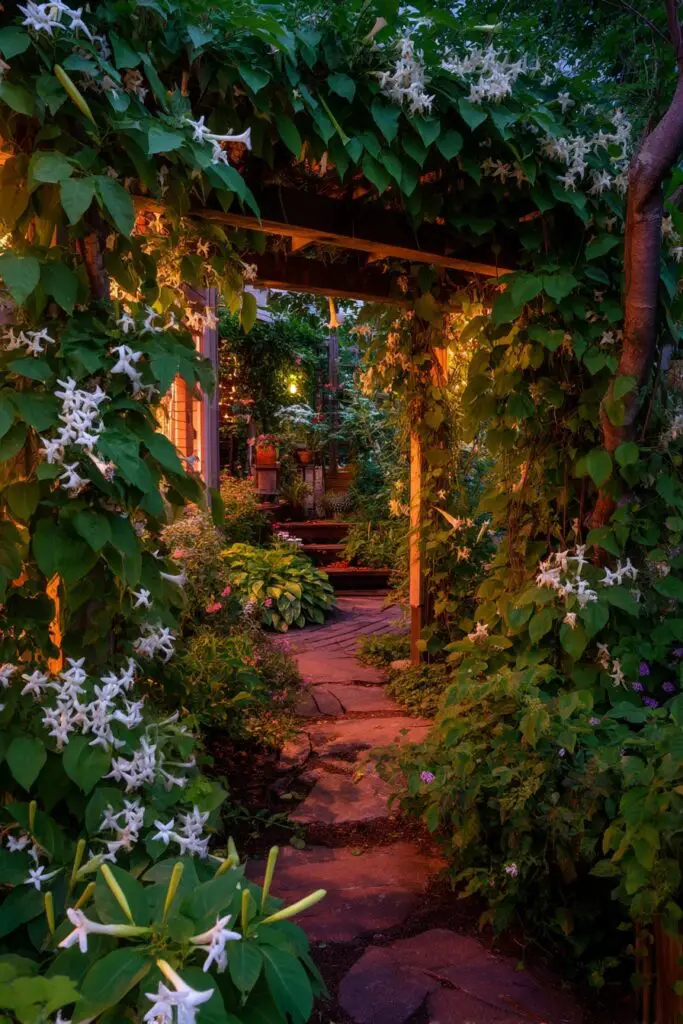
A defining feature of a moon garden is how it engages the senses—especially scent. As daylight fades, many evening-blooming plants release rich fragrances that turn your garden into a calming retreat. This olfactory element is essential to the experience, especially when visual details soften in low light.
Incorporate fragrant night bloomers such as:
- Jasmine – classic scent that intensifies at night
- Honeysuckle – sweet, nostalgic aroma
- Angel’s trumpet – large, trumpet-shaped flowers with a heady evening fragrance
Sound also plays a subtle role. The rustle of ornamental grasses or bamboo, and the hum of nighttime pollinators like moths or bats, can add a quiet rhythm. A small water feature or wind chimes can enhance the garden’s relaxing atmosphere after dark.
Together, these elements create a rich, multi-sensory environment perfect for evening enjoyment.
Lighting and Design Tips
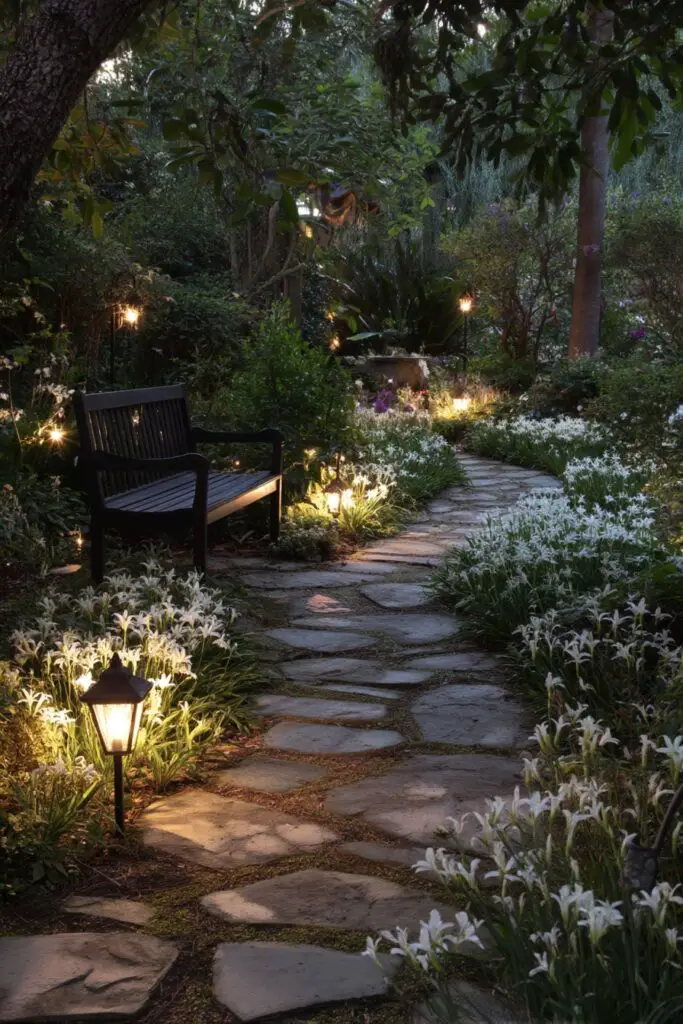
Even though moon gardens are designed to glow naturally under moonlight, subtle lighting enhances safety, mood, and beauty. The goal is to accentuate rather than overpower the gentle atmosphere of the garden.
💡 Smart Lighting Ideas:
- Soft solar lights along paths or borders
- Uplighting for trees or tall plants with white blooms
- Lanterns or candles for portable, ambient lighting
- String lights draped overhead for subtle shimmer
Use warm, dim lighting rather than cool, bright tones to avoid washing out your garden’s natural glow. Keep fixtures low to the ground or behind plants to hide the source and focus on illuminating foliage and flower surfaces.
Stick with curved paths, organic shapes, and natural materials like gravel or stone to maintain a relaxed flow. Garden seating in a quiet corner adds functionality and makes your moon garden an ideal place to linger at night.
How to Start Your Own Moon Garden
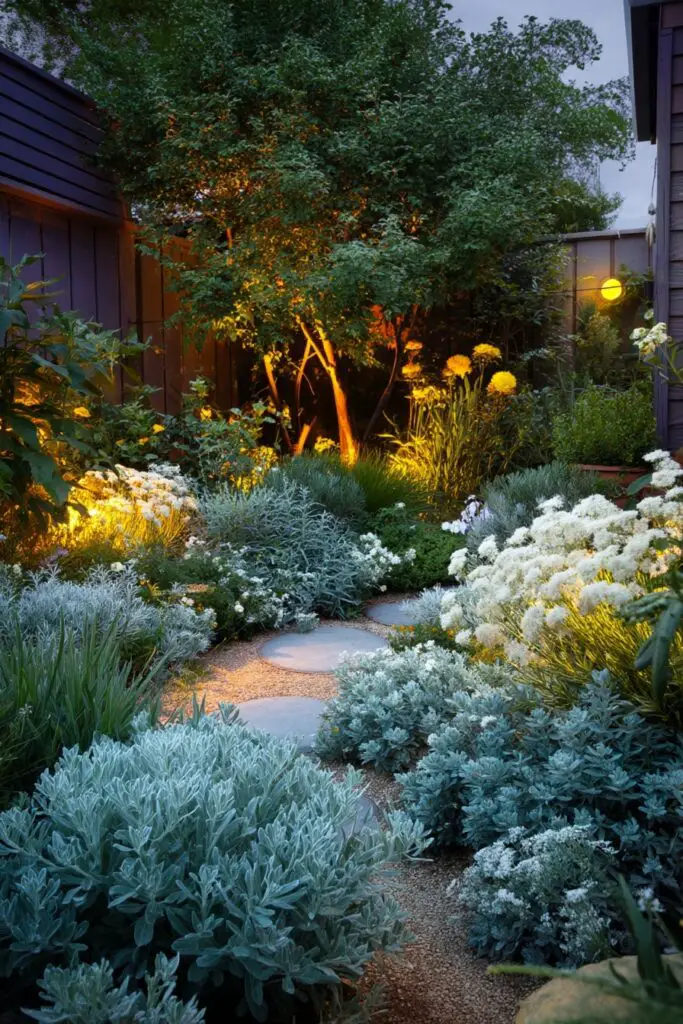
Starting a moon garden doesn’t require a large space or complicated layout—it just takes thoughtful selection and a bit of planning. Whether you have a spacious yard or a small patio, the key is to choose plants and features that come alive in low light.
🌙 Step-by-Step Guide:
- Choose your location – ideally one that receives partial moonlight and is visible from your evening seating area.
- Select your plants – prioritize white or pale flowers, silver foliage, and night-scented varieties.
- Plan your layout – group plants in clusters to amplify light reflection and mix heights for depth.
- Add sensory elements – soft lighting, water sounds, and fragrant blooms create atmosphere.
- Include a place to sit – a bench or hammock lets you fully enjoy the garden after dark.
Start small and let your moon garden evolve over time. It can be as simple as a container garden with night-friendly plants or as elaborate as a full backyard sanctuary.
Conclusion
moon garden design offers a magical way to enjoy your outdoor space after sunset. By focusing on pale blooms, silvery foliage, and evening fragrance, you can create a space that glows under moonlight and soothes the senses. With a few key plants and gentle lighting, your backyard or balcony can become a tranquil retreat that feels just as inviting at night as it does during the day.