
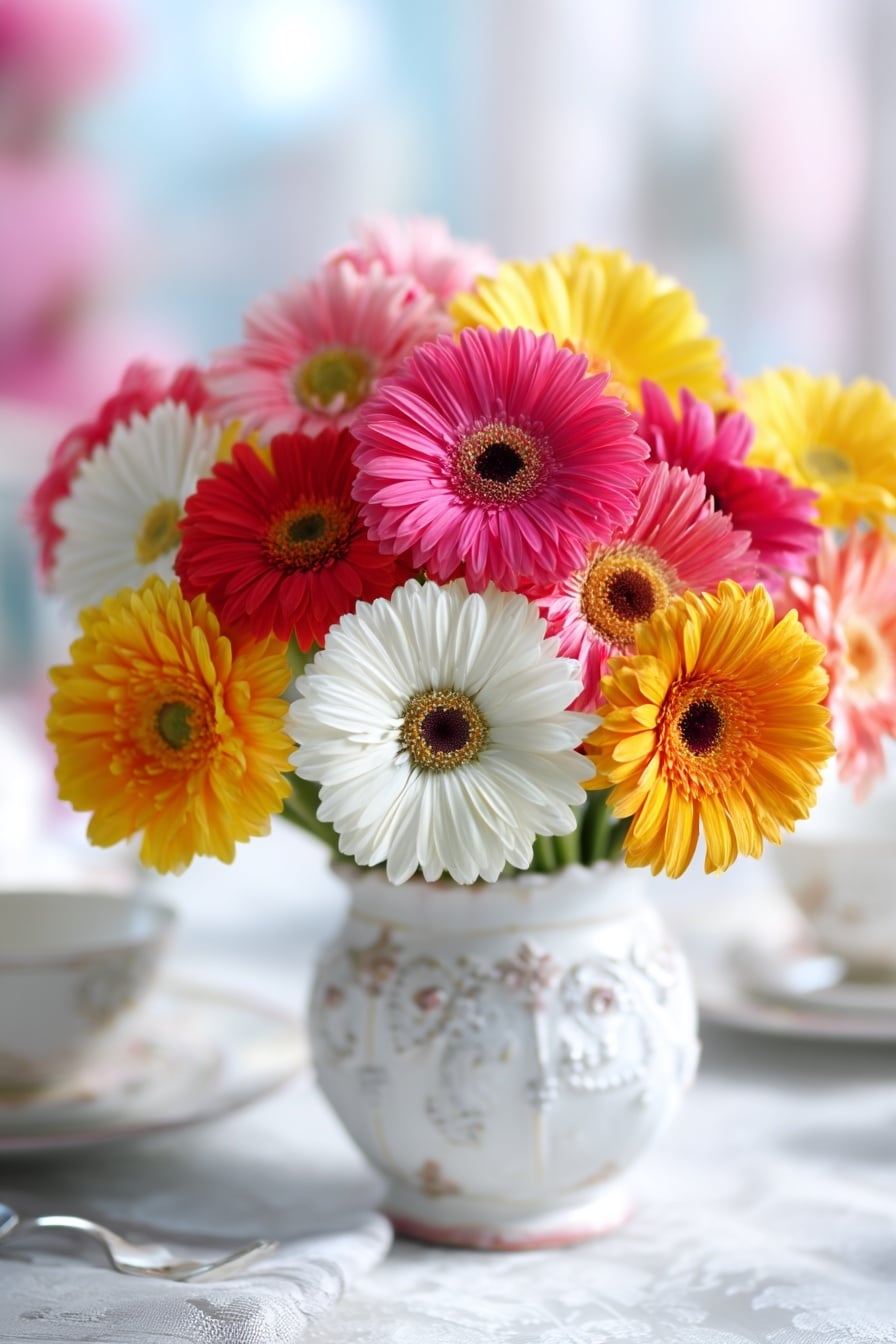
Gerbera daisy is one of the most cheerful and vibrant flowers you can grow, known for its bold colors, classic daisy shape, and long-lasting blooms. Whether you’re planting them in your garden or growing them in pots indoors, proper care is key to keeping them healthy and blooming beautifully. In this guide, you’ll learn how to care for gerbera daisies indoors and outdoors with practical tips on light, watering, soil, and more—all from a gardener’s point of view. With just a little attention, these bright blooms can bring color and life to your home or landscape all season long.
Table of Contents
🌿 How to Care for Gerbera Daisies

Whether grown in the ground or in containers, gerbera daisies thrive when given the right environment and consistent care. Here’s what you need to know about their basic needs.
☀️ Light
Gerbera daisy plants love bright light but dislike extreme heat. Outdoors, plant them in a spot with morning sun and afternoon shade to protect them from intense rays. Indoors, place pots near a sunny window with filtered light—east- or west-facing windows are ideal.
Too much direct sun can scorch the leaves, while too little light leads to leggy growth and fewer blooms.
💧 Watering
These cheerful blooms like moisture but hate soggy soil. Water when the top inch of soil feels dry, and always aim to water at the base of the plant, not the leaves, to prevent rot.
- Avoid overwatering, which leads to root rot.
- Ensure pots or garden beds have good drainage.
A consistent watering schedule keeps your gerbera daisy blooming longer.
🌱 Soil
Use a well-draining, slightly acidic soil with a pH between 5.5 and 6.5. Mix in organic compost or perlite to improve drainage, especially in heavy or clay soils.
For container growing, a high-quality potting mix labeled for flowers works best.
🌼 Feeding
To keep your gerbera daisy thriving, apply a balanced liquid fertilizer every 2–3 weeks during the growing season (spring through early fall). Look for one that includes micronutrients like magnesium and iron for vibrant foliage and blooms.
Skip fertilizing during dormancy in winter.
🏡 Tips for Indoor Gerbera Daisy Care
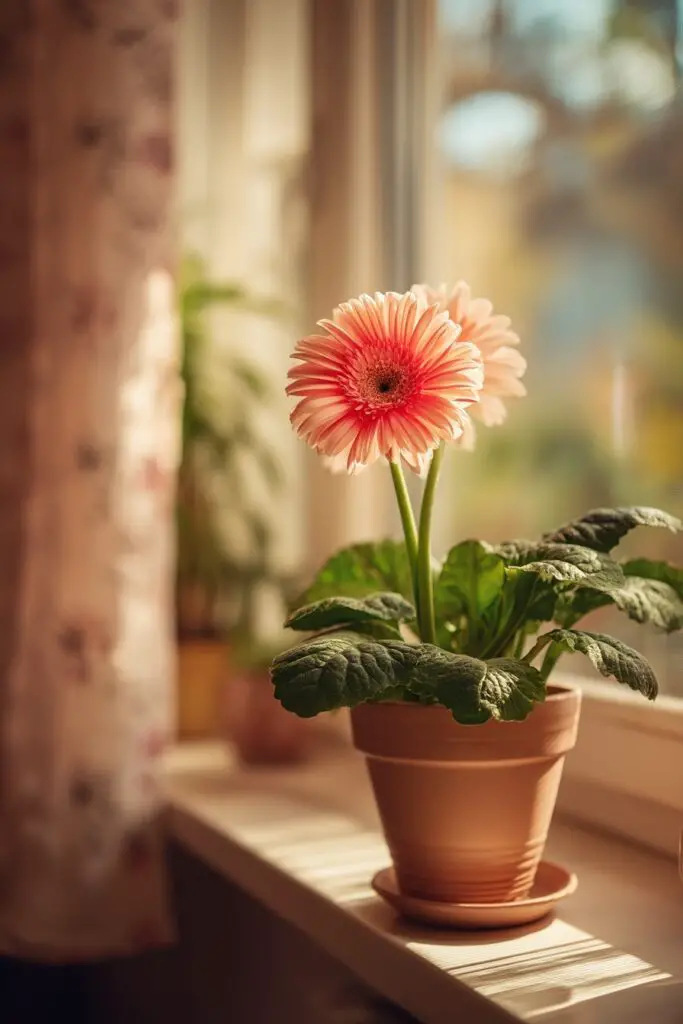
Bringing a gerbera daisy indoors can brighten any room, but indoor growing requires a slightly different approach than outdoor gardening. These flowering plants can thrive inside if you mimic their natural conditions and give them the right care.
🪟 Provide Bright, Filtered Light
Indoors, place your gerbera daisy near a window where it receives at least six hours of indirect sunlight. East-facing windows are ideal, offering gentle morning light without the harsh midday heat.
Rotate the pot every few days to ensure even light exposure and prevent the plant from leaning.
🌡️ Maintain Proper Temperature & Humidity
Gerbera daisies prefer moderate indoor temperatures between 65°F and 75°F (18°C to 24°C). Avoid placing them near heating vents, AC units, or cold drafts, which can stress the plant and stunt flowering.
If the air is dry, occasional misting or using a humidity tray can help replicate their preferred environment.
🚿 Watch for Overwatering
Indoor gerberas are especially sensitive to overwatering. Use pots with drainage holes, and empty saucers to prevent standing water. Water when the top inch of soil is dry, and be sure to water at the soil level, not over the foliage.
🪴 Repot When Needed
If your gerbera daisy seems rootbound or stops blooming, it may be time to repot. Choose a slightly larger pot and refresh the soil with a nutrient-rich, well-draining mix.
Repotting is best done in early spring before new growth begins.
🌸 Gerbera Daisy Blooming Tips
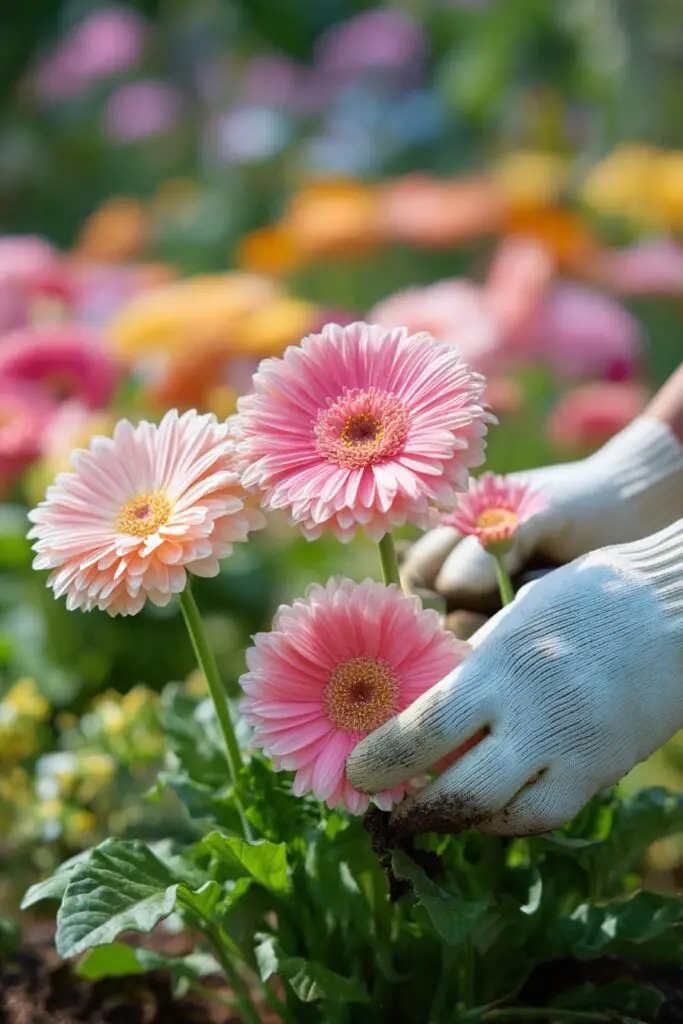
A healthy gerbera daisy can produce bright, cheerful blooms for several weeks—sometimes even longer with the right care. To keep your plant flowering consistently, focus on light, nutrition, and smart pruning.
✂️ Deadhead Spent Blooms Regularly
Once a flower fades, remove it by cutting the entire stem down to the base of the plant. This helps redirect energy to new bud production rather than seed development.
Avoid just plucking the bloom—leaving the stem can encourage rot and fungal issues.
💡 Ensure Adequate Light
For continuous blooms, light is critical. Indoors or outdoors, your gerbera daisy needs bright, indirect sunlight to stimulate flower formation. If you’re growing indoors during winter, consider using a grow light to supplement natural light.
🧪 Feed Consistently
Use a phosphorus-rich fertilizer (like 10-30-20) to encourage more blooms. Feed every 2–3 weeks during the active growing season. Be careful not to overfertilize, as too much nitrogen encourages leafy growth but fewer flowers.
🌬️ Improve Air Circulation
Good airflow helps prevent fungal diseases that can inhibit blooming. Avoid overcrowding your gerbera daisy with other plants and keep it in an open, well-ventilated area.
🌼 Gerbera Daisy Symbolism and Fun Facts
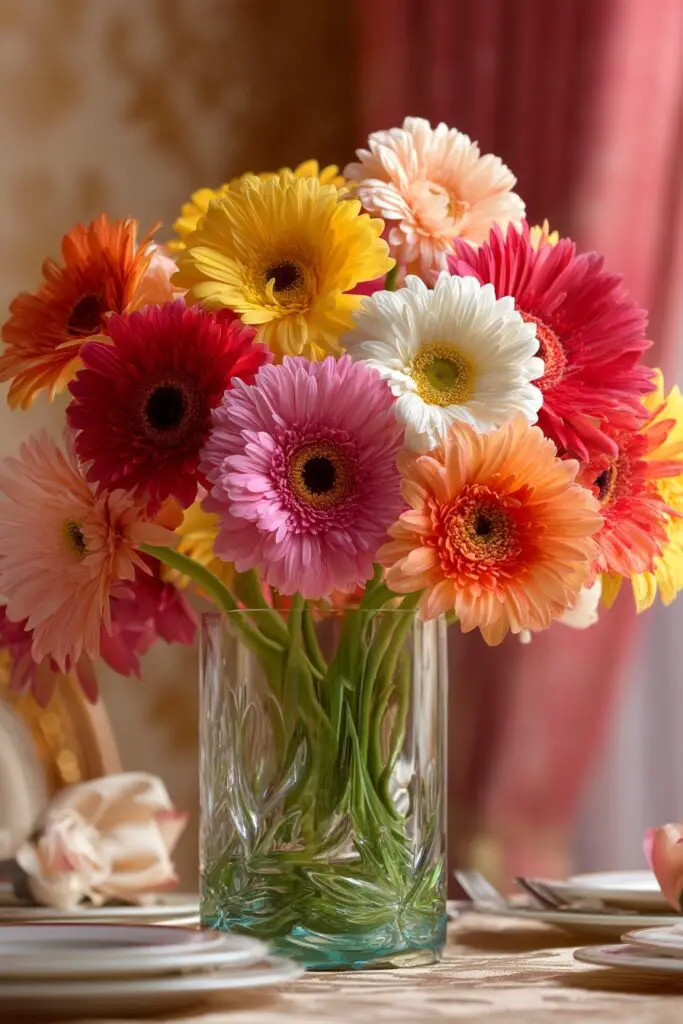
Beyond their beauty, the gerbera daisy holds deep meaning and a few surprising facts that make it even more special in the garden or vase.
💐 What Gerbera Daisies Symbolize
The gerbera daisy is often associated with cheerfulness, innocence, and purity. Thanks to its wide range of vibrant colors, it’s also seen as a symbol of joy and positive energy. Florists love using them in arrangements meant to uplift or celebrate milestones.
In flower language, gifting a gerbera daisy often means “you make me happy.”
🌈 Color Meanings
Each color of gerbera daisy carries its own meaning:
- Red: Love and passion
- Yellow: Friendship and happiness
- Pink: Admiration and grace
- Orange: Enthusiasm and warmth
- White: Purity and innocence
- Green: Renewal and new beginnings
🌎 Fun Facts About Gerbera Daisies
- Native to South Africa, they belong to the Asteraceae family, alongside sunflowers and daisies.
- The gerbera daisy was discovered in the late 19th century and quickly became a florist favorite due to its long vase life.
- NASA once studied gerbera daisies for their ability to purify air indoors—making them both beautiful and functional.
🌺 Conclusion
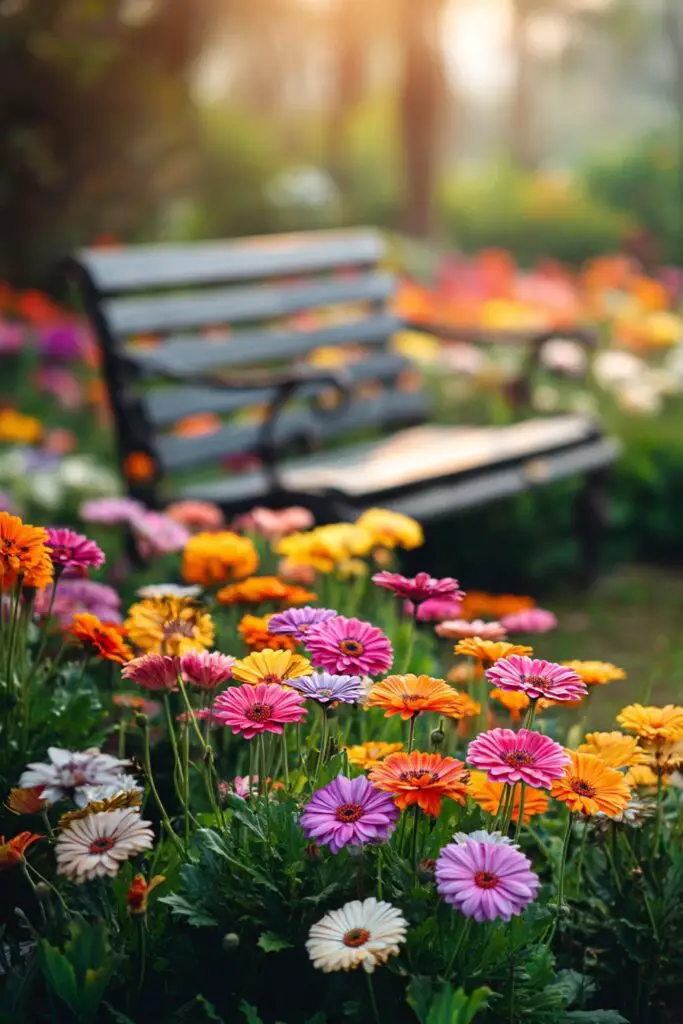
Caring for a gerbera daisy doesn’t require expert-level gardening skills—just a little attention to light, water, and soil. Whether you’re growing them indoors to brighten up a windowsill or adding them to your outdoor garden for a splash of color, these vibrant blooms reward you with long-lasting beauty and cheerful charm.
By following the tips outlined in this guide, your gerbera daisy can thrive season after season. With regular care and a bit of patience, you’ll enjoy colorful flowers that bring warmth and happiness to any space.