
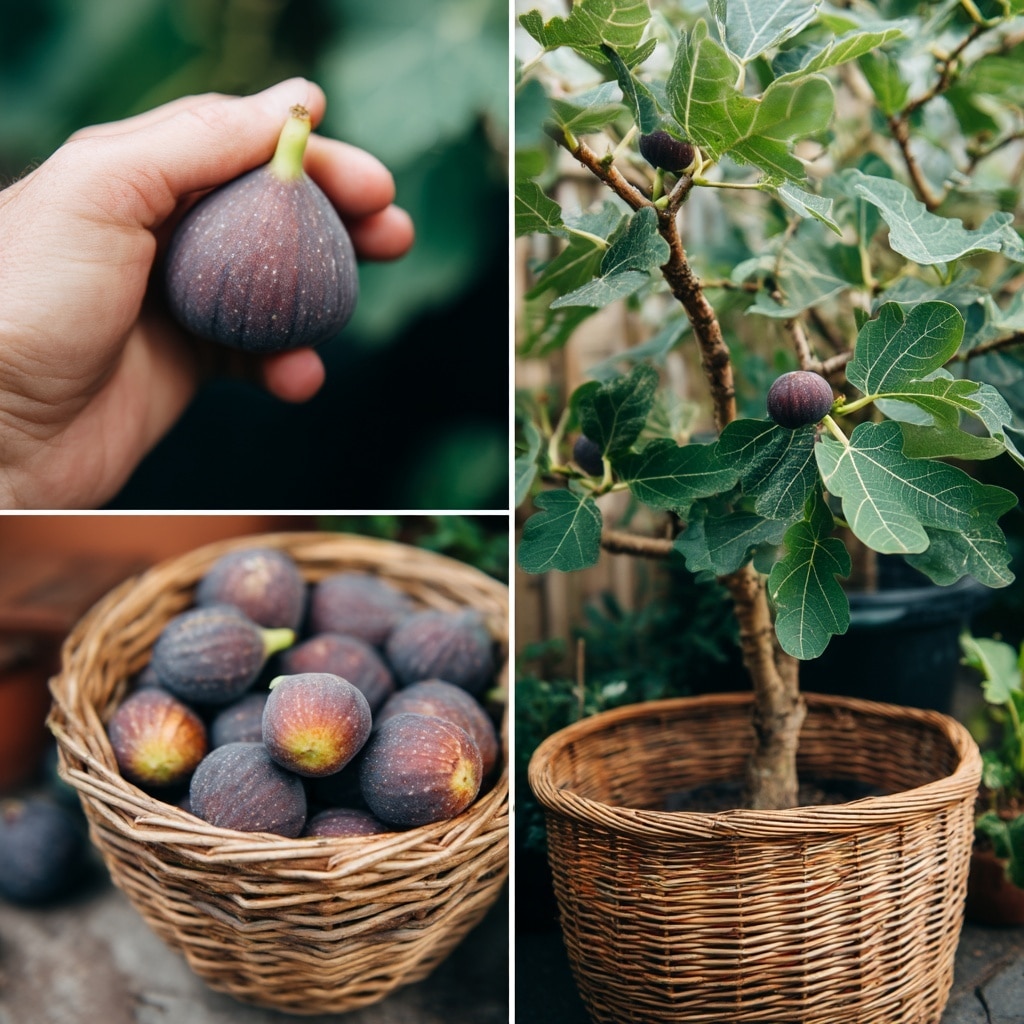
Fig tree cultivation is one of the most rewarding experiences for gardeners who love low-maintenance plants with high-yield rewards. Whether you’re tucking one into a sunny corner of your garden or exploring how to grow a fig tree in pots, these Mediterranean natives are surprisingly adaptable and generous with their fruit. With the right positioning, pruning techniques, and watering routine, a fig tree can thrive in even temperate climates like the UK, producing delicious crops for years. This guide walks you through the essential care principles for nurturing a healthy, productive fig tree — whether you’re a beginner or an experienced gardener fine-tuning your fig-growing game.
Table of Contents
🌞 Choosing the Right Location for Your Fig Tree

Fig trees are sun lovers. To truly thrive, a fig tree needs at least 6–8 hours of direct sunlight each day. The more sun it gets, the sweeter and more abundant the fruit will be. Choose a south-facing wall or fence in your garden, which not only provides warmth but also protects the tree from harsh winds — something particularly valuable in cooler climates.
If you’re short on space or growing in a colder region, consider how to grow a fig tree in pots. Containers allow you to move the tree to follow the sun, and even bring it indoors or under cover during cold snaps.
✅ Top Tip: Figs don’t like sitting in soggy soil. Make sure the spot you choose has excellent drainage, whether it’s a raised bed, open ground, or a large container with proper holes.
🪴 Soil Requirements

The fig tree isn’t particularly picky about soil, but it thrives best in loamy, well-drained soil that’s rich in organic matter. A neutral to slightly alkaline pH (around 6.0–7.5) is ideal. If your soil is heavy clay or prone to waterlogging, amend it with plenty of compost or grit to improve texture and drainage.
🚫 Avoid: Very acidic or compacted soil, which can hinder root development and stunt your tree’s growth.
🌱 How to Plant a Fig Tree (In Ground or Container)
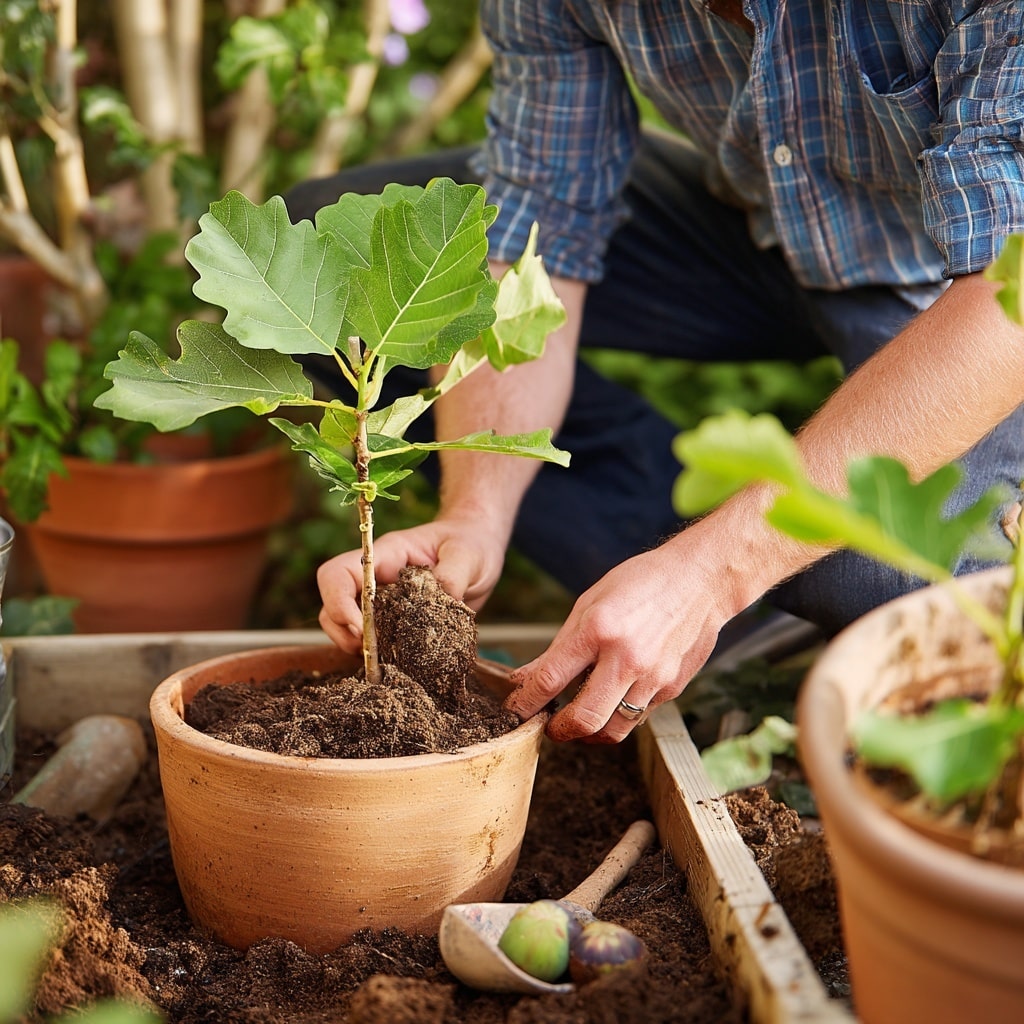
🏡 Planting in the Ground
Planting a fig tree directly into the ground is ideal if you live in a region with mild winters and have the garden space to accommodate its wide-spreading roots. Autumn or early spring is the best time to plant, allowing the roots to establish before extreme weather hits.
Steps for ground planting:
- Dig a hole twice as wide and about the same depth as the root ball.
- If your soil is rich, avoid adding too much compost — this can encourage leafy growth over fruit.
- Place the tree so the top of the root ball sits level with the surrounding soil.
- Backfill with the original soil, firm it gently, and water well.
💡 Root restriction tip: To encourage fruiting instead of rampant growth, many UK gardeners partially restrict fig tree roots by planting in a bottomless container or lining the planting hole with paving slabs.
🪴 Planting a Fig Tree in Pots
If you’re wondering how to grow a fig tree in pots, you’re in good company. Container growing is perfect for patios, small gardens, or regions with colder winters. Plus, it naturally limits the root system, encouraging better fruiting.
Potting guidelines:
- Choose a large container (at least 40cm wide and deep) with good drainage holes.
- Use a mix of loam-based compost (like John Innes No. 3) with some added grit for drainage.
- Raise the pot on feet or bricks to prevent waterlogging.
- Water well after planting and place the pot in a sunny, sheltered spot.
✅ Bonus: Potted fig trees are easier to protect in winter—just move them to a greenhouse, conservatory, or unheated shed when temperatures drop.
💧 Watering and Feeding Your Fig Tree

💦 Watering Guidelines
A fig tree prefers consistently moist — but never waterlogged — soil. In the ground, established trees are fairly drought-tolerant, but younger ones and potted figs need regular watering during dry periods.
General watering tips:
- Water deeply once a week during the growing season.
- In hot, dry weather, increase to twice per week, especially for potted trees.
- Allow the top inch of soil to dry slightly between waterings.
🚫 Avoid overwatering: Waterlogged roots can lead to rot and attract pests like fungus gnats.
🌿 Feeding Schedule
Though not heavy feeders, fig trees will reward you with a stronger crop if you support them with the right nutrients.
- In early spring, apply a balanced slow-release fertiliser (like 6-6-6 or 10-10-10).
- For container-grown trees, feed monthly with a liquid tomato fertiliser from April through August.
- Avoid nitrogen-rich feeds that encourage excessive leaf growth at the expense of fruit.
✅ Pro Tip: Mulch around the base of the tree with well-rotted compost or bark chips to conserve moisture and slowly feed the soil.
✂️ Pruning and Training Fig Trees

🧭 Why Prune a Fig Tree?
A fig tree, left unpruned, can quickly become large and unwieldy, with lots of leafy growth but fewer fruits. Pruning keeps the tree compact, improves airflow, and encourages the development of fruit-bearing wood.
✅ Proper pruning also helps manage breba crops (early-season fruit on last year’s wood) and main crops (summer fruit on new growth).
🛠️ How to Prune Fig Trees
For young trees (formative pruning):
- In the first winter after planting, cut the main stem back by a third to encourage side shoots.
- In year two, select 4–6 strong branches to form an open, goblet-like framework.
For established trees (maintenance pruning):
- Prune in late winter or early spring, just before new growth starts.
- Remove dead, diseased, or crossing branches.
- Shorten overly vigorous stems to maintain shape and light penetration.
✂️ In summer, you can pinch out the tips of new shoots to divert energy into fruiting rather than leafy growth.
📏 Training Against a Wall or in a Fan Shape
Fig trees train beautifully against walls or fences, making them ideal for small gardens. Fan training also exposes more of the tree to sunlight, improving fruit quality.
- Use soft ties and horizontal wires to guide branches outward.
- Maintain the fan shape with annual pruning in winter and summer.
- Container trees can also be lightly shaped to keep them neat and productive.
🐛 Common Problems and Fig Tree Pests
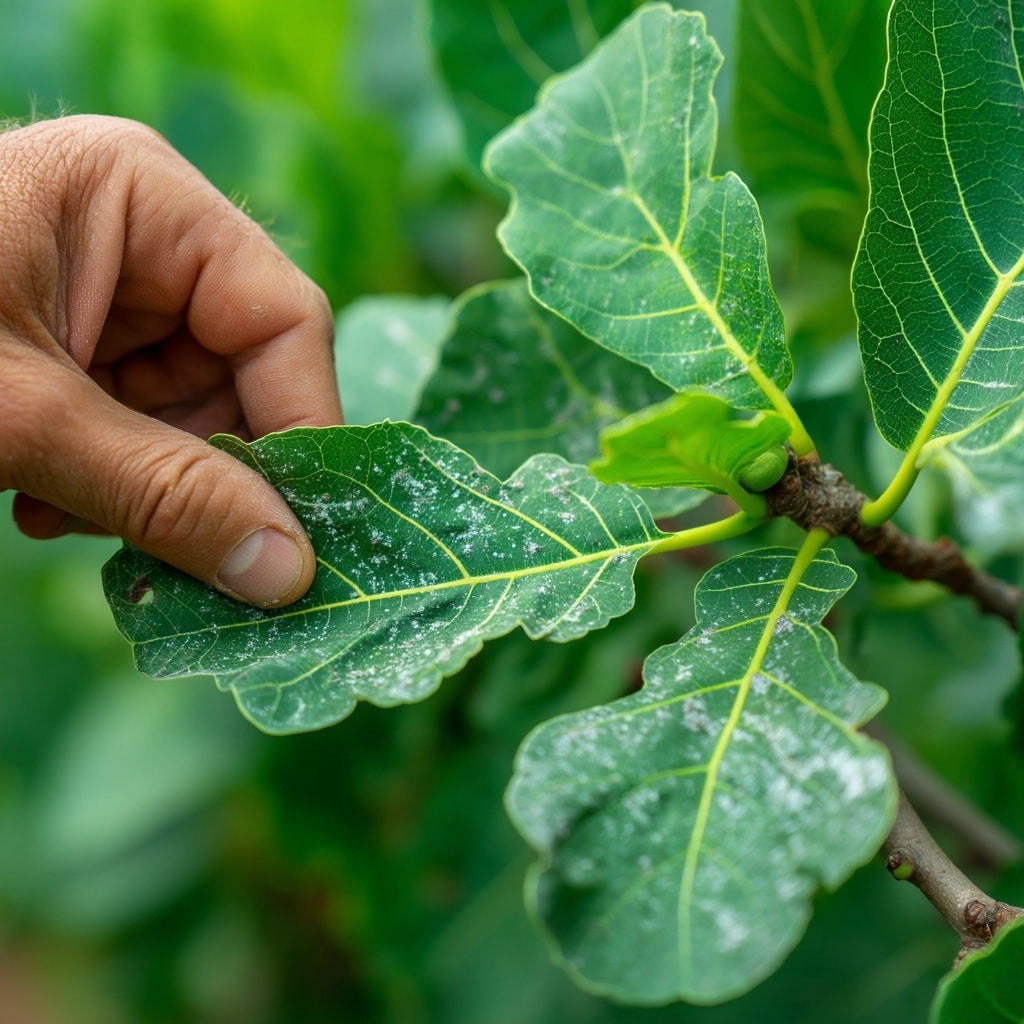
Even though fig trees are relatively hardy and low-maintenance, they can still face a few challenges. Knowing what to look for — and how to prevent it — will keep your tree thriving year after year.
🐞 Common Pests
- Fig Tree Scale (Soft or Hard Scale)
- Signs: Sticky residue on leaves, yellowing, and visible bumps on stems.
- Treatment: Wipe with soapy water or use horticultural oil in winter.
- Red Spider Mites
- Signs: Webbing on leaves, leaf bronzing, stunted growth.
- Solution: Increase humidity (for potted trees) and spray with insecticidal soap.
- Aphids
- Signs: Clusters of green or black insects on new growth.
- Control: Blast off with water or use neem oil spray.
🐞 Tip: Encourage beneficial insects like ladybirds and hoverflies to keep pest populations in check naturally.
🍂 Diseases and Physiological Issues
- Leaf Drop
- Cause: Overwatering, underwatering, or sudden environmental changes.
- Solution: Adjust care routine; fig trees may shed leaves naturally in autumn.
- Root Rot
- Cause: Poor drainage or waterlogged soil.
- Prevention: Always plant in well-draining soil or containers with drainage holes.
- Lack of Fruit or Fruit Drop
- Possible causes:
- Too much nitrogen
- Not enough sunlight
- Poor pollination (especially indoors)
- Fix: Feed properly, ensure good sun exposure, and keep the tree stress-free.
- Possible causes:
🧺 Harvesting and Overwintering Your Fig Tree
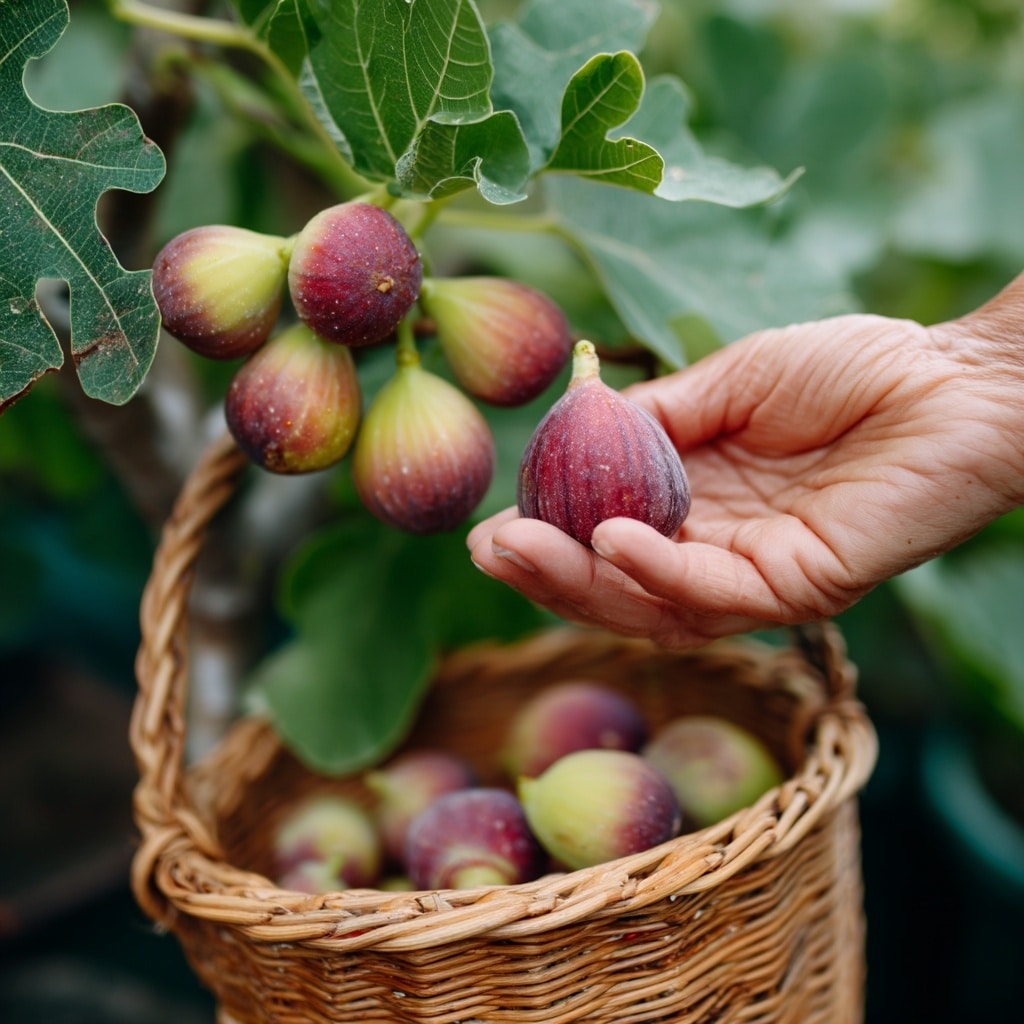
🍈 When and How to Harvest Figs
A well-cared-for fig tree will start producing fruit in its second or third year — and once it gets going, you’ll have more than enough to enjoy fresh, preserve, or bake into tarts.
Signs a fig is ready to harvest:
- It has fully colored (usually brown, purple, or green, depending on variety)
- The skin appears soft and slightly wrinkled
- The fig droops downward from the branch
- It gives slightly when gently squeezed
⚠️ Don’t pick too early — figs do not ripen after harvesting. A fig picked too soon will be tough and flavorless.
Gently twist and pull the fruit from the tree, or use snips if it resists. Handle with care, as figs bruise easily.
❄️ Overwintering Fig Trees
In colder climates (like most of the UK), fig tree overwintering is crucial — especially for potted trees or young specimens.
For outdoor, in-ground trees:
- Mulch heavily around the base in late autumn using straw, bark, or compost.
- Wrap the trunk and lower branches with fleece or horticultural fabric if frost is expected.
For potted fig trees:
- Move containers to a cool, frost-free space such as a shed, garage, or unheated greenhouse.
- Water very sparingly during dormancy — about once every 4–6 weeks to keep the roots just moist.
💤 Fig trees naturally go dormant in winter, dropping their leaves — this is normal and not a cause for concern.
Conclusion
Growing a fig tree is a deeply rewarding experience, whether you’re planting it directly in the ground or learning how to grow a fig tree in pots. With the right location, good drainage, thoughtful pruning, and a watchful eye for pests, you can enjoy sweet, sun-ripened figs right from your own garden. As long as you give your fig tree the seasonal care it needs — especially during colder months — it will reward you with bountiful harvests for years to come.