
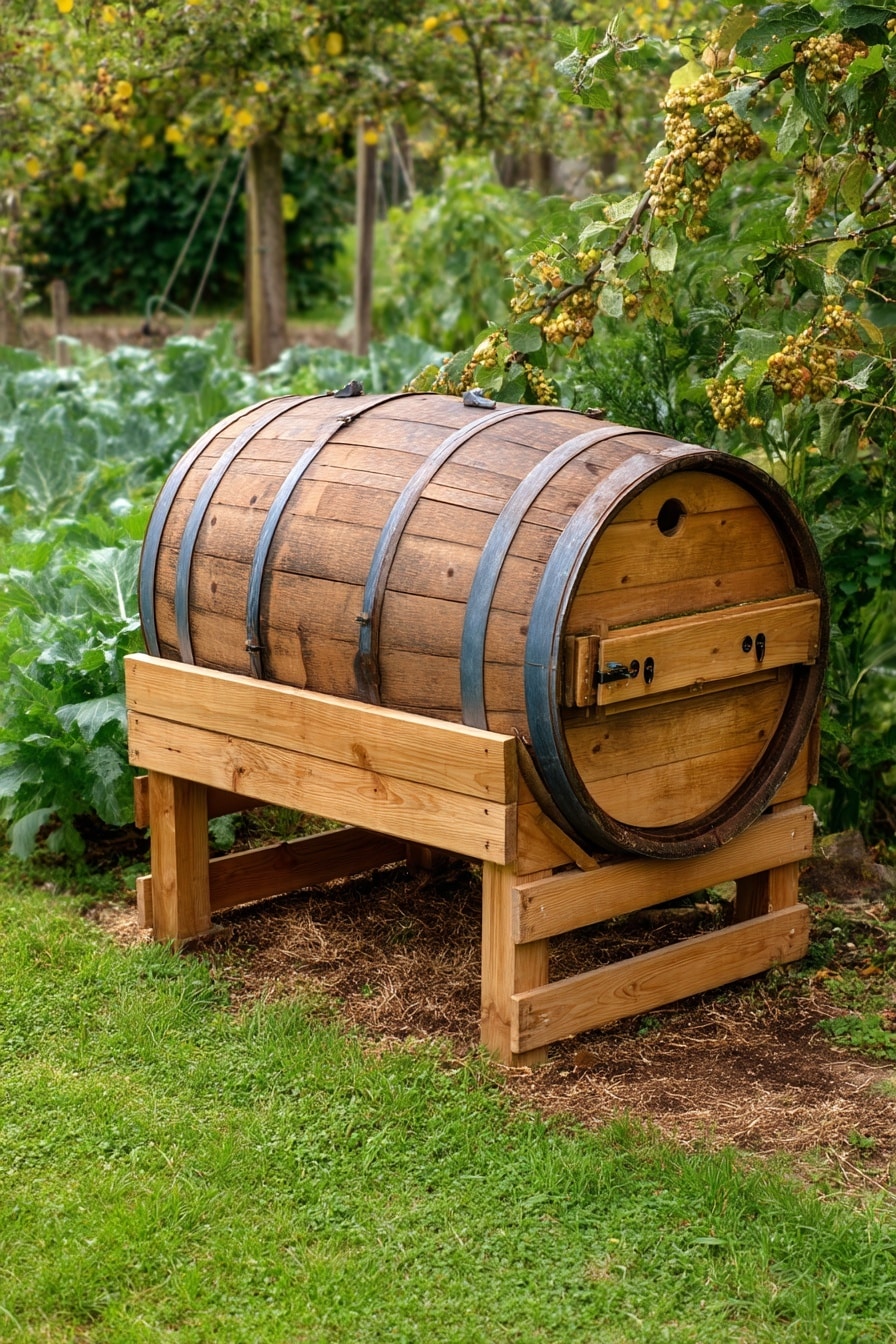
DIY compost bin projects are a smart, sustainable way to turn kitchen scraps and garden waste into nutrient-rich material for your plants. Whether you have a sprawling yard or a compact balcony, creating your own compost system doesn’t require fancy tools or expensive setups. With a few common materials and a little time, you can build a compost bin that suits your space, supports the environment, and fuels your garden naturally. In this guide, you’ll find five practical DIY compost bin ideas — from beginner-friendly buckets to rotating drums — that make composting simple, efficient, and accessible for every gardener.
Table of Contents
1. Pallet Compost Bin

A DIY compost bin made from wooden pallets is one of the most popular and cost-effective ways to start composting at home. Pallets are easy to find, provide great airflow, and create a sturdy structure for larger compost piles. Plus, the rustic look blends nicely into any garden setting.
To build one:
- Stand three pallets upright in a U-shape to form the back and sides
- Secure them together using screws or nails
- Attach a fourth pallet in front using hinges for easy access, or leave it removable
Place your pallet bin directly on bare soil. This allows natural drainage and invites beneficial microbes and worms to help break down materials. Be sure to use heat-treated (HT) pallets, not those marked MB (methyl bromide), which are unsafe for compost.
With good airflow between the slats and ample space, a pallet bin makes an ideal setup for backyard composting — especially if you generate a steady flow of yard and kitchen waste.
2. Cold Frame Compost Bin
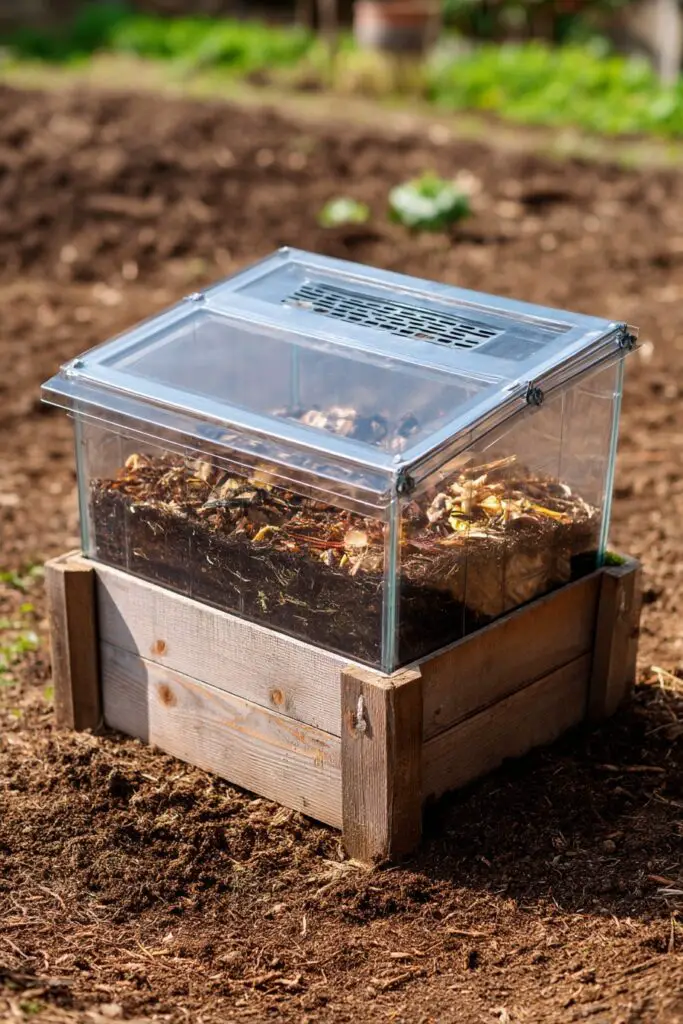
If you have an old or unused cold frame, converting it into a DIY compost bin is an efficient way to repurpose garden equipment. Designed to trap heat for seedlings, a cold frame also creates a warm, enclosed environment that helps speed up decomposition — even in colder weather.
To adapt a cold frame for composting:
- Drill ventilation holes in the lid and sides to improve airflow
- Place the frame on bare soil for natural drainage and access for worms and microbes
- Monitor moisture levels closely, as enclosed frames can trap too much humidity
Plastic cold frames are easiest to modify, but make sure the materials are durable and free of degrading plastics, which could contaminate your compost over time.
This type of bin is especially useful for winter composting, preventing your pile from freezing and keeping microbial activity going. It’s compact, insulated, and ready-made — perfect for gardeners who want to compost year-round with minimal building effort.
3. Plastic Bucket Compost Bin
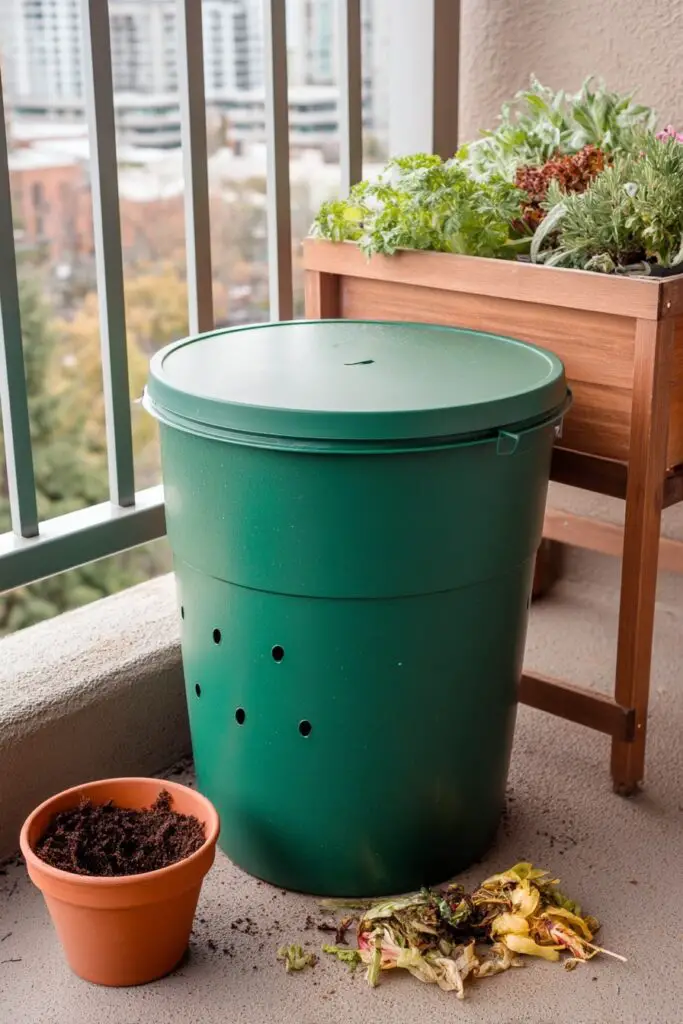
For gardeners with limited space, a DIY compost bin made from a plastic bucket offers a simple and compact solution. It’s ideal for small patios, balconies, or even indoor use — and requires minimal tools to get started.
To build one:
- Use a clean, 5-gallon plastic bucket with a tight-fitting lid
- Drill several small holes around the sides and bottom for airflow and drainage
- Start layering your green (wet) and brown (dry) materials, such as food scraps and dry leaves
To keep the compost aerated, stir it weekly using a stick or by shaking the bucket with the lid securely closed. For better results, avoid overfilling and monitor moisture — it should feel like a wrung-out sponge.
This compact system is great for beginner composters or apartment dwellers. With proper ventilation and regular turning, a bucket bin can efficiently handle daily kitchen waste while staying tidy and odor-free.
4. Trash Bin Composter
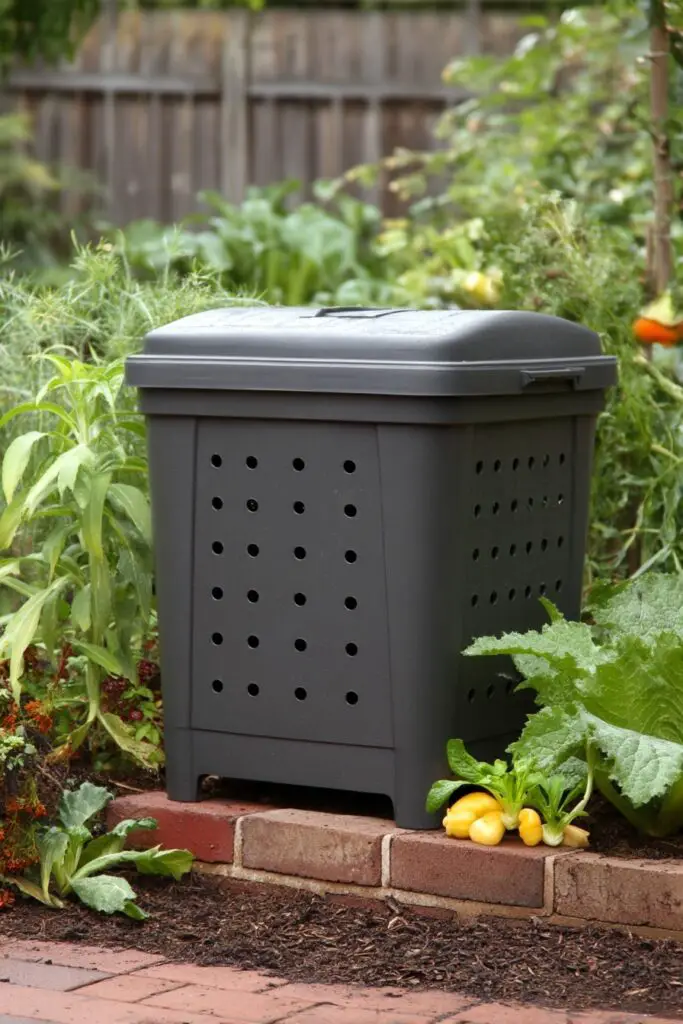
If you’re looking for a larger yet still low-cost DIY compost bin, a repurposed trash bin offers the perfect balance of volume and simplicity. With a few modifications, a plastic trash bin becomes an efficient, mobile composting system — ideal for backyard gardeners who want more capacity than a bucket can provide.
Here’s how to make it work:
- Choose a plastic trash bin with a tight-fitting lid (avoid metal bins that can rust)
- Drill holes around the sides and bottom for ventilation and drainage
- Elevate the bin slightly using bricks, wooden blocks, or pot feet to encourage airflow underneath
To aerate your compost, you can either mix it manually or simply roll the bin on its side — just make sure the lid is tightly secured. This rolling method makes turning your compost quick and mess-free.
With its upright design and built-in lid, a trash bin composter keeps your pile contained and protected from pests, all while breaking down organic matter efficiently in a small footprint.
5. Tumbling Compost Bin
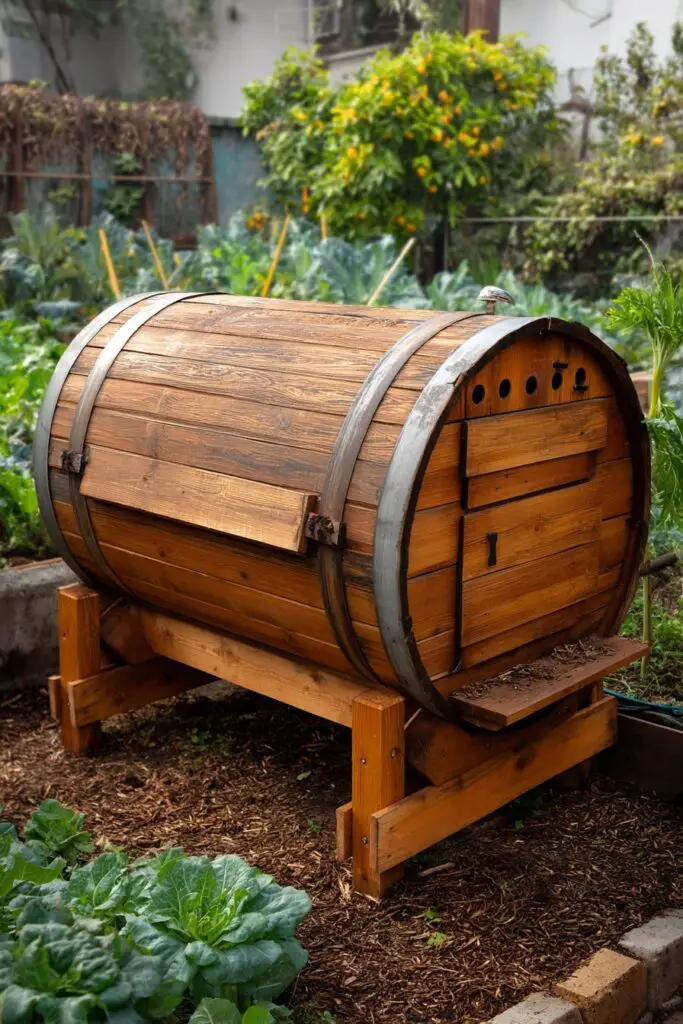
For gardeners who want convenience and faster results, a tumbling DIY compost bin is a great choice. While it’s a more advanced project, it makes turning your compost effortless — which is key to speeding up decomposition and maintaining a healthy balance of air, moisture, and materials.
To build one:
- Start with a 55-gallon drum or large plastic barrel
- Drill ventilation and drainage holes evenly around the surface
- Mount the barrel horizontally on a sturdy frame or set it across sawhorses with a metal rod or pipe acting as an axis
If your barrel doesn’t have a secure lid, cut a flap into the side and attach it with hinges and a latch to create a closable access door. Make sure the drum can rotate freely so you can easily tumble the compost every few days.
This rotating action keeps your compost well-aerated with minimal effort and results in a finer, more uniform finished product — perfect for gardeners who compost regularly and want faster turnaround times.
Conclusion
Creating a DIY compost bin doesn’t have to be complicated or costly. Whether you’re using pallets, buckets, cold frames, or even an old trash bin, the right setup depends on your space, time, and composting goals. Each of these five options helps reduce waste, improve soil health, and support a more sustainable garden — all with minimal investment. By choosing a method that fits your lifestyle and sticking to basic composting principles, you’ll soon be producing rich, organic matter that your plants will thrive on.