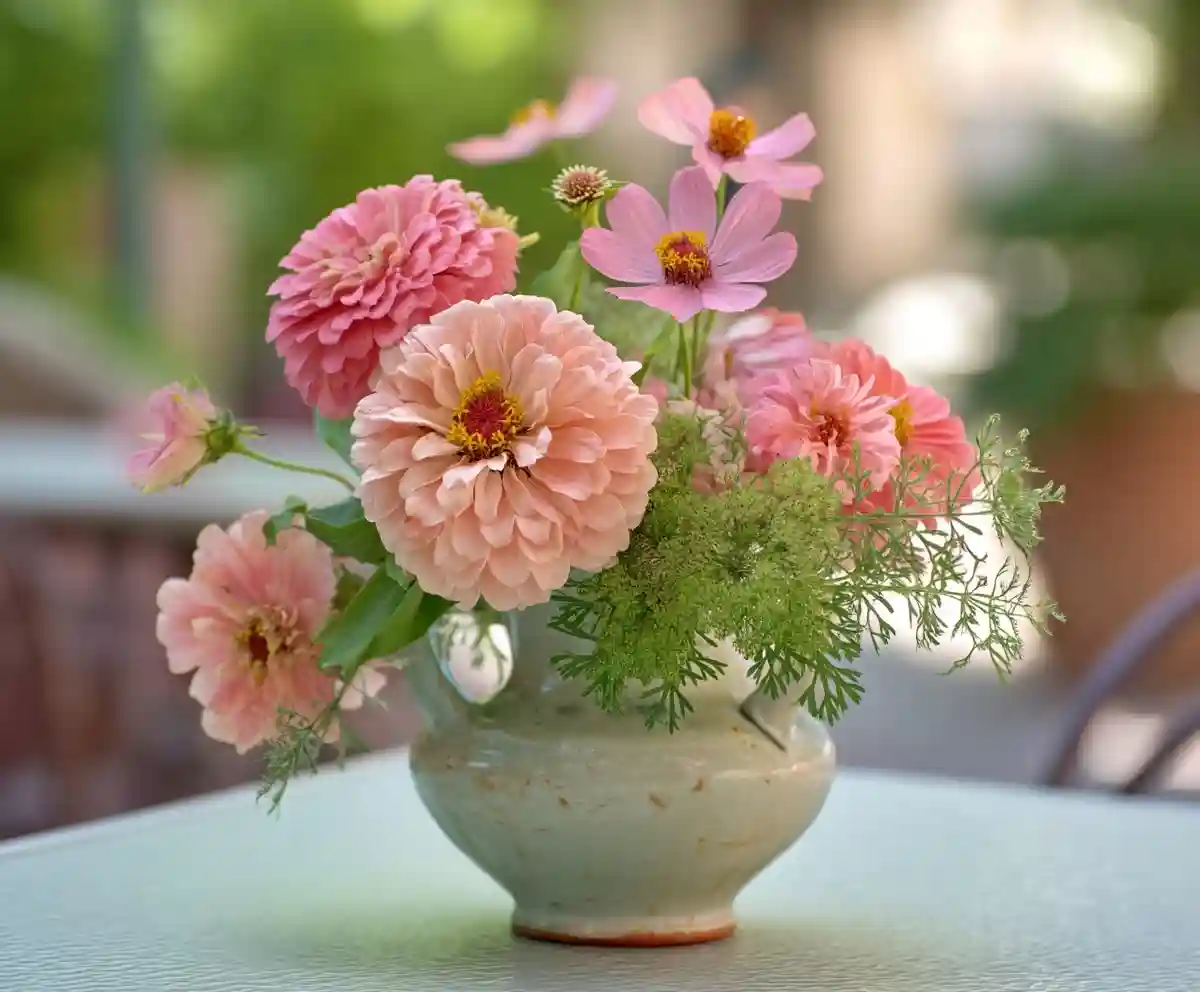
Designing with zinnias can elevate your floral arrangements from simple to stunning with just a few intentional tweaks. While often overlooked as a “common garden flower,” zinnias have a dynamic shape, bold color palette, and structural versatility that make them far more than filler material. Whether you’re preparing a backyard bouquet or planning centerpieces for an event, understanding how to highlight zinnias’ natural form will help you design with purpose and beauty.
In this guide, we’ll walk through key techniques for designing with zinnias—from stem trimming and foliage removal to the best companion textures. Each tip is crafted to help your arrangements breathe, move, and shine with the unique presence that only zinnias can offer.
Table of Contents
1. Leave the Stems on the Longer Side

One of the most overlooked tricks in designing with zinnias is resisting the urge to trim their stems too short. While compact, round arrangements may tempt you to snip everything down for symmetry, leaving the stems longer adds movement, dimension, and elegance to your floral designs.
Zinnias, especially when garden-grown, often develop curving, organic stems that bring a touch of wild beauty to structured bouquets. Letting those natural curves remain intact gives your design a layered, airy quality that’s harder to achieve with tightly cut stems.
Instead of forcing a symmetrical dome, allow a few zinnias to extend above or beyond the main body of your arrangement. Their lifted posture will guide the eye upward, create negative space, and add a more professional, natural look.
🟢 Pro tip: Long stems are especially effective when you’re working with asymmetrical designs or hand-tied bouquets. They give the arrangement vertical balance and visual rhythm.
2. Remove All Foliage
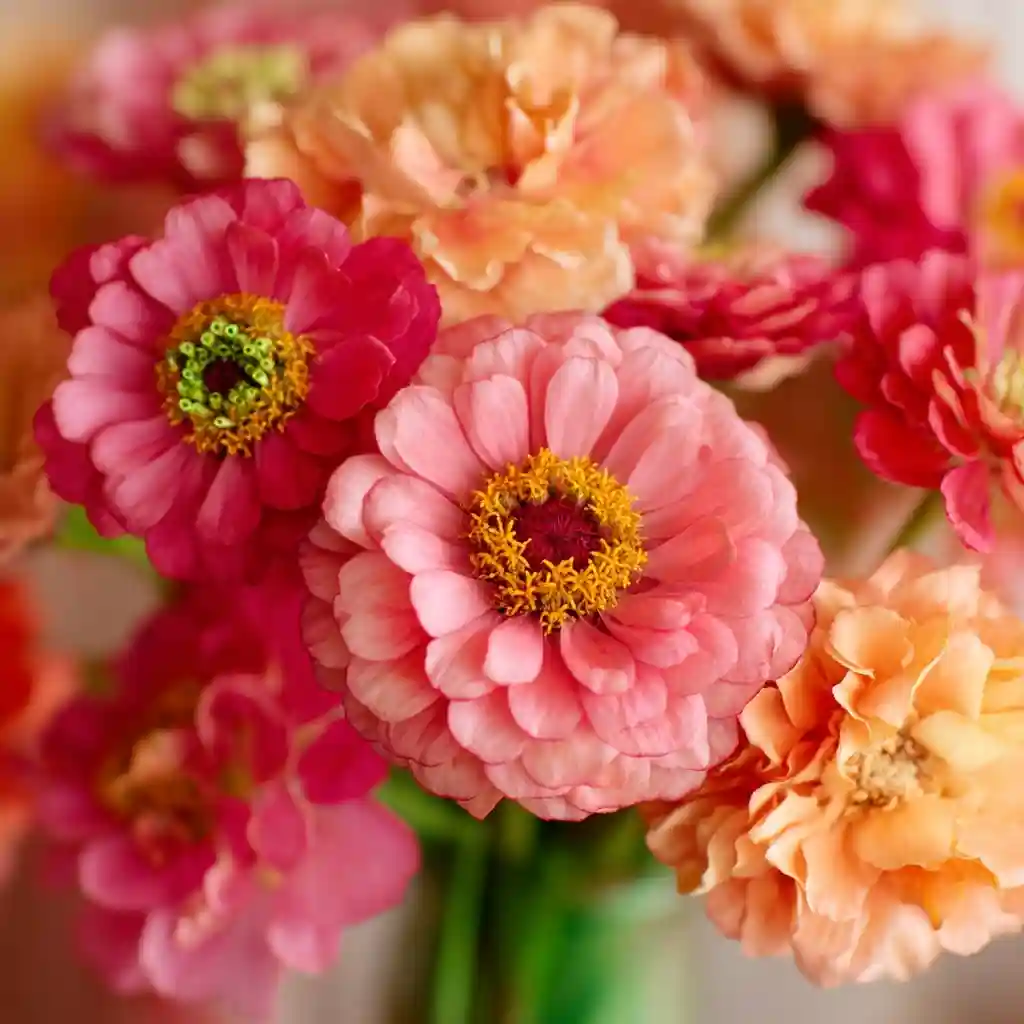
A simple but powerful rule in designing with zinnias is to completely strip the foliage from the stems before arranging. While the leaves might seem harmless—or even helpful in adding fullness—they often clutter the composition and take attention away from the flower heads.
Unlike greenery that adds texture or contrast, zinnia foliage tends to look bulky and can quickly make an arrangement feel overgrown or muddled. By removing every leaf, you emphasize the clean lines of the stems and allow each bloom to stand on its own.
This technique is especially useful when working with zinnias that have naturally curved or arched stems. Without the foliage, the shape of the stem becomes a design element in itself, creating motion and visual flow throughout your arrangement.
🟢 Pro tip: Fully stripped stems pair beautifully with elegant flowers like ranunculus or poppies, which also benefit from open, clean compositions.
3. Leave a Good Amount of Space
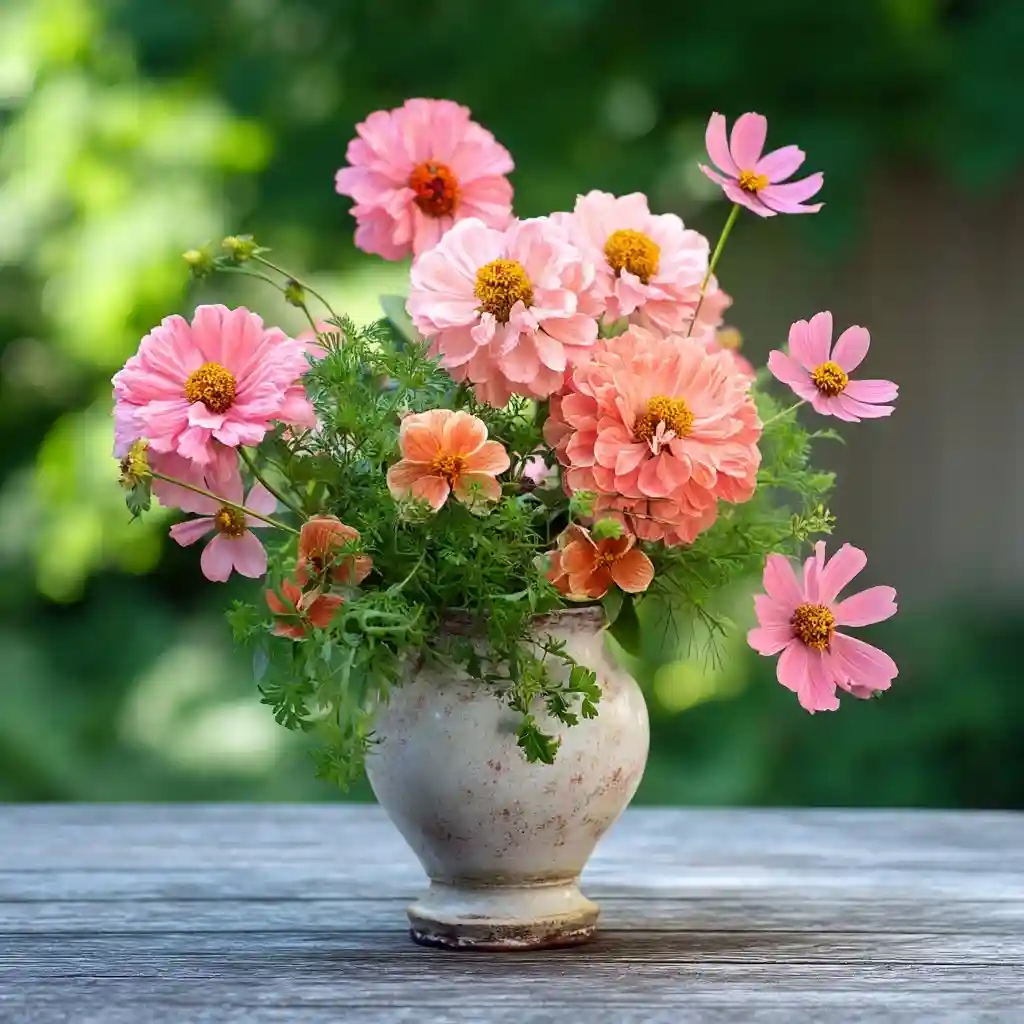
Spacing is essential when designing with zinnias. While it’s tempting to cluster them tightly for a bold, colorful impact, doing so can actually overwhelm the viewer and flatten the overall composition.
Instead, aim to give each zinnia a bit of breathing room. Picture the old floral design mantra: “leave space for a butterfly to fly through.” That negative space between blooms adds dimension and lets each flower shine individually. When your eye can pause on each bloom, the overall design becomes more intentional and less chaotic.
Proper spacing also enhances the shape of the arrangement. You’ll notice more depth, better movement, and a lighter, more professional aesthetic—especially when working with multiple layers of flowers.
🟢 Pro tip: When arranging zinnias in a vase, use a floral frog or chicken wire to help maintain structure while allowing generous spacing between stems.
4. Pair with Fine-Textured Foliage and Filler
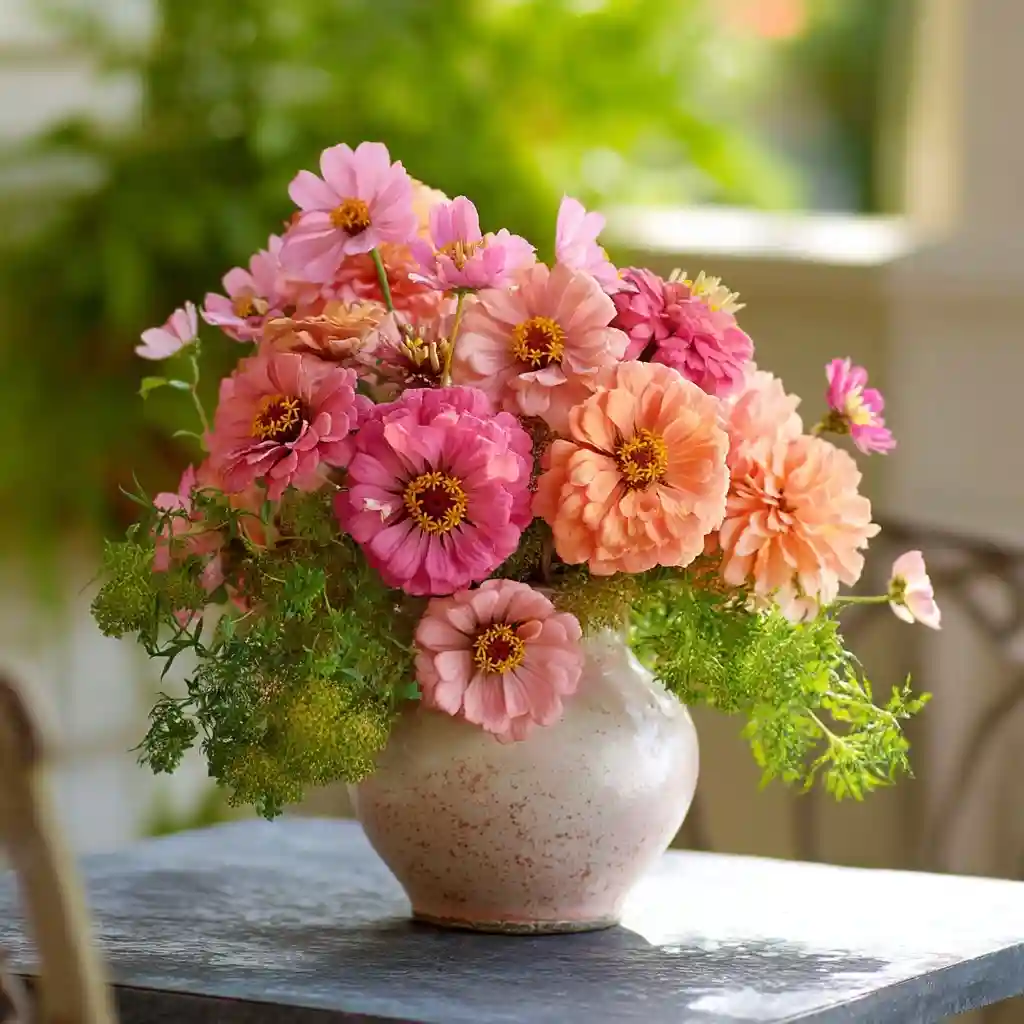
One of the key challenges in designing with zinnias is balancing their bold, wide-petaled structure with complementary elements. Zinnias are naturally lush and full, so pairing them with other dense, multi-petaled blooms—like dahlias or roses—can quickly lead to a heavy, bloated look.
To avoid this, lean into contrast. Use fine-textured foliage and airy fillers to lighten the visual weight of your design. Think of plants like eucalyptus, mahogany splendor, or basil for foliage, and celosia, globe thistle, or ornamental grasses for fillers. These delicate accents create breathing room and highlight the sculptural quality of the zinnia blooms.
The goal is to let zinnias serve as focal points, not get lost in a sea of similar textures. When surrounded by feathery or spiky companions, their form becomes more pronounced and your arrangement gains sophistication and clarity.
🟢 Pro tip: Try using one type of zinnia per arrangement and rotate supporting textures with each season to keep your designs fresh and evolving.
5. Choose Double-Flowering Varieties
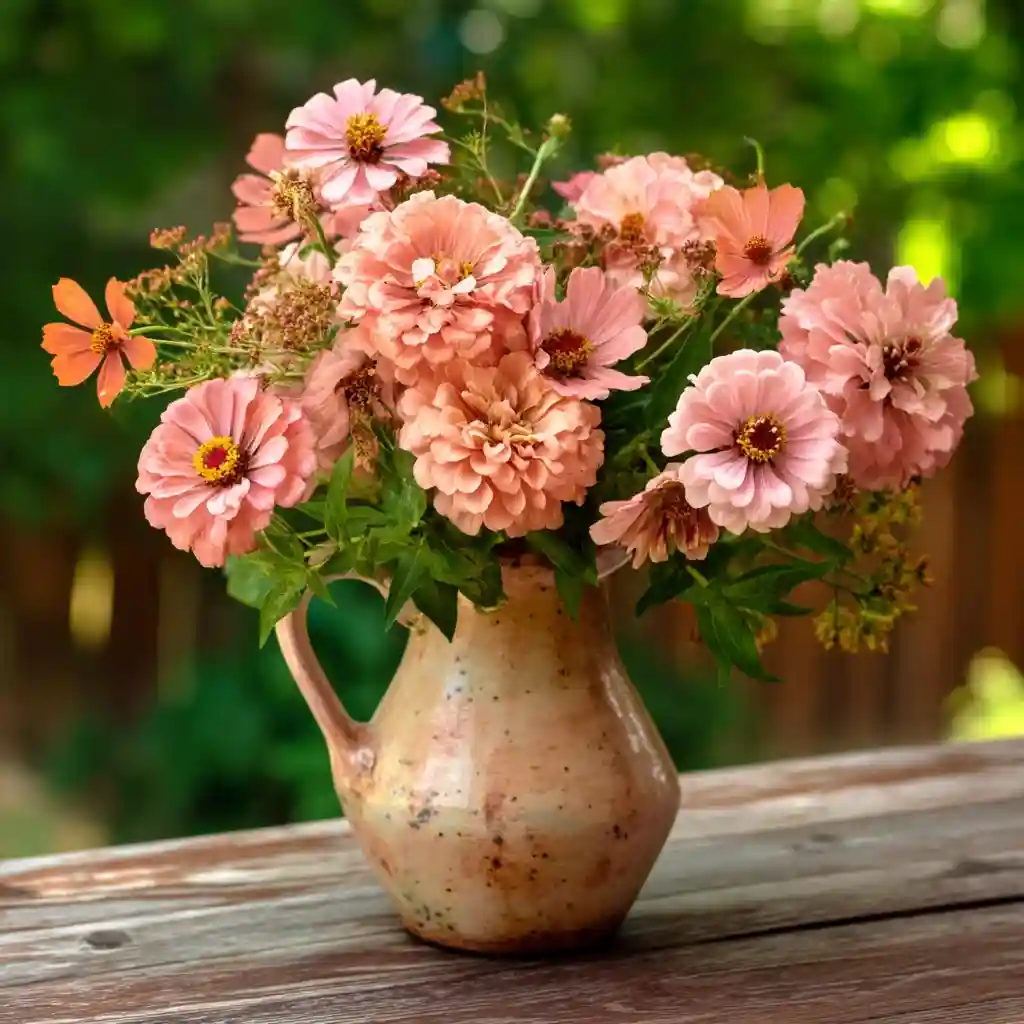
If you want to take your designing with zinnias game to the next level, the variety you choose makes all the difference. While all zinnias bring color and character, double-flowering types offer the richest visual impact for floral arrangements.
Varieties like ‘Queen Red Lime’, ‘Oklahoma’, ‘Zinderella’, and ‘Lilliput’ produce full, layered blooms that resemble miniature ranunculus or scabiosa. Their dense petals and rounded form provide structure and texture, making them ideal for focal points or feature flowers within your design.
In contrast, single-flower types—such as many Benary Giants—tend to have flatter, more open faces. These can still be used effectively, but they often work best as accents or to break up heavier focal areas. Mixing both types can add nuance, but for bold arrangements, double blooms are your best friend.
🟢 Pro tip: Grow your own double-flowering zinnias from seed to ensure variety control and bloom quality. They thrive in well-drained soil and sunny spots—perfect for cutting gardens.
Written by Molly 🌿
Founder of Grow Greenery Now, Molly’s gardening journey began in her grandmother’s sunlit vegetable patch. Every bloom she plants honors that legacy of patience, love, and quiet miracles. Through heartfelt stories and practical tips, she shares how gardening can be both soulful and sustainable.
Read more about Molly →Conclusion
Designing with zinnias doesn’t have to feel ordinary. With just a few thoughtful techniques—like keeping stems long, removing excess foliage, allowing space, and choosing textural contrasts—you can transform this humble garden staple into a floral design powerhouse.
By prioritizing shape, flow, and contrast, your arrangements will feel more modern, artistic, and alive. And with so many vibrant varieties available, zinnias can easily become the star of your summer bouquets or an elegant accent to more structured pieces.
The next time you head out to the garden or the farmer’s market, don’t overlook the zinnia. With the right touch, it can become the most captivating flower in your entire design.
🌿 Love gardening inspiration? Follow me on Pinterest for bold plant ideas, tips, and seasonal color!
More Posts