
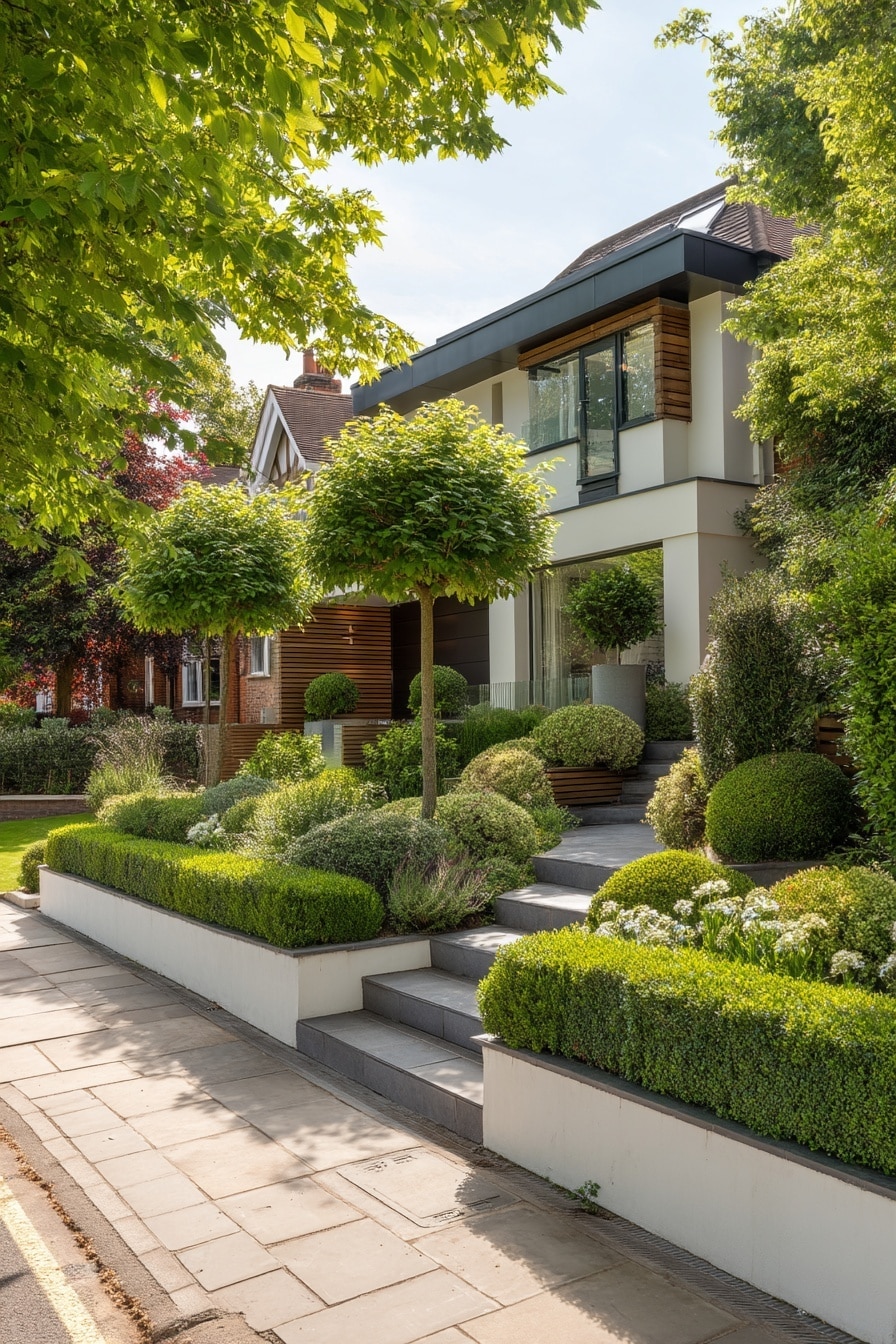
Front garden privacy can completely transform the way your home feels from the street. When designed thoughtfully, a front garden becomes more than an entry space — it creates a calm buffer between your private life and the outside world.
Many homes sit close to sidewalks or roads, making entrances feel exposed. With the right professional design solutions, a front garden can provide screening without sacrificing curb appeal. From layered hedging to architectural screens, there are elegant ways to shield your entrance while maintaining style.
In this guide, you’ll find seven professionally driven front garden privacy ideas that balance structure, greenery, and visual interest — all without making your home feel closed off.
Table of Contents
1. Install Decorative Privacy Screens for Instant Structure

One of the most effective professional upgrades for a front garden is the addition of decorative privacy screens. These architectural features provide immediate coverage while enhancing design.
Why Screens Work So Well
Decorative screens:
- Block direct sightlines from the street
- Add vertical interest
- Define entry pathways
- Complement modern and traditional homes
Professionally installed metal, timber, or composite panels can be customized to suit the scale of your front garden without overwhelming it.
Design Tip
Choose laser-cut or slatted designs that allow filtered light through. This prevents your front garden from feeling boxed in while still protecting privacy.
2. Create Layered Hedging for Natural Screening
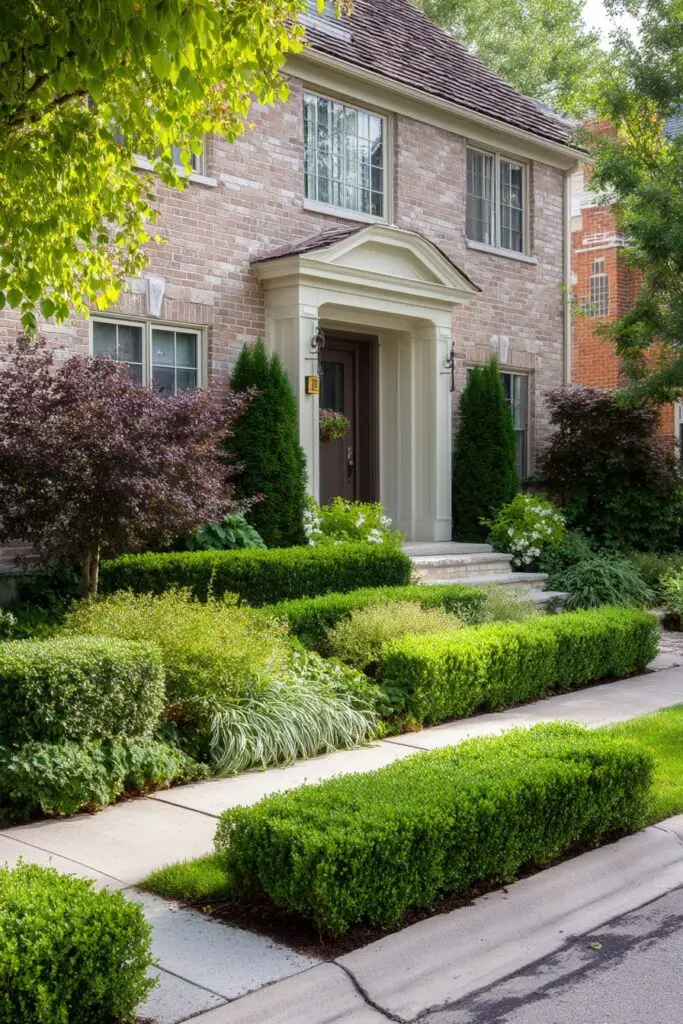
Layered hedging is a timeless approach to front garden privacy. Instead of a single row of shrubs, professionals often design multiple staggered layers.
The Power of Layers
A layered hedge typically includes:
- Low border planting at the front
- Mid-height evergreen shrubs
- Taller screening plants at the back
This structured planting approach softens boundaries and creates depth in the front garden.
Best Professional Strategy
Select evergreen varieties to ensure year-round coverage. A well-designed hedge system keeps your front garden shielded even in winter months.
If you have an internal guide about Low-Maintenance Evergreen Plants, this would be a strong internal link opportunity.
3. Use the “Sandwich” Planting Technique for Dense Coverage
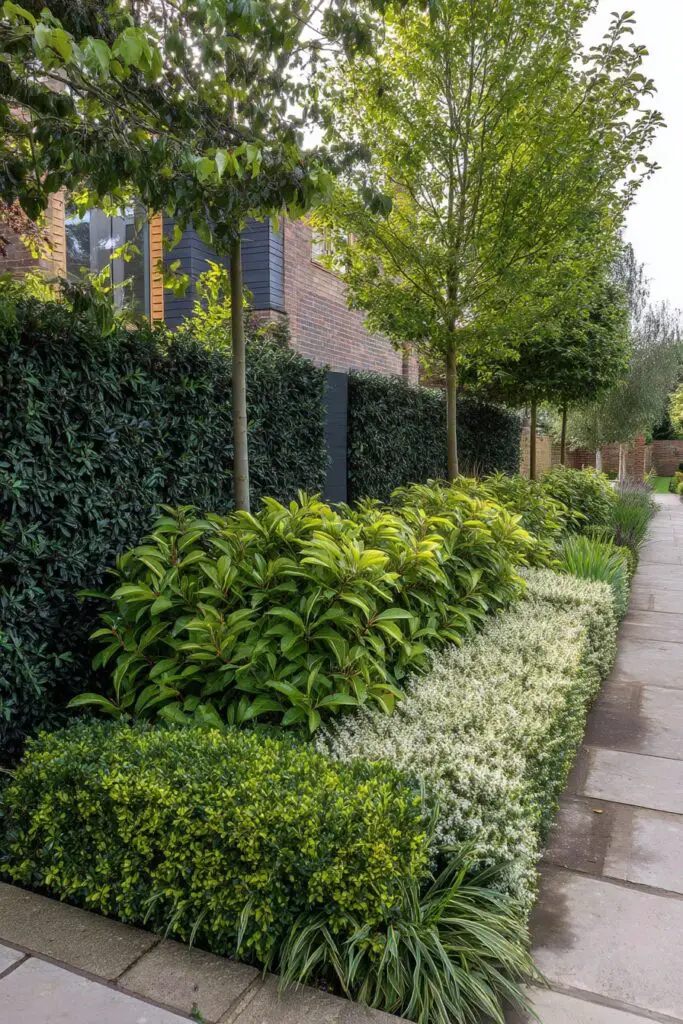
Professional landscape designers often use a “sandwich” technique in a front garden layout. This involves placing taller screening plants between structured lower plantings.
How It Works
The arrangement typically includes:
- Groundcover or low edging in front
- A dense hedge or ornamental grasses in the middle
- A fence or wall behind
This layered setup increases privacy while keeping the front garden visually appealing from every angle.
It’s especially effective for properties facing busy streets.
4. Opt for Well-Selected Trees to Shield Sightlines
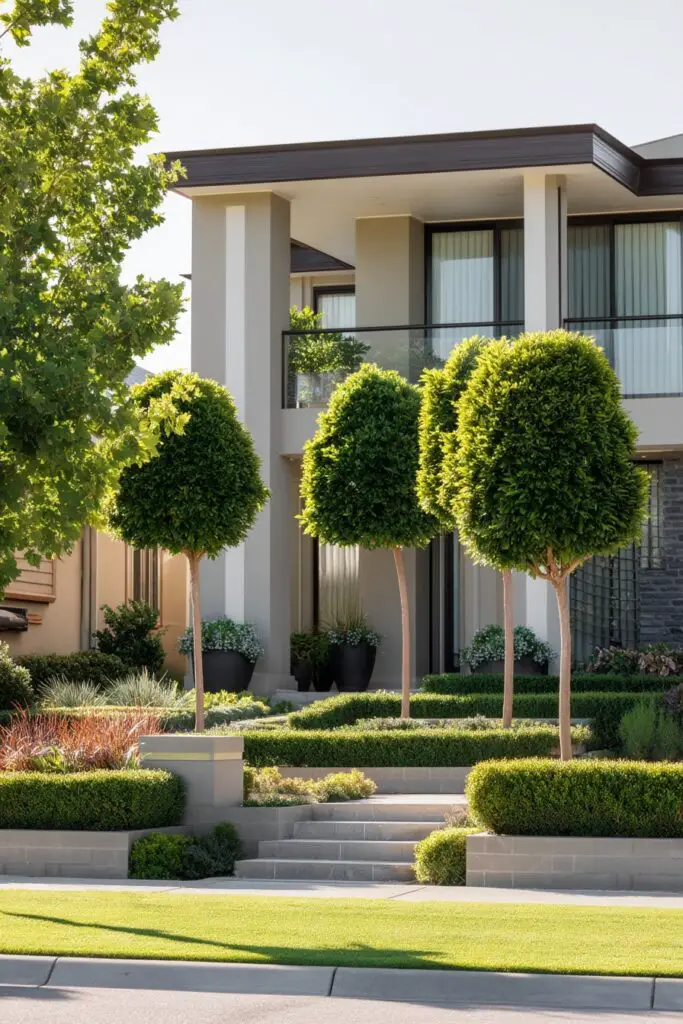
Strategically placed trees can elevate a front garden while creating subtle yet effective privacy. Instead of blocking the entire frontage, trees filter views and soften the overall boundary.
Why Trees Are a Smart Professional Choice
Trees:
- Break direct sightlines from upper windows or passing cars
- Add vertical structure
- Frame the entrance naturally
- Increase property value
In a compact front garden, choose trees with upright or columnar growth habits. This provides screening without consuming too much ground space.
Professional Planning Matters
Tree placement should consider:
- Root spread
- Mature height
- Distance from foundations
- Local regulations
A landscape designer ensures your front garden remains balanced as trees mature.
5. Add Attention-Grabbing Focal Features
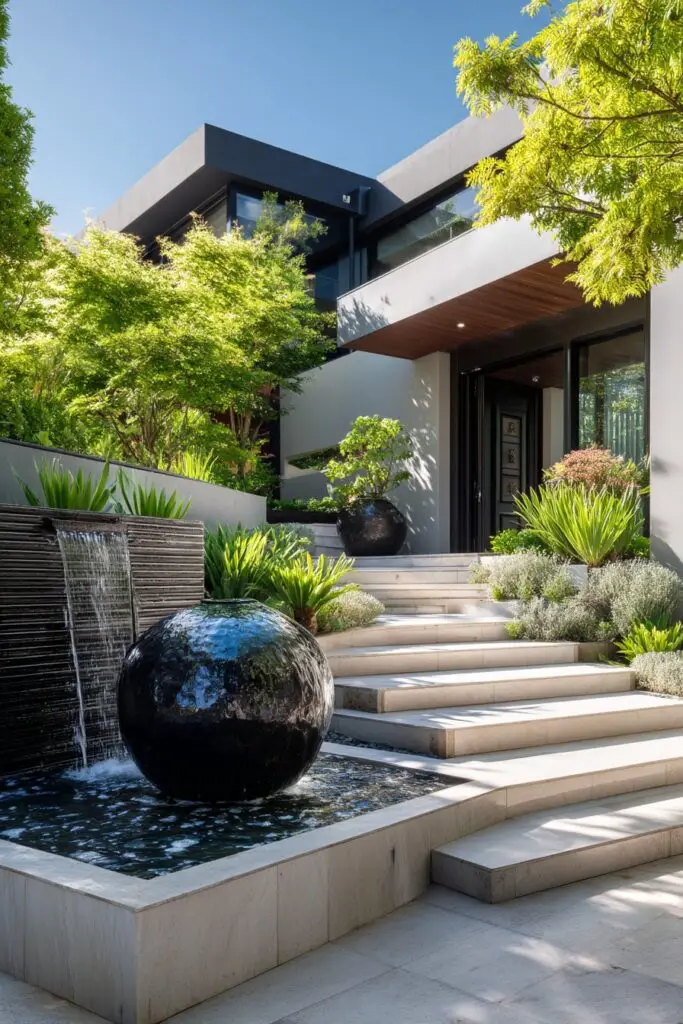
Sometimes privacy in a front garden is less about blocking views and more about redirecting attention.
How Focal Points Improve Privacy
By installing a strong visual element, you shift the eye away from entry doors or windows.
Consider:
- Sculptural water features
- Statement planters
- Architectural gates
- Feature walls with textured finishes
These elements create interest while subtly shielding parts of the front garden from view.
Keep Proportions Balanced
Oversized features can overwhelm a smaller front garden. The scale should complement your home’s façade and overall landscape design.
6. Use Tall Planters to Create Flexible Screening
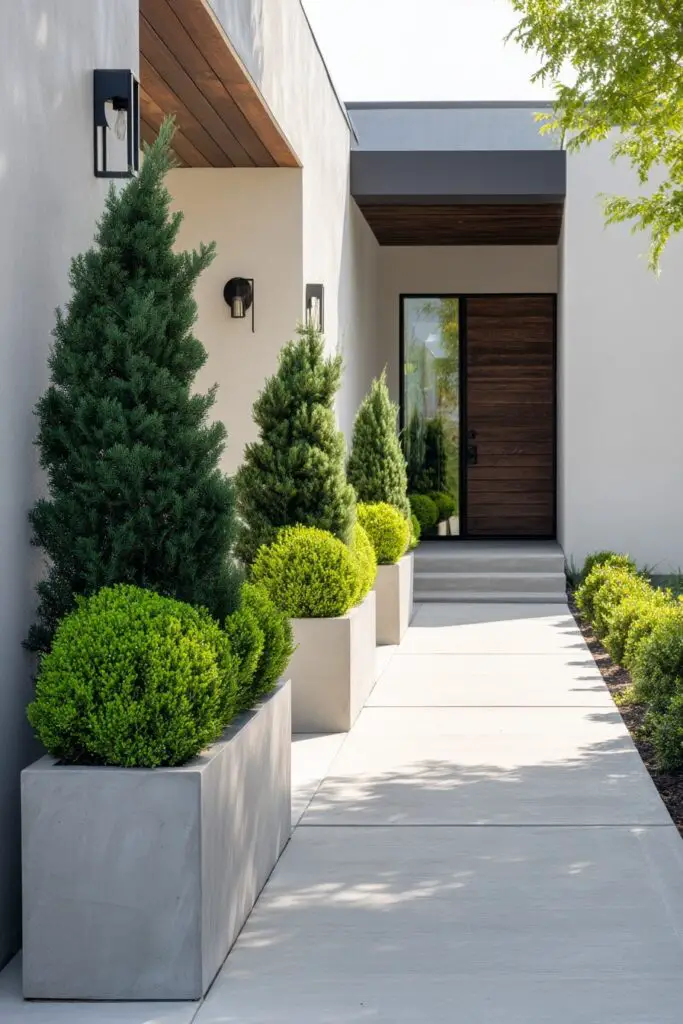
Tall planters are an elegant and adaptable solution for front garden privacy.
Unlike permanent hedges, planters can be repositioned as needed. This flexibility makes them ideal for entrances that require seasonal adjustments.
Why Tall Planters Work
They:
- Add instant height
- Define pathways
- Frame entry doors
- Support structured greenery
In a contemporary front garden, large rectangular planters with evergreen shrubs create a clean, architectural look.
Professional Installation Tip
Choose frost-resistant materials and ensure proper drainage. Poor drainage can quickly damage plants in a front garden setting exposed to the elements.
7. Layer, Layer, Layer for Maximum Effect
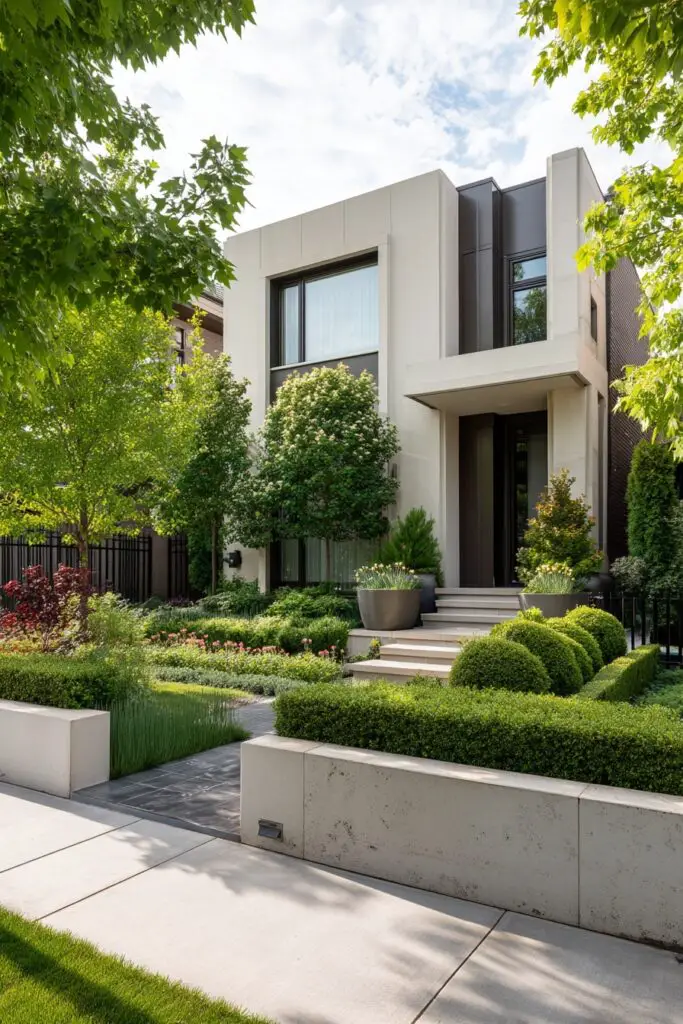
Layering is the foundation of effective front garden privacy design. Instead of relying on one barrier, professionals combine multiple elements.
The Ideal Layered Approach
A strong layered design may include:
- A low wall or edging
- Mid-height shrubs
- Taller hedges or trees
- Screens or architectural panels
Each layer adds depth, making the front garden feel lush and secure without appearing closed off.
Maintain Visual Flow
Even with layers, sightlines should feel intentional. A well-designed front garden provides privacy while still feeling welcoming and open.
Conclusion
A thoughtfully designed front garden can protect your privacy while enhancing curb appeal. From decorative screens and layered hedging to strategic trees and tall planters, professional solutions allow you to create a secluded entrance without sacrificing style.
With the right combination of structure and greenery, your front garden becomes a calm and welcoming transition between public and private space.