
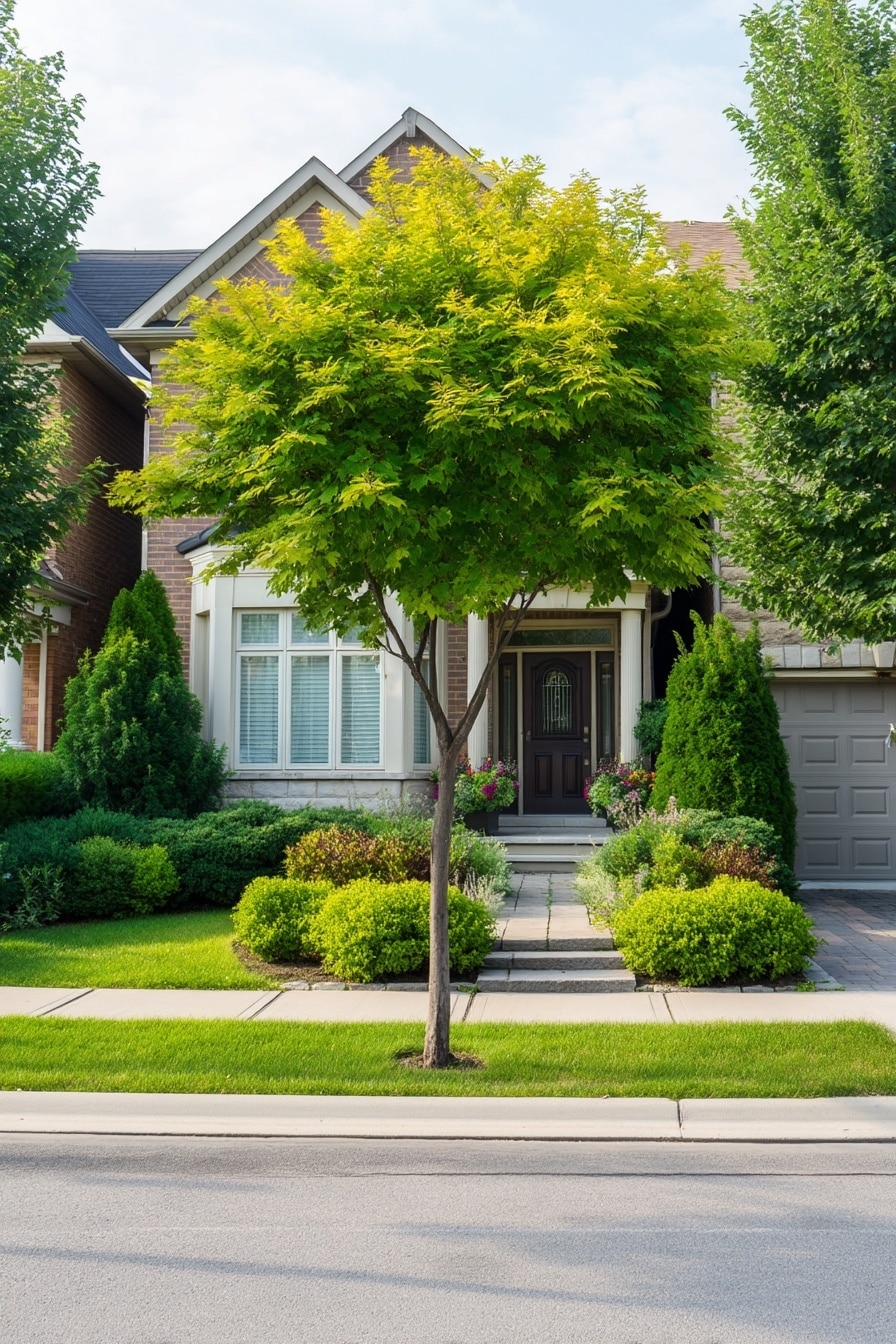
Small front yard landscaping can completely transform the look and feel of your home, even when space is limited. A compact front yard doesn’t mean you have to sacrifice curb appeal. With thoughtful planning and smart design choices, small front yard landscaping can create a welcoming, stylish, and easy-to-maintain entrance that reflects your personal taste.
Many homeowners assume that larger yards offer more design potential, but small front yard landscaping often results in cleaner layouts and more intentional plant selections. By focusing on structure, proportion, and layered greenery, you can make a modest space appear balanced and visually appealing.
In this guide, you’ll find eight practical and attractive ideas to help you make the most of small front yard landscaping while improving functionality and curb appeal.
Table of Contents
1. Define the Space with a Clear Walkway

A well-designed walkway is one of the most effective ways to anchor small front yard landscaping. In compact spaces, structure matters. A defined path creates visual direction and instantly makes the yard feel organized.
Straight concrete paths work well for modern homes, while curved pavers or stepping stones soften traditional exteriors. Choose materials that complement your home’s façade to create cohesion.
Walkway Tips for Small Yards
- Keep the width proportional to the yard size
- Use light-colored pavers to make the space appear larger
- Add subtle edging with bricks or stone
- Line the path with low-growing plants
Avoid overly wide walkways, as they can overwhelm small front yard landscaping. Instead, aim for balance. Narrow, intentional paths allow more planting space while maintaining functionality.
If you have an internal article on garden pathway design ideas or hardscaping basics, linking it here would support your SEO structure and help readers plan effectively.
2. Layer Plants for Depth and Dimension
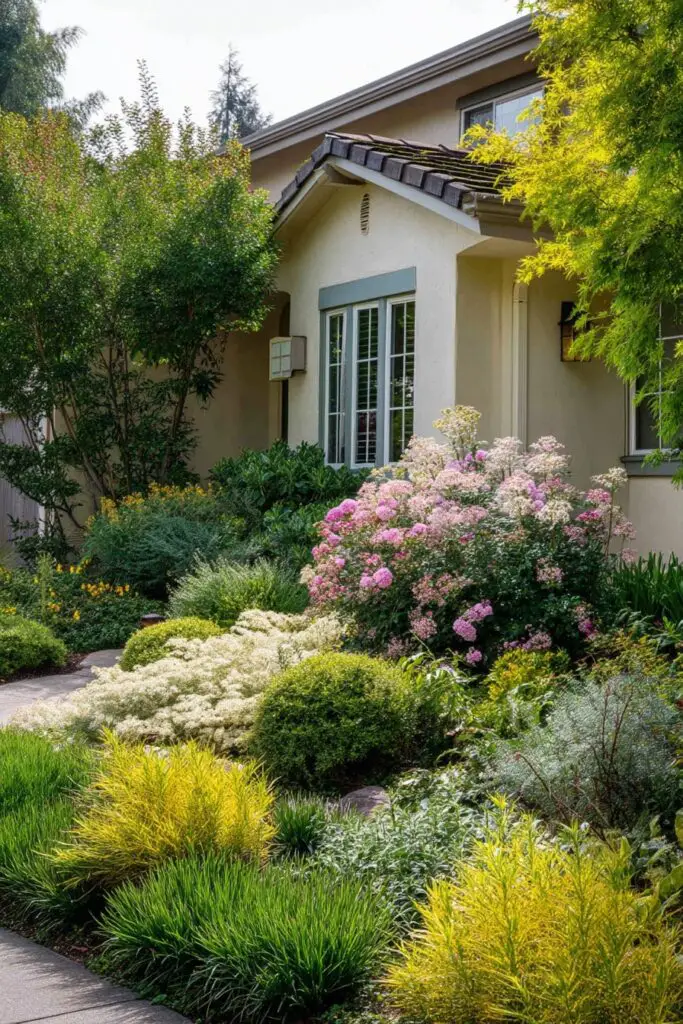
Layering is essential in small front yard landscaping because it creates depth without overcrowding the space. Instead of planting everything at the same height, arrange greenery in tiers to guide the eye naturally from front to back.
Start with taller shrubs or ornamental grasses near the house. Add medium-height flowering plants in the middle, and finish with low-growing groundcovers along borders.
Simple Plant Layering Formula
- Back layer: evergreen shrubs or small ornamental trees
- Middle layer: flowering perennials or compact shrubs
- Front layer: groundcovers or border plants
This structured approach prevents small front yard landscaping from looking flat. It also keeps plants from competing for attention.
Choose varieties that thrive in your local climate to reduce maintenance. If your website includes a guide on low-maintenance shrubs or flowering plants for curb appeal, this is a great spot to add an internal link.
When layered properly, small front yard landscaping feels fuller and more intentional without appearing crowded.
3. Incorporate Vertical Elements
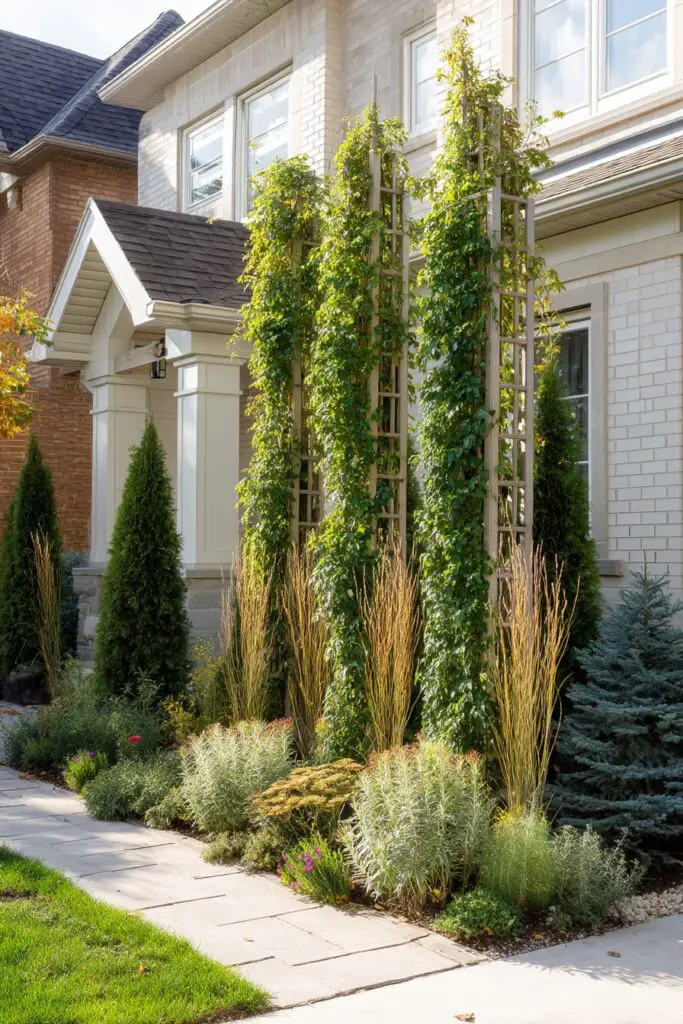
When square footage is limited, height becomes your best design tool. Adding vertical features draws the eye upward and gives small front yard landscaping a more dynamic appearance.
Vertical elements can include trellises, climbing plants, columnar trees, or tall ornamental grasses. These features create visual interest without taking up valuable ground space.
Vertical Ideas for Small Front Yards
- Install a slim trellis against a wall with climbing vines
- Plant columnar evergreens near entry points
- Use tall grasses to frame the walkway
- Add a narrow arbor over the front path
Be mindful of scale. Oversized structures can overwhelm small front yard landscaping, so choose slender, proportionate designs.
If you have an article about vertical trellis ideas or climbing plants for small gardens, linking it here can strengthen your site’s internal SEO and help readers go deeper into the topic.
Vertical layers add sophistication while preserving open space—an ideal balance for small front yard landscaping.
4. Choose a Focal Point
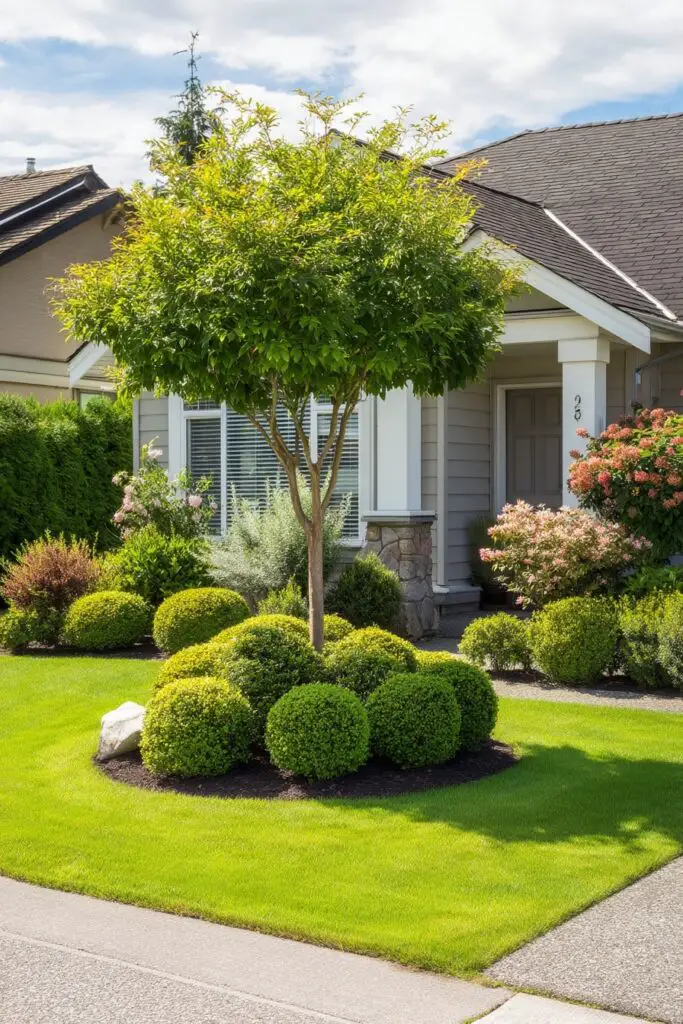
Every well-designed space benefits from a focal point, and small front yard landscaping is no exception. A single standout feature creates structure and prevents the yard from feeling scattered.
In compact yards, subtlety works best. A small ornamental tree, decorative planter, birdbath, or compact water feature can anchor the design without overwhelming the space.
Great Focal Point Options
- Dwarf Japanese maple
- Sculptural evergreen shrub
- Decorative urn planter
- Compact stone fountain
Place the focal point where it naturally draws attention—often near the entry path or center of the yard. Surround it with complementary plants to frame the feature.
Avoid adding multiple competing highlights. In small front yard landscaping, simplicity enhances impact. One strong focal element keeps the design clean and cohesive.
5. Keep the Lawn Minimal and Intentional
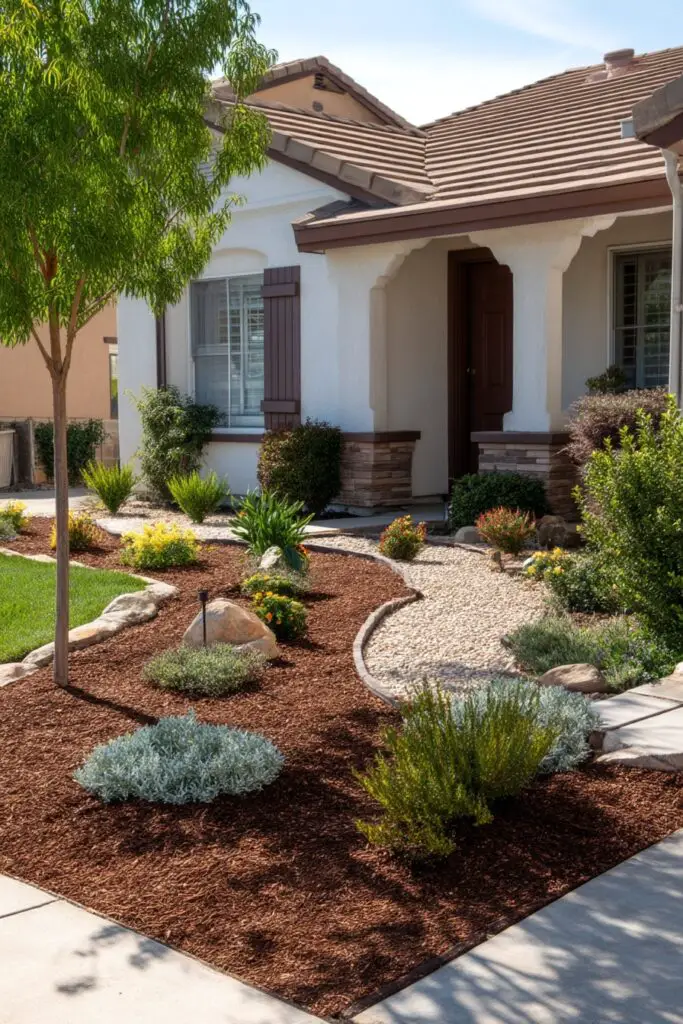
Large stretches of grass can make small front yard landscaping feel empty rather than expansive. In compact spaces, reducing lawn size often improves both appearance and maintenance.
Instead of covering the entire yard in turf, consider shaping a smaller lawn area bordered by planting beds. This adds structure while creating room for layered greenery.
Smart Lawn Alternatives
- Curved garden beds to break up straight lines
- Gravel or decorative stone sections
- Groundcovers instead of traditional grass
- Mulched planting zones for easy upkeep
Less lawn means less mowing, watering, and fertilizing. That’s a practical advantage for homeowners seeking low-maintenance small front yard landscaping.
If your site features an article about low-maintenance plants or eco-friendly lawn alternatives, linking internally here would add value and strengthen SEO.
A balanced mix of lawn and planting areas makes small front yard landscaping feel purposeful rather than cramped.
6. Use Repetition for a Cohesive Look
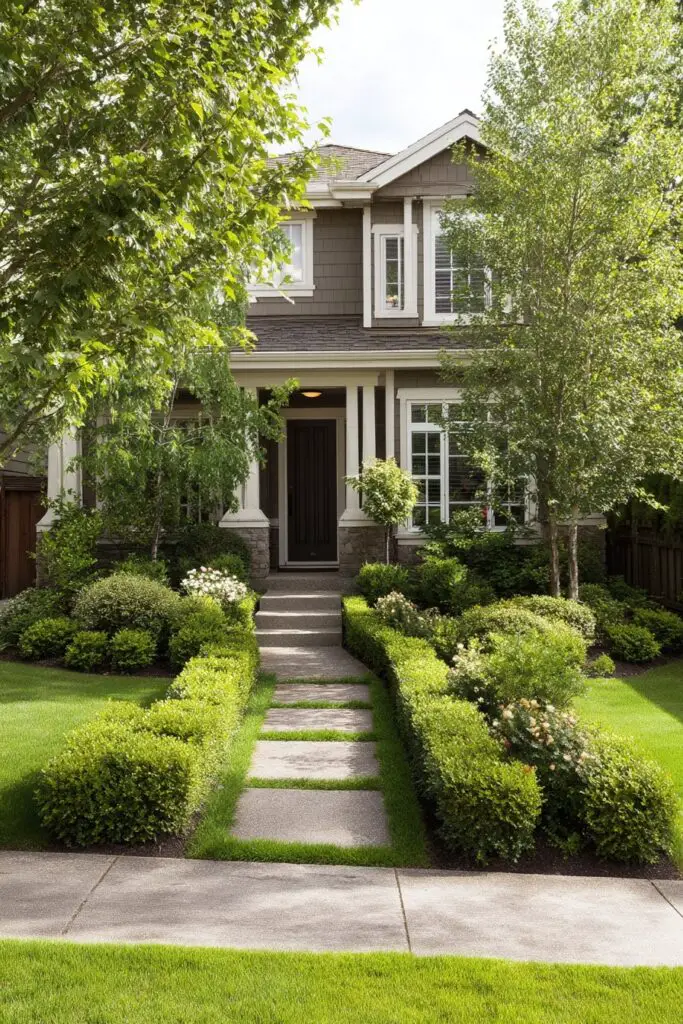
Repetition is a powerful design principle in small front yard landscaping. In compact spaces, repeating certain plants, materials, or colors creates rhythm and makes the yard feel thoughtfully planned.
Rather than planting many different varieties, select two or three main plant types and repeat them throughout the yard. This approach reduces visual clutter.
Ways to Apply Repetition
- Plant the same shrub along both sides of a walkway
- Use matching planters near the entrance
- Repeat one flower color across multiple beds
- Carry the same edging material throughout
When repetition is used carefully, small front yard landscaping appears organized and larger than it actually is. The eye moves smoothly across the space without distraction.
Too much variety can make a small yard look chaotic. Keeping the plant palette focused enhances balance and makes maintenance easier.
7. Add Subtle Outdoor Lighting
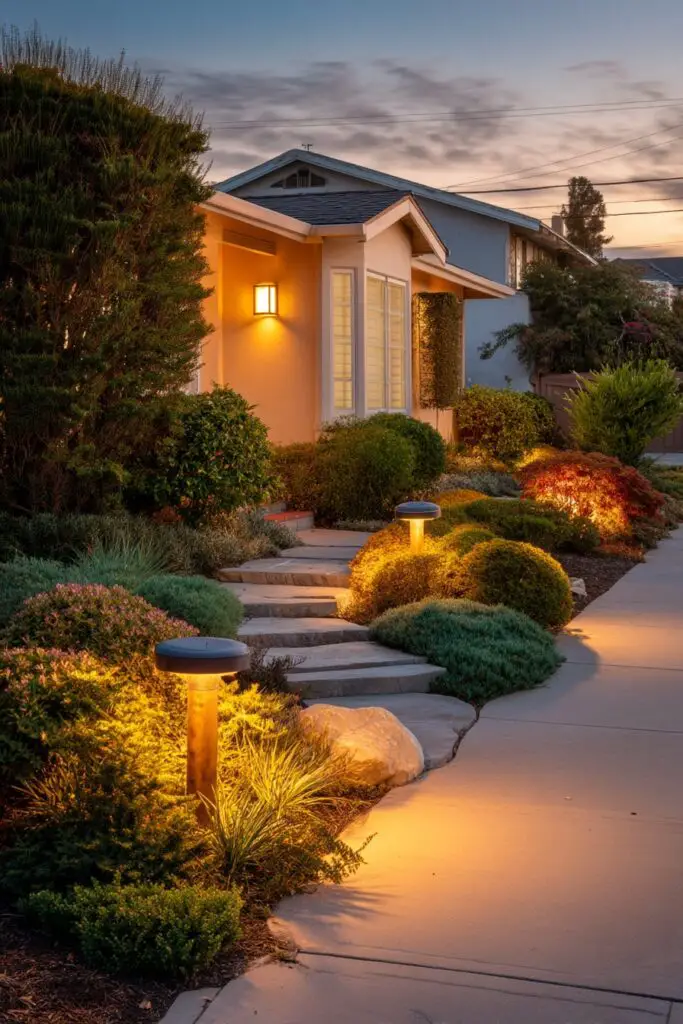
Thoughtful lighting enhances small front yard landscaping by adding depth, safety, and visual appeal after sunset. Even a few well-placed fixtures can make a compact yard feel polished and welcoming.
Low-voltage pathway lights guide visitors safely to the front door, while soft uplighting highlights trees or architectural details. Lighting also adds dimension by creating shadows and contrast.
Lighting Tips for Small Yards
- Use warm white bulbs for a natural glow
- Space pathway lights evenly but not too closely
- Highlight one focal feature instead of many
- Choose fixtures that match your home’s style
Avoid overly bright or large fixtures that dominate the space. Subtle lighting complements small front yard landscaping without overpowering it.
If you have an article about outdoor lighting ideas or front yard curb appeal upgrades, linking internally here would enhance your site’s navigation and SEO structure.
Lighting ensures small front yard landscaping looks just as appealing at night as it does during the day.
8. Keep Maintenance Simple
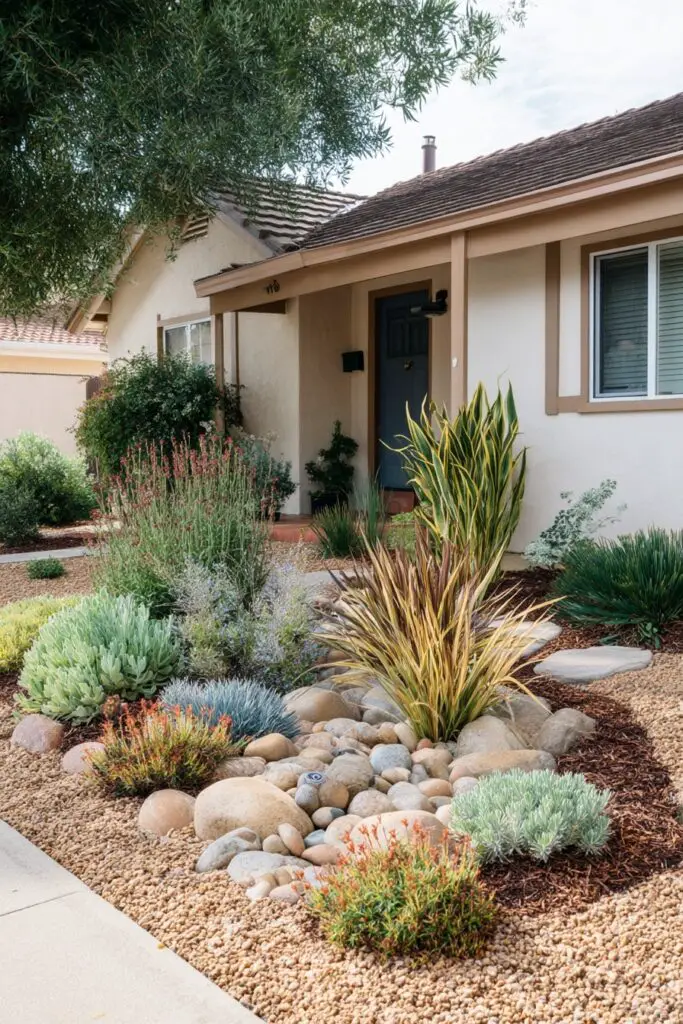
Simplicity is key in small front yard landscaping, especially when it comes to upkeep. A well-designed yard should enhance curb appeal without demanding constant attention.
Choose plants that thrive in your climate and soil conditions. Native varieties often require less watering and fertilizing once established.
Low-Maintenance Strategies
- Apply mulch to reduce weeds and retain moisture
- Install drip irrigation for efficient watering
- Select drought-tolerant shrubs and perennials
- Limit high-maintenance seasonal flowers
Overplanting can increase upkeep. Instead, focus on strong foundational plants that maintain structure year-round.
When small front yard landscaping is designed with maintenance in mind, it remains attractive without becoming overwhelming. A clean, simple plan ensures long-term success and lasting curb appeal.
Conclusion
Small front yard landscaping proves that limited space doesn’t limit design potential. By defining pathways, layering plants, incorporating vertical elements, and keeping maintenance simple, you can create a welcoming entrance that feels polished and intentional.
Thoughtful choices in structure, repetition, lighting, and focal points allow small front yard landscaping to feel larger and more cohesive. With careful planning, even the smallest yard can make a lasting first impression.