
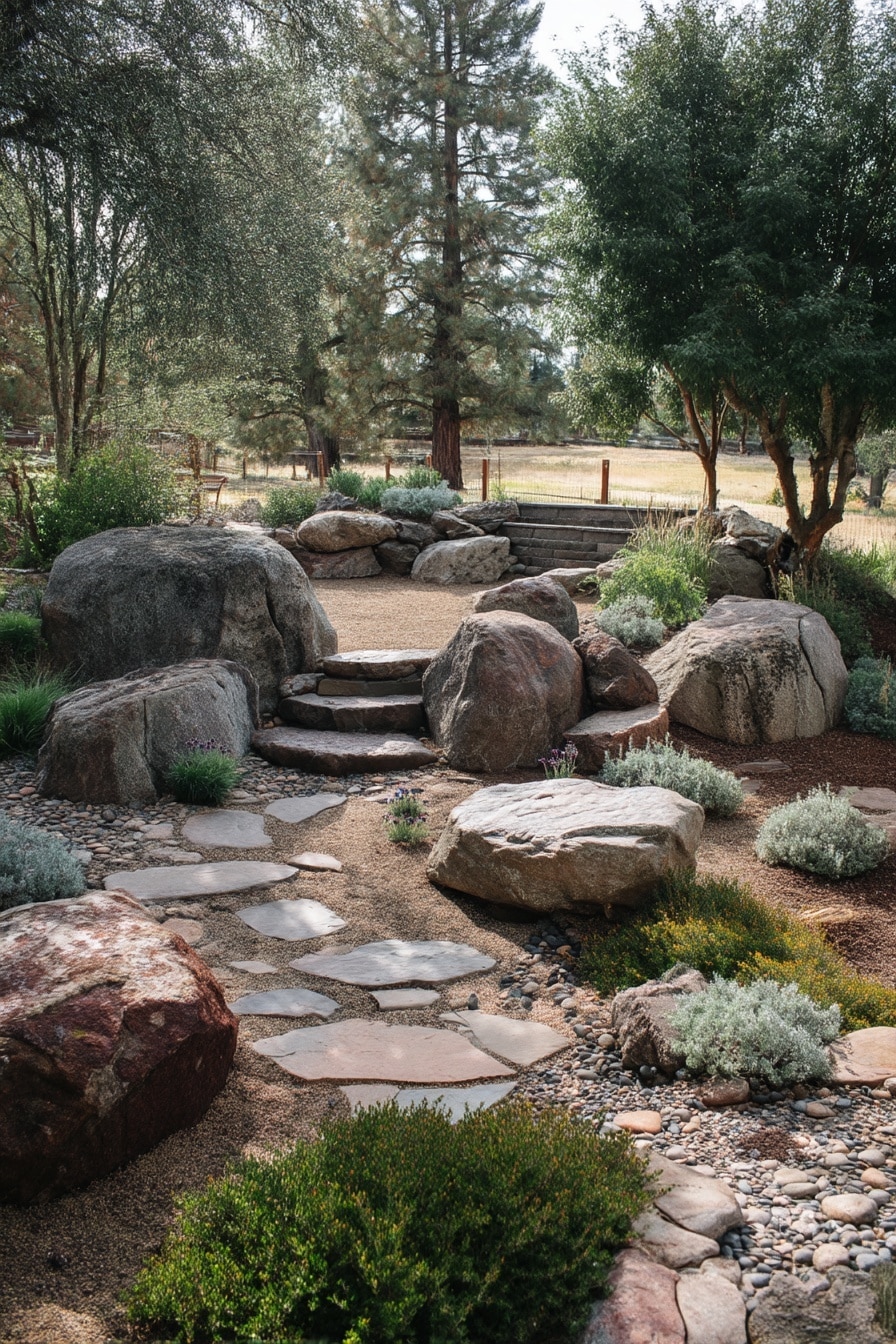
landscaping with rocks adds enduring beauty and practical function to outdoor spaces, whether you want a low‑maintenance garden, better drainage, or a striking visual focal point. Unlike plant‑only gardens, rock elements bring texture, structure, and timeless appeal to yards and gardens of all shapes and sizes.
From small pebble paths to bold boulder focal points, the right combination of stone and landscape design enhances both aesthetics and usability. This guide outlines five useful design guidelines to help you use rocks effectively in your landscape, balancing form and function for year‑round appeal.
Table of Contents
1. Plan Your Layout First

Before placing a single stone, it’s important to design your layout. Landscaping with rocks requires a clear plan to ensure balance, flow, and function throughout the space.
Start by identifying the main areas of your yard: pathways, plant beds, focal points, or zones with poor drainage. Sketch a rough layout that maps where each rock element will go—such as gravel paths, large boulders, retaining walls, or dry creek beds. Planning prevents overcrowding and helps rocks complement surrounding plants and structures.
Think about sight lines from common viewpoints like patios or windows. Well‑placed rocks can guide the eye, frame a view, or subtly separate garden zones. A thoughtful layout ensures your rock landscaping feels intentional and visually cohesive.
2. Use a Mix of Rock Sizes

One of the most effective techniques in landscaping with rocks is to vary the size and scale of the stones you use. Combining large rocks, medium cobbles, and small gravel adds depth, contrast, and a natural appearance to your garden.
Larger boulders create visual anchors and can serve as focal points or informal seating. Medium-sized rocks help soften transitions and define edges, while finer gravel fills gaps and supports drainage. Using just one size throughout can feel flat or artificial, but mixing textures and forms mimics nature and enhances visual interest.
Avoid placing all large or small rocks together. Instead, layer them like in natural environments—big stones nestled into the earth, smaller stones clustered around them. This layered look provides movement and a grounded feel to the overall design.
3. Blend Rocks with Plants
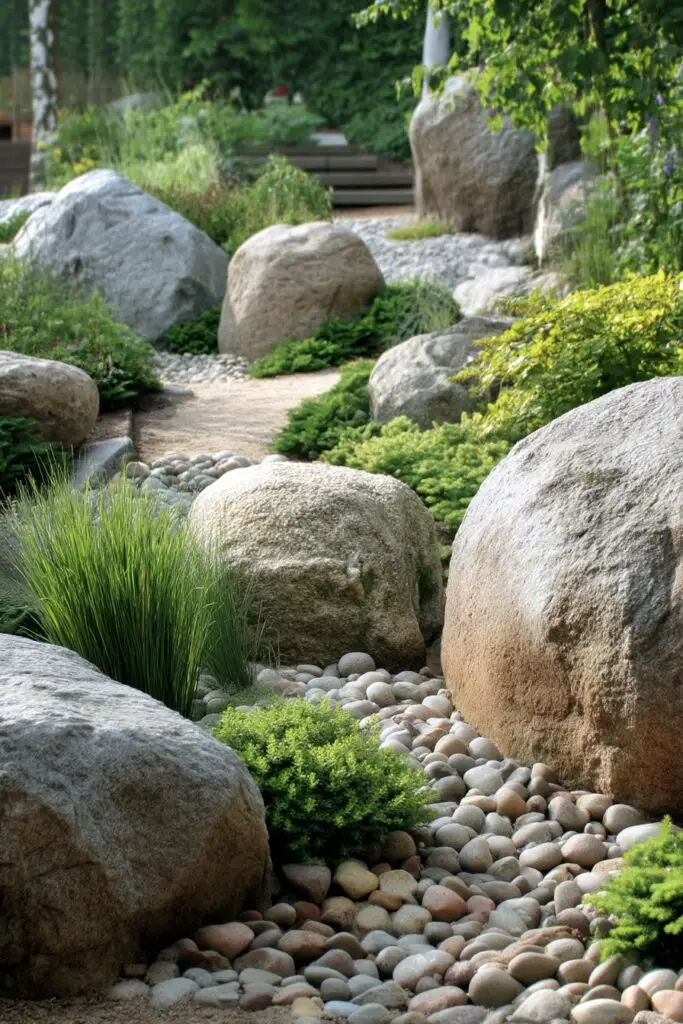
Successful landscaping with rocks isn’t just about stone—it’s about how rocks and plants interact to create a balanced, living composition. Integrating greenery softens hard textures and brings life to the landscape.
Use low-growing groundcovers like creeping thyme, sedum, or woolly yarrow to weave between stones and fill crevices. Taller grasses and perennials can be positioned behind or alongside boulders to frame them naturally. Choose drought-tolerant or native plants for low-maintenance harmony with your rock features.
Consider seasonal interest: evergreen shrubs offer structure year-round, while flowering varieties add color and contrast. Planting pockets between rocks help plants thrive while keeping the overall design neat and intentional.
The goal is to let rocks and plants support each other visually—neither overpowering the other, but working together to form a cohesive garden scene.
4. Consider Function and Drainage

landscaping with rocks isn’t just about looks—rocks play a vital role in controlling water flow and improving functionality in your garden. When used intentionally, they can reduce erosion, guide runoff, and improve soil retention.
For sloped areas or spots prone to pooling, consider building a dry creek bed using river stones or gravel. This not only channels excess water but also adds a sculptural element to the landscape. Around the base of buildings or along pathways, use crushed stone or decomposed granite to promote drainage and prevent muddy build-up.
Ensure that rock beds are slightly graded to direct water away from foundations. Avoid compacting the soil too much beneath gravel, as this can hinder water movement. With proper design, your rock landscape becomes both practical and visually striking.
5. Stick to a Natural Look

The most timeless results in landscaping with rocks come from mimicking nature. Random placement, layered textures, and earthy tones help your garden feel grounded and organic rather than forced or overly manicured.
Choose stones that complement your regional environment—locally sourced rocks tend to blend more naturally with native plantings and soil. When placing large rocks, partially bury them to make them look settled, as if they’ve always been there. Avoid lining up rocks in perfect rows or scattering them evenly like decorations.
Use curved lines instead of sharp angles in your rock beds and borders. Nature rarely works in straight lines, and your garden will feel more relaxed and cohesive by following this lead. A natural look encourages a sense of calm and makes your outdoor space feel like an extension of the land itself.
Conclusion
landscaping with rocks offers a low-maintenance, visually impactful way to shape your garden while adding lasting structure and texture. By planning your layout, mixing stone sizes, blending with plants, and considering function, you can create a space that feels both beautiful and purposeful. Whether you’re working on a small urban yard or a sprawling natural garden, these five design guidelines will help you use rocks effectively and naturally.