
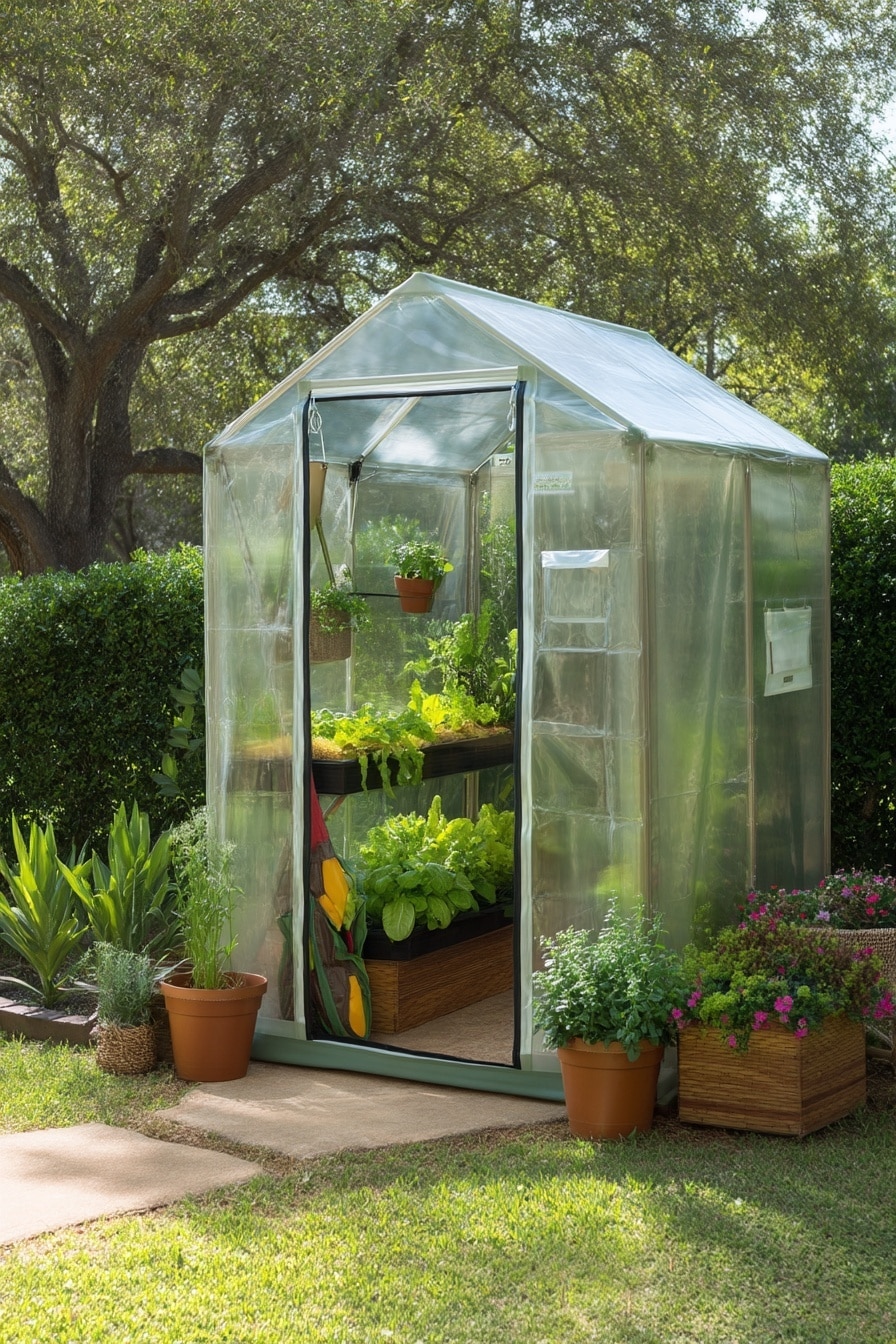
DIY mini greenhouse setups are a smart, budget-friendly way to keep your garden thriving beyond the typical growing season. Whether you’re dealing with unpredictable spring weather or trying to protect tender plants during fall, a homemade greenhouse gives you control over temperature, humidity, and light—without the cost of a full-size structure.
Even if space is tight or your budget is limited, there are creative and effective ways to build your own mini greenhouse using items you may already have at home. From upcycled furniture to repurposed containers, these ideas not only save money but also help reduce waste while supporting healthy plant growth.
In this guide, we’ll walk through eight clever DIY mini greenhouse ideas that are perfect for beginners and seasoned gardeners alike. Let’s get growing.
Table of Contents
Benefits of Building a Mini Greenhouse
A DIY mini greenhouse offers a lot more than just charm in your garden—it’s a practical solution that can transform how and when you grow your plants. Here are the key benefits of building your own:
🌱 Extend Your Growing Season
One of the biggest advantages is the ability to start your garden earlier in spring and keep it going later into the fall. A mini greenhouse traps heat and moisture, creating a more stable microclimate for plants that might otherwise struggle in fluctuating outdoor conditions.
🌿 Protect Tender Plants from Harsh Weather
Whether it’s an unexpected frost or too much rain, a DIY mini greenhouse acts as a shield. Delicate seedlings, herbs, and heat-loving vegetables all benefit from a more controlled environment.
🌼 Start Seeds with Greater Success
Starting seeds indoors is great, but a mini greenhouse can make the process even more effective. The warmer, more humid conditions improve germination rates and help young plants grow stronger before transplanting.
🍅 Grow a Wider Variety of Plants
Want to grow tomatoes earlier or experiment with tropical herbs? A mini greenhouse allows you to try growing more sensitive varieties that wouldn’t normally thrive in your zone.
💰 Save Money and Space
Buying a full-size greenhouse can be expensive and overwhelming. A DIY mini greenhouse uses affordable, repurposed materials and fits neatly in small spaces like patios, balconies, or backyards. It’s ideal for urban gardeners or anyone with limited square footage.
1. Upcycle Scraps for a Budget-Friendly Build

If you’re handy with basic tools and have leftover materials lying around, building a DIY mini greenhouse from scrap materials is a great place to start. It’s cost-effective, sustainable, and surprisingly simple.
Old wood planks, siding, or even corrugated metal can be used to create the frame. For the roof or walls, repurpose an old window, attach it with hinges, and you have a lid that lets in sunlight while keeping warmth and moisture in.
Even better? If you have multiple windows or glass panels, you can join them together to form a full enclosure. In a pinch, clean plastic bottles can be cut and flattened to serve as makeshift windows, allowing light through while insulating your plants.
Tips:
- Choose untreated wood to avoid chemical exposure to your plants.
- Secure all sides well to prevent wind damage.
- Add ventilation by propping open the lid during warm days.
This idea is perfect for gardeners who love the satisfaction of building with what they already have. It’s functional, eco-friendly, and adds a rustic charm to any garden space.
2. Recycle Old Picture Frames into a Charming Greenhouse
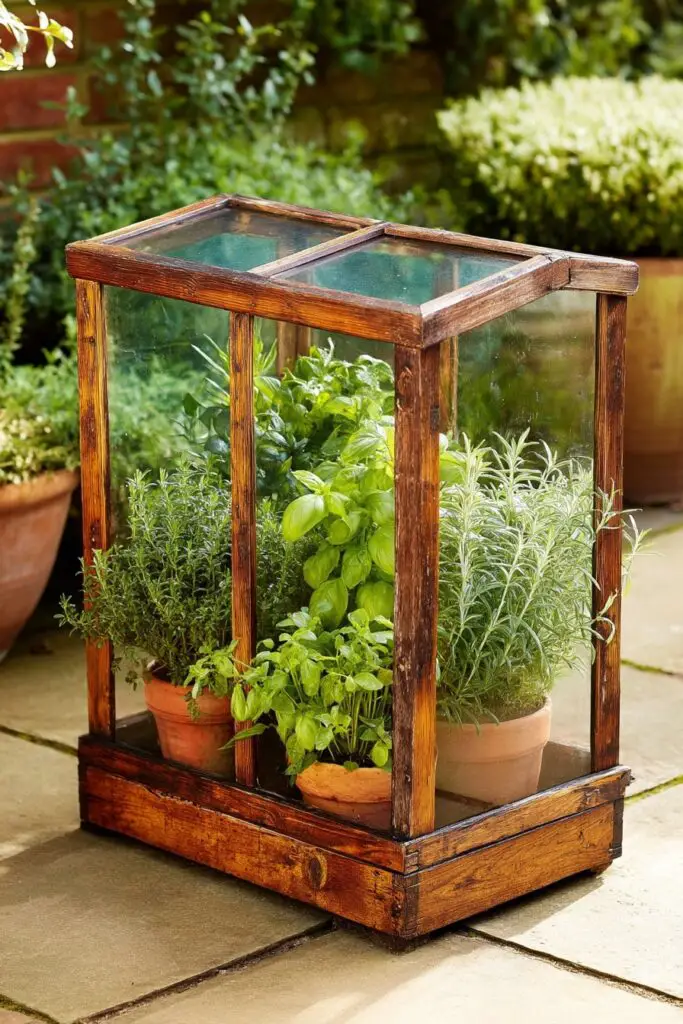
Old picture frames might seem like clutter, but they’re actually perfect building blocks for a DIY mini greenhouse. Their rectangular shape and built-in glass (or the option to add clear plastic) make them ideal for creating a small, protective plant shelter.
To get started, gather four to six frames of similar size. You can use them to form the sides and top of a small greenhouse box. If the glass is intact, keep it for maximum sunlight exposure. If not, stretch clear plastic wrap or sheeting across the openings for a lightweight alternative.
Attach the frames using hinges, brackets, or even strong adhesive depending on your level of DIY experience. Create a hinged lid on top to make watering and airflow easy to manage.
Why It Works:
- Easy to find frames at thrift stores or flea markets
- Glass offers great insulation and visibility
- Lightweight and portable for moving around the garden
This mini greenhouse works well for seed starting, herb pots, or protecting delicate flowers from sudden cold snaps. It’s also a fun weekend project for crafty gardeners.
3. Reuse Plastic Containers for Single-Plant Greenhouses
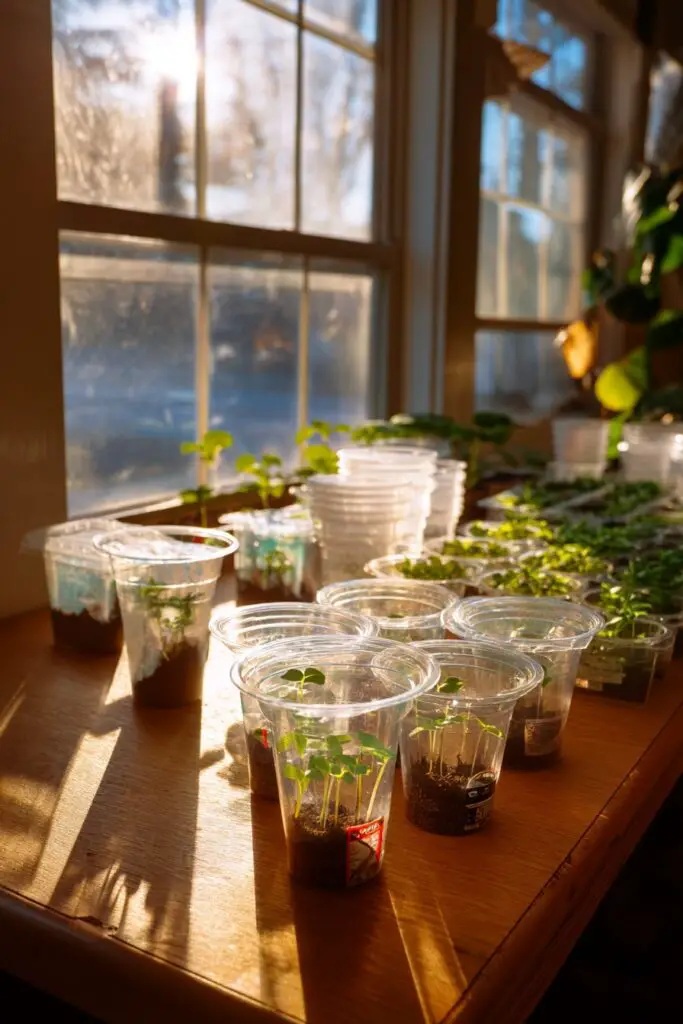
One of the easiest ways to make a DIY mini greenhouse is by reusing plastic containers you already have at home. Think berry boxes, salad clamshells, clear takeout containers, or even plastic cups and water bottles. These small items can instantly become protective domes for individual plants.
Simply place the container over a seed tray or small pot. The clear plastic traps heat and moisture, creating the perfect microclimate for germination or protection from chilly nights. For better airflow, poke a few holes in the top or lift the container slightly during the day.
Plastic bottles can be cut in half, with the top acting like a cloche over seedlings. Just remember to remove the cap occasionally to avoid overheating.
Ideal Uses:
- Starting seeds indoors or on a sunny windowsill
- Protecting fragile seedlings in early spring
- Covering single herb plants or vegetables outdoors
This method is perfect for small-space gardeners or anyone looking for a no-cost greenhouse solution. It’s low-effort, highly effective, and reduces plastic waste.
4. Use a Clear Storage Bin for a Portable Greenhouse
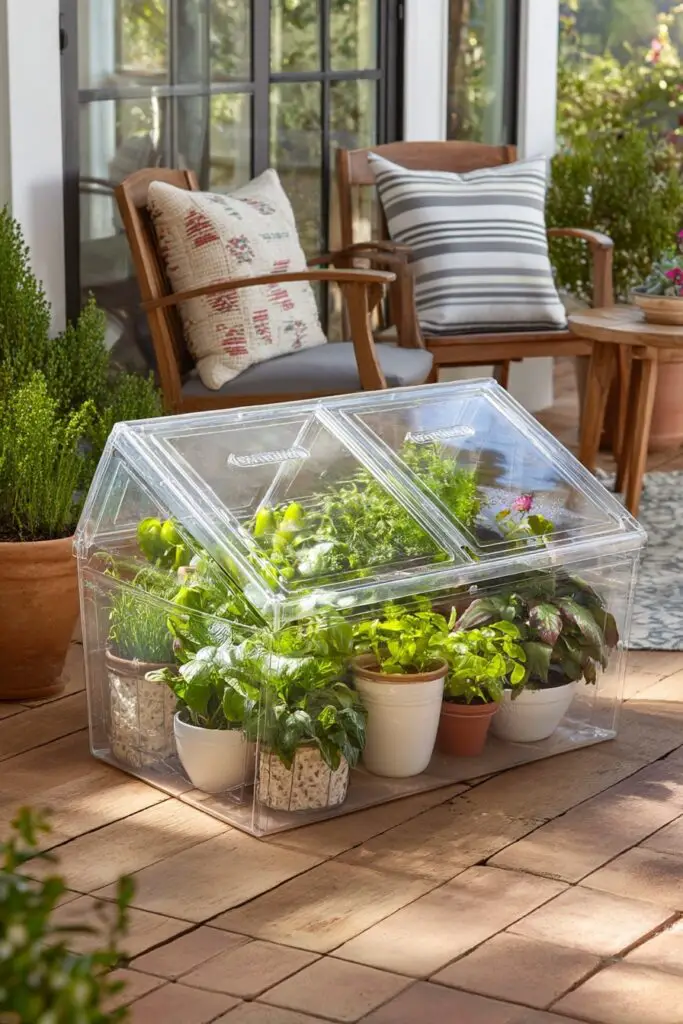
A clear plastic storage bin is one of the most versatile and affordable ways to build a DIY mini greenhouse. With no tools required, this setup is great for beginners or anyone short on time.
To use it, simply place seed trays or small plant pots inside the bin and cover it with the lid. This setup traps heat and humidity, helping your plants grow faster and stay protected. You can also flip the bin upside down and place it over plants in a garden bed or container for added insulation outdoors.
If you need ventilation, just prop the lid open slightly or drill a few small holes. You can even use multiple bins stacked or side-by-side to create a modular greenhouse system.
Key Benefits:
- Durable, weather-resistant, and reusable
- Easy to move between indoors and outdoors
- Great for patios, balconies, or raised beds
Whether you’re hardening off seedlings or protecting plants from early frosts, this method offers flexibility without the cost of specialty equipment.
5. Enclose a Shelving Unit for Vertical Growing
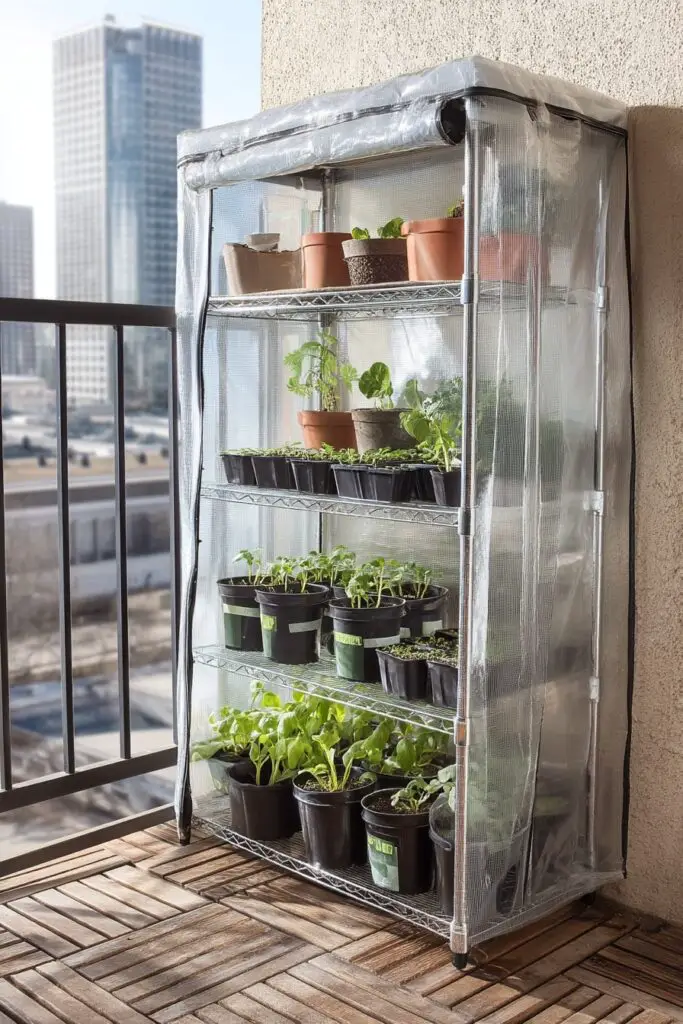
If you already have a metal or wooden shelving unit, you’re just a few steps away from creating a vertical DIY mini greenhouse. By enclosing it in clear plastic sheeting, you can instantly turn shelves into a warm, protected growing space for multiple plants.
Place your seed trays or pots on the shelves, then cover the entire unit with clear plastic. You can use painter’s plastic, a shower curtain, or even repurposed plastic drop cloths. For ease of access, consider attaching a zippered greenhouse cover (available online), or simply cut a flap that can be opened and closed with clips or Velcro.
This setup works beautifully indoors, on patios, or in small backyards—especially where space is limited but vertical room is available.
Why This Works:
- Maximizes growing space in a compact footprint
- Keeps plants organized and off the ground
- Protects from drafts, pests, and cold snaps
For gardeners who want more than just a couple of pots, enclosing a shelving unit offers a smart way to scale up without building something from scratch.
6. Upcycle an Old Glass Cabinet into an Indoor Greenhouse
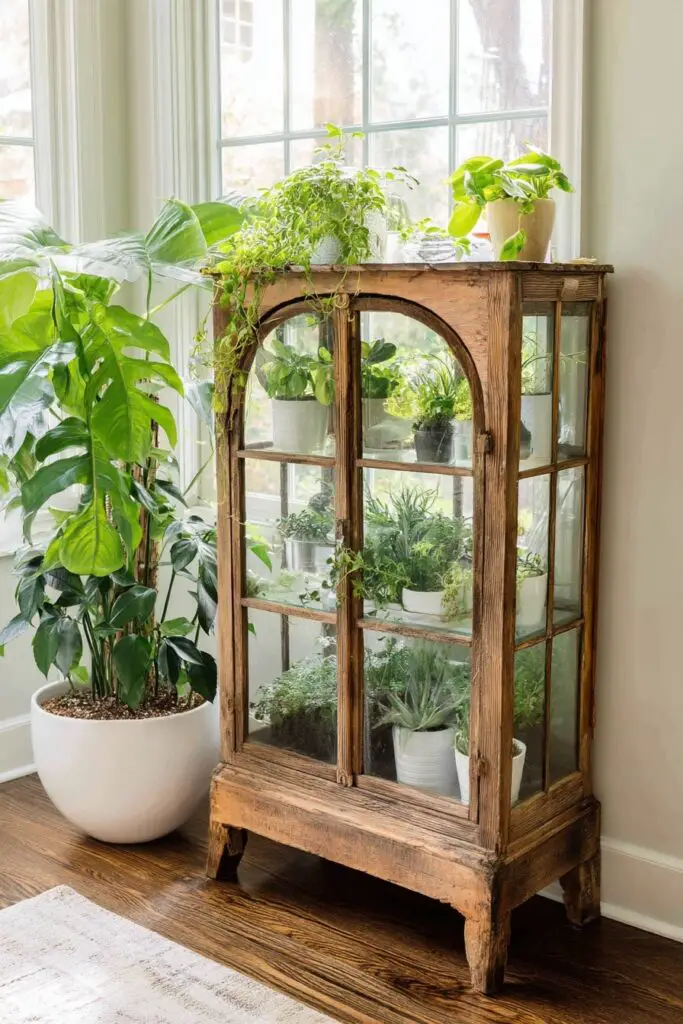
Got an old glass cabinet collecting dust? Turn it into a stylish DIY mini greenhouse with minimal effort. Glass curio cabinets, display cases, or even bathroom storage units with glass doors can all be repurposed to house plants—especially indoors.
These cabinets already have transparent sides, making them perfect for capturing sunlight while maintaining warmth and humidity. Just place your plants on the shelves and, if needed, add a small fan or grow light for extra support. You can even line the bottom with a waterproof tray to catch drips and protect furniture.
This option is ideal for growing herbs, tropical plants, or starting seeds in colder months when outdoor options aren’t practical.
Helpful Tips:
- Look for affordable cabinets at thrift stores or flea markets
- Use peel-and-stick thermometers or hygrometers to monitor conditions
- Add LED grow lights if the cabinet is in a low-light area
This method blends function with aesthetics—perfect for apartment dwellers or anyone wanting to garden in style.
7. Use an Aquarium for an Instant Mini Greenhouse
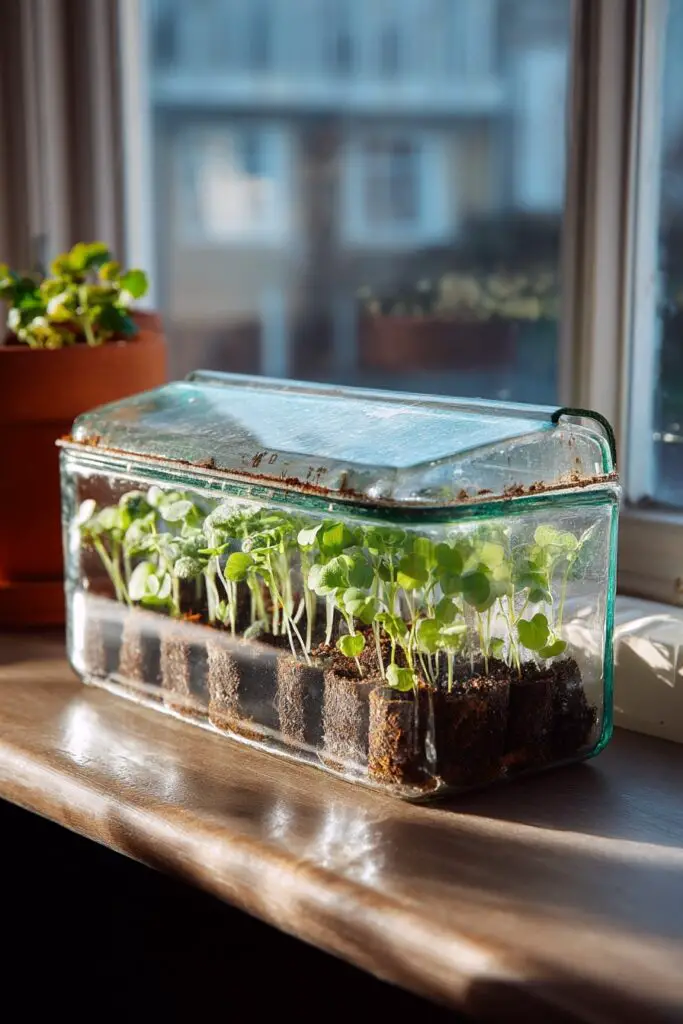
If you’ve got an old fish tank lying around, it can easily become a ready-made DIY mini greenhouse. Aquariums are made from durable, transparent glass that’s perfect for trapping light and moisture—two essentials for healthy plant growth.
You can use the aquarium upright, placing pots or seed trays inside and covering the top with a mesh lid, plastic wrap, or even the original screen top. Alternatively, flip it upside down and place it over seedlings in your garden to protect them from cold or wind.
For indoor use, aquariums are ideal for growing herbs, microgreens, or tropical plants. Add a grow light on top, and you’ve got a climate-controlled environment perfect for apartment or winter gardening.
Smart Uses for Aquariums:
- Germinating seeds earlier in the season
- Creating a humid microclimate for tropicals
- Shielding young plants from pets or drafts
Old aquariums are easy to find at yard sales or online marketplaces. Just give it a good cleaning and you’ve got a no-cost greenhouse that’s both effective and visually appealing.
8. Buy a Greenhouse Kit for a Hassle-Free Start
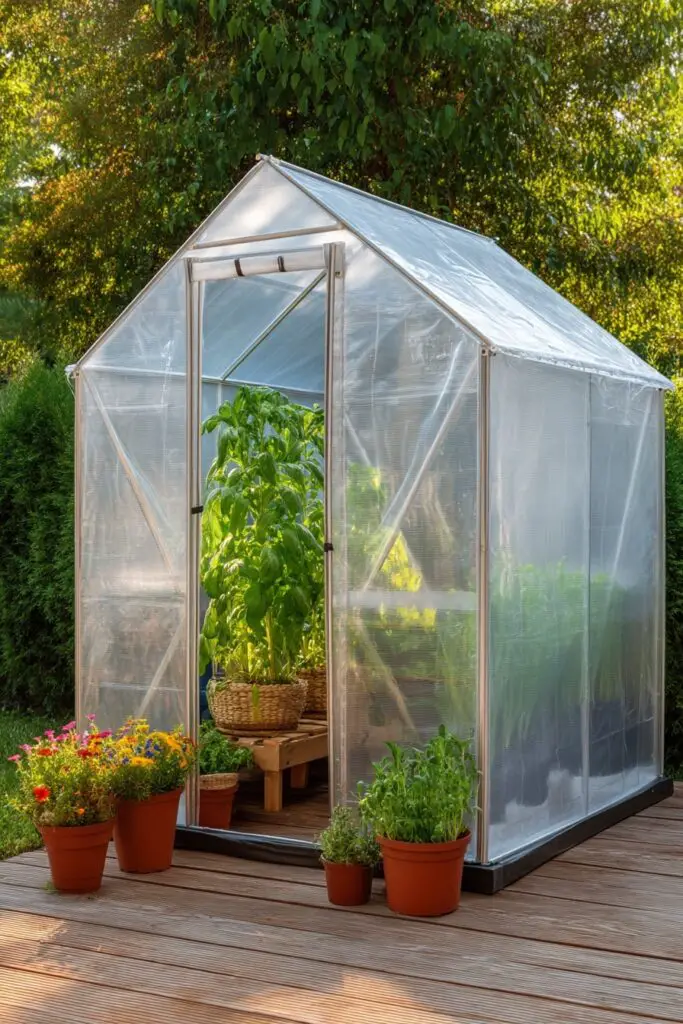
If DIY construction isn’t your thing—or you just want to save time—a small greenhouse kit can still give you the benefits of a DIY mini greenhouse, without the guesswork. These kits come with everything you need: pre-cut materials, hardware, and clear instructions. Some even include shelves and zippered plastic covers.
While it’s not as inexpensive as using repurposed materials, it’s still far more affordable than purchasing a full-size greenhouse. Plus, you can choose from tabletop kits, walk-in designs, or collapsible options depending on your available space.
Kits are especially useful for new gardeners who want a quick solution without diving into building tools or sourcing parts.
What to Look For:
- UV-resistant plastic covers for durability
- Sturdy metal or plastic frames
- Adjustable shelving for better plant organization
This option combines convenience with flexibility—perfect for anyone looking to jumpstart their growing season with minimal effort.
Final Thoughts
A DIY mini greenhouse doesn’t have to be expensive, complicated, or time-consuming. Whether you upcycle household items or invest in a starter kit, the right setup can help you grow healthier plants, extend your gardening season, and make the most of your space—all on a budget.
The key is to choose a design that fits your goals, available materials, and the space you have. With a bit of creativity and some basic supplies, you can build a functional and attractive mini greenhouse that works year-round.