
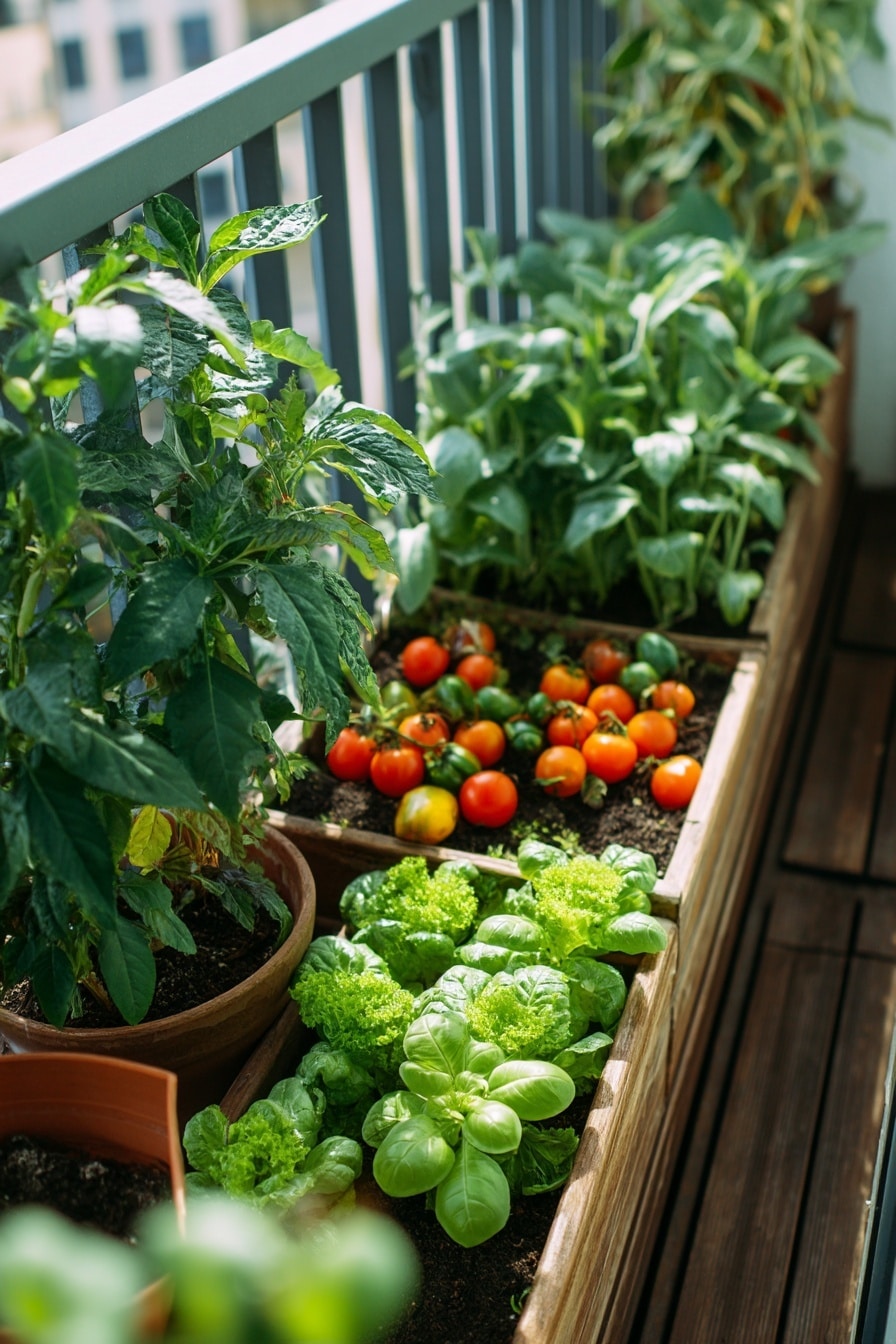
Balcony garden setups are an ideal way to grow plants when outdoor space is limited. Whether you live in a high-rise apartment or a small condo, turning your balcony into a productive garden is both rewarding and practical. With the right approach, you can grow vegetables, herbs, and flowers in containers without needing a traditional yard. However, balcony gardening comes with its own challenges — from managing sunlight to choosing the right containers. In this guide, you’ll find six essential tips to help you create a thriving balcony garden that fits your space, lifestyle, and growing goals.
Table of Contents
1. Select Container-Friendly Plants

A successful balcony garden starts with choosing the right plants for small-space growing. Not every plant thrives in containers, so it’s important to select varieties specifically labeled as “patio,” “bush,” or “dwarf.” These types are bred to stay compact while still producing a good harvest, making them perfect for limited balcony space.
If you’re growing food, look for vegetables like cherry tomatoes, peppers, eggplants, bush beans, and cucumbers. Leafy greens such as spinach, arugula, and lettuce also grow well in shallow pots. Most herbs, including basil, parsley, oregano, and thyme, are naturally suited for containers and easy to maintain.
For color and beauty, consider flowering plants like marigolds, geraniums, or zinnias. Focus on plants you’ll actually use and enjoy — it keeps your balcony garden both purposeful and manageable.
2. Choose the Right Container Size
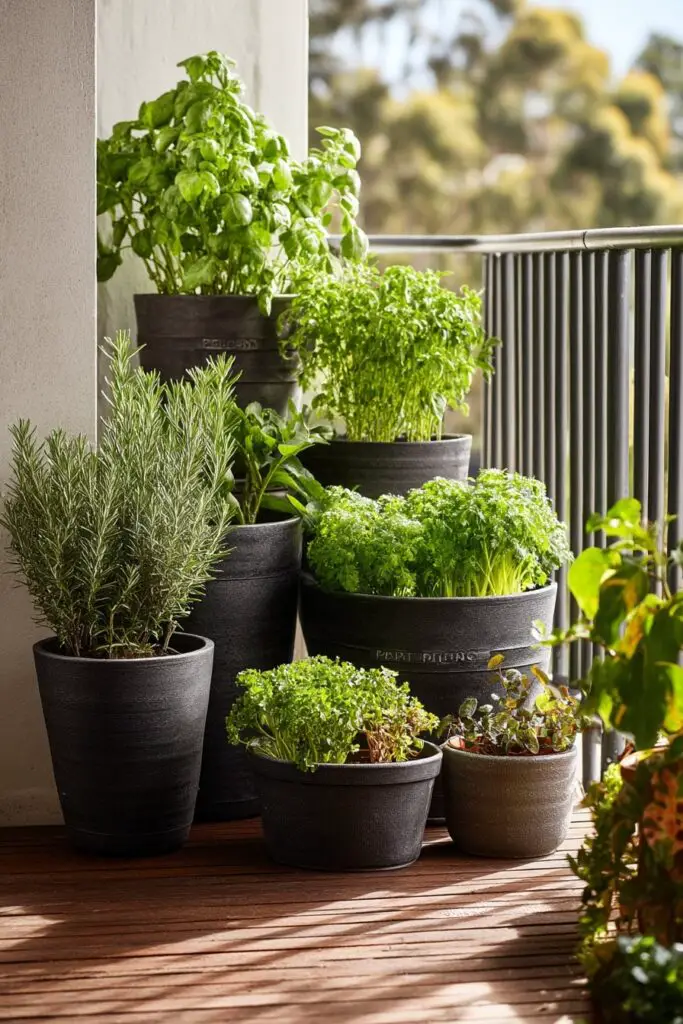
The right container is just as important as the plant itself when building a productive balcony garden. Each plant has different root depth needs, so using the correct pot size ensures healthy growth and reduces the risk of disease or stunted development.
Here’s a quick guide based on plant type:
- Large containers (18–24 inches deep): Ideal for tomatoes, zucchini, potatoes, squash, and cucumbers
- Medium containers (12–18 inches deep): Great for eggplants, peppers, kale, beets, and peas
- Small containers (6–9 inches deep): Suitable for lettuce, spinach, arugula, chives, and green onions
Regardless of size, every container must have drainage holes to prevent soggy soil and root rot. Materials like terra cotta, ceramic, plastic, or wood all work — just make sure they’re suited to your climate and balcony conditions.
3. Place Plants Based on Sunlight
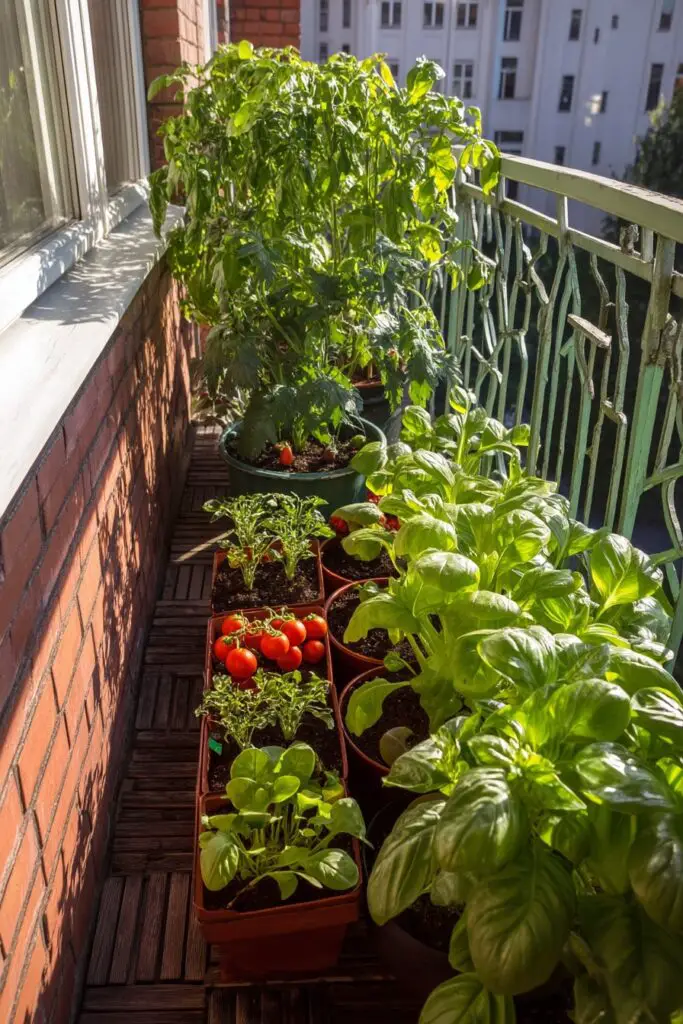
Sunlight plays a major role in the success of your balcony garden, and understanding your balcony’s exposure is essential. Spend a day observing how much light each area of your balcony receives — full sun, partial shade, or mostly shade — and group your plants accordingly.
Here’s a basic light guide:
- Full sun (6–8 hours/day): Tomatoes, peppers, eggplants, beans, and squash thrive here
- Partial shade (3–5 hours/day): Great for leafy greens like lettuce, spinach, arugula, swiss chard, and broccoli
Avoid placing sun-loving plants in shady corners, as they’ll become leggy and weak. If sunlight is limited, consider rotating pots regularly or using reflective surfaces to bounce light around. Grouping similar light-needs together also simplifies care and improves plant health.
4. Companion Planting
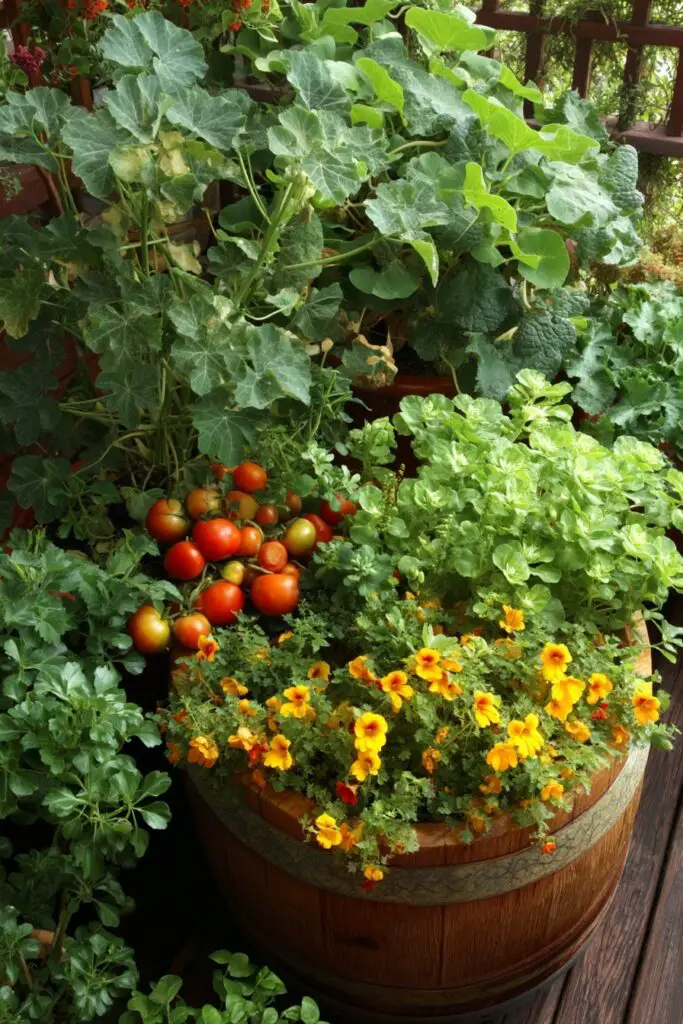
Maximizing space is key in a balcony garden, and companion planting is one of the most efficient ways to do it. By pairing plants that benefit each other, you can grow more in limited square footage while naturally boosting plant health and deterring pests.
Some classic companion combos include:
- Tomatoes + Basil or Marigolds: Basil enhances tomato flavor and repels insects, while marigolds attract pollinators and deter aphids.
- Kale + Nasturtiums: Nasturtiums help keep caterpillars and other pests away from leafy greens like kale, broccoli, and cabbage.
When using this method, choose plants with similar light and watering needs. Be sure to give each plant enough space to grow — even in the same pot. Proper spacing reduces competition and allows airflow, which helps prevent mold and mildew on your balcony.
5. Mulch Plants and Water Regularly
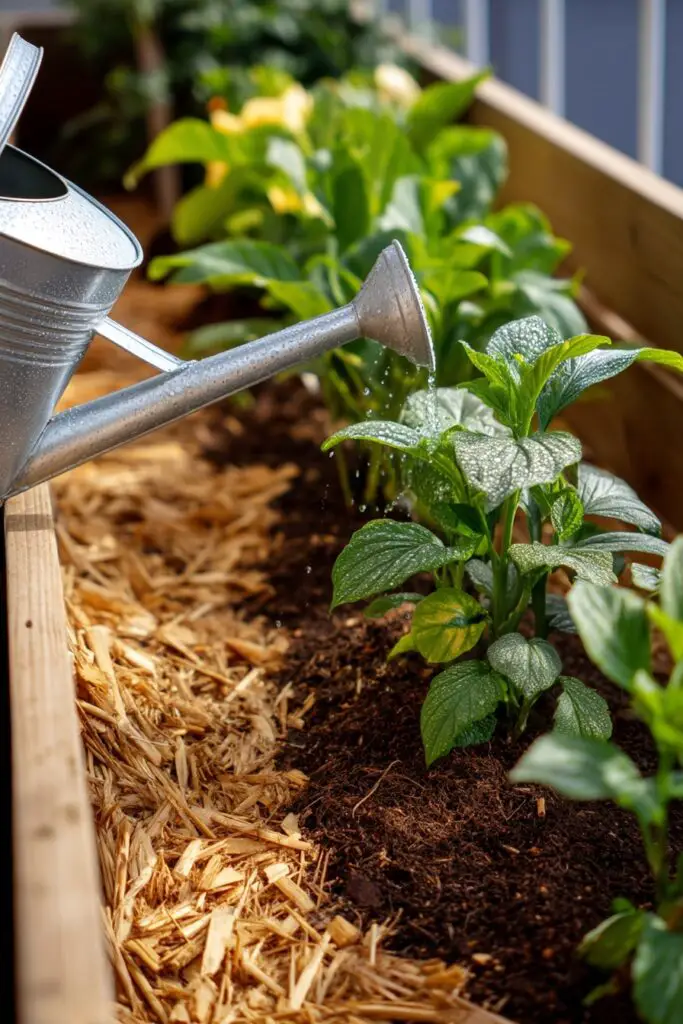
In a balcony garden, container plants dry out much faster than those in the ground, making regular watering a non-negotiable part of your routine. Check the soil daily by pressing your finger a couple of inches deep—if it feels dry, it’s time to water. Early morning is the best time to water, as it prepares your plants to handle the heat of the day.
To help retain moisture, apply a 2–3 inch layer of mulch on top of the soil in each container. Organic options like straw, wood chips, bark, or dried leaves work well. Mulch not only keeps the soil cooler but also reduces how often you need to water and helps suppress weeds in larger containers.
For added ease, consider grouping plants with similar watering needs and placing shallow trays under pots to catch excess runoff.
6. Fertilize Your Balcony Garden
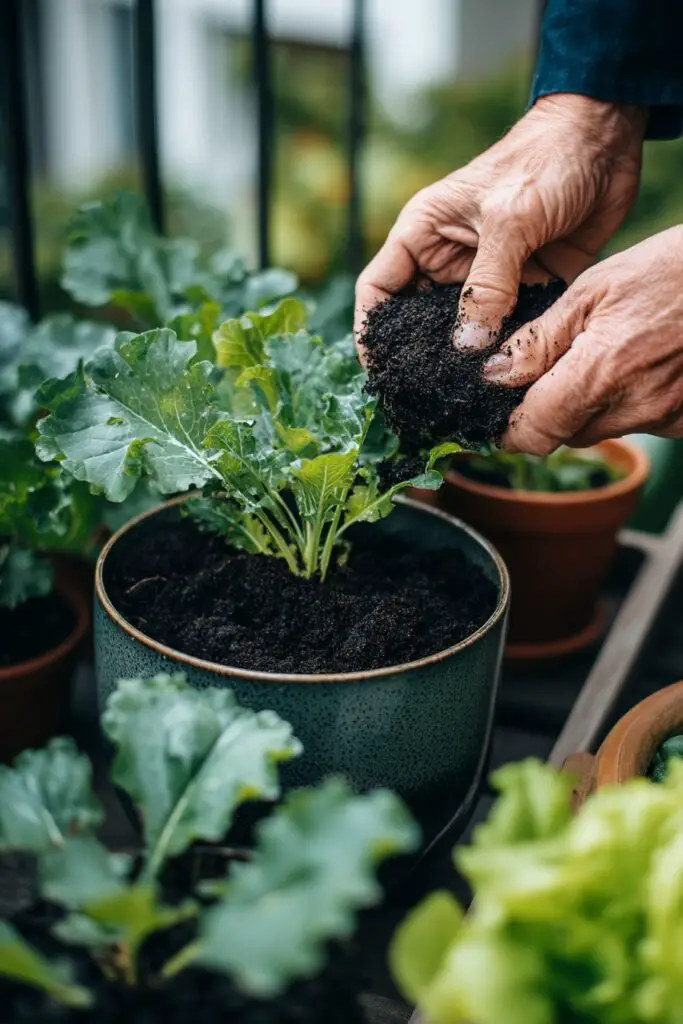
Since container soil loses nutrients faster due to frequent watering, regular fertilizing is essential in a balcony garden. Without it, your plants may struggle to grow, produce fruit, or stay healthy. Unlike in-ground gardens, balcony plants rely entirely on what you give them — so feeding them well is key.
Use an organic fertilizer suited for edible plants, such as:
- Compost or compost tea
- Fish emulsion or seaweed extract
- Alfalfa meal or bone meal
Follow the product instructions and feed your plants every 2 to 4 weeks, depending on their growth stage. Avoid over-fertilizing, which can lead to salt buildup and harm the roots. If you’re growing a mix of veggies, herbs, and flowers, feed according to the needs of the hungriest plants, usually fruiting crops like tomatoes and peppers.
Conclusion
A thriving balcony garden is completely achievable with the right planning and care. By choosing the right plants, using appropriate containers, understanding sunlight patterns, and practicing techniques like companion planting and mulching, you’ll create a healthy, productive space no matter how small your balcony is. Don’t forget to water consistently and replenish nutrients with regular fertilizing — these final steps are what keep your container garden growing strong throughout the season. With a little effort and attention, your balcony can become a lush, edible escape just outside your door.