
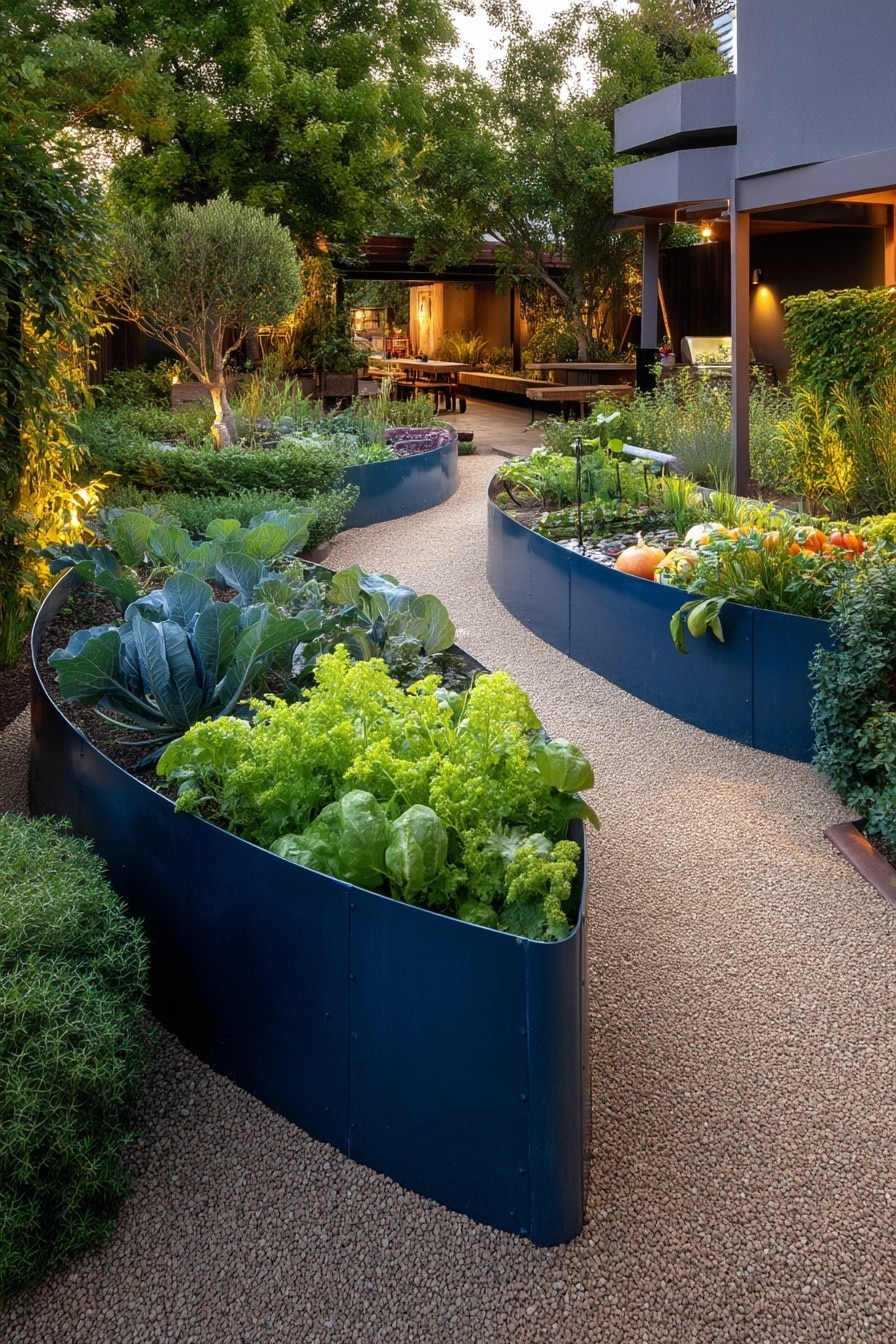
Garden beds make growing your own vegetables simpler, smarter, and more space-efficient—especially when you’re working with a small backyard, patio, or balcony. Whether you’re a first-time grower or a seasoned gardener looking to maximize yield, raised garden beds offer better control over soil quality, drainage, and accessibility. They’re also highly customizable, making them perfect for creative designs and DIY builds.
In this guide, you’ll find ten practical and visually appealing garden bed ideas that fit all spaces and styles—from compact courtyards to rooftop nooks. Each suggestion helps you grow more while using less space, time, and effort.
1. Paint Your Garden Beds for a Modern Touch

A simple coat of paint can give your garden beds a sleek, modern look without a major investment. Wooden raised beds are often left bare, but treating them with high-quality outdoor paint not only adds style—it also protects the wood from moisture and UV damage.
Opt for colors that complement your landscape. Matte black or charcoal tones can create a bold contrast against green foliage, while soft pastels or sage green offer a more natural, calming aesthetic. This is especially effective in smaller gardens or balconies where color choices have a big impact on the overall atmosphere.
Before painting, make sure to choose non-toxic, outdoor-safe paint, especially if you’re growing edibles. Seal all sides of the boards, including the undersides, to maximize weather resistance.
A painted raised bed adds personality, blends with your outdoor decor, and gives you a fresh look each season—just repaint when you want a change.
2. Combine Garden Beds with Tropical Plants
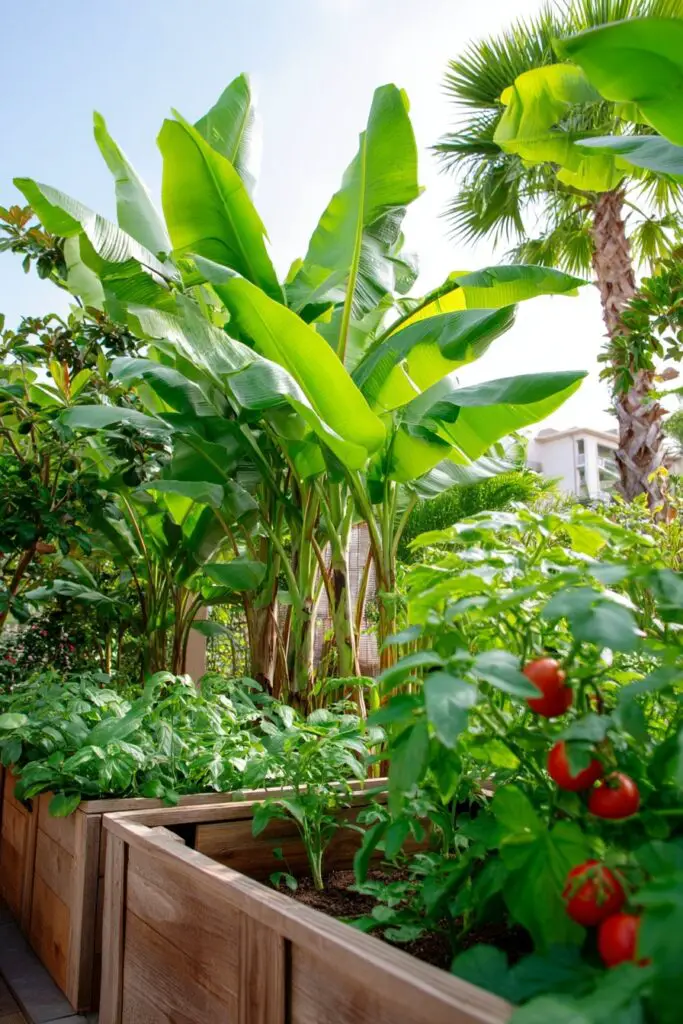
If you’re tight on space but want your garden beds to feel lush and vibrant, consider blending edible crops with tropical plants. It’s a creative way to add visual interest while still growing your favorite vegetables.
For example, tomatoes, with their rich green foliage and bright fruits, pair surprisingly well with tropical companions like banana palms or cannas. Since tomatoes originated in warmer climates, they thrive alongside these sun-loving plants. The result is a mini jungle vibe that’s both productive and beautiful.
This idea works especially well in warm zones or protected patios, where plants can benefit from shared humidity and sunlight. Try placing taller tropicals at the back or corners of your bed to provide natural shade and vertical interest.
Not only does this approach make your space more dynamic, but it also maximizes your planting potential—turning every inch of your garden beds into a feast for the eyes and the table.
3. Create a Mini Wildlife Garden Bed
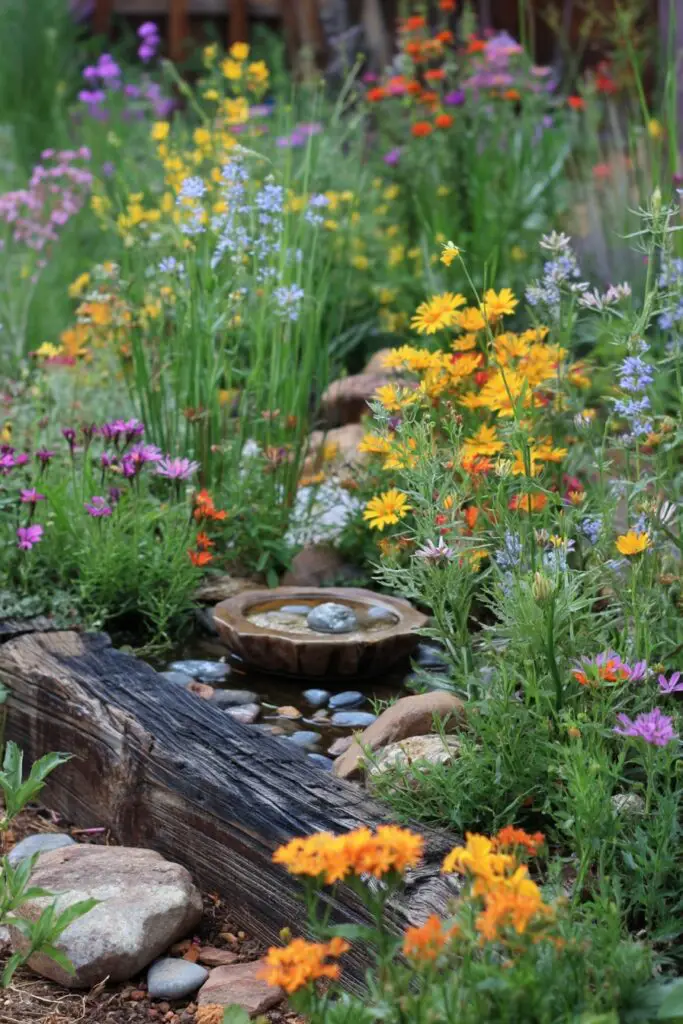
Not every part of your garden beds needs to be for vegetables. Dedicating even a single raised bed to wildlife-friendly plants can transform your space into a small but vital haven for bees, butterflies, and beneficial insects.
Start by planting pollinator-attracting flowers like coneflowers, calendula, or lavender. These thrive in raised beds and bring movement and color to your garden. Add a shallow water dish with pebbles for bees to land on, and consider including a small log pile or rock corner to support other helpful critters.
In urban or balcony gardens where space is limited, dividing your raised beds into zones—half for edibles, half for pollinator plants—lets you enjoy both beauty and function in one footprint.
If you’re especially adventurous, some gardeners even line part of their raised bed to create a small water feature or mini pond (just be sure to use a proper liner to protect the wood).
This approach helps you grow food and support nature—right in the same garden bed.
4. Use Curved Steel for a Modern, Low-Maintenance Look
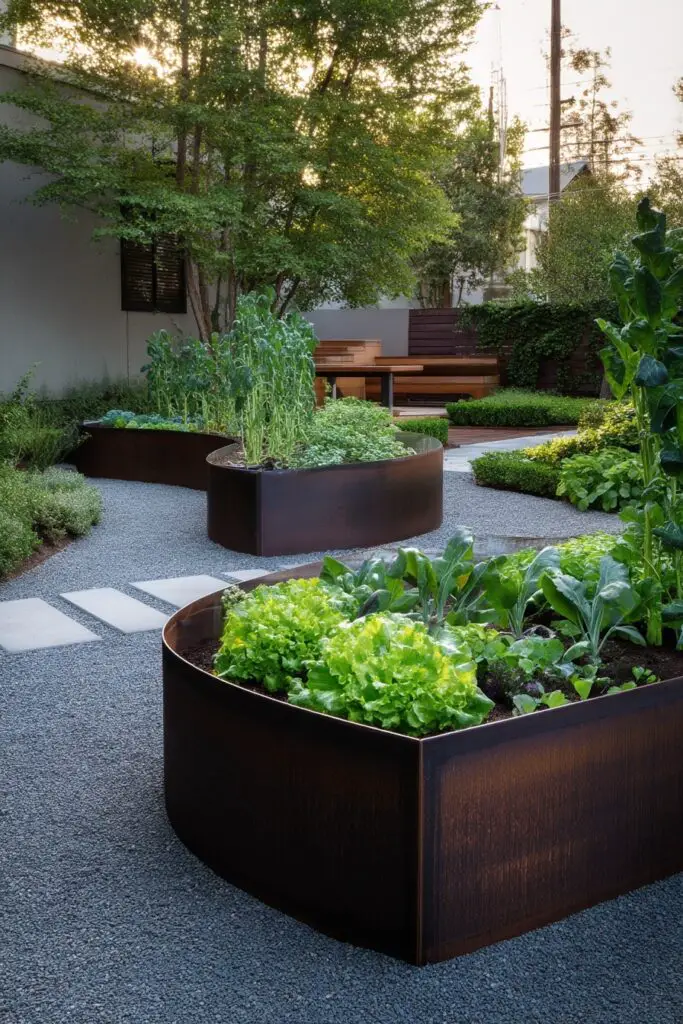
For a sleek, long-lasting alternative to wood, curved steel makes a bold statement in raised garden beds. This material isn’t just durable—it also develops a beautiful weathered patina over time, adding character to your space without extra upkeep.
Curved shapes soften the overall look of your garden and work especially well in small or modern landscapes. Steel edging or corrugated panels can be easily shaped into ovals, circles, or gentle waves, giving your garden beds a custom feel without the cost of custom work.
Unlike untreated wood, steel won’t rot, warp, or attract pests. It also holds soil structure exceptionally well, making it a smart choice for permanent installations.
To install, use steel sheets or buy pre-fabricated kits. Add a mulch top layer to prevent heat buildup in sunnier spots, and line the interior if you’re concerned about soil contact.
Curved steel garden beds combine style with substance—perfect for gardeners who want a clean look that lasts.
5. Add Dividers to Grow Multiple Crops in One Bed
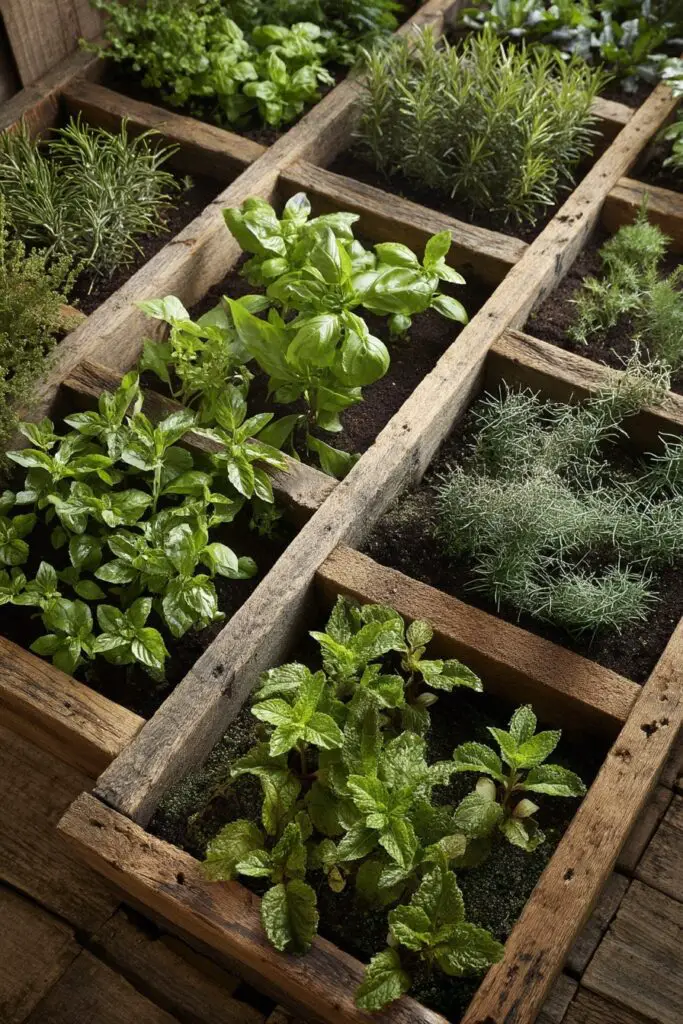
When you’re working with limited space, dividing your garden beds into sections can help you grow more without crowding your plants. This method allows you to cultivate different crops side by side while maintaining order and avoiding competition between aggressive growers.
Wooden or plastic dividers, set deep into the soil, help contain root systems and keep faster-spreading plants—like mint or oregano—from overtaking your entire bed. You can also use bricks, recycled tiles, or even repurposed garden stakes to section off each growing zone.
This strategy is especially handy in raised beds on balconies or patios, where you’re likely growing a variety of herbs, leafy greens, and compact veggies in the same bed.
Besides function, dividers also add visual structure, making your garden beds look neat and intentional. They make harvesting, watering, and rotating crops easier, too—key if you’re growing intensively or year-round.
Dividers are a small detail with big results—ideal for gardeners who want variety without chaos.
6. Try a U-Shaped Bed for Better Access in Tight Spaces
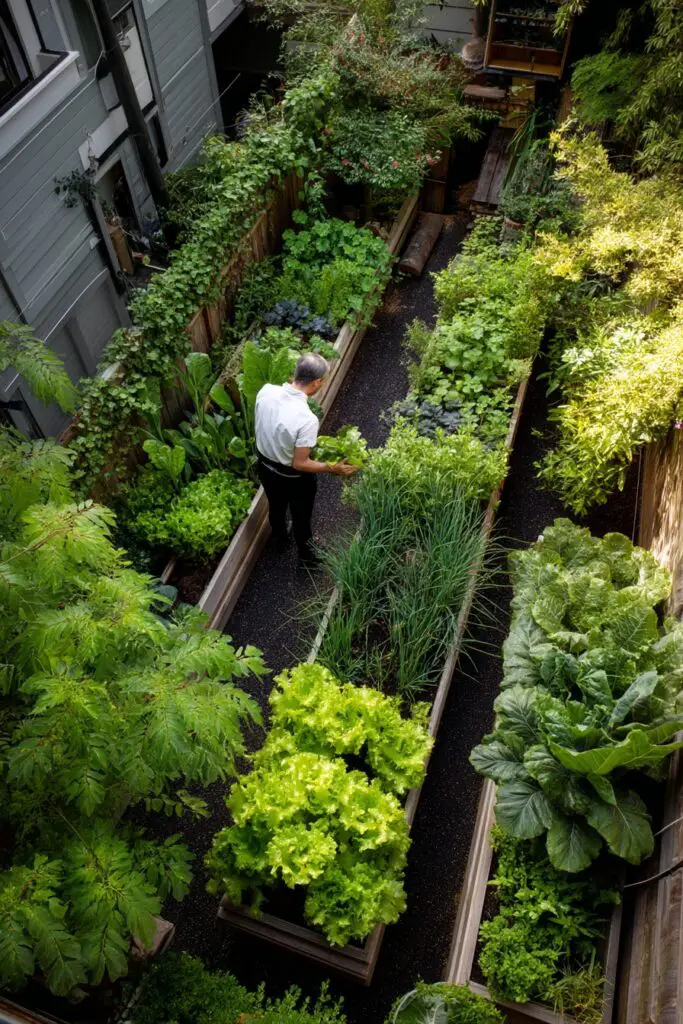
U-shaped garden beds are a clever solution when you want to maximize growing area while keeping everything within easy reach. This design creates natural walking access on three sides of the bed, which is especially helpful in small yards or courtyard gardens where space is limited.
Unlike rectangular layouts that may force you to stretch awkwardly or step into the bed, a U-shape keeps every plant within arm’s reach. This makes tasks like pruning, watering, and harvesting simpler—and more comfortable.
These beds can be built from wood, composite materials, or metal, and the center “cut-out” area can double as a pathway or a spot for a compost bin, water tank, or even a small bench.
If you have pets or pests to worry about, consider adding a gate or low fence around the outer edge for added protection.
U-shaped garden beds strike the perfect balance between productivity and practicality—ideal for gardeners who want efficient use of limited space.
7. Use Rattan Baskets for Rustic Charm
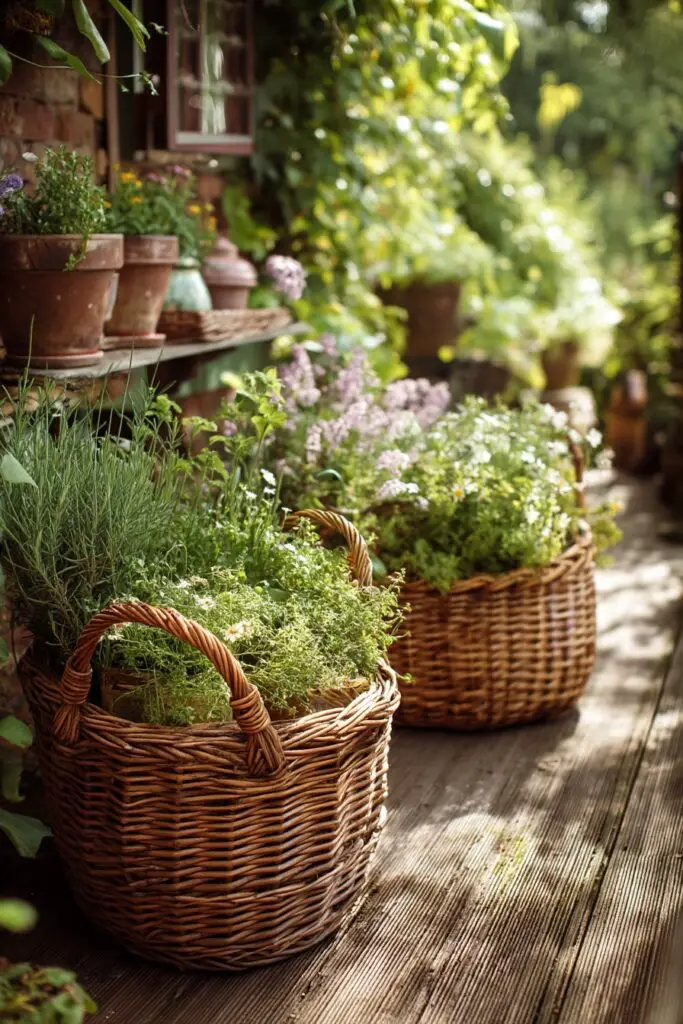
For gardeners who value both function and aesthetics, using rattan or wicker containers as garden beds offers a unique, charming twist. These baskets bring a cozy, rustic look to patios, balconies, or cottage-style gardens—and they’re ideal for small-space growing.
Choose synthetic or treated rattan that can withstand moisture and outdoor conditions. Real wicker tends to break down quickly when exposed to constant watering and changing weather. To extend the life of your basket, line the inside with landscape fabric or plastic sheeting before filling it with soil.
To prevent sagging or collapse, reinforce the interior frame with wood or use smaller baskets within a wooden border. Group several together to create a layered, textured look that feels both casual and curated.
These types of garden beds are especially well-suited for herbs, lettuce, and strawberries—plants that don’t require deep root systems.
Rustic, lightweight, and easy to rearrange, rattan garden beds bring character to any space with minimal effort.
8. Fit Garden Beds into Your Greenhouse for Year-Round Growing
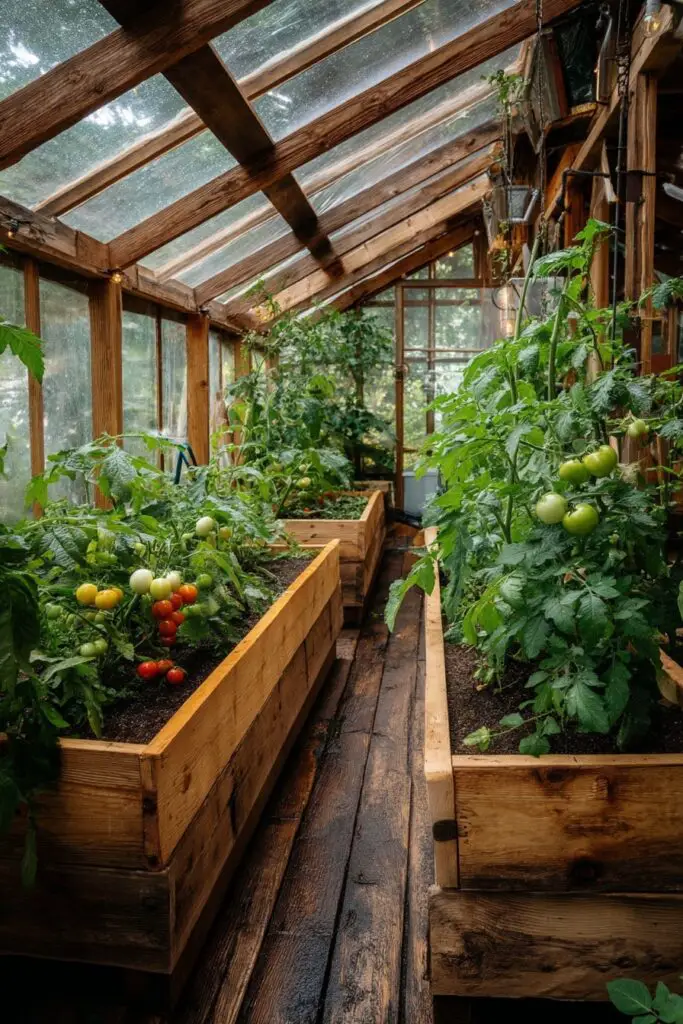
If you have a greenhouse, incorporating raised garden beds inside it can dramatically boost your productivity. This setup allows you to grow heat-loving crops like tomatoes, peppers, and cucumbers for longer periods—often well into fall or even winter.
Raised beds retain warmth and help regulate soil moisture, which pairs perfectly with the controlled environment of a greenhouse. Whether your structure is a small lean-to or a full walk-in, installing garden beds along the perimeter makes the most of the available space without blocking light or airflow.
Use untreated wood or galvanized steel for durability, and line the base with gravel or sand to improve drainage. If you’re working with limited space, opt for narrower beds to maintain a comfortable walkway between rows.
Not only do these garden beds keep your greenhouse tidy and organized, but they also make it easier to rotate crops, amend soil, and control pests in a confined space.
The combination of raised beds and greenhouse gardening creates a powerhouse system for growing more, year-round.
9. Build a Pyramid Bed to Maximize Vertical Space
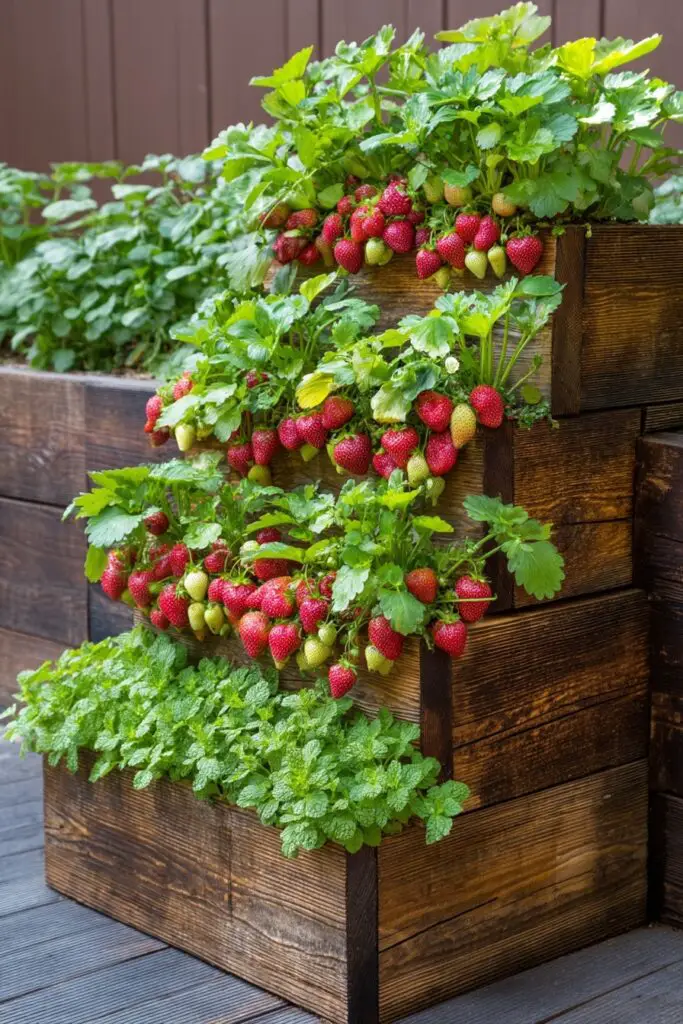
When ground space is limited, think upward. Pyramid-style garden beds offer a smart way to grow more crops in a compact footprint by stacking planting tiers vertically. This design is especially effective for shallow-rooted plants like strawberries, lettuce, or herbs.
The layered structure allows each level to receive plenty of sunlight and airflow, while also creating natural drainage between tiers. This reduces the risk of waterlogging and makes irrigation more efficient—especially helpful for busy gardeners.
You can build a pyramid bed using wood planks, repurposed crates, or pre-made kits. Make sure each tier is slightly smaller than the one below it, creating a stair-step effect. For a decorative touch, stain or paint the frame to match your garden’s overall style.
Pyramid garden beds are ideal for patios, balconies, or tight backyard corners where every square foot matters. They also make harvesting easy, since most plants are within arm’s reach.
With their unique shape and practical layout, pyramid beds are a high-yield solution packed into a small space.
10. Repurpose an Old Bathtub as a Raised Garden Bed
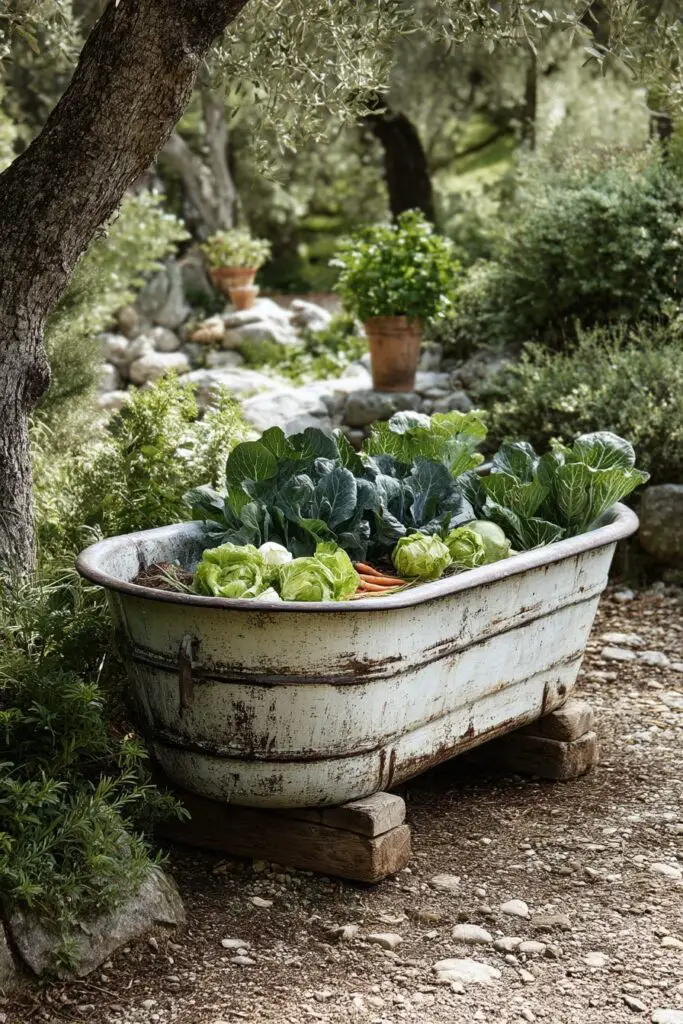
If you’re into upcycling or just love quirky garden features, turning an old bathtub into one of your garden beds is a brilliant and budget-friendly idea. Most tubs are deep enough for vegetables, and their built-in drainage systems make them ideal planters with little modification.
To get started, make sure the tub has working drainage holes—or drill some if needed. You can place gravel or broken pots at the bottom to aid water flow, then fill it with high-quality soil. For added style, consider painting the outside or cladding it with wood or stone to blend it into your landscape.
Bathtub garden beds are especially useful in small yards, urban patios, or rental properties where permanent installations aren’t an option. They’re also a fun conversation piece that adds character to your garden.
Best of all, using repurposed materials keeps waste out of landfills and saves you money—without sacrificing growing space or function.
🌿 Final Thoughts on Raised Garden Beds
With a bit of creativity and smart planning, raised garden beds can transform any outdoor space—no matter how small—into a productive and beautiful vegetable garden. Whether you’re using painted crates, curved steel, or upcycled bathtubs, the key is to choose a layout that fits your space, style, and gardening goals.
Raised beds give you more control over soil quality, drainage, and plant placement, making them ideal for new gardeners and seasoned growers alike. From decorative touches to practical designs, the ideas in this guide prove that you don’t need a big backyard to grow your own fresh food.
Start small, stay consistent, and enjoy watching your garden grow—one raised bed at a time.