
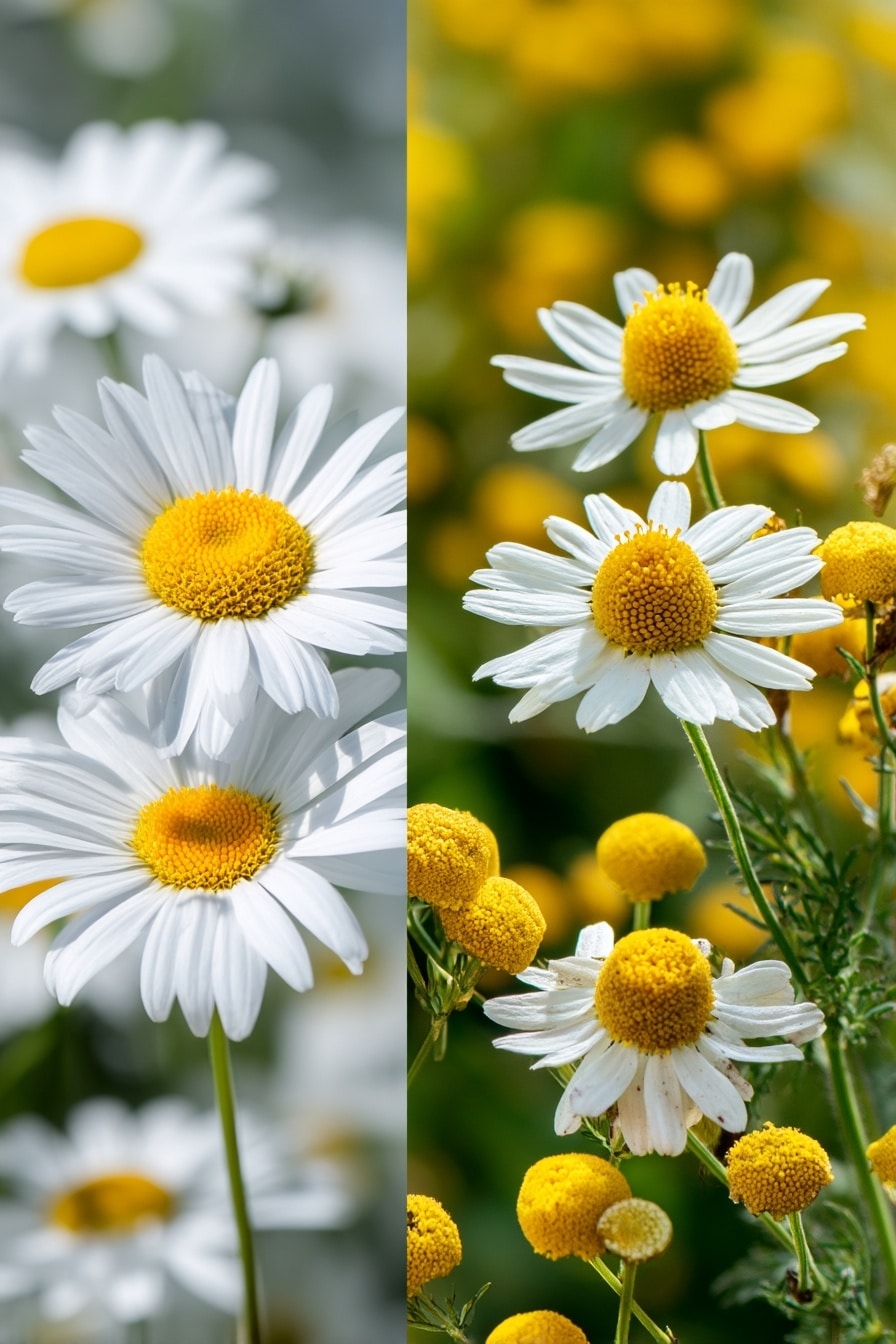
Daisy lovers often find themselves drawn to the elegance and charm of the Marguerite daisy—a sun-loving perennial known for its crisp white petals and bright yellow centers. With its cheerful appearance and long blooming season, this daisy variety adds brightness to any garden, patio, or bouquet.
Whether you’re growing it in beds, borders, or containers, the Marguerite daisy is a rewarding plant for both beginner and seasoned gardeners. In this guide, you’ll learn everything you need to know about its characteristics, care requirements, pruning, and how to help it thrive from spring through fall.
Table of Contents
Identifying the Marguerite Daisy: What Makes It Unique

The daisy family is vast, but the Marguerite daisy (Leucanthemum) stands out with its classic beauty and garden versatility. Its flowers feature crisp white or cream petals surrounding a golden-yellow center, closely resembling miniature sunflowers. Depending on the variety, you may also find soft pink or double-flowering forms.
What sets the Marguerite daisy apart from similar blooms is its compact, upright growth, long blooming period, and ability to thrive in both borders and containers. It typically grows between 40 and 80 centimeters tall, making it perfect for mid-level planting in mixed flower beds.
The Marguerite daisy belongs to the Asteraceae family, which includes other daisy-like flowers such as asters and chrysanthemums. However, unlike chrysanthemums, Marguerite daisies have non-aromatic leaves and a lighter, airier growth habit.
This hardy perennial flowers generously from late spring through early autumn, providing color and texture for months. With minimal maintenance and high visual impact, it’s easy to see why gardeners choose this daisy again and again.
Daisy Varieties: Common vs. Large-Flowered
While the term daisy often refers to many similar-looking blooms, true Marguerite daisies fall into two main categories: the common daisy and the large-flowered daisy. Understanding the difference can help you choose the right type for your garden’s size and style.
Common Daisy (Leucanthemum vulgare)
Also known as the wild daisy or meadow daisy, this variety is the most recognizable. It features classic white petals and a yellow center, growing to about 40–50 centimeters tall. It’s a hardy perennial that thrives in naturalized settings like meadows, roadsides, or casual cottage gardens. These daisies are evergreen in mild climates and bloom from May to September.
Large-Flowered Daisy (Leucanthemum maximum)
True to its name, the large-flowered daisy produces bigger, bolder blooms and can reach heights of 70–80 centimeters. Its striking appearance makes it ideal for formal borders or as a standout feature in a perennial bed. This variety is also long-flowering and cold-hardy, making it a favorite for gardeners in cooler zones.
How to Care for Daisies as Cut Flowers
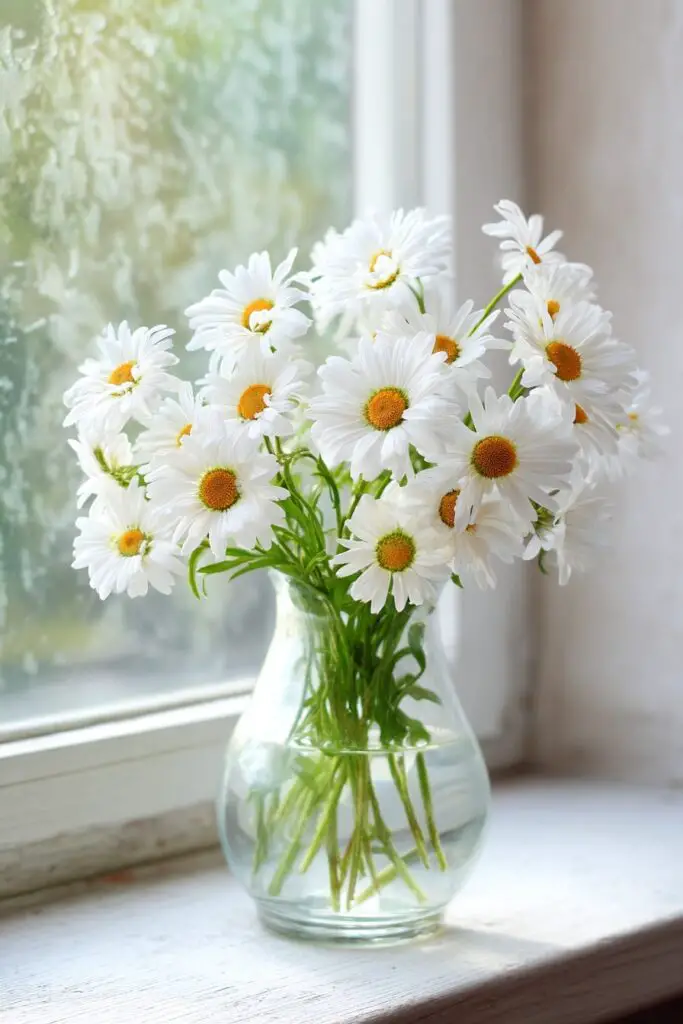
Bringing daisy blooms indoors is a simple way to add freshness and charm to any space. Luckily, Marguerite daisies hold up well in vases when cared for properly, making them a popular choice for casual bouquets and spring arrangements.
To get the most life out of your cut daisies, follow these easy care tips:
1. Trim Stems at an Angle
Use a sharp knife or garden shears to cut the stems diagonally. This increases the surface area for water absorption and prevents the stem from sitting flat at the bottom of the vase.
2. Remove Lower Leaves
Strip off any leaves that will sit below the waterline. Leaves submerged in water decay quickly and can cause bacterial growth, shortening the vase life of your daisies.
3. Use a Clean Vase and Fresh Water
Place your daisies in a clean vase filled with room temperature water. Change the water every couple of days to keep bacteria at bay.
4. Keep Them Cool
Display your bouquet in a shaded area, away from direct sun, heat sources, fruit bowls (which release ethylene gas), and drafts. These all reduce freshness.
5. Add Flower Food (Optional)
A small amount of cut flower food can help extend the freshness of your daisy bouquet.
With a little care, your Marguerite daisies can last up to 7 days in a vase, bringing brightness and a touch of summer indoors.
Planting and Growing Marguerite Daisies Outdoors
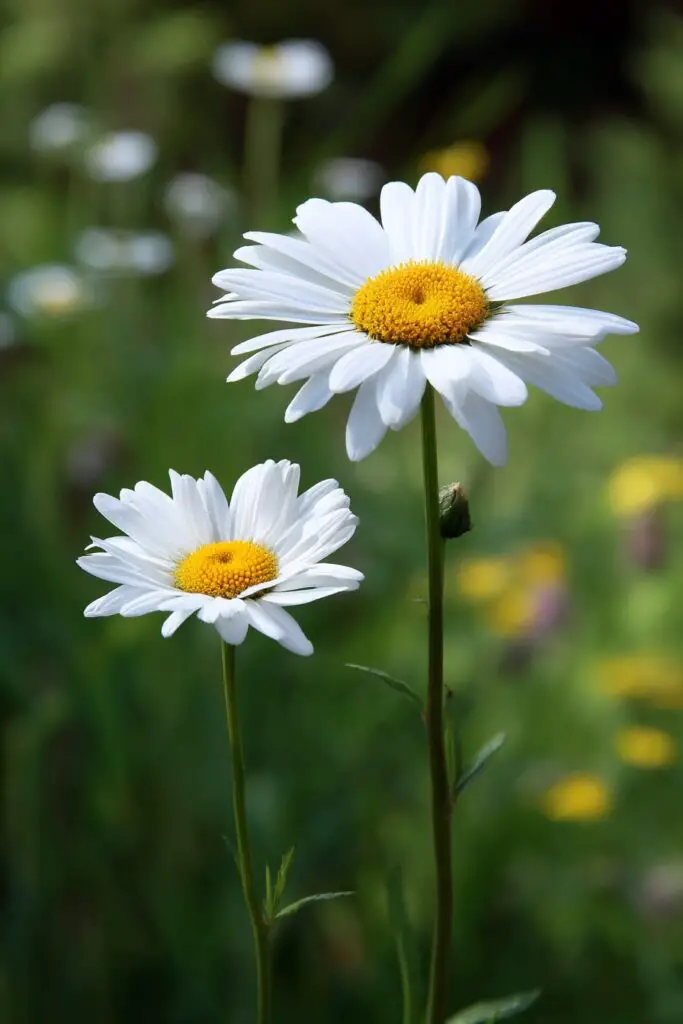
If you’re aiming to brighten your garden beds with a sea of cheerful daisy blooms, Marguerite daisies are a low-maintenance, high-reward choice. Their long flowering season and pollinator appeal make them a favorite for both decorative gardens and eco-friendly landscapes.
When to Plant
Plant Marguerite daisies in spring, once the risk of frost has passed. This gives them time to establish before blooming begins in late spring or early summer.
Spacing and Location
Space plants about 30 centimeters apart to allow good air circulation and prevent overcrowding. Choose a sunny or partially shaded location that’s sheltered from strong wind, like near a garden wall or hedge.
Soil Requirements
Marguerite daisies are adaptable and grow well in various soil types including clay, sandy, and loamy soils. They tolerate both acidic and alkaline pH levels, but they prefer soil that drains well to prevent root rot.
Watering and Fertilizing
Water regularly during the growing season, especially in dry spells. While daisies are drought-tolerant once established, they still need consistent moisture to bloom well. Use a balanced, organic fertilizer early in the season to support healthy growth and vibrant flowers.
Garden Benefits
In addition to their visual appeal, Marguerite daisies attract bees, butterflies, and other beneficial insects, making them a smart choice for boosting biodiversity in your outdoor space.
With just a bit of attention, your daisy plants will reward you with months of blooms and a garden full of life.
How and When to Prune Daisies

Proper pruning is key to keeping your daisy plants healthy, tidy, and full of blooms. Marguerite daisies are generous with their flowers, and with a bit of seasonal trimming, you can even encourage a second wave of flowering later in the year.
Mid-Summer Pruning (After First Bloom)
Once the first round of flowering fades in mid to late summer, cut back your daisies by about one-third. This encourages the plant to put energy into new buds rather than seed production.
With the right timing, you’ll often get a second bloom in late summer or early fall, extending your garden’s color well into autumn.
Autumn Pruning (End-of-Season Cutback)
After the second flowering—and once the stems begin to wither—cut the plant back to about 10 cm above the ground. This deep pruning prepares the plant for winter dormancy.
Don’t worry—Marguerite daisies are hardy, and they’ll bounce back in spring with fresh green growth.
Deadheading for Prolonged Blooming
Throughout the season, make a habit of deadheading—snipping off faded blooms to keep the plant looking neat and to encourage continuous flowering.
Regular pruning not only improves your plant’s shape and bloom cycle but also helps prevent disease and improves airflow around the base.
Daisy Symbolism and Meaning

Beyond their visual charm, the daisy holds deep symbolic meaning across cultures and time periods. With its bright, open face and pure petals, the Marguerite daisy has long been associated with purity, innocence, and love.
Love and Loyalty
You’ve likely heard the phrase, “They love me, they love me not,”—a childhood ritual involving plucking daisy petals one by one. This speaks to the daisy’s long-standing link to romantic fate and devotion. In floral symbolism, daisies often represent faithful love and emotional honesty.
Cheerfulness and Sunshine
The bright yellow centers and clean white petals resemble a mini sun, which is why daisies are also seen as symbols of joy, positivity, and clarity. They’re often used in spring celebrations and cheerful bouquets to convey optimism and renewal.
Historical and Cultural Roots
In Ancient Greece and Rome, daisies were associated with innocence and were used in garlands and remedies. During the Middle Ages, the flower became a symbol of purity and virtue, especially among women.
Whether growing wild in a meadow or arranged in a vase, daisies carry a message that’s both timeless and uplifting. Including them in your garden isn’t just about beauty—it’s about planting a symbol of warmth, simplicity, and emotional connection.
Origins, Edibility, and the Daisy vs. Chamomile Confusion
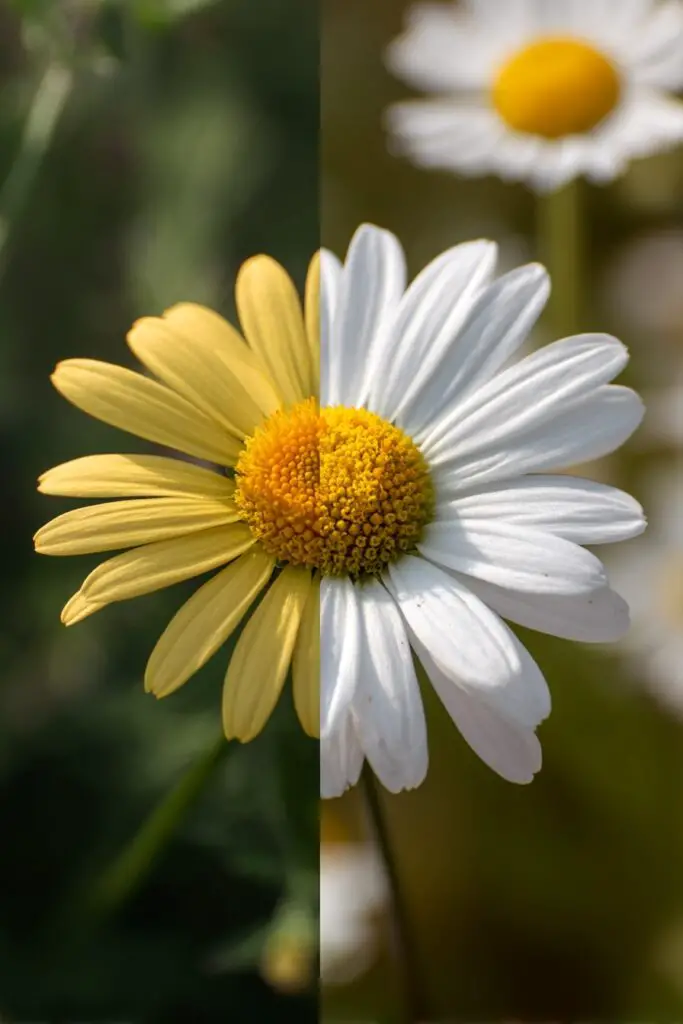
The daisy may be one of the most recognizable flowers in the world, but there’s more to it than meets the eye. From ancient roots to edible petals—and a common identity mix-up—it’s worth getting to know this bloom beyond the garden bed.
Where Daisies Come From
Marguerite daisies (Leucanthemum species) are native to Europe, North Africa, and temperate regions of Asia. Over time, they’ve been cultivated around the world—from gardens in New Zealand to roadside meadows in North America. Historically, daisies were cherished by the Ancient Greeks and Romans not only for decoration but also for their perceived healing properties.
Are Daisies Edible?
Yes—Marguerite daisies are non-toxic and edible. Both the flowers and the leaves can be used in small amounts:
- Sprinkle fresh petals in salads
- Brew daisy flower tea
- Use the leaves as a garnish
However, always source edible flowers from trusted, pesticide-free growers, especially if you didn’t grow them yourself.
Daisy vs. Chamomile: What’s the Difference?
Daisies and chamomile look similar at first glance—both feature white petals and yellow centers—but they’re botanically distinct.
- Chamomile has a more prominent, dome-shaped center and gives off a sweet, herbal fragrance.
- Daisies tend to be smaller, flatter, and lack the same scent.
- Chamomile is often used medicinally, while daisies are more ornamental (though also edible).
Knowing the difference ensures you’re not mislabeling plants—or accidentally brewing the wrong tea.
Conclusion
The daisy is far more than just a pretty bloom—it’s a symbol of joy, resilience, and simplicity. The Marguerite daisy, in particular, offers gardeners an easy-to-grow, long-blooming plant that adds instant charm to borders, containers, and wildflower beds alike.
From proper planting and pruning to understanding its symbolism and edible uses, caring for daisies is as rewarding as it is simple. Whether you’re filling a vase or planning a pollinator-friendly garden, Marguerite daisies bring life, light, and warmth wherever they grow.