
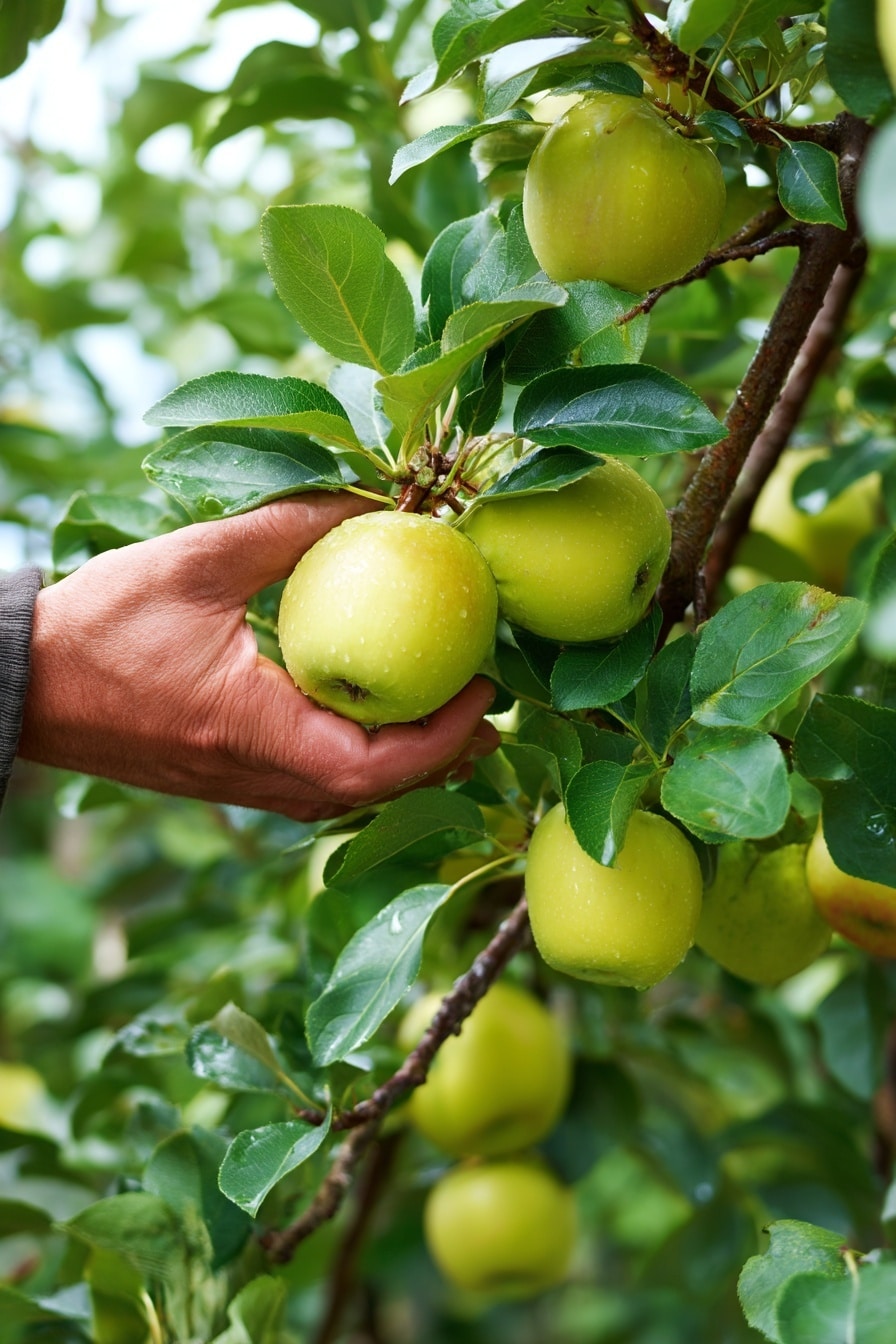
Apple tree care can be deeply rewarding, but it comes with challenges. While these fruit trees offer stunning blossoms and crisp, delicious harvests, they are also prone to a handful of frustrating problems that can ruin fruit, stunt growth, or even kill the tree.
Whether you’re growing apples in your backyard or managing a small orchard, recognizing the most common apple tree problems is essential for healthy growth. In this article, we’ll walk through the top 5 issues that plague apple trees—and show you exactly how to prevent or manage each one.
Table of Contents
🍏 1. Apple Scab

One of the most common fungal diseases affecting the apple tree is apple scab. This disease appears early in the growing season and can quickly take over if left untreated.
🟢 Symptoms
You’ll first notice olive-green or brown spots on the upper side of the leaves. These spots may feel velvety or rough to the touch. As the disease progresses, infected leaves may curl, turn black, and fall prematurely.
The fruit develops dark, corky blemishes, making it misshapen and inedible. Even if the apples look fine at harvest, scab can reduce storage quality and shelf life.
🛡️ How to Manage It
- Plant resistant varieties when possible
- Rake and remove fallen leaves in autumn to reduce fungal spores
- Apply fungicides preventively in early spring, especially during wet seasons
- Ensure good airflow around the tree through proper spacing and pruning
A consistent care routine and preventative action will keep apple scab under control and protect your tree’s fruit yield.
🐛 2. Codling Moths
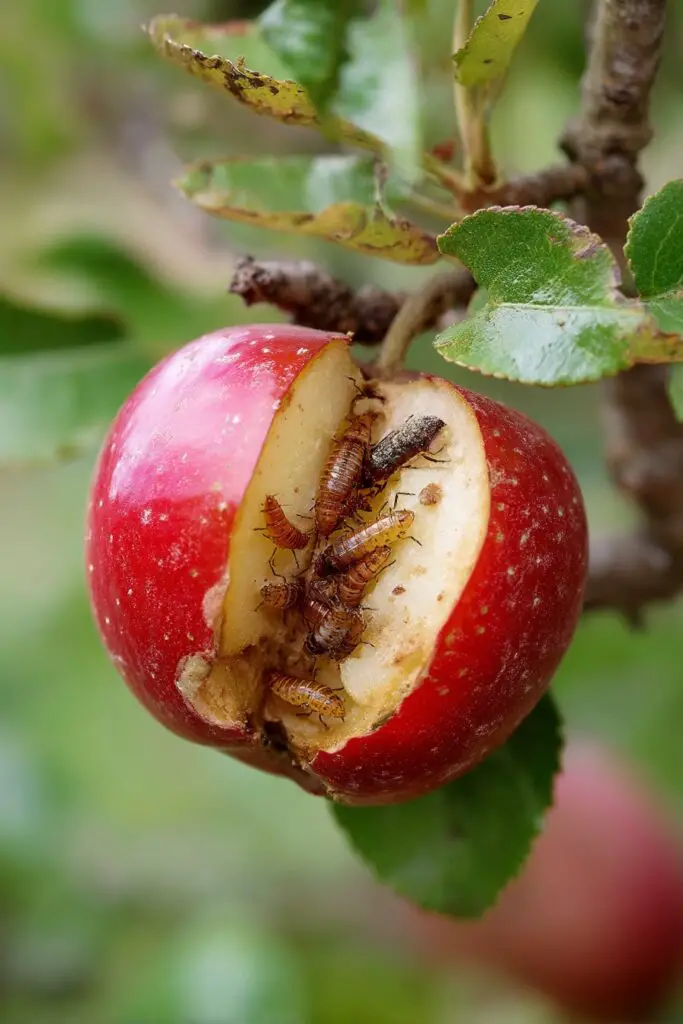
If you’ve ever bitten into an apple and found a worm inside, you’ve encountered the damage caused by codling moths—a common and destructive pest for any apple tree.
🐞 What They Do
Adult codling moths lay eggs on developing apples. Once hatched, the larvae burrow into the fruit, feeding from the inside and leaving behind frass (insect excrement). On the outside, the apple may look normal—but inside, it’s spoiled and unusable.
Codling moth infestations can ruin large portions of your harvest if left unchecked.
🛡️ How to Control Them
- Use pheromone traps to monitor and disrupt mating cycles
- Apply codling moth virus treatments (Cydia pomonella granulovirus)—a natural method targeting only the larvae
- For serious infestations, consult a professional about targeted, timing-specific insecticide use
- Remove and destroy infested fruit during the season to reduce future egg-laying
Managing codling moths requires consistency and early-season intervention, especially if they’ve been a problem in previous years.
🔥 3. Fire Blight
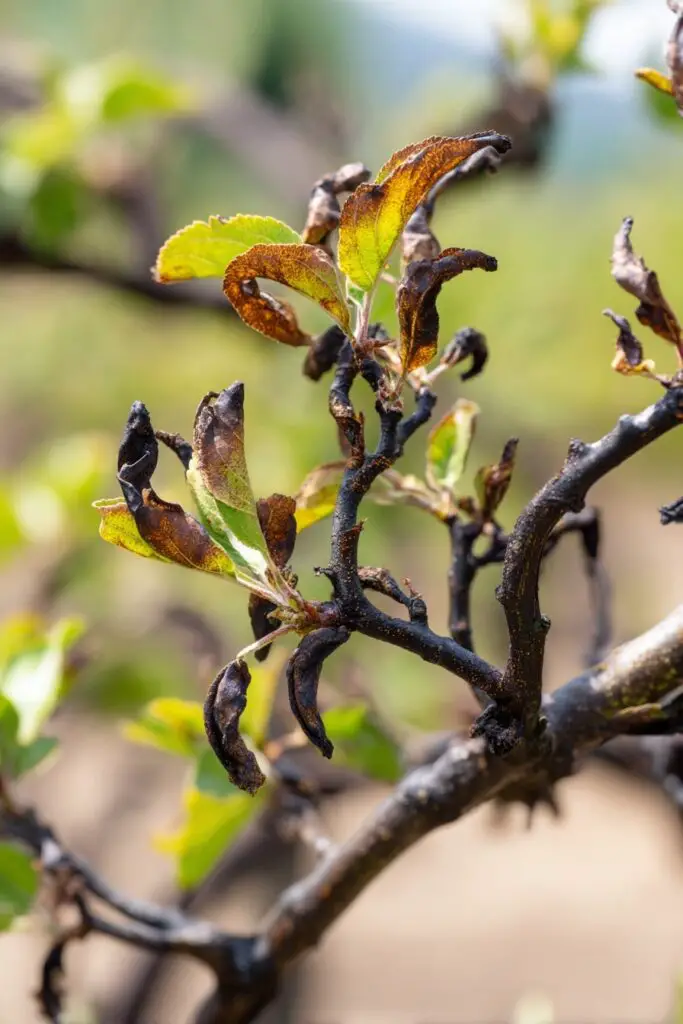
Fire blight is a fast-spreading bacterial disease that can cause major damage to an apple tree, often killing new shoots, blossoms, and entire branches if not controlled early.
🔍 How to Identify It
Infected shoots and leaves wilt and turn black or dark brown, curling into a hooked shape that resembles scorched wood—hence the name. Cankers (sunken, diseased areas) may form on branches and trunks, and fruit may shrivel or rot while still on the tree.
This disease is most active in warm, wet spring weather, and spreads via rain, pruning tools, or even pollinators.
🛡️ How to Treat It
- Prune infected shoots at least 8–12 inches below the visible damage (disinfect pruners between cuts)
- Avoid pruning during wet weather, as it encourages spread
- Apply copper-based sprays in early spring before bud break
- Choose resistant apple varieties when planting new trees
Fire blight requires prompt action. Regular inspection and preventative treatment are key to protecting your apple tree from serious dieback.
🐜 4. Aphids
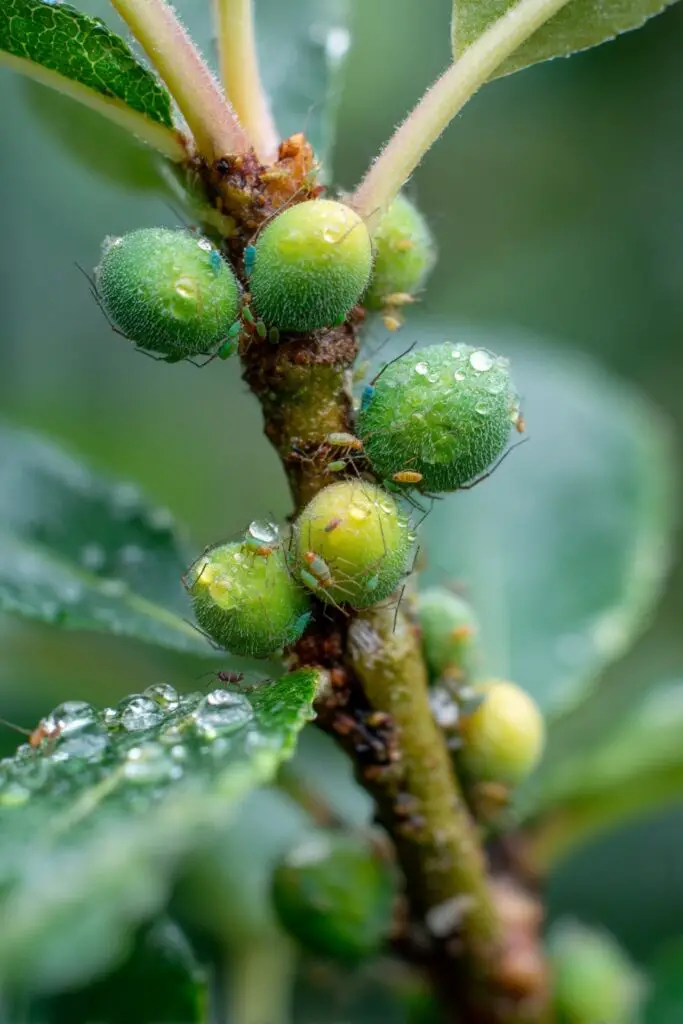
Aphids are small, soft-bodied insects that feed on the sap of your apple tree. While tiny, their damage can be significant—especially when infestations go unnoticed early in the season.
🐞 Common Types
- Green apple aphids primarily target leaves and stems, causing yellowing and curling.
- Woolly apple aphids are more damaging, forming cotton-like clusters on branches and roots. These pests also create galls—swollen growths that disrupt nutrient flow and weaken the tree.
Both types excrete sticky honeydew, which attracts ants and promotes the growth of sooty mold, a black fungus that further reduces leaf function.
🛡️ How to Control Aphids
- Encourage beneficial insects like ladybugs, lacewings, and hoverflies
- Avoid broad-spectrum insecticides, which can kill helpful predators
- For serious outbreaks, use insecticidal soap or neem oil, applied early in the morning or evening
- Choose aphid-resistant rootstocks if planting new trees
Monitor your apple tree closely in early spring, especially on new growth. A small aphid problem can turn severe quickly if left untreated.
🌫️ 5. Powdery Mildew
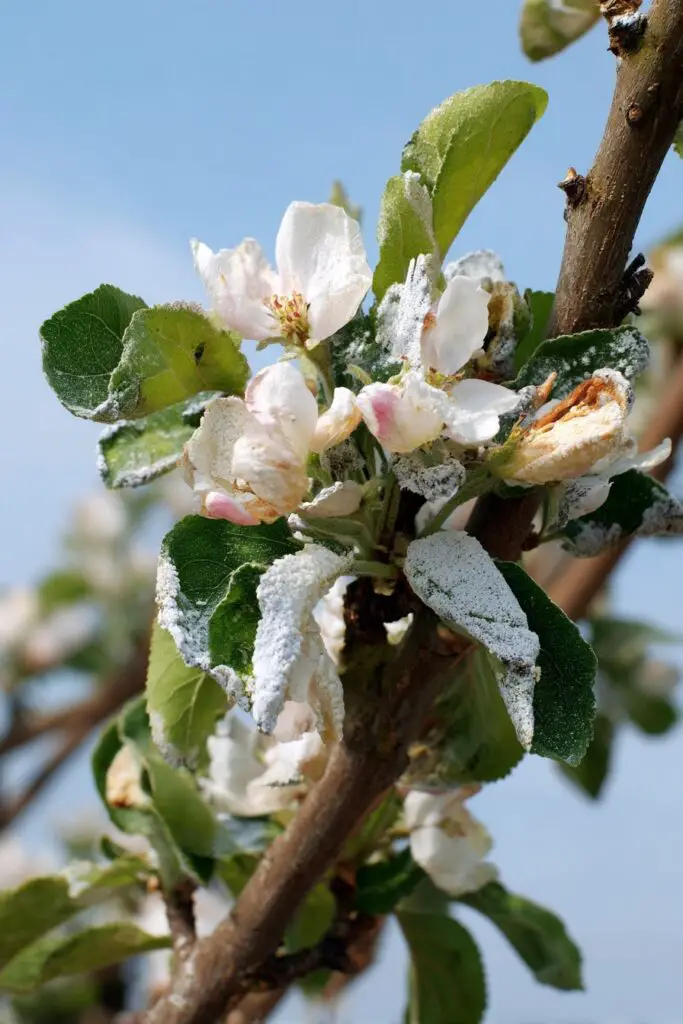
Powdery mildew is a fungal infection that can significantly affect the health and productivity of your apple tree, especially during dry springs and summers.
❓ What to Look For
The disease begins as a white, powdery coating on young leaves, buds, and blossoms. Affected leaves may curl upward and growth may become stunted. In severe cases, infected buds fail to open, and fruit production suffers.
Powdery mildew thrives in warm, dry conditions, particularly when airflow is poor and trees are densely planted.
🛡️ Prevention & Management
- Prune regularly to promote good air circulation within the canopy
- Apply fungicidal sprays (sulfur-based or biological) at the green tip or bud stage in spring
- Remove infected shoots and leaves before the disease spreads
- Water at the base—avoid wetting foliage, which can encourage fungal activity
Consistent monitoring and early treatment are essential. Left unchecked, powdery mildew can compromise the entire season’s fruit yield.
✅ Conclusion
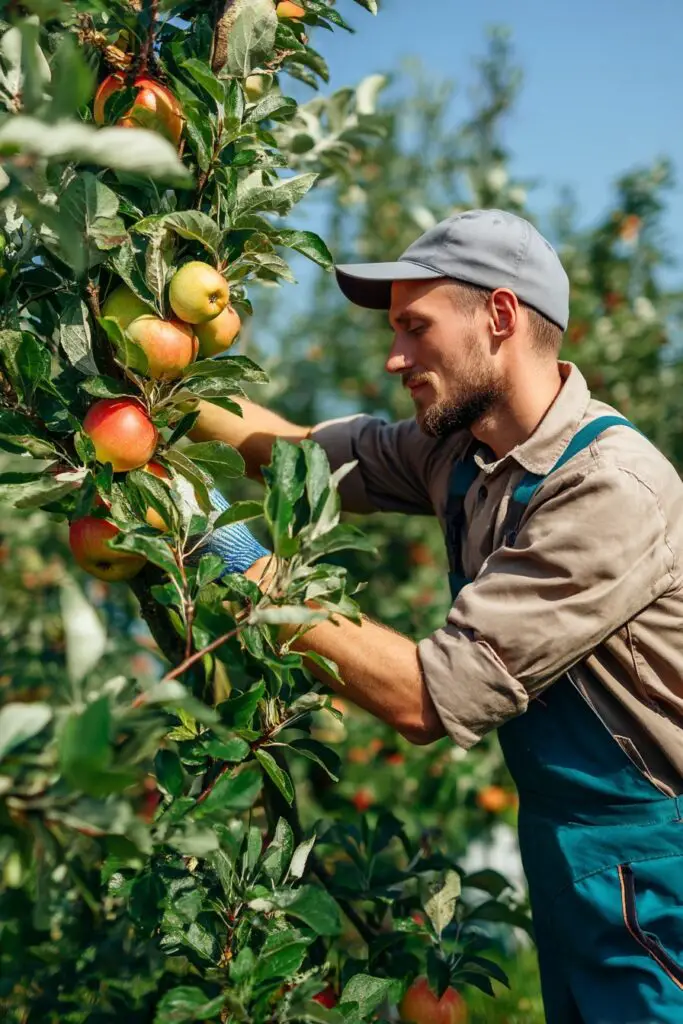
Growing a healthy apple tree takes more than planting and watering—it requires awareness of the most common pests and diseases that can hinder your harvest. From fungal threats like apple scab and powdery mildew to insect invaders like codling moths and aphids, these problems can quickly escalate without proper care.
Fortunately, with early detection, preventative measures, and a bit of knowledge, most issues can be managed or avoided entirely. Whether you’re growing apples for the first time or improving an existing orchard, regular observation and thoughtful intervention will keep your apple trees healthy, fruitful, and beautiful for years to come.