
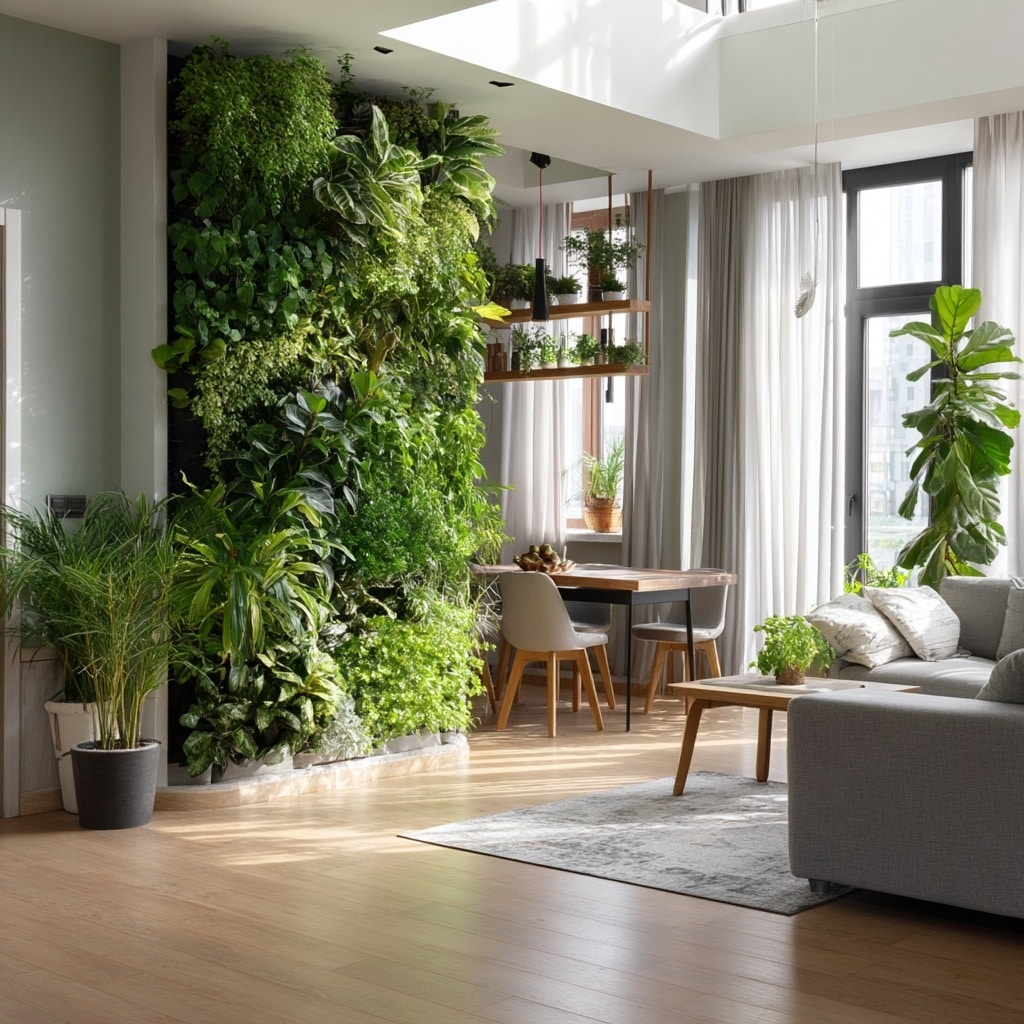
A gorgeous plant wall can completely transform your indoor space—especially when you’re working with a small apartment and a big love for greenery. If you’ve ever felt like your floor is shrinking under the weight of your ever-growing plant collection, you’re not alone. Limited space doesn’t have to mean limiting your green dreams. Building a vertical plant wall not only saves valuable room but also creates a stunning focal point that breathes life into your home. This guide walks you through how one couple in a cozy Berlin apartment designed and built their own DIY indoor plant wall on a budget—and how you can do it too, without breaking the bank.
Table of Contents
🌱 Why a DIY Plant Wall?

When you’re short on square footage but overflowing with plants, a DIY plant wall becomes more than just a clever idea—it’s a necessity. That’s exactly what inspired one Berlin couple to take their plant obsession to the next level. Living in a charming but compact 53-square-meter apartment, they quickly ran out of room for their large houseplant collections. Pots cluttered the floor, windowsills were overcrowded, and natural light was going to waste on tall, empty walls.
Instead of cutting back on their greenery, they decided to grow upward. Taking advantage of the apartment’s high ceilings, they saw their wall not as a limitation, but as a blank canvas. Inspired by the breathtaking vertical gardens designed by French botanist Patrick Blanc—whose lush creations grace buildings in cities like Paris, Bangkok, and even Berlin—they set out to create their own lush indoor jungle.
Going vertical wasn’t just about space—it was about creating a living art piece that blended design with functionality. And it turns out, building a plant wall is easier than you might think, even on a budget.
🪴 Choosing the Right Plants for Your DIY Plant Wall
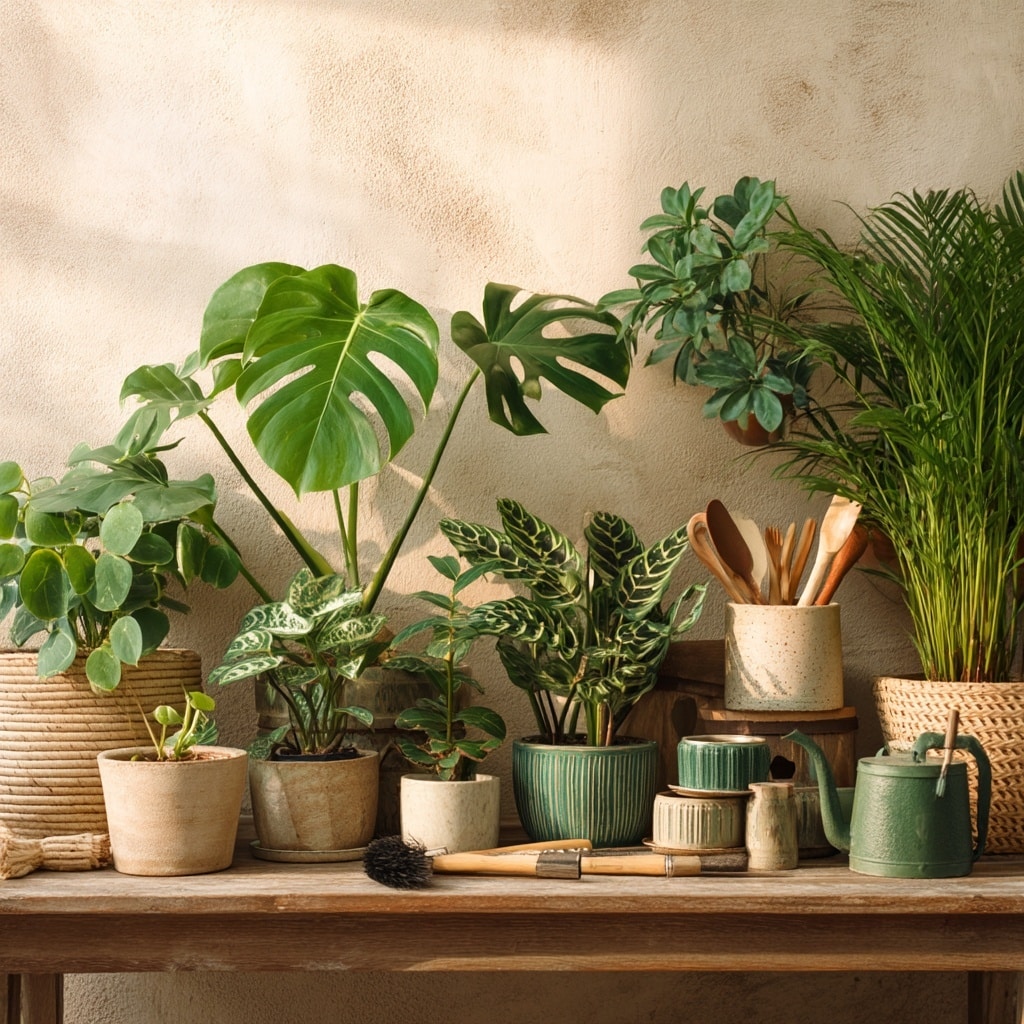
One of the most important parts of creating a thriving plant wall is picking the right plants. This isn’t just about aesthetics—it’s about understanding each plant’s needs and making sure they’ll thrive in a vertical environment.
The Berlin couple focused on tropical houseplants that not only look lush but adapt well to vertical setups. Their plant wall included:
- Monstera deliciosa
- Philodendrons
- Anthuriums
- Alocasias
- Calatheas
- Begonias
- Pothos
- Caladiums
Each of these species brings different textures, colors, and leaf shapes—creating a beautiful living mosaic.
🌤️ How to Choose the Right Plants
When selecting plants for your DIY plant wall, ask yourself:
- Does this plant prefer high humidity or dry conditions?
(Most tropicals love humidity!) - Is it a climber or a crawler?
(Climbers like pothos or philodendron are perfect for vertical growth.) - Does it need direct light or can it handle low light?
(Your wall’s placement matters—bright indirect light is ideal.) - Will this plant tolerate being moved or repotted into a vertical system?
- Will it look balanced and cohesive as part of a larger display?
Getting to know your plants is essential. Look at their natural habitats and mimic those conditions as closely as possible. That’s the key to creating a plant wall that doesn’t just survive—but thrives.
🔨 How to Build Your Plant Wall – Materials & Step-by-Step Guide
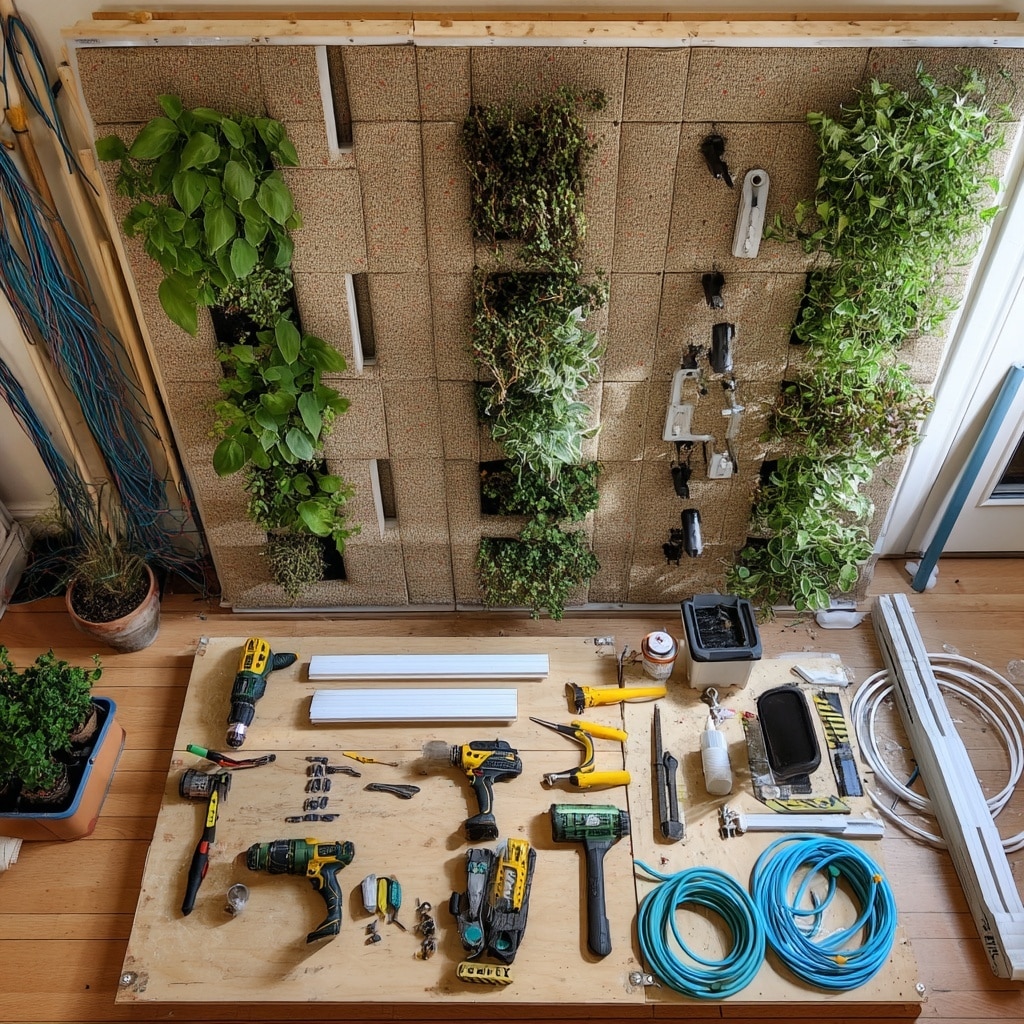
Building your own plant wall may sound intimidating, but with the right tools and a simple plan, it’s surprisingly achievable—even for beginners. The Berlin couple built theirs using basic materials, affordable tools, and a bit of creative problem-solving. Here’s how they did it—and how you can too.
🧰 Tools You’ll Need
- Power drill
- Jigsaw
- Staple gun
- Scissors or utility knife
🧱 Materials List
- Builder’s plastic sheet – To protect your wall from moisture
- Corrugated plastic panels (10mm thick) – Acts as a rigid backing
- PET felt (100% synthetic from recycled bottles) – Your growing medium
- Water tank and pump – For a circular watering system
- Flexible tubing and drippers – To distribute water evenly
- Gutters or collection trays – To catch and recycle water
- Grow lights – Especially if you have low natural light
💡 Budget Tip: Many of these materials can be found at home improvement stores or upcycled from old projects. Synthetic felt (PET) is both eco-friendly and odor-free—perfect for indoor use.
🪜 Step-by-Step Build Instructions
Step 1: Frame and Protect the Wall
Stretch a thick plastic sheet across the area where your plant wall will go. This layer protects your wall from any potential water damage.
Step 2: Add Support Panels
Attach corrugated plastic panels over the builder’s plastic using screws or nails. These panels act as the foundation for your growing system.
Step 3: Attach the Felt Layers
Staple the PET felt onto the support panels. This is where your plants will live. Make sure the felt is snug and even—this ensures good water flow and root support.
Step 4: Install the Watering System
Connect your water tank to a pump. Run tubing up both sides of the wall, with drippers at the top. Water trickles down through the felt via capillary action, keeping roots evenly moist. Collect runoff in gutters at the base, and cycle it back to the tank.
Step 5: Set Up Grow Lights (if needed)
If your wall doesn’t get enough sunlight, install full-spectrum grow lights overhead. Use a timer to simulate a natural day-night cycle.
Step 6: Add Your Plants
Carefully insert your chosen plants into slits in the felt. Don’t overcrowd—leave space for roots to grow and airflow to circulate.
🌿 Caring for Your Plant Wall Over Time
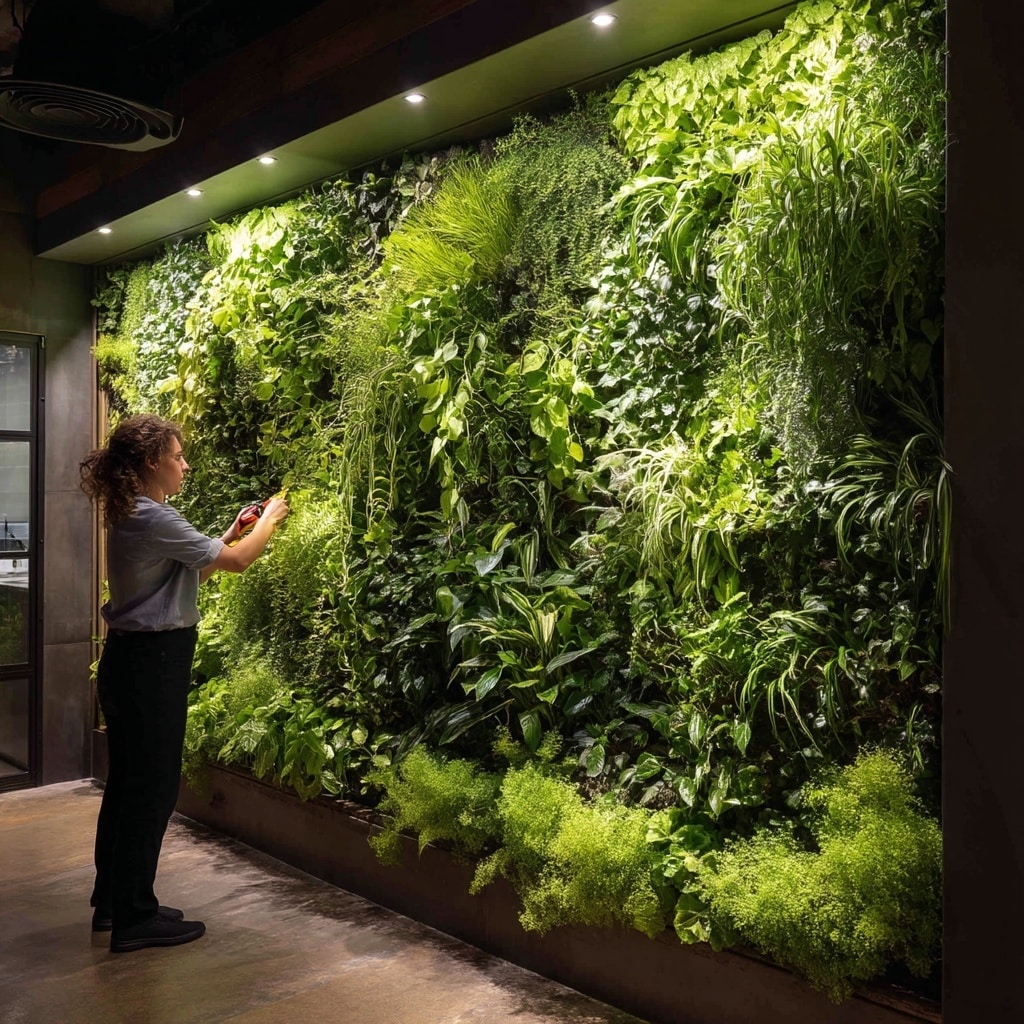
Once your plant wall is set up, it becomes a living system that evolves. Plants grow, shift, and respond to their environment—so maintenance is part of the process. But don’t worry—it’s more rewarding than it is complicated.
☀️ Monitor Light and Placement
Even if you’ve installed grow lights, light levels can vary across the wall. Taller plants may shade smaller ones, and window angles can change with the seasons. Keep an eye on which plants are thriving and which may need to be rotated or moved.
💧 Adjust Watering and Humidity
If you’ve installed a closed-loop watering system, your plant wall should stay evenly moist. But you’ll still need to:
- Check the pump and drippers regularly for clogs
- Monitor humidity—tropical plants thrive in 60–80%
- Top off the water tank as needed
Consider adding a hygrometer to track moisture levels near the wall.
🌱 Fertilize and Prune
Your plants will grow fast—especially during spring and summer. Use a diluted liquid fertilizer in your watering system every 2–3 weeks. Regularly:
- Trim yellowing or damaged leaves
- Prune fast growers to keep shape and airflow
- Clean plant leaves to remove dust (especially near lights)
🔁 Expect Trial and Error
Even experienced plant parents need to make changes. Some plants may outgrow their space, others may not adapt well to vertical life. That’s okay. Rearranging your plant wall is part of the fun—and each adjustment teaches you more about your plants’ personalities.
Over time, your wall becomes more than decoration—it becomes a dynamic green companion that brings joy, fresh air, and a calming energy to your space.
🌼 Final Thoughts: Your Plant Wall Journey Starts Here
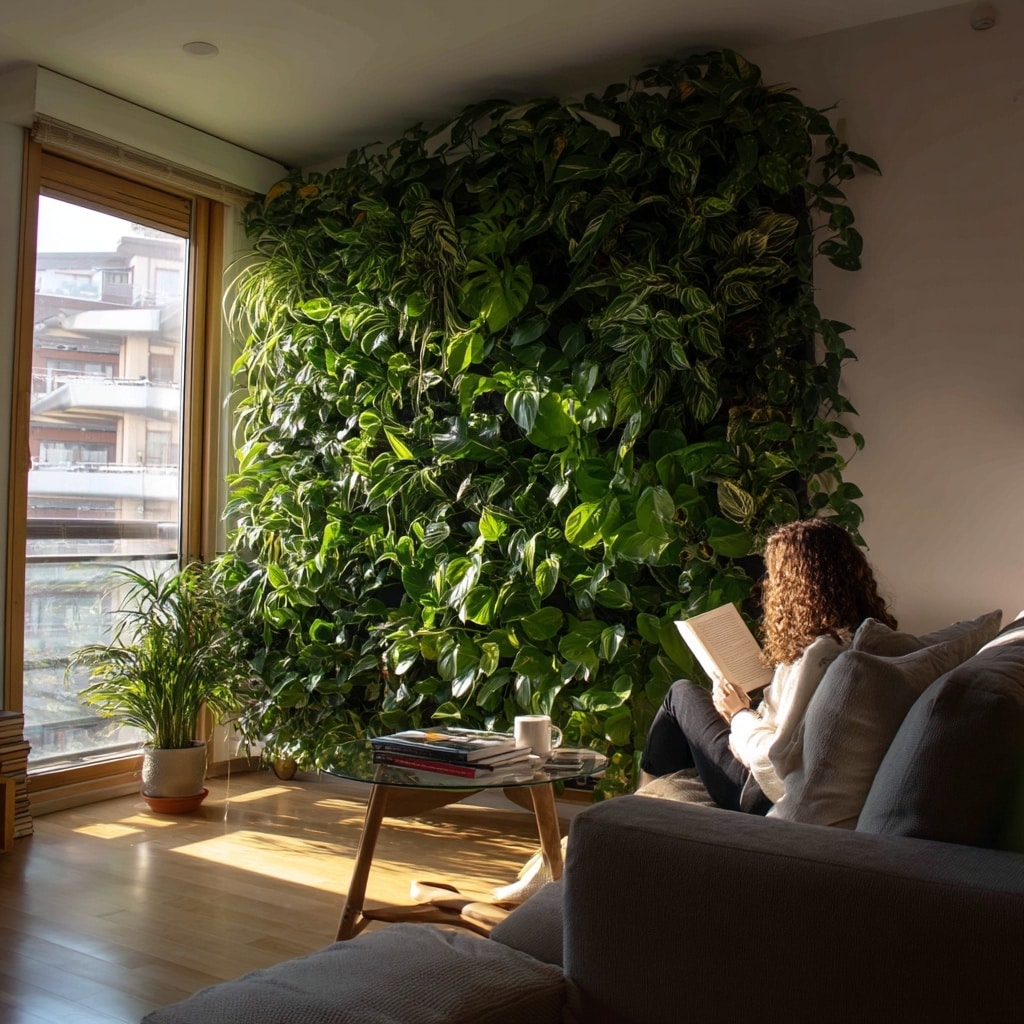
Creating a plant wall isn’t just a clever way to save space—it’s a deeply satisfying way to reconnect with nature inside your home. Whether you live in a small apartment or just want to turn a blank wall into something alive and meaningful, a DIY plant wall offers beauty, function, and a daily dose of joy.
You don’t need to be a carpenter or a botanist. You just need curiosity, patience, and a willingness to get your hands a little dirty. Like the Berlin couple, you might find that your indoor jungle becomes more than a design feature—it becomes a source of peace, growth, and pride.
So go ahead. Build your vertical oasis. Your walls are waiting.