
Small backyard landscaping can completely change how your outdoor space feels, even if you’re working with limited square footage. With the right design approach, a compact yard can appear wider, more open, and far more functional than its actual size.
Many homeowners assume a tiny yard limits possibilities. In reality, smart small backyard landscaping techniques create depth, movement, and purpose. By adjusting layout, plant placement, and structural elements, you can visually expand the space while improving usability.
In this guide, you’ll find five proven small backyard landscaping ideas that help your yard feel larger, more inviting, and better organized.
Table of Contents
1. Add Curves to Create Movement and Depth

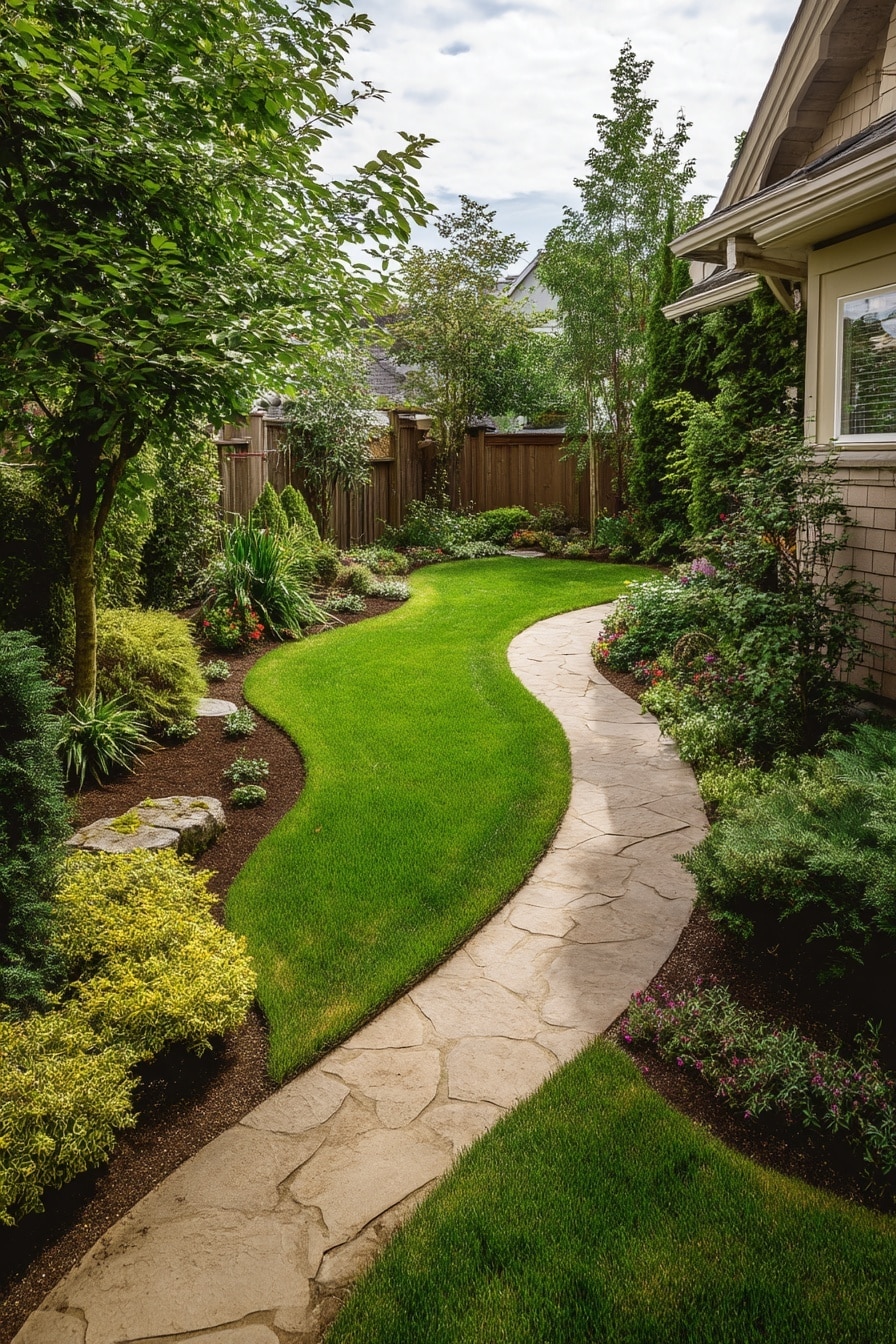
Straight lines tend to emphasize boundaries. In contrast, curves soften edges and make a yard feel more expansive. One of the simplest small backyard landscaping upgrades is replacing rigid layouts with gentle, flowing shapes.
How Curves Help a Small Yard
Curved pathways and garden beds:
- Lead the eye gradually through the space
- Reduce the focus on property lines
- Create a sense of mystery and movement
- Break up boxy layouts
Instead of a straight patio edge or narrow strip of grass, consider reshaping lawn borders into subtle arcs. Even a slightly curved walkway can transform your small backyard landscaping plan.
Where to Add Curves
You can incorporate curves in:
- Planting beds
- Walkways
- Retaining walls
- Patio outlines
The key is balance. Overcomplicating the design can make the yard feel cluttered. Thoughtful, minimal curves work best in small backyard landscaping projects.
2. Use Strategic Plantings to Add Dimension
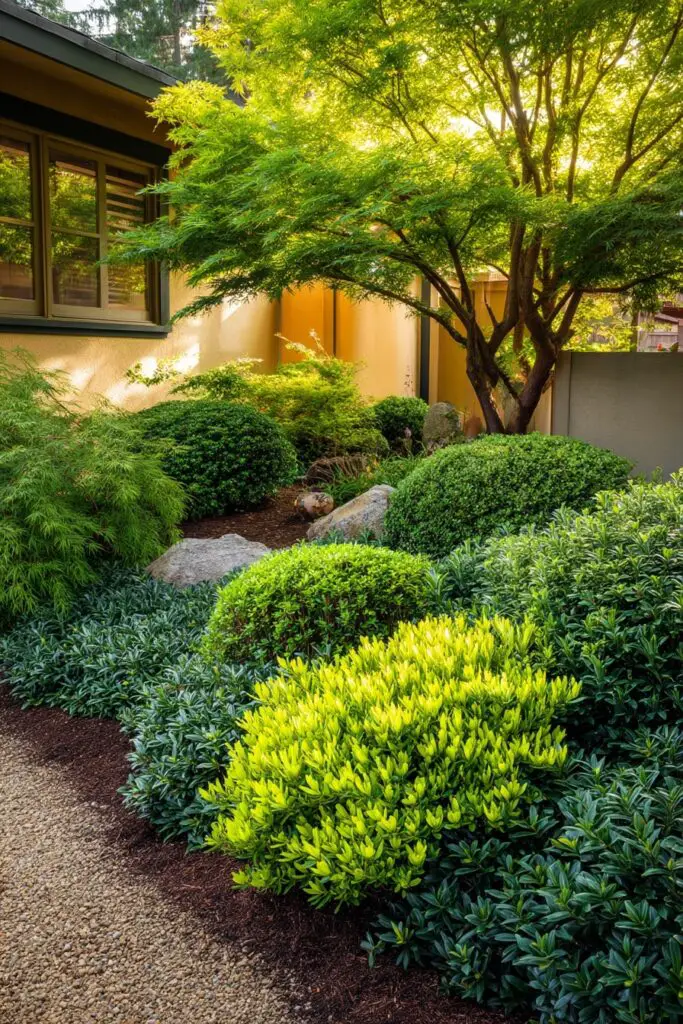
Plants are powerful tools in small backyard landscaping. The right mix of heights and textures creates layers that visually expand the yard.
Layer Plants by Height
Instead of planting everything at the same level, use three tiers:
- Low groundcovers in front
- Medium shrubs in the middle
- Taller ornamental trees or vertical accents in the back
Layering draws the eye upward and outward, which makes small backyard landscaping designs feel deeper.
Choose Plants That Don’t Overwhelm
In compact spaces, scale matters. Oversized shrubs can quickly dominate the yard.
Focus on:
- Compact ornamental grasses
- Dwarf shrubs
- Slim, upright trees
- Perennials with structured growth habits
3. Define Functional Zones Without Shrinking the Space
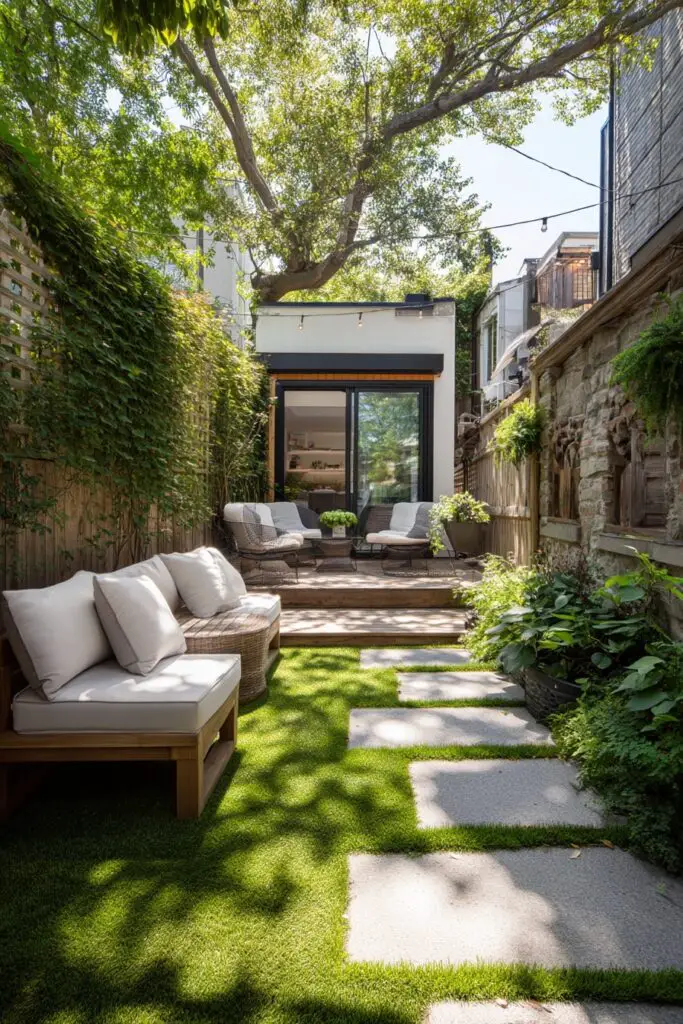
One common mistake in small backyard landscaping is leaving the yard as a single, undefined area. Breaking it into zones makes it feel intentional and usable.
Create Purposeful Areas
Consider dividing your yard into:
- A small seating area
- A planting zone
- A lawn patch
- A pathway connector
Defining these areas with subtle transitions, such as stepping stones or changes in material, helps small backyard landscaping feel organized rather than cramped.
Keep Transitions Open
Avoid tall barriers or bulky dividers. Instead, use:
- Low hedges
- Decorative edging
- Variation in paving materials
Open sightlines are essential in small backyard landscaping because they prevent the space from feeling boxed in.
4. Incorporate Terraces to Add Visual Interest
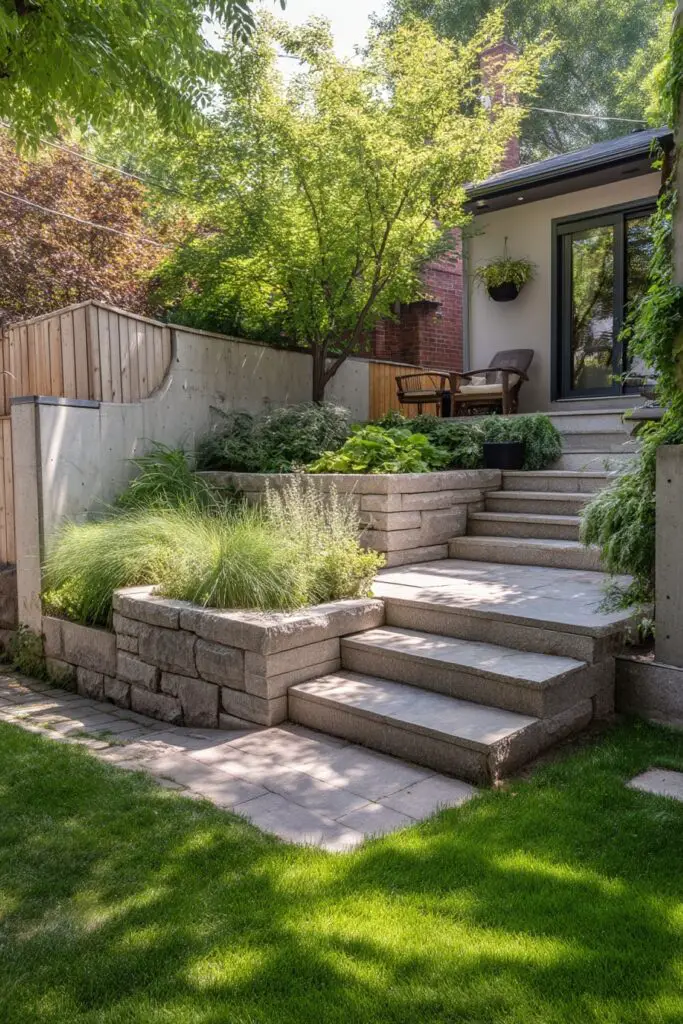
Terracing is a powerful technique in small backyard landscaping, especially if your yard has even a slight slope. By creating subtle level changes, you add depth and dimension without expanding the footprint.
Why Terraces Make a Yard Feel Larger
Level changes naturally draw the eye across the space. Instead of seeing one flat area, visitors experience multiple layers.
Terraces can:
- Break up monotony
- Create designated zones
- Improve drainage
- Add architectural structure
In small backyard landscaping, even a raised planting bed or a slightly elevated patio can create this layered effect.
Keep Terraces Proportional
In compact yards, terraces should be modest in scale. Oversized retaining walls can overwhelm the space.
Opt for:
- Low retaining walls
- Wide, shallow steps
- Raised garden borders
The goal of small backyard landscaping is subtle enhancement, not dramatic elevation shifts.
5. Add Landscape Lighting for Depth and Ambience
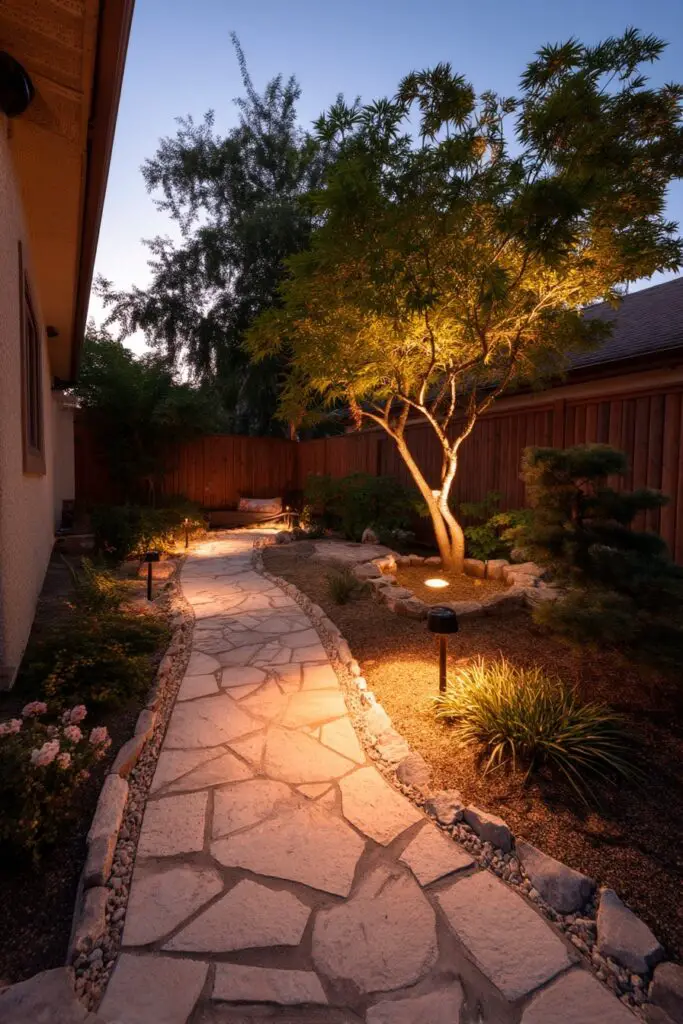
Lighting is often overlooked in small backyard landscaping, yet it can dramatically influence how large a yard feels at night.
Use Light to Extend Visual Boundaries
Strategic lighting highlights focal points and pushes the eye outward.
Consider adding:
- Path lights along walkways
- Uplighting on small trees
- Soft wall washes on fences
- Step lighting on terraces
When key features are illuminated, small backyard landscaping designs feel more expansive after sunset.
Avoid Overlighting
Too much brightness can flatten the space. Instead, aim for layered lighting with soft contrasts.
Balanced lighting creates shadows and depth, enhancing the perception of size in small backyard landscaping layouts.
Work With a Professional for Maximum Impact
While many improvements can be DIY, professional guidance can elevate your small backyard landscaping results.
An experienced landscape designer can:
- Optimize layout flow
- Choose plants suited to your climate
- Prevent overcrowding
- Ensure proper grading and drainage
If you have an internal guide about Planning a Backyard Landscape Design, this would be a natural internal link.
Professional planning often prevents costly mistakes and ensures your small backyard landscaping investment delivers long-term value.
Conclusion
Smart small backyard landscaping is about creating depth, movement, and function within limited space. By incorporating curves, layered plantings, defined zones, terraces, and lighting, you can make your yard feel significantly larger and more inviting.
With thoughtful planning, even the smallest yard can become a beautifully organized outdoor retreat.