
A well-designed backyard garden layout can completely transform even the smallest outdoor space into a productive and beautiful retreat. Whether you’re working with a tight urban yard or a sprawling suburban plot, choosing the right garden structure is key to making the most of every inch. By tailoring your garden’s layout to your needs, lifestyle, and environment, you’ll not only grow more but also enjoy the process a whole lot more.
In this article, we’ll walk through five smart and efficient backyard garden layout ideas that maximize space without compromising style or functionality. These layout options are perfect for anyone who wants to garden with intention—no matter how limited the area may be.
Table of Contents
Raised Bed Garden Layout

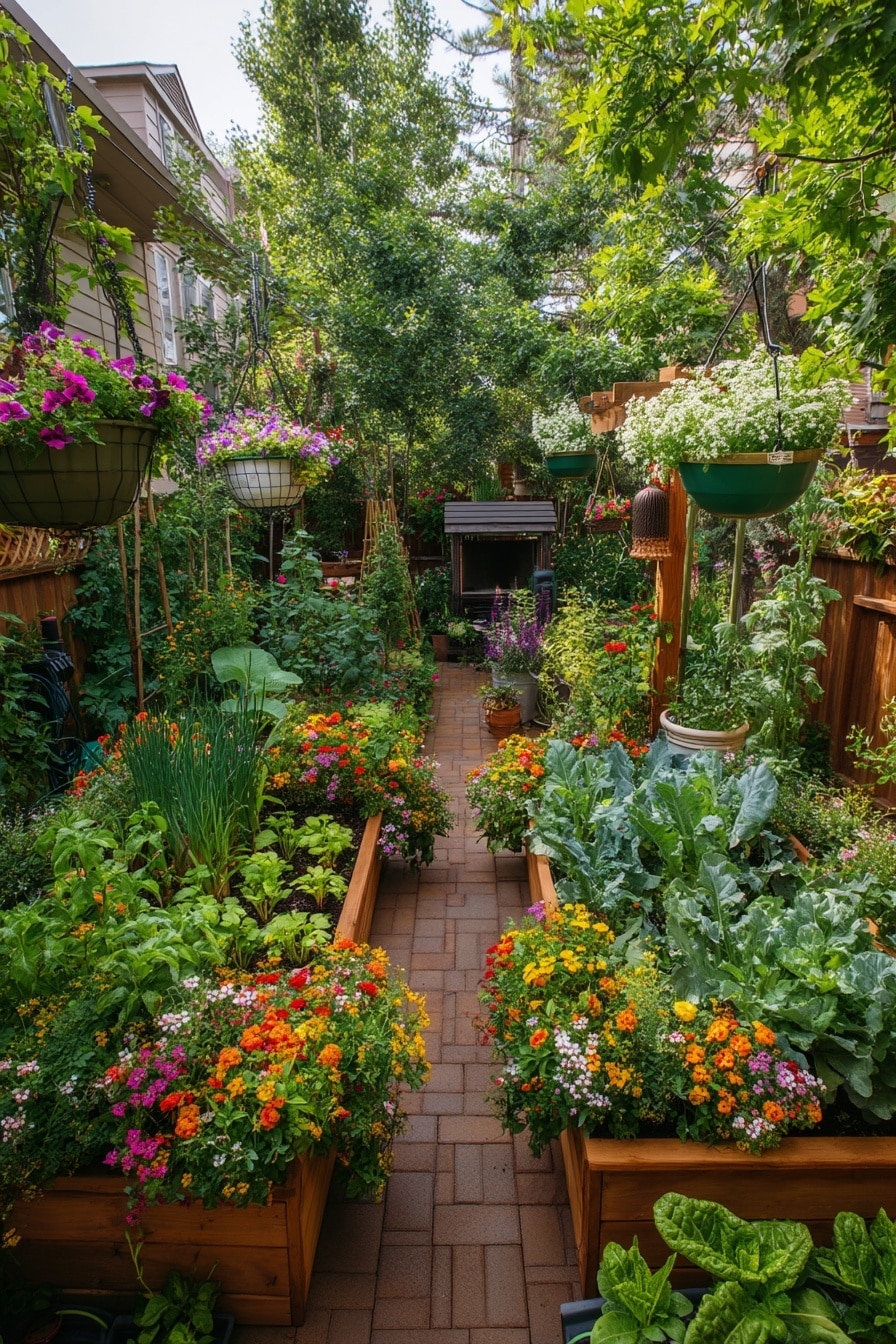
One of the most efficient and beginner-friendly options for a backyard garden layout is the raised bed design. This approach involves constructing planting areas above the natural ground level, usually framed with wood, stone, or metal. Raised beds are particularly effective in compact backyards where soil quality is poor or drainage is an issue.
Benefits of a Raised Bed Layout:
- Improved soil control: You can customize soil mix for better fertility and drainage.
- Space definition: Beds create clear, manageable zones that prevent overcrowding.
- Easier maintenance: Raised beds reduce the need to bend, making weeding and harvesting more comfortable.
- Better pest control: Barriers and spacing reduce the risk of weeds and pests.
To maximize your space, consider designing multiple narrow beds with walking paths in between. A common setup is 4-foot-wide beds with 2-foot-wide paths, which allows easy access from all sides without stepping on the soil. For even tighter spaces, L-shaped or U-shaped raised beds can fit neatly around corners or fences.
Raised beds work well for growing a variety of vegetables, herbs, and even small fruits. You can also add trellises at the back of the beds for vertical growth, boosting both yield and garden aesthetics.
Vertical Garden Layout
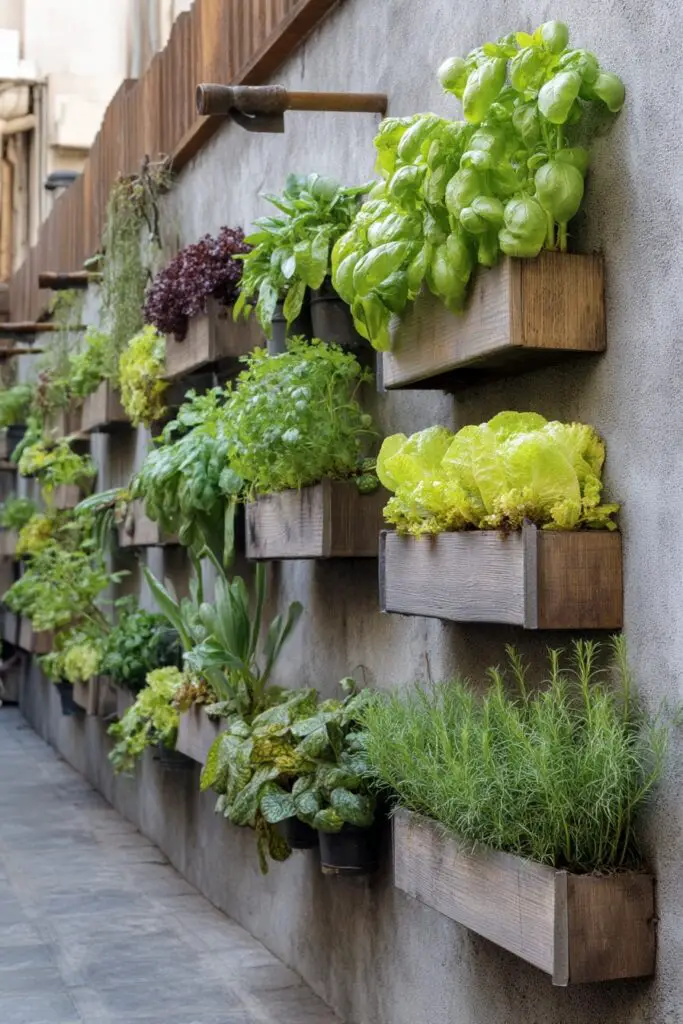
If you’re dealing with limited ground space, a backyard garden layout that goes vertical is an ideal solution. Vertical gardening focuses on growing upward instead of outward, using walls, trellises, hanging planters, and tiered shelves to support plant growth.
Benefits of a Vertical Garden Layout:
- Maximizes vertical space: Ideal for small yards, patios, or balconies.
- Improves air circulation: Reduces risk of disease and pests.
- Enhances aesthetics: Adds visual interest and layers to your garden.
- Easier harvesting: Plants are at eye-level or within easy reach.
There are several ways to implement a vertical garden. Wall-mounted planters or pocket panels allow you to grow herbs, leafy greens, or even strawberries in tight spaces. Trellises are great for climbing plants like cucumbers, beans, or flowering vines. Stackable planter boxes or tiered shelves work well for cascading herbs or trailing flowers.
To maintain healthy growth, ensure that vertical gardens are placed where they receive adequate sunlight and are accessible for watering. A drip irrigation system can be especially useful in these setups.
This layout is perfect for urban gardeners or anyone looking to create a lush, layered look with minimal square footage.
Square or Block Garden Layout
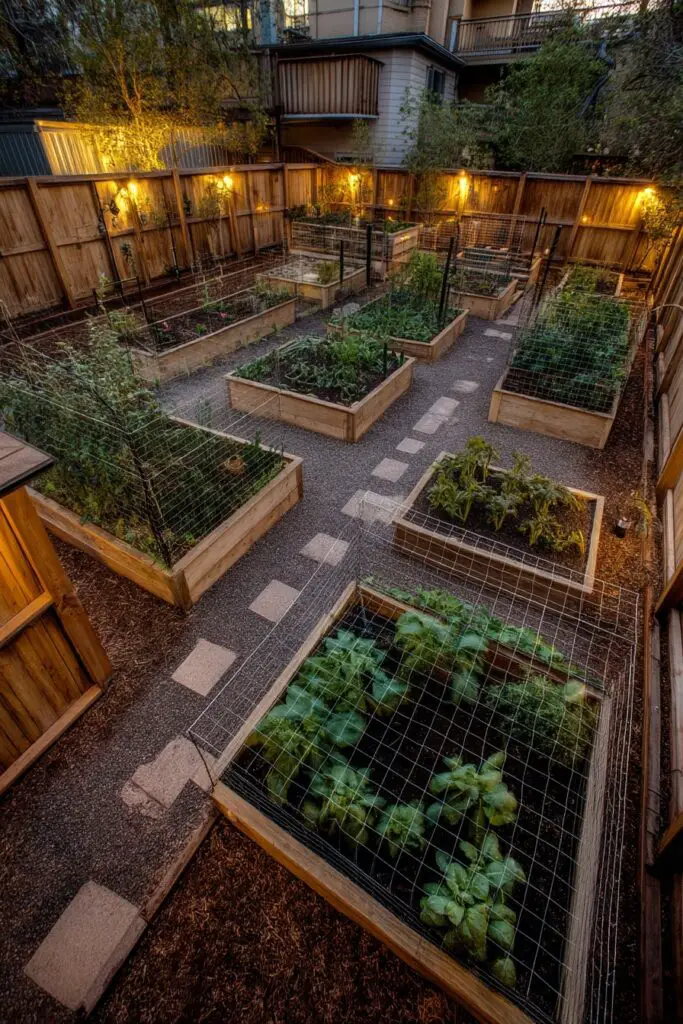
A square or block layout is a highly efficient backyard garden layout that prioritizes plant density and accessibility. Unlike traditional rows, this method groups plants into square-foot sections or compact blocks, maximizing yield per square foot.
Benefits of a Square or Block Layout:
- Efficient use of space: Ideal for small gardens and urban spaces.
- Better weed control: Dense planting limits room for weeds to grow.
- Improved yields: Intensive spacing allows more plants in less area.
- Easy planning and rotation: Organized sections make crop rotation simpler.
This layout often uses a grid system, commonly referred to as square-foot gardening. Each square (typically 1 foot by 1 foot) holds a specific number of plants based on their size. For example, one square may contain one tomato plant, four lettuce heads, or sixteen radishes.
You can implement this design in raised beds or directly on the ground. Just frame the area and divide it into equal sections with string or wooden slats. This method encourages precise planting, reduces waste, and makes maintenance straightforward.
For beginners or gardeners who want to grow a lot in a little space, the square garden layout is both manageable and productive.
Pathway-Focused Garden Layout
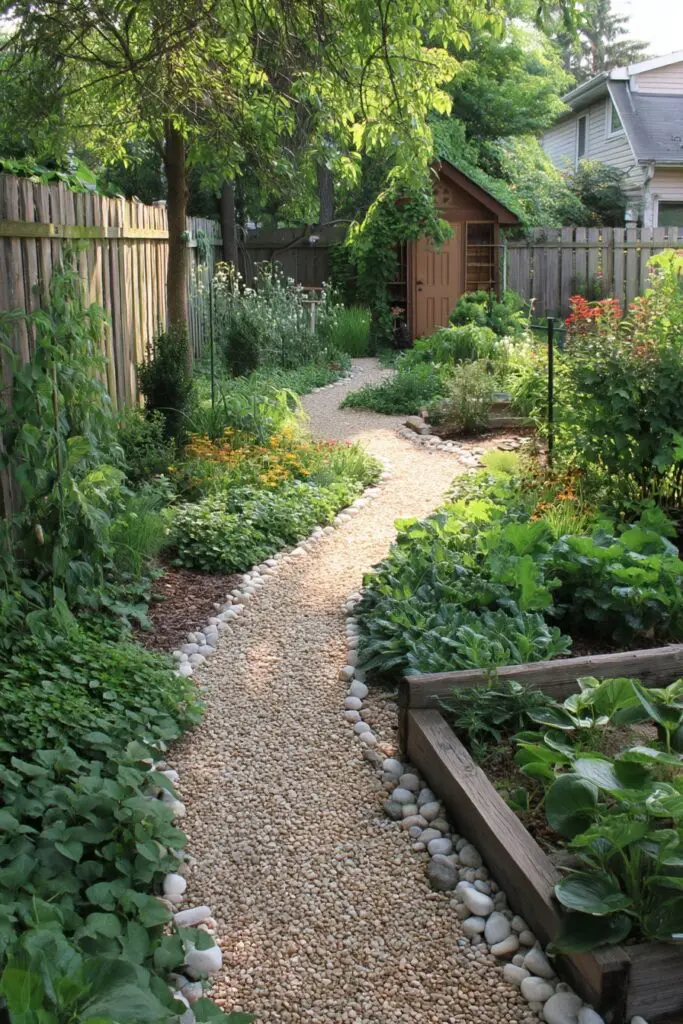
Designing your backyard garden layout around pathways is not only visually appealing but also highly functional. This layout creates intentional walking spaces between planting areas, allowing easy access for planting, watering, harvesting, and maintaining your garden without compacting the soil.
Benefits of a Pathway-Focused Layout:
- Improved accessibility: No need to step on planting beds.
- Better organization: Clearly separates different garden zones.
- Enhanced aesthetics: Paths add structure and guide foot traffic.
- Low-maintenance: Defined paths help control weeds and erosion.
Materials like gravel, mulch, bricks, or stepping stones can be used to define pathways. The width of each path should be wide enough for comfortable movement—at least 18 inches for walking and 2 to 3 feet if you’ll be using wheelbarrows or garden carts.
The layout can be adapted into different patterns: straight lines for a formal look, curved paths for a natural feel, or even circular paths around a central focal point like a fountain or tree. Integrating pathways with companion planting and raised beds enhances both usability and appearance.
This layout is particularly beneficial for larger backyards or for gardeners who want a neat, walkable, and structured garden space that’s easy to maintain year-round.
Multi-Functional Garden Zones Layout
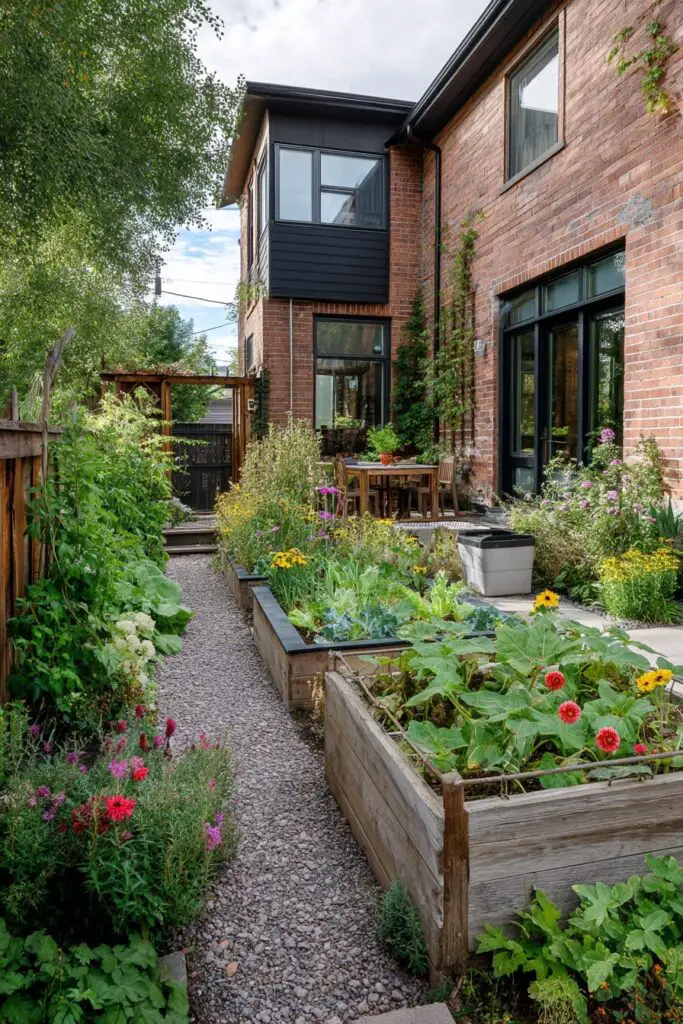
A thoughtfully designed backyard garden layout can do more than just grow food—it can also support relaxation, play, and outdoor living. The multi-functional zones layout divides the garden into dedicated areas for various purposes, creating a harmonious balance between productivity and lifestyle.
Benefits of a Multi-Functional Zones Layout:
- Versatility: Combine utility with leisure—grow, cook, and relax in the same space.
- Better organization: Each area has a defined role, making the garden feel more spacious.
- Customizable to lifestyle: Easily adapt zones for children, pets, entertaining, or wellness.
- Increases property value: A well-designed outdoor living space enhances curb appeal.
Typical zones in this layout may include:
- Edible garden area: Raised beds or vertical setups for vegetables and herbs.
- Outdoor seating or dining zone: Patio furniture, pergolas, or fire pits for relaxation.
- Composting or storage corner: Discreetly located bins and garden tool sheds.
- Pollinator patch: A dedicated section for flowers and native plants to attract bees and butterflies.
By strategically placing each zone and adding transitions—like stepping stones, hedges, or arbors—you create a cohesive flow throughout the garden. This layout is ideal for homeowners who want to get the most out of their backyard by blending functionality with comfort.
Conclusion
Designing the right backyard garden layout is the first step toward making your outdoor space truly work for you. Whether you choose raised beds, vertical structures, block planting, well-planned pathways, or multi-functional zones, each layout offers a unique way to maximize space, improve yields, and enhance your gardening experience. By understanding your goals, available space, and personal style, you can create a garden that is not only productive but also a joy to spend time in.
Remember, your garden doesn’t have to be large to be impactful. With the right layout and thoughtful planning, even the smallest backyard can become a vibrant, functional haven.