
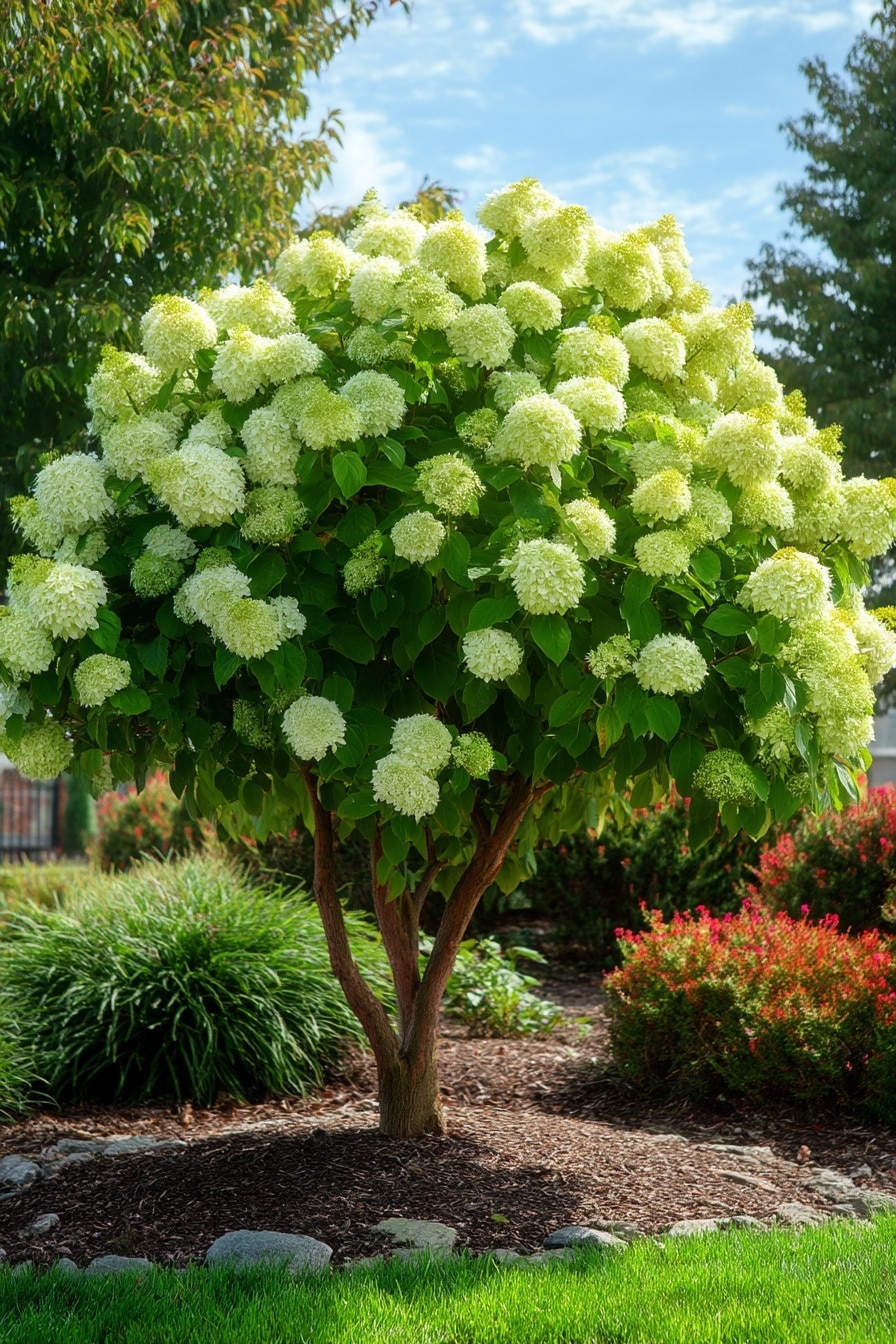

Limelight hydrangea landscaping brings outstanding color, texture, and year‑long interest to your outdoor design. Gardeners and landscapers alike prize the Limelight Hydrangea Tree (Hydrangea paniculata ‘Limelight’) for its bold, lime‑green blossoms that shift to cream and soft pinks as the season progresses. These distinctive flowers can elevate even a simple garden into a standout feature, drawing attention with dramatic blooms that last from summer through fall.
In this guide, we’ll walk through 5 practical ways to use the Limelight Hydrangea Tree in your landscape design, whether you want a bold focal point, a refined hedge, or an elegant mixed garden display.
Table of Contents
1. Feature Limelight Hydrangea as a Stand‑Alone Specimen

One of the most striking limelight hydrangea landscaping ideas is to plant a single Limelight Hydrangea Tree as a focal point. Its towering stature, typically reaching 6–8 feet tall and wide, gives structure to beds and draws the eye upward.
These trees burst into large cone‑shaped clusters of lime green blooms in mid‑summer that age into soft white and eventually rosy hues. This seasonal color shift adds dynamic interest to your garden palette without needing complex design techniques.
Tips for placement:
- Near entryways to create a welcoming impression
- At the end of walkways to draw vision toward the garden
- Against a backdrop of evergreen shrubs for contrast
2. Use Limelight Hydrangea Trees in Mass Plantings

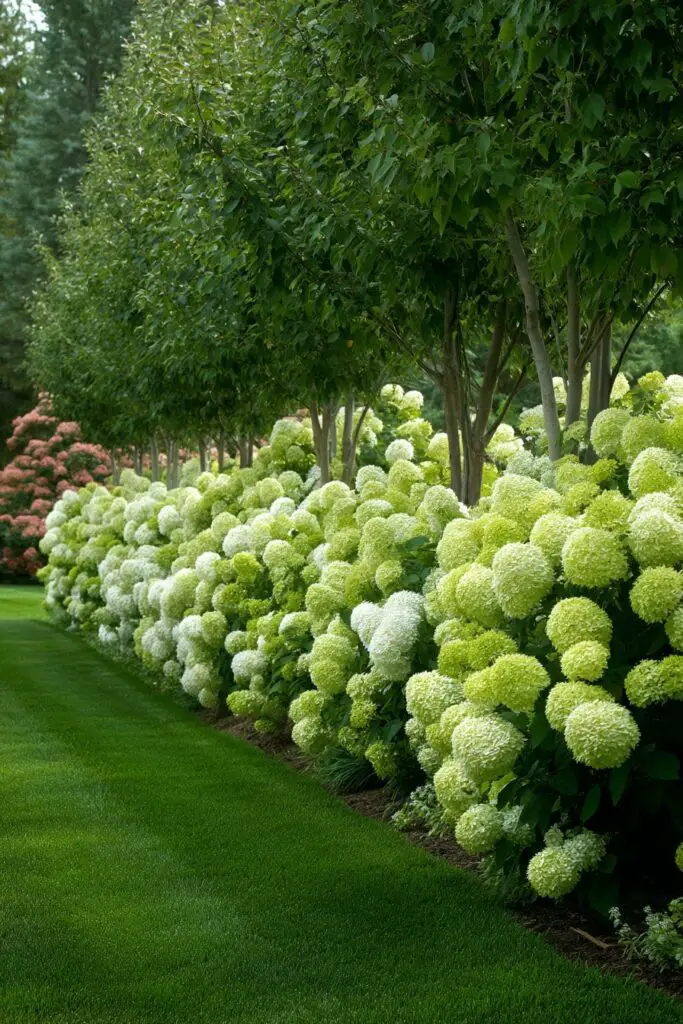
Planting multiple Limelight Hydrangea Trees together can form a stunning flowering hedge or visual barrier. When grouped, their repeated blooms offer cohesive color and movement that can define outdoor rooms or soften structural edges.
Mass plantings also provide seasonal rhythm: the blossoms start bright green, transition to cream, and finish in warm pinks as temperatures cool.
Great spots for cluster plantings:
- Along property lines or driveways
- Around patio perimeters
- Beneath larger shade trees
3. Combine with Other Plants for a Layered Border

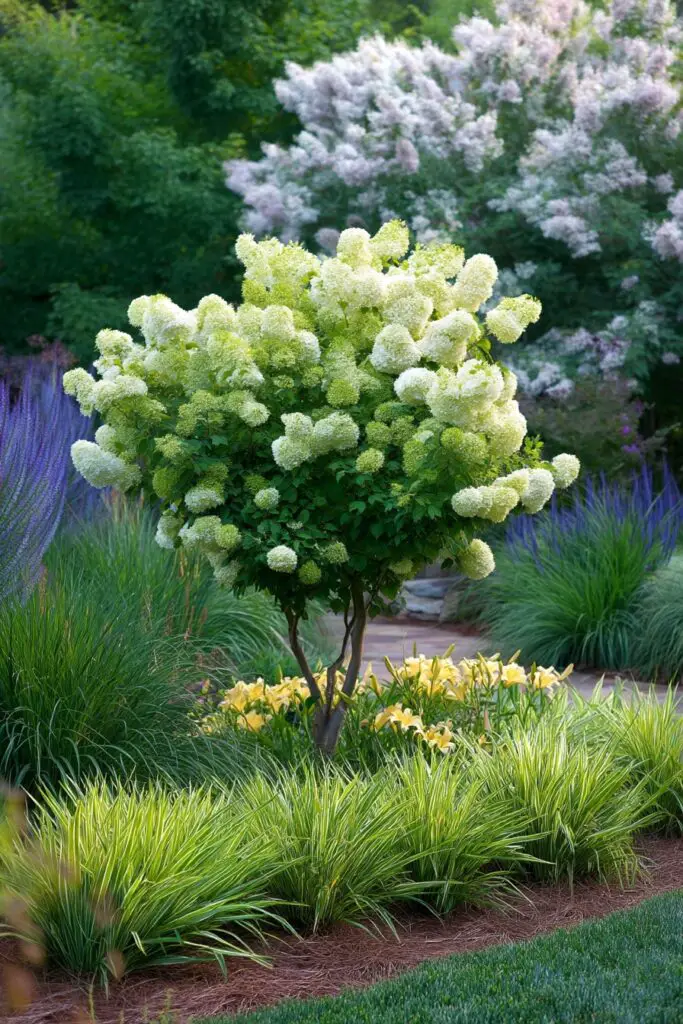
Integrating Limelight Hydrangea Trees into a layered garden border enriches limelight hydrangea landscaping with balanced height and color. Pair them with lower‑growing perennials and ornamental grasses to create depth and texture.
Suggested companions include:
- Daylilies or salvia for contrasting flower shapes
- Ornamental grasses for movement and texture
- Evergreen shrubs for year‑round structure
These combinations keep your border interesting in every season, letting the Limelight Hydrangea serve as a colorful anchor.
4. Plant in Ideal Light and Soil for Strong Blooming
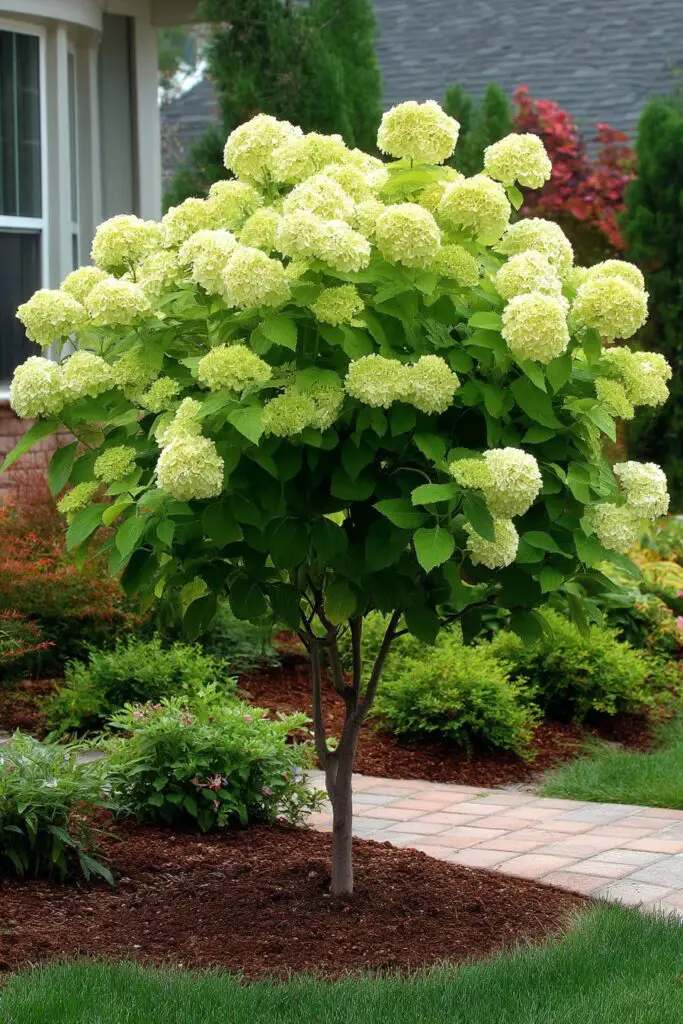
Successful limelight hydrangea landscaping starts with selecting the right location. Limelight Hydrangea Trees perform best with at least 6 hours of direct sunlight per day. In hotter regions, providing afternoon shade helps protect blooms from scorch.
Good drainage is equally important: these hydrangeas prefer soil that stays moist but never waterlogged. Amending soil with compost or organic matter before planting promotes healthy root development and abundant blooms.
Planting tips:
- Choose a spot with morning sun and afternoon shade in warmer climates
- Amend heavy clay soils for quick drainage
- Space plants adequately to allow air circulation
5. Maintain Your Limelight Hydrangea for Lasting Beauty

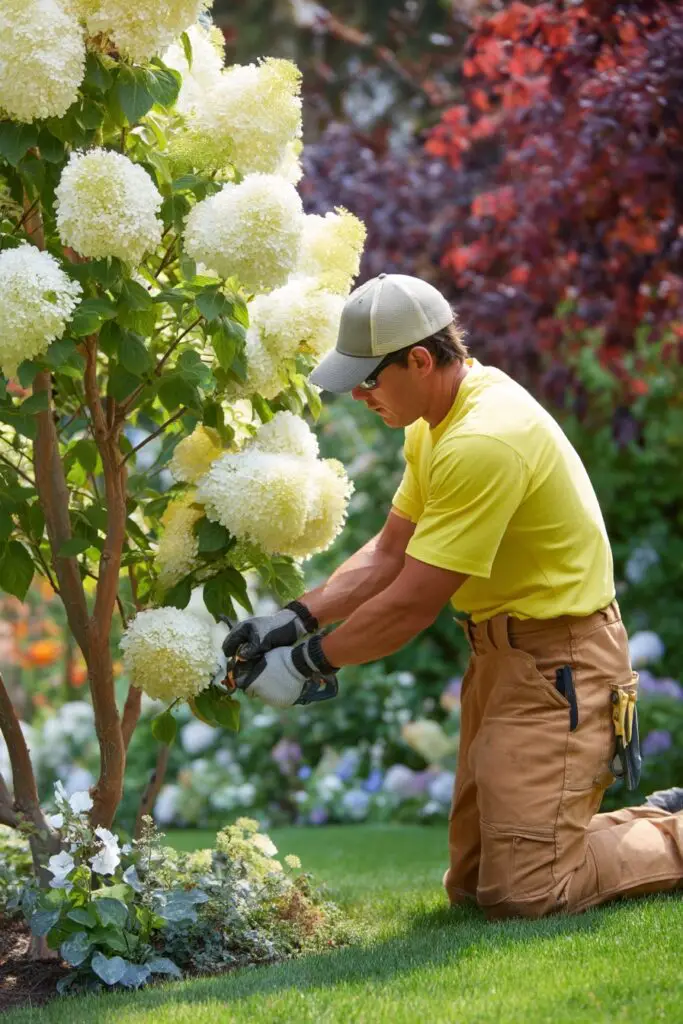
Caring for your Limelight Hydrangea Tree ensures longevity and stunning seasonal performance. These plants are relatively low‑maintenance, but a few key practices can enhance your limelight hydrangea landscaping results.
Maintenance basics:
- Prune in late winter or early spring to shape and encourage vigorous blooms.
- Apply a balanced, slow‑release fertilizer in early spring.
- Mulch around the base each year to conserve soil moisture and regulate temperature.
With attention to these simple care habits, your Limelight Hydrangea Trees can bloom consistently and gracefully season after season.
Conclusion
Limelight Hydrangea Trees bring eye‑catching color and layered interest to almost any garden design. Whether planted as singular standouts, in groupings, or within mixed borders, they offer long‑lasting blooms that evolve from vibrant lime green to soft pinks and creams. Incorporating these trees into your limelight hydrangea landscaping plan enhances both visual appeal and seasonal dynamics, making your garden uniquely expressive and inviting.