
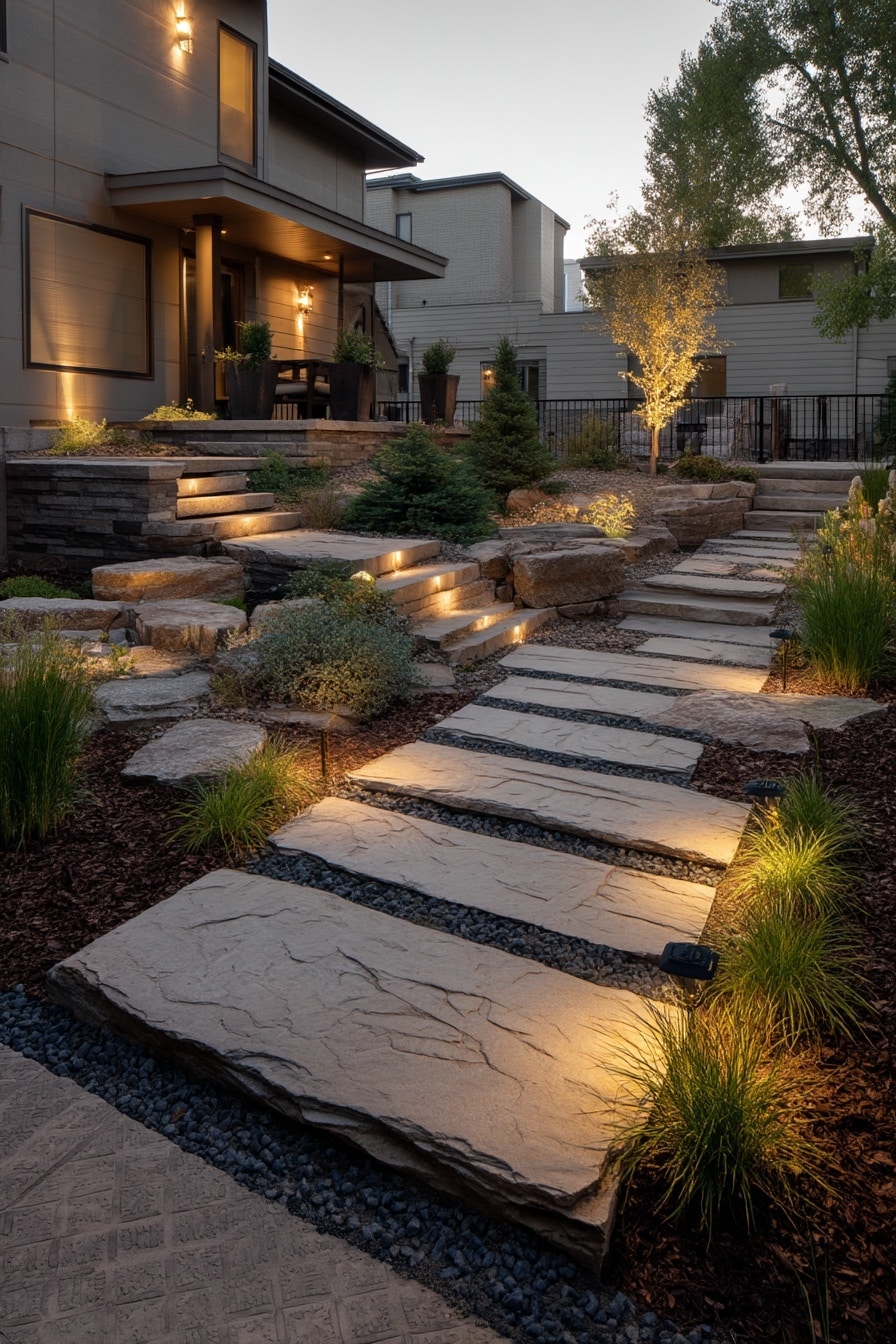
A flagstone walkway is one of the most timeless, functional ways to enhance your outdoor space. Whether you’re designing a front path that welcomes guests or a winding trail that threads through flowerbeds, flagstone’s natural texture and earthy tones create charming movement across your plot. With the right layout and materials, a flagstone walkway can become both a practical route and a beautiful landscape feature.
In this article, we share five creative and achievable flagstone walkway ideas that bring character, cohesion, and style to your garden, no matter its size or layout.
Table of Contents
1. Extend materials for seamless paths and steps

One of the most elegant ways to incorporate a flagstone walkway is by using the same stone material for other hardscape elements, such as garden steps and patio borders. By carrying the flagstone choice across surfaces, your outdoor design feels cohesive and intentional.
Large, neutral‑toned stones like sandstone or bluestone help your plantings, furniture, and architectural elements shine. Keeping a consistent palette—such as pale flagstones throughout—ties the space together visually, especially when combined with subtle lighting that highlights the texture after sunset.
2. Frame the path with contrasting borders
Adding contrast to a flagstone walkway can make a big visual difference. Consider edging your path with reclaimed clay bricks or darker pavers. This approach defines the path’s shape and adds texture to the overall design.
Clay pavers, with their warm red and terracotta tones, stand out beautifully against the cool hues of flagstone. This look complements traditional garden styles as well as more contemporary designs—especially in cottage or mixed material landscapes.
3. Make a mosaic with irregular stones
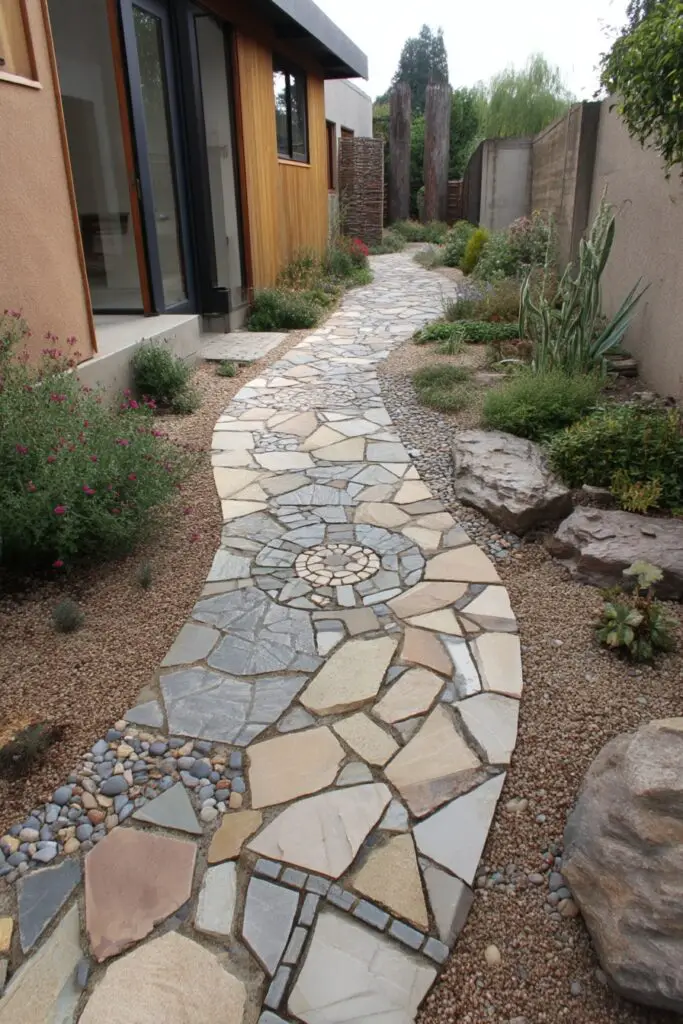
Instead of choosing uniformly cut stones, why not design your flagstone walkway with irregular pieces to form a mosaic‑like effect? Selecting mixed shapes and sizes adds personality and charm to a path and helps it blend naturally into the surrounding garden.
Pair the flagstone with complementary materials—like gravel, slate chips, or small pavers—to create contrast and texture. This method works particularly well in prairie, modern, or eclectic garden styles where varied elements enhance visual interest.
4. Add personality with staggered or rugged edges
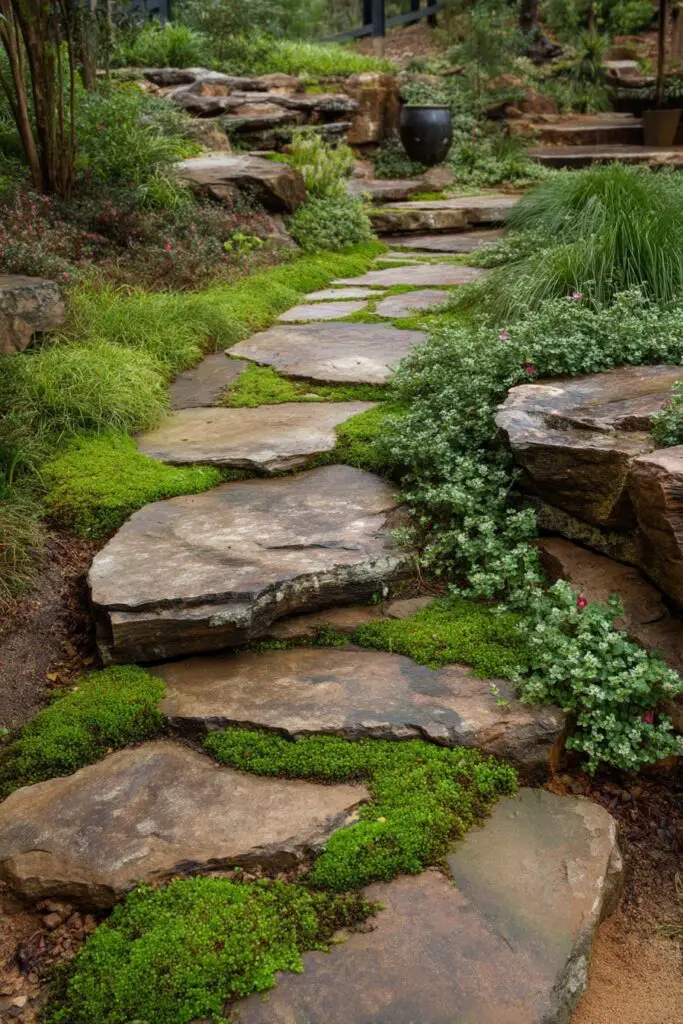
A flagstone walkway doesn’t have to be a straight line. Staggering the stones or allowing their rough, broken edges to create subtle variations gives an organic, relaxed feel.
Planting low‑groundcover plants, grasses, or moss right up to the stone’s edge emphasizes the natural look and softens the transition between the path and planting beds. This approach works beautifully in informal garden layouts or spaces that prioritize a casual, welcoming vibe.
5. Blend greenery and stone for a natural look
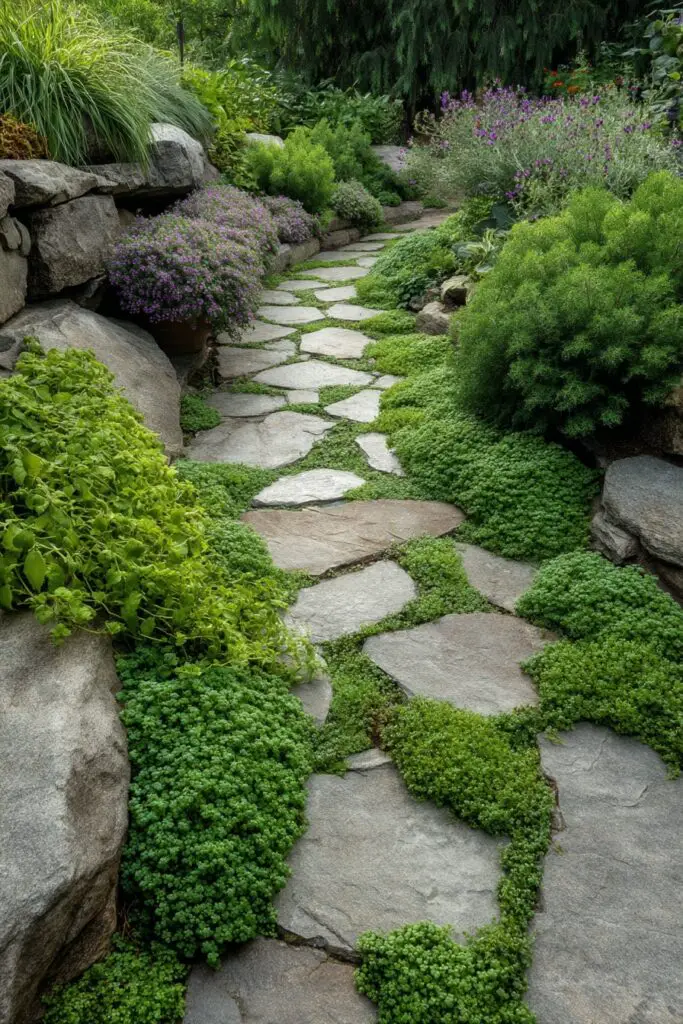
Integrating your flagstone walkway with planting brings life and depth to the space. Situating stones among grasses or low flowering plants—such as creeping thyme or sedum—not only improves aesthetics but also helps with maintenance by reducing visible bare earth.
This design choice encourages people to meander slowly through your garden, admiring textures and colors as they go. It’s a great way to create a “living path” that feels part of the landscape rather than an afterthought.
Conclusion
A flagstone walkway has the power to connect different areas of your outdoor space beautifully and practically. Whether you prefer a classic formal path, a quirky mosaic design, or a soft, plant‑lined route, these flagstone walkway ideas offer inspiration for paths that suit a variety of garden styles.