
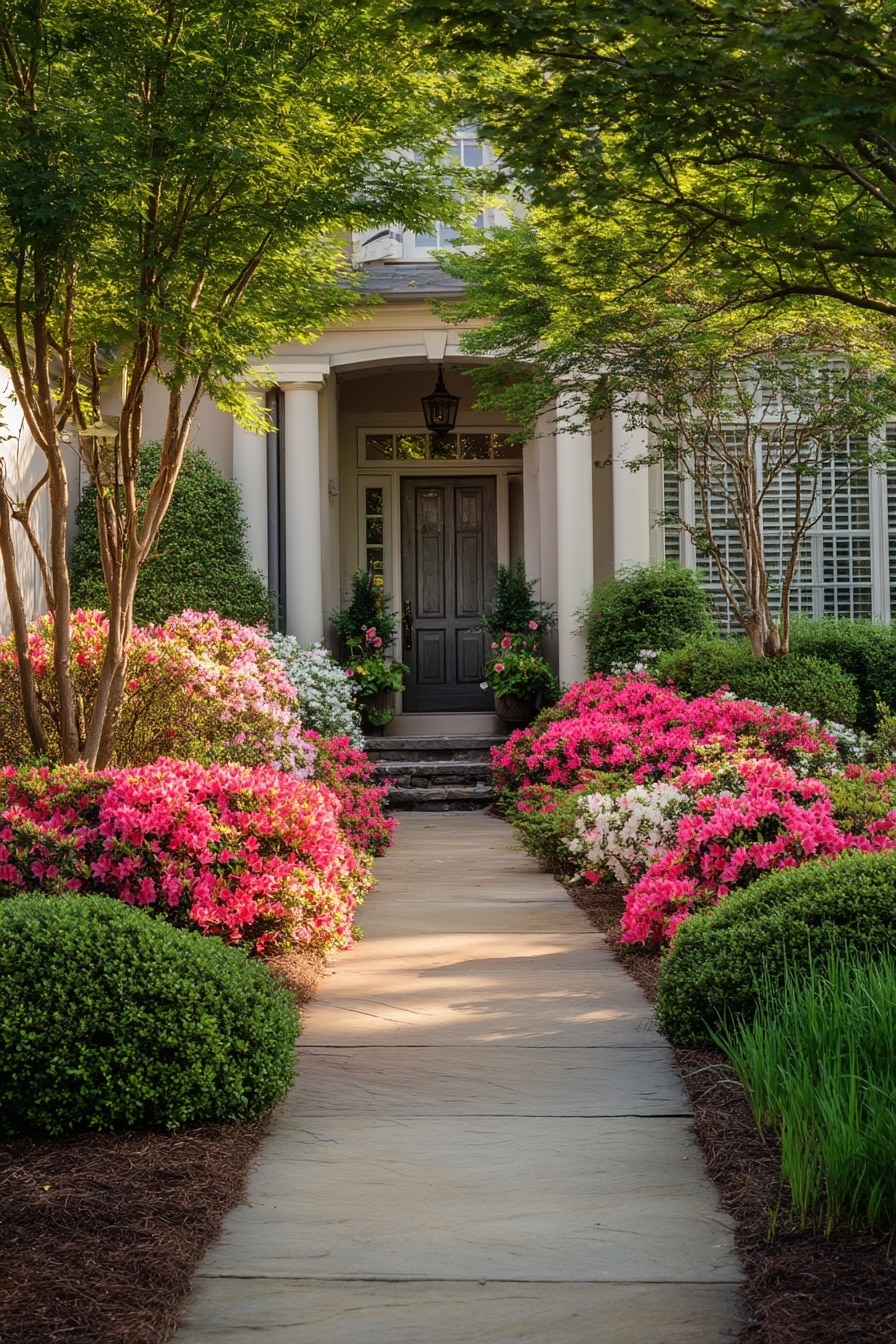
Azaleas landscaping is one of the most effective ways to add long-lasting color and structure to your garden. These flowering shrubs are known for their vibrant blooms and ability to thrive in a variety of outdoor settings.
With the right placement and care, azaleas can become a reliable feature that returns year after year. Whether you want to create a bold focal point or soften the edges of your yard, azaleas landscaping offers flexible design options for both small and large spaces.
Below are five practical ways to use azaleas in your landscape while keeping your garden visually appealing throughout the seasons.
Table of Contents
1. Use Azaleas as Foundation Plantings

Planting azaleas along the base of your home creates a structured and polished look. This is one of the most common azaleas landscaping techniques because it frames your house beautifully.
Azaleas work well in foundation beds due to their dense growth and seasonal color.
Tips for success:
- Choose varieties that match your home’s scale
- Space plants to allow for mature growth
- Use mulch to retain moisture
This approach adds curb appeal while keeping your landscape neat and organized
2. Create Colorful Garden Borders
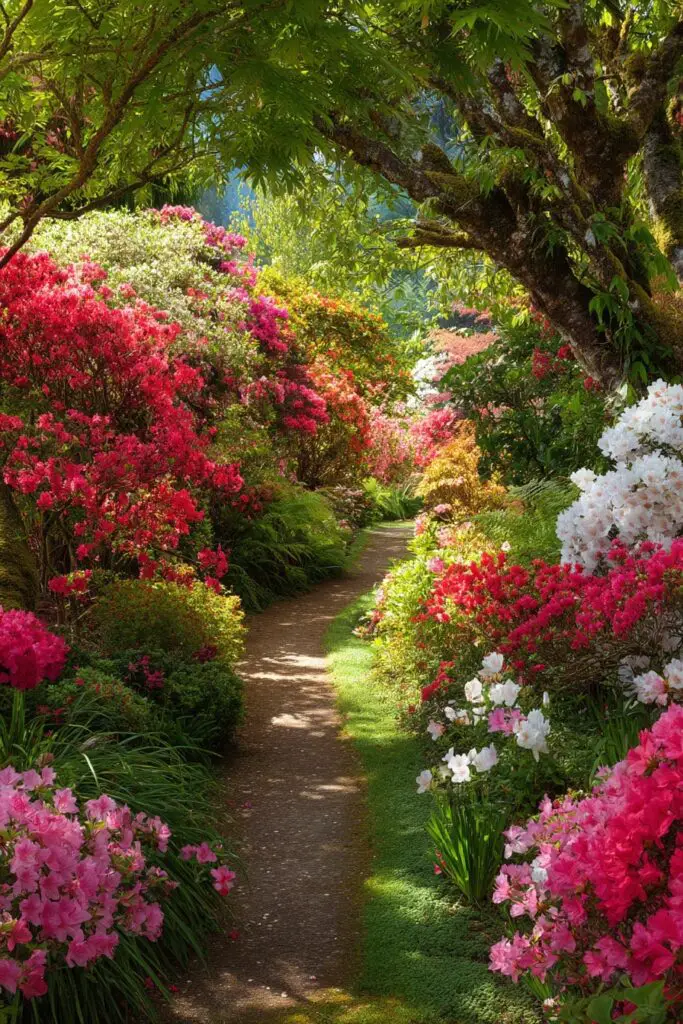
Azaleas make excellent border plants, especially when planted in rows or clusters. Their bright blooms can define walkways, driveways, or garden edges.
Using azaleas landscaping for borders helps guide the eye and adds a sense of flow to your yard.
Best practices:
- Mix early and late-blooming varieties
- Keep spacing consistent for a uniform look
- Pair with low-growing plants for contrast
This method ensures continuous color and structure throughout the growing season.
3. Design a Woodland Garden Setting
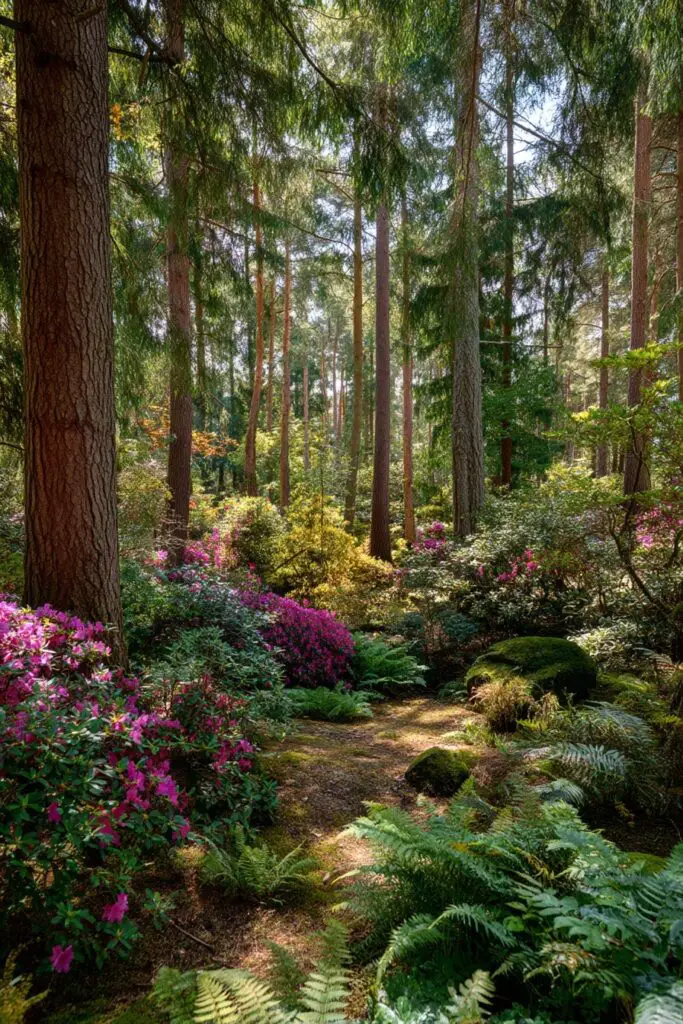
Azaleas naturally thrive in partially shaded environments, making them perfect for woodland-style gardens.
In azaleas landscaping, this approach creates a more relaxed and natural feel.
How to achieve this look:
- Plant under trees with filtered sunlight
- Combine with ferns and shade-loving plants
- Use organic mulch like bark or leaves
This setting mimics their natural habitat and encourages healthy growth.
4. Highlight Entryways and Pathways
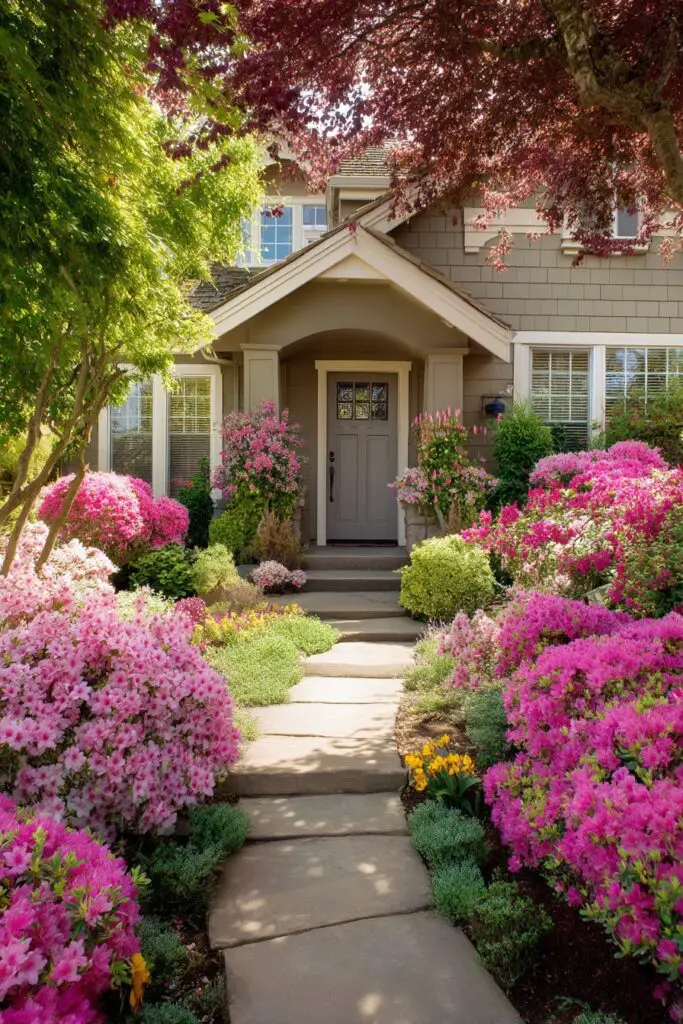
Placing azaleas near entrances or along pathways creates a welcoming atmosphere. Their colorful blooms draw attention and make your outdoor space feel inviting.
This type of azaleas landscaping works well for both front yards and backyard gardens.
Design ideas:
- Use symmetrical planting near doorways
- Line pathways with evenly spaced shrubs
- Choose colors that complement your home
This setup enhances both beauty and functionality.
5. Combine Azaleas with Other Plants for Layered Design
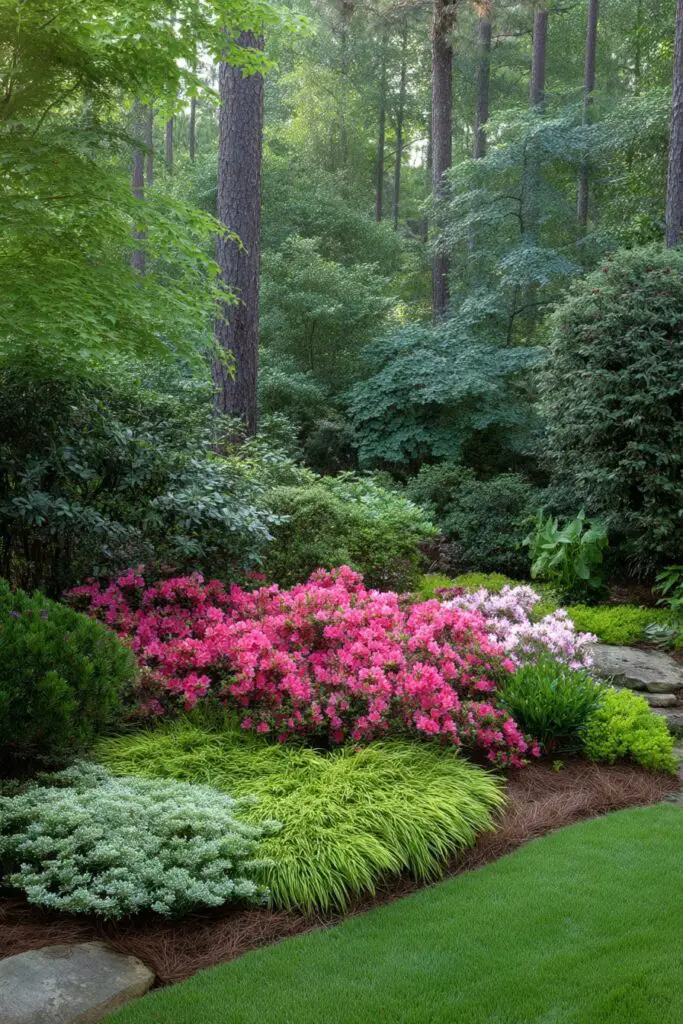
Layering azaleas with other plants adds depth and variety to your landscape. This technique prevents your garden from looking flat or one-dimensional.
With azaleas landscaping, combining different plant heights creates a balanced and dynamic look.
Plant pairing ideas:
- Taller shrubs behind azaleas
- Ground covers in front
- Evergreen plants for year-round structure
This layered approach keeps your garden interesting even when azaleas are not in bloom.
Conclusion
Azaleas landscaping provides a reliable and visually striking way to enhance your outdoor space. From foundation plantings to woodland gardens, these shrubs offer versatility and seasonal beauty.
By choosing the right placement and maintaining proper care, you can enjoy vibrant blooms year after year while keeping your landscape balanced and inviting.