
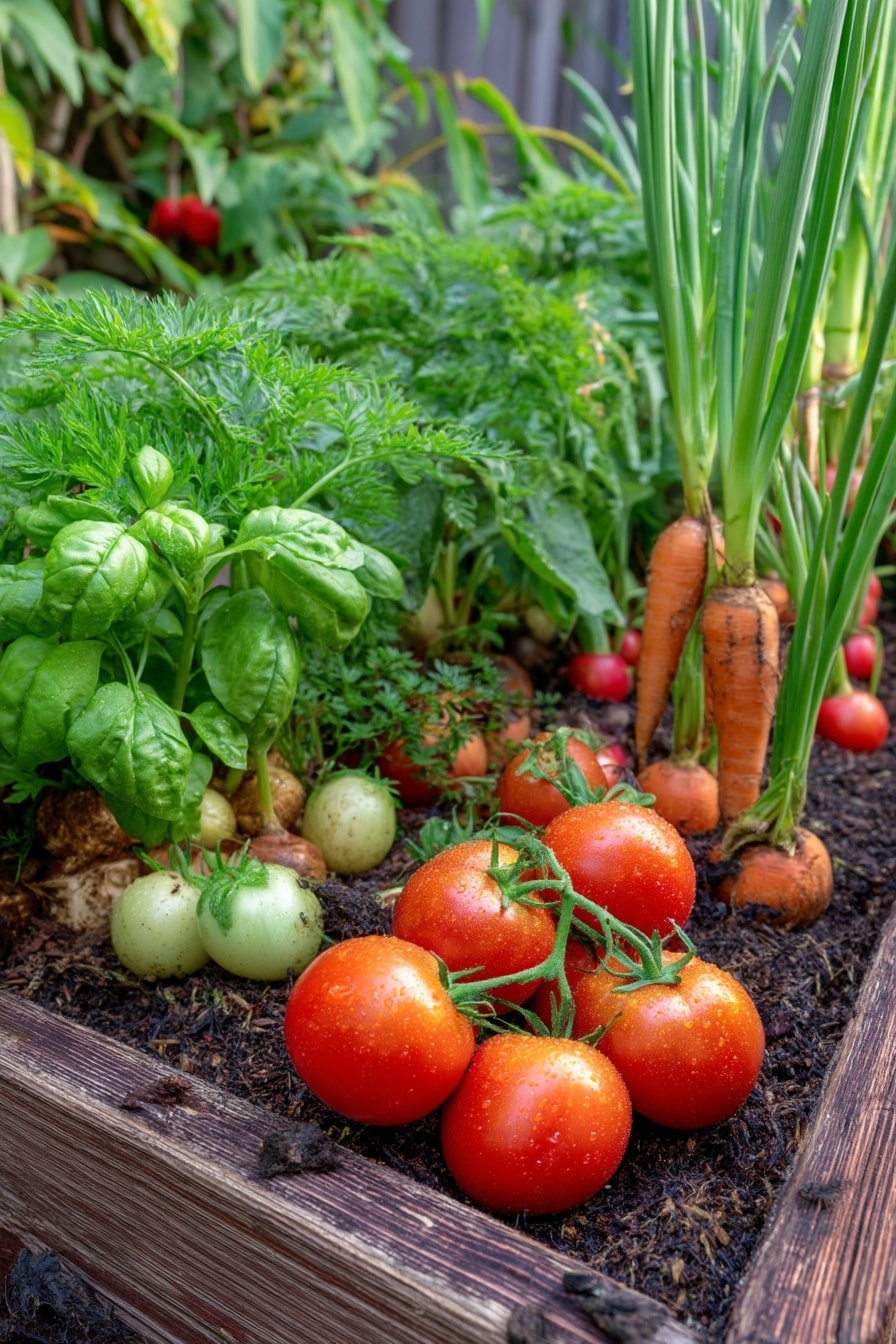
Garden bed layout planning is one of the most important steps when designing a raised bed vegetable garden. A thoughtful layout helps maximize growing space, improve plant health, and make gardening tasks easier throughout the season.
Many beginners build raised beds but overlook how the planting arrangement affects sunlight, airflow, and harvest efficiency. With a well-designed garden bed layout, you can grow more vegetables in a smaller space while keeping the garden organized and easy to maintain.
In this guide, you’ll learn practical tips for creating a raised bed garden layout that works well for beginners. From choosing the right bed size to organizing plant spacing, these ideas will help you design a productive and visually appealing garden.
Table of Contents
Why Garden Bed Layout Matters

A smart garden bed layout improves how your plants grow and how easily you can care for them. Without a clear layout plan, plants may compete for space, sunlight, and nutrients.
Designing a thoughtful layout can help you:
- Maximize available garden space
- Improve air circulation between plants
- Reduce the spread of pests and disease
- Make watering and harvesting easier
- Keep your garden visually organized
A well-planned garden bed layout also helps you rotate crops from year to year, which supports healthier soil and better vegetable yields.
1. Choose the Right Raised Bed Size

The size of each bed plays a big role in a successful garden bed layout.
Ideal bed width
Most raised beds are about 3 to 4 feet wide. This allows you to reach the center of the bed from either side without stepping on the soil.
Bed length
Raised beds can vary in length depending on your space. Many gardeners prefer beds that are 6 to 8 feet long, but shorter beds also work well in small gardens.
Bed height
Typical raised beds range from 10 to 18 inches tall. Deeper beds allow plant roots to grow comfortably while improving drainage.
Choosing the right bed dimensions makes your garden bed layout both practical and easy to maintain.
2. Plan Walkways Between Garden Beds
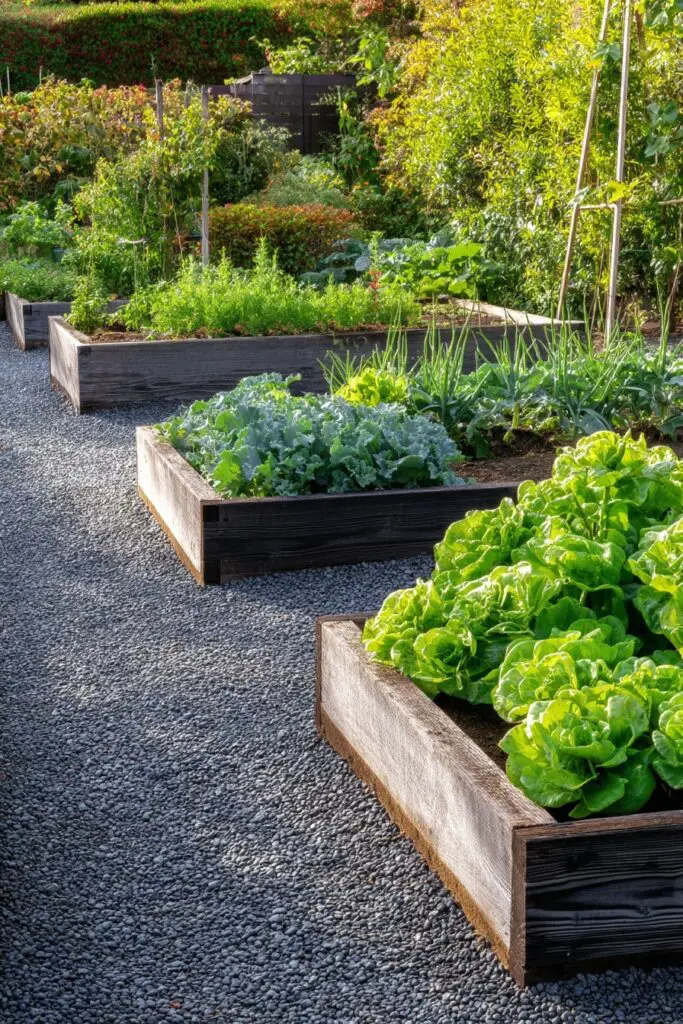
Walkways are often overlooked in a garden bed layout, but they are essential for easy garden access.
Recommended walkway width
Paths should be at least 18 to 24 inches wide so you can comfortably move between beds.
Path materials
Popular walkway materials include:
- Gravel
- Wood chips
- Straw mulch
- Stepping stones
Clear walkways keep your garden bed layout tidy and prevent soil compaction caused by walking directly on the beds.
3. Arrange Plants by Height
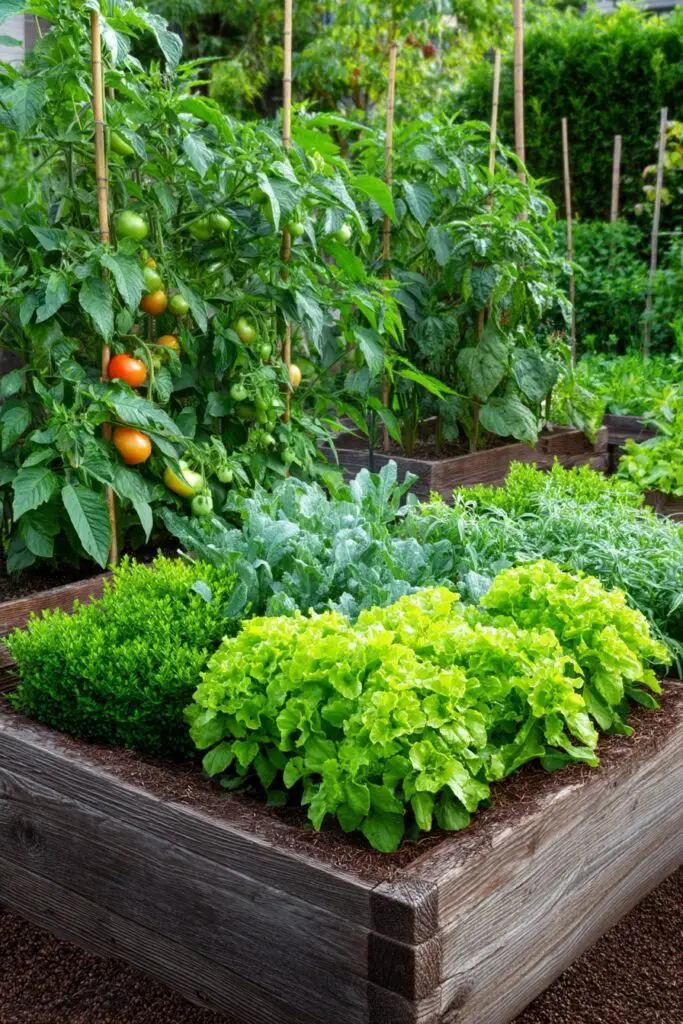
Plant height plays an important role when organizing a garden bed layout.
Taller plants
Place taller crops where they will not block sunlight from smaller plants. In most gardens, tall plants work best on the north side of the bed.
Examples include:
- Tomatoes
- Corn
- Sunflowers
- Trellised beans
Medium plants
These can be planted in the middle area of the bed:
- Peppers
- Eggplant
- Bush beans
Short plants
Low-growing crops work best near the front edge:
- Lettuce
- Spinach
- Radishes
- Herbs
This layered approach helps sunlight reach all plants in your garden bed layout.
4. Use Companion Planting
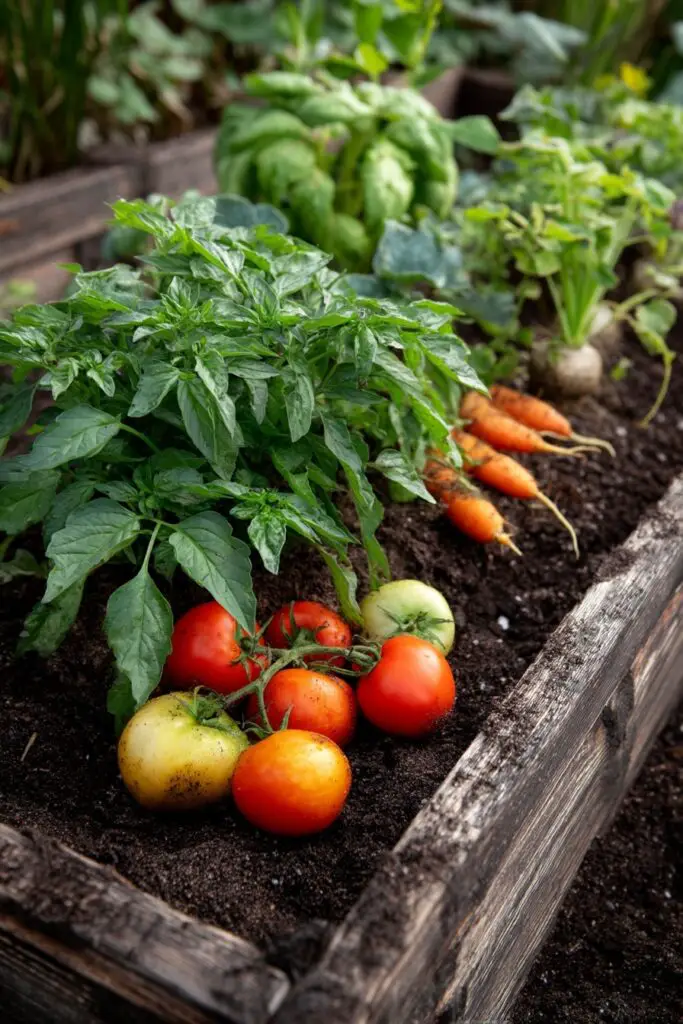
Companion planting is another helpful strategy for improving your garden bed layout.
Certain plants grow better when placed near compatible neighbors.
Helpful plant combinations
Some popular companion plant pairings include:
- Tomatoes with basil
- Carrots with onions
- Cucumbers with dill
- Lettuce with radishes
These combinations can improve plant growth and reduce pest problems.
Using companion planting techniques helps your garden bed layout stay productive while supporting a balanced garden ecosystem.
5. Leave Space for Crop Rotation
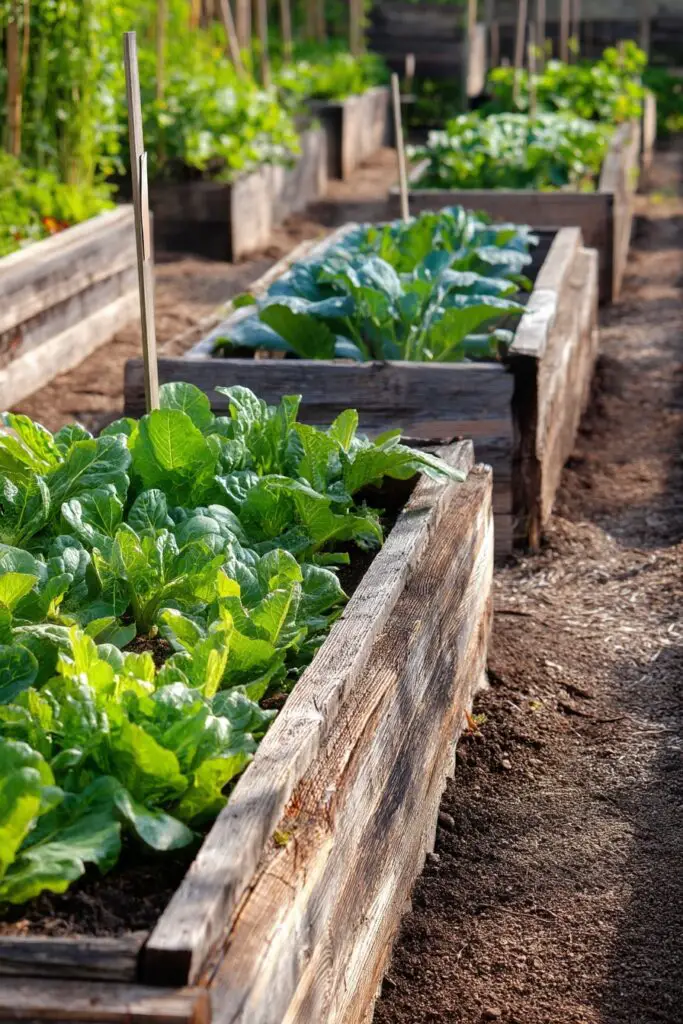
Crop rotation is an important part of maintaining a healthy garden bed layout over time.
Growing the same plants in the same location every year can weaken soil quality and attract pests.
Simple crop rotation plan
Rotate plant families each season, such as:
- Leafy greens
- Root vegetables
- Legumes
- Fruit-bearing crops
Keeping a simple record of your garden bed layout each year makes crop rotation easier and helps maintain soil fertility.
Tips for Designing a Beginner-Friendly Garden Bed Layout
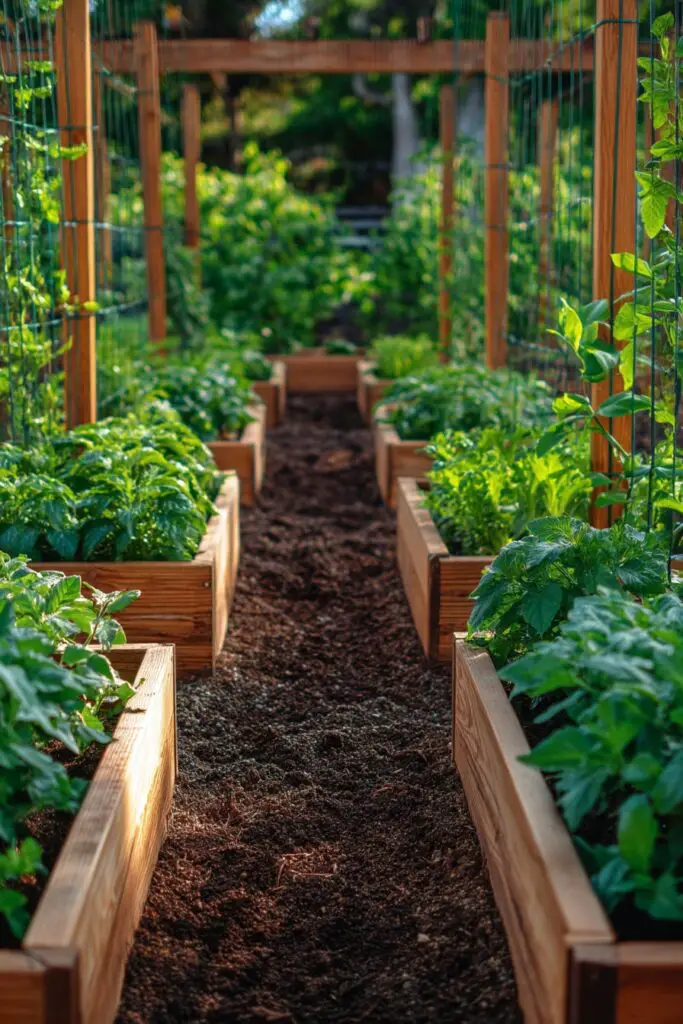
Creating a successful garden bed layout does not need to be complicated. A few simple design principles can make your garden much easier to manage.
Keep beds accessible
Avoid making beds too wide so you can easily reach all plants.
Leave room for expansion
If space allows, plan extra areas where additional beds can be added in the future.
Group similar plants
Grouping plants with similar watering and sunlight needs makes care easier.
Add vertical growing space
Trellises and cages can help maximize productivity in a compact garden bed layout.
Vegetables That Grow Well in Raised Beds
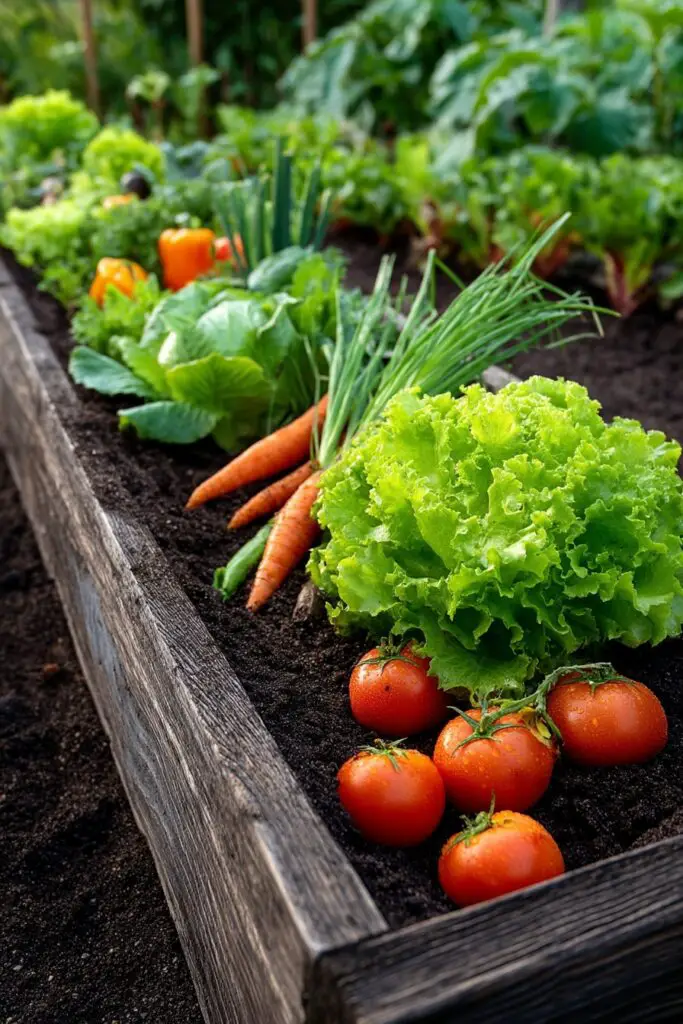
Many vegetables thrive in a well-designed garden bed layout.
Popular raised bed vegetables
Some great options include:
- Tomatoes
- Peppers
- Lettuce
- Carrots
- Cucumbers
- Spinach
These plants grow well in loose, well-drained soil, which raised beds provide.
Conclusion
Garden bed layout planning plays a key role in building a successful raised bed vegetable garden. By choosing the right bed size, leaving room for walkways, organizing plants by height, and using companion planting techniques, gardeners can create a productive and organized growing space.
A well-designed layout also supports healthier plants and simplifies everyday garden tasks such as watering, harvesting, and crop rotation. With thoughtful planning, even beginner gardeners can design a raised bed garden that produces fresh vegetables and looks beautiful throughout the growing season.