
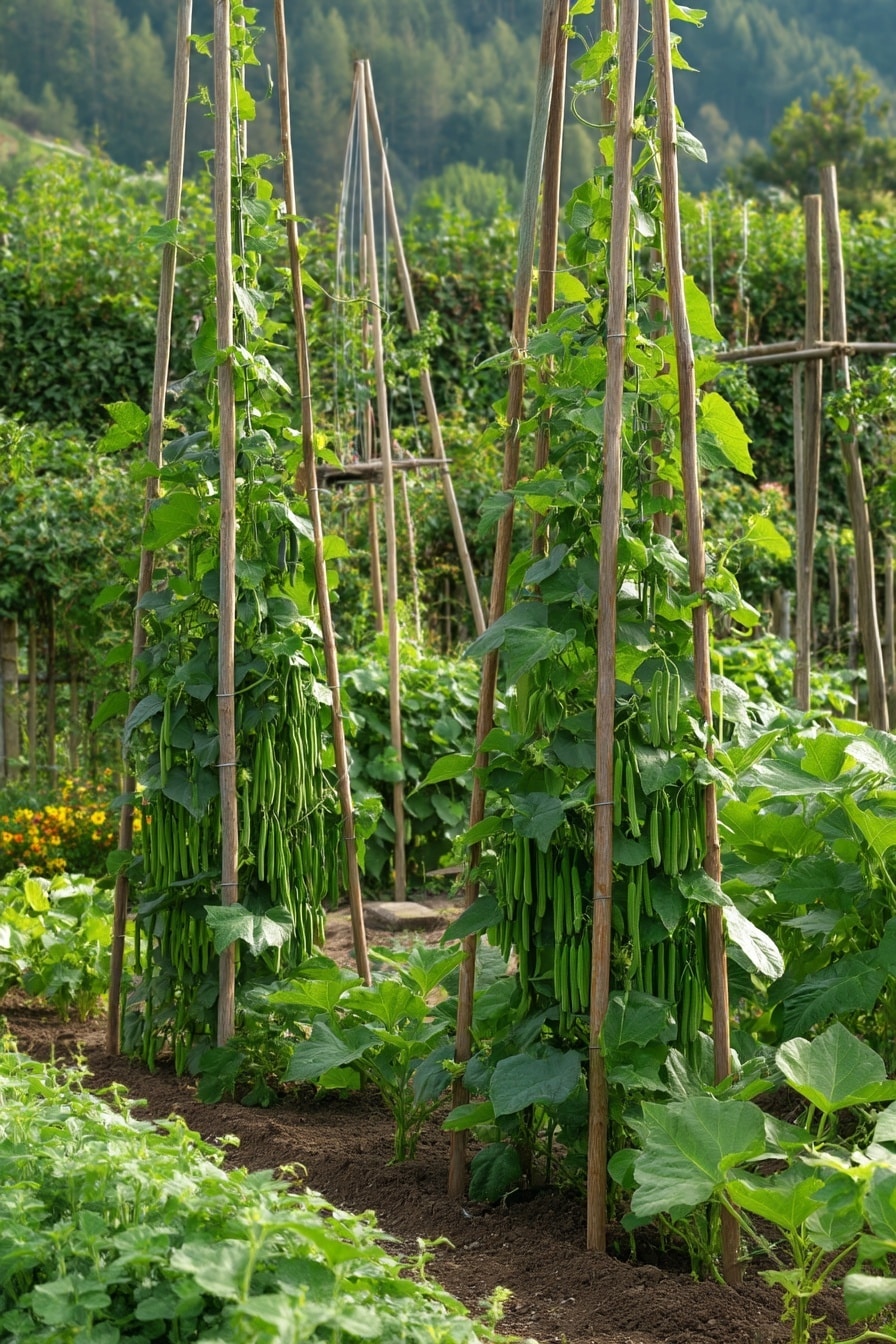
Garden layout planning is one of the most important steps when starting a vegetable garden. A thoughtful garden layout helps you use available space efficiently, improves plant growth, and makes watering, harvesting, and maintenance easier.
Whether you have a large backyard or a small garden area, the right garden layout can turn even a simple space into a productive vegetable garden. Proper spacing, sunlight exposure, and easy access to plants all play a role in creating a successful garden.
These vegetable garden layout ideas work for different types of spaces, including small yards, raised beds, and traditional backyard gardens. By choosing the right design, you can grow more vegetables while keeping your garden organized and easy to maintain.
Table of Contents
1. Traditional Row Garden Layout

A traditional row garden layout is one of the most common vegetable garden designs. In this setup, plants grow in straight rows with walking paths between them.
This layout works best in larger garden spaces where there is plenty of room to move between rows.
Benefits of a Row Garden Layout
- Easy to plant and maintain
- Ideal for large vegetable gardens
- Provides good airflow between plants
- Simple irrigation and watering
This type of garden layout is especially useful for growing crops such as tomatoes, corn, beans, and peppers that need consistent spacing.
Tips for Row Gardens
- Leave enough walking space between rows
- Place taller plants toward the back of the garden
- Keep similar plants grouped together
- Rotate crops each season
With proper spacing and organization, a row-style garden layout can produce a large harvest throughout the growing season.
2. Raised Bed Garden Layout

Raised beds are one of the most popular modern garden layout options. They create defined planting spaces and improve soil conditions.
Raised beds are ideal for gardeners who want better soil control, improved drainage, and easier maintenance.
Advantages of Raised Bed Layouts
- Better soil quality and drainage
- Easier access for planting and harvesting
- Reduced weed growth
- Efficient use of small spaces
A raised bed garden layout also allows gardeners to add compost and nutrient-rich soil directly into the planting area.
Raised Bed Layout Tips
- Keep beds about 3 to 4 feet wide for easy reach
- Leave walking paths between beds
- Use wood, stone, or metal borders
- Grow companion plants together
This structured garden layout works well for both beginners and experienced gardeners.
3. Square Foot Garden Layout

The square foot garden layout is designed to maximize productivity in small spaces. The garden bed is divided into small squares, and each square grows a different plant.
This layout allows gardeners to grow a variety of vegetables in a compact area.
How Square Foot Gardening Works
- Divide the bed into 1-foot squares
- Plant one type of crop per square
- Use close plant spacing
- Harvest regularly for continuous growth
The square foot garden layout is ideal for backyard gardens, patios, and small urban spaces.
Benefits of Square Foot Layouts
- Uses space efficiently
- Easy to organize crops
- Less weeding required
- Great for beginners
With careful planning, this garden layout can produce a surprising amount of vegetables in a limited area.
4. Vertical Garden Layout

A vertical garden layout uses upward space instead of spreading plants across the ground. This is a smart solution when garden space is limited.
Climbing plants grow on structures like trellises, cages, or garden arches.
Plants That Work Well in Vertical Layouts
- Cucumbers
- Tomatoes
- Peas
- Pole beans
- Squash
Using a vertical garden layout keeps plants organized and improves airflow around leaves and stems.
Vertical Gardening Ideas
- Install trellises along garden beds
- Use wall-mounted planters
- Add garden arches for climbing crops
- Train vines on fences
This garden layout is especially helpful for small gardens and patio vegetable setups.
Vertical Gardening Ideas
- Install trellises along garden beds
- Use wall-mounted planters
- Add garden arches for climbing crops
- Train vines on fences
This garden layout is especially helpful for small gardens and patio vegetable setups.
5. Potager Garden Layout
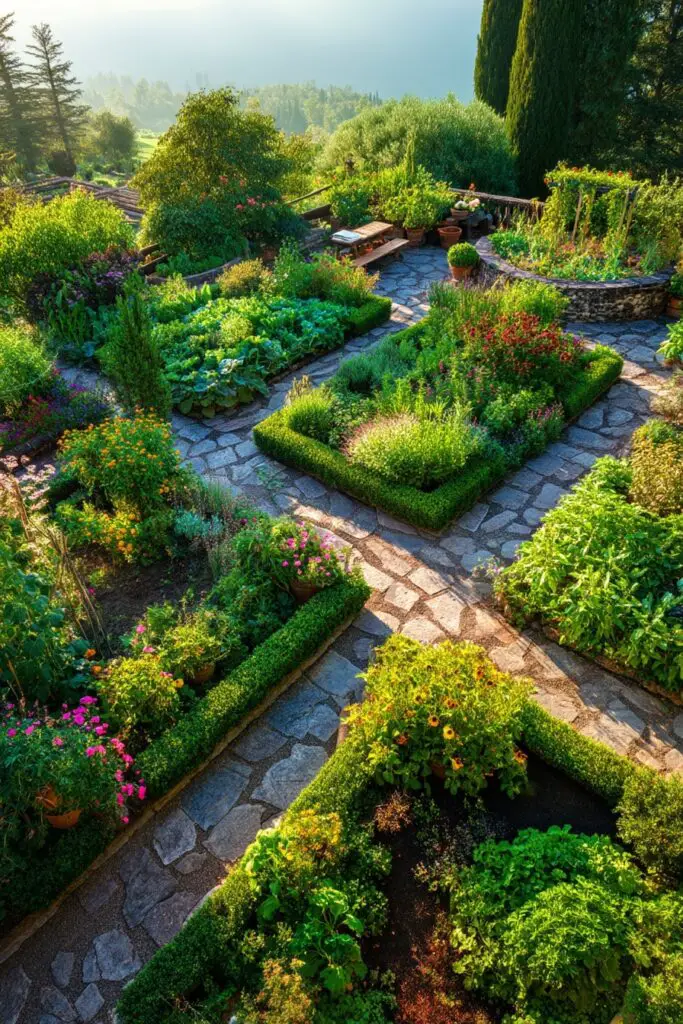
A potager is a decorative vegetable garden layout that blends edible plants with flowers and herbs. This design comes from traditional French kitchen gardens.
Instead of simple rows, plants are arranged in attractive patterns and sections.
Features of a Potager Garden Layout
- Geometric garden beds
- Decorative borders
- Mix of vegetables and flowers
- Paths between planting sections
This type of garden layout combines beauty with productivity. Vegetables grow alongside flowers that attract pollinators and beneficial insects.
Popular Plants for Potager Gardens
- Lettuce
- Kale
- Tomatoes
- Marigolds
- Basil
A potager-style garden layout adds color and charm while still producing fresh vegetables.
Tips for Planning a Garden Layout
Before choosing your vegetable garden layout, it helps to consider a few important factors.
Key Planning Considerations
- Sunlight: Most vegetables need 6–8 hours of sun daily
- Soil quality: Healthy soil supports stronger plants
- Water access: Place gardens near a water source
- Plant spacing: Avoid overcrowding
- Pathways: Ensure easy access for harvesting
Careful planning makes any garden layout easier to manage throughout the season.
Conclusion
A well-designed garden layout helps you grow more vegetables while keeping your garden organized and easy to maintain. Whether you choose traditional rows, raised beds, square foot gardening, vertical designs, or a decorative potager style, the right layout can make gardening more enjoyable and productive.
By selecting the best garden layout for your space and planting needs, you can turn any outdoor area into a thriving vegetable garden.