
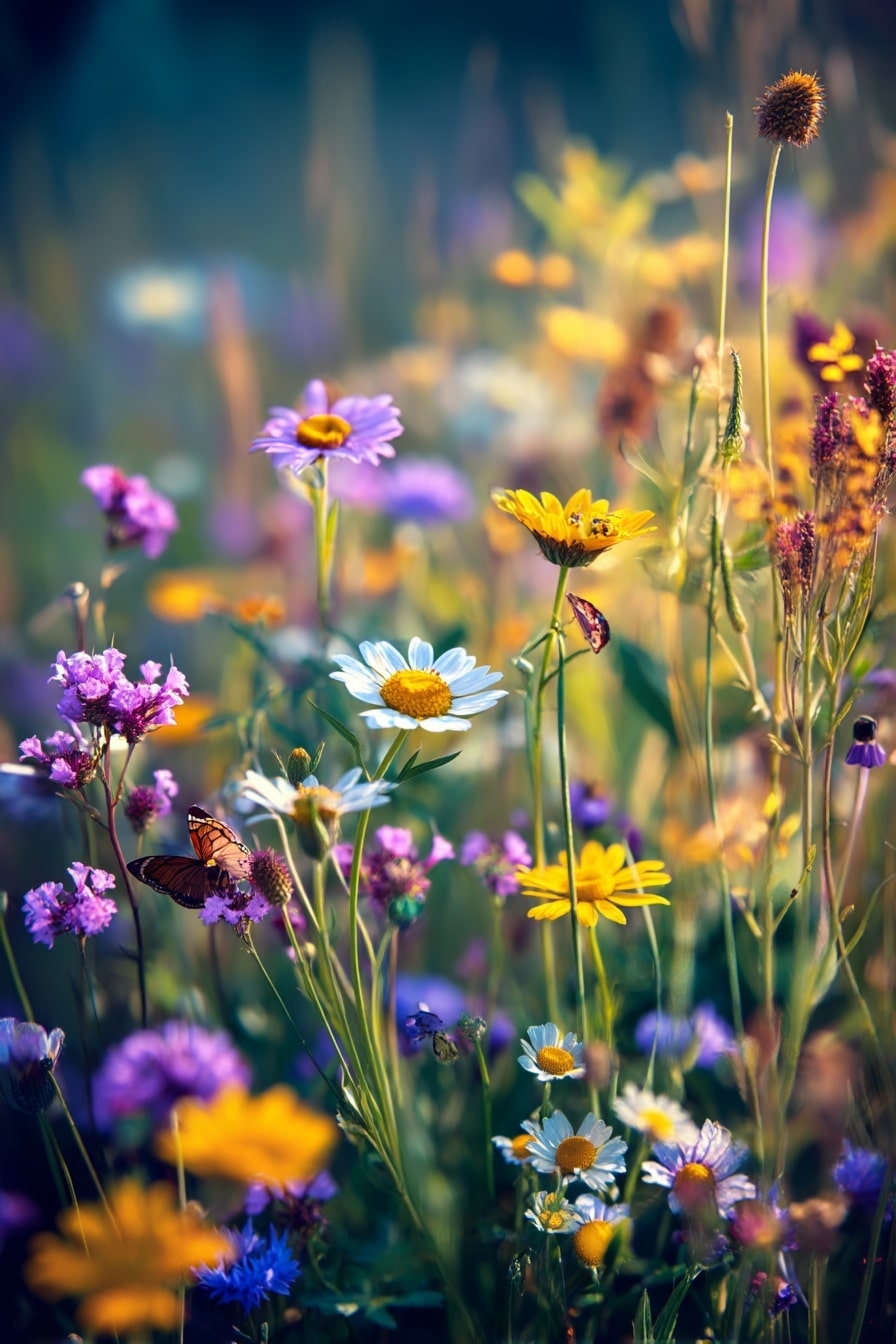
Flower meadow projects are becoming increasingly popular among gardeners who want a natural, pollinator-friendly landscape. A flower meadow offers movement, seasonal color, and ecological value that traditional lawns simply cannot match. But creating a thriving flower meadow requires more planning than scattering a packet of wildflower seeds and hoping for the best.
Before you replace your lawn or dedicate a section of your yard to a flower meadow, there are several practical factors to think through. From soil conditions to long-term maintenance, the success of your flower meadow depends on careful preparation.
Below are five essential things to consider before starting your own flower meadow.
1. Understand Your Soil Conditions

The foundation of any successful flower meadow begins with soil.
Many gardeners assume wildflowers grow anywhere. In reality, most native meadow plants prefer poor, low-fertility soil. Rich, heavily fertilized ground encourages aggressive grasses and weeds that can quickly dominate a young flower meadow.
Test Before You Plant
Before starting your flower meadow:
- Conduct a basic soil test
- Identify nutrient levels
- Check soil drainage
- Determine pH
If your soil is too fertile, you may need to remove the top layer or avoid adding compost. While this feels counterintuitive, lower fertility helps wildflowers compete more effectively.
Drainage Matters
A flower meadow struggles in waterlogged areas. If your site collects standing water, consider improving drainage or choosing moisture-tolerant species.
Matching your soil type to appropriate wildflowers increases the likelihood that your flower meadow will establish successfully.
2. Choose the Right Location
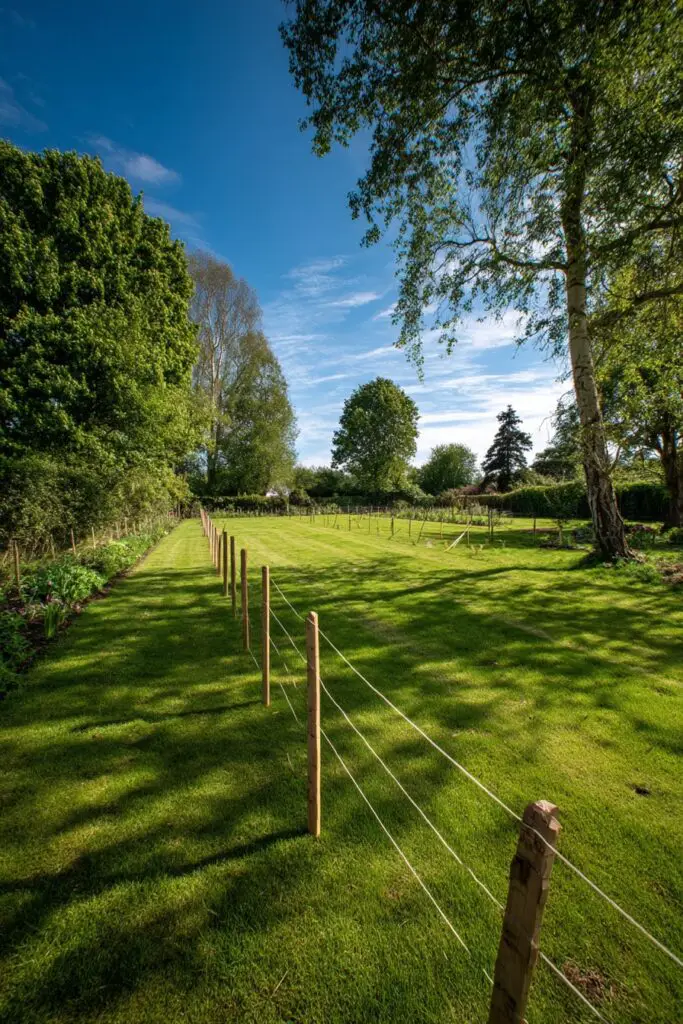
Sunlight plays a critical role in flower meadow success.
Most meadow species require full sun, meaning at least six hours of direct light daily. Shady locations often result in weak growth and fewer blooms.
Assess Sun Patterns
Observe your space throughout the day. Trees, fences, and buildings can cast longer shadows than expected.
If your garden has partial shade, you can still create a flower meadow, but you’ll need a shade-tolerant seed mix specifically designed for lower light conditions.
Consider Scale and Boundaries
Decide how large your flower meadow will be. Smaller urban gardens may benefit from a defined border using edging or pathways. Larger properties can allow the flower meadow to blend more naturally into surrounding landscapes.
Clear boundaries make the space look intentional rather than neglected.
3. Select Native and Climate-Appropriate Species
The plant selection stage determines whether your flower meadow thrives for years or struggles after one season.
Native plants are typically the best choice because they:
- Adapt well to local climate conditions
- Support pollinators and wildlife
- Require less supplemental watering
- Resist local pests and diseases
Avoid Generic Seed Mixes
Many commercial wildflower mixes contain non-native or short-lived annual species. While they provide quick color, they may not create a sustainable flower meadow.
Instead, look for region-specific mixes that include:
- Native grasses
- Perennial wildflowers
- A blend of early, mid, and late bloomers
A well-balanced mix ensures your flower meadow provides color and habitat across multiple seasons.
4. Prepare the Ground Properly
One of the biggest reasons a flower meadow fails is poor site preparation.
Wildflower seeds struggle to compete with established turfgrass and weeds. Simply scattering seeds over an existing lawn rarely works.
Remove Existing Vegetation
To establish a flower meadow, you may need to:
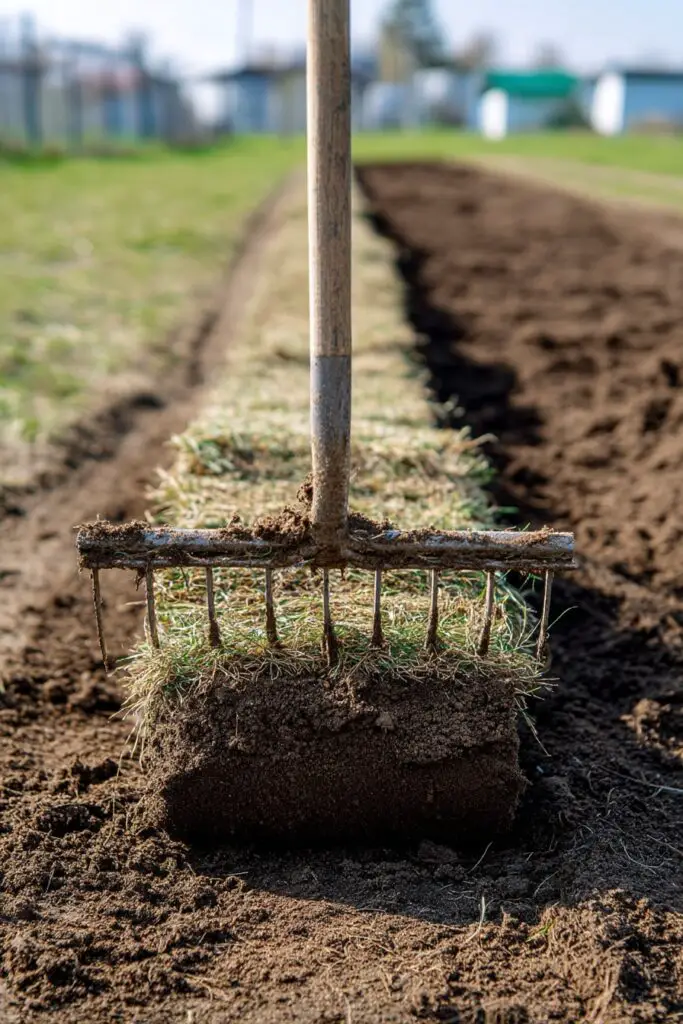
- Strip sod manually
- Solarize the area with clear plastic
- Smother grass with cardboard and mulch
- Lightly till, depending on soil condition
The goal is to create bare soil with minimal competition.
Sow Seeds Correctly
When planting your flower meadow:
- Scatter seeds evenly
- Press them lightly into the soil
- Avoid burying them too deeply
- Water gently during early establishment
Patience is important. A flower meadow may look sparse in the first year while roots develop beneath the surface.
5. Plan for Ongoing Maintenance
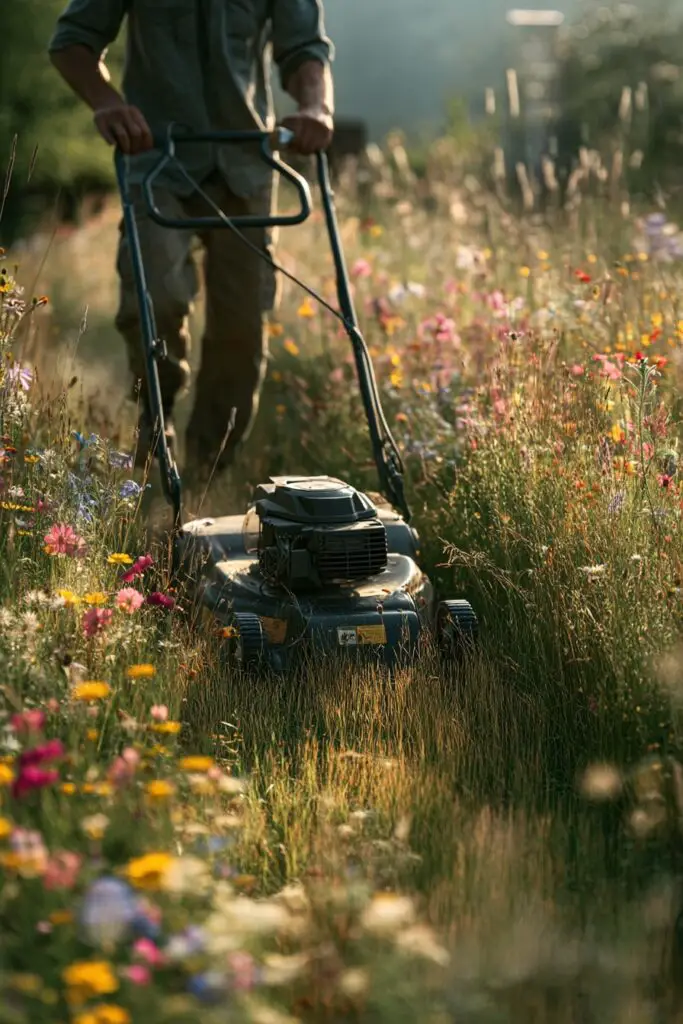
Although a flower meadow requires less mowing than a traditional lawn, it is not maintenance-free.
Understanding long-term care prevents disappointment later.
First-Year Care
In the first growing season, your flower meadow may need:
- Light watering during dry spells
- Occasional weeding of aggressive invaders
- A few strategic mowings to control annual weeds
Cutting back young growth to about 4–6 inches can encourage stronger root development.
Annual Maintenance
Once established, most flower meadow areas require:
- One annual mow in late fall or early spring
- Removal of clippings to prevent soil enrichment
- Monitoring for invasive species
This annual cut helps reseed wildflowers and keeps woody plants from taking over.
A flower meadow evolves over time. Some species will fade while others become more dominant. This shifting balance is natural and part of its charm.
Final Thoughts
Flower meadow projects offer beauty, movement, and ecological value, but they require thoughtful preparation. By understanding your soil, choosing the right location, selecting native plants, preparing the ground carefully, and planning for ongoing care, you set your flower meadow up for long-term success.
A well-established flower meadow rewards patience with seasonal color, wildlife activity, and a landscape that feels alive and dynamic. With proper planning, your flower meadow can become one of the most rewarding features in your garden.