
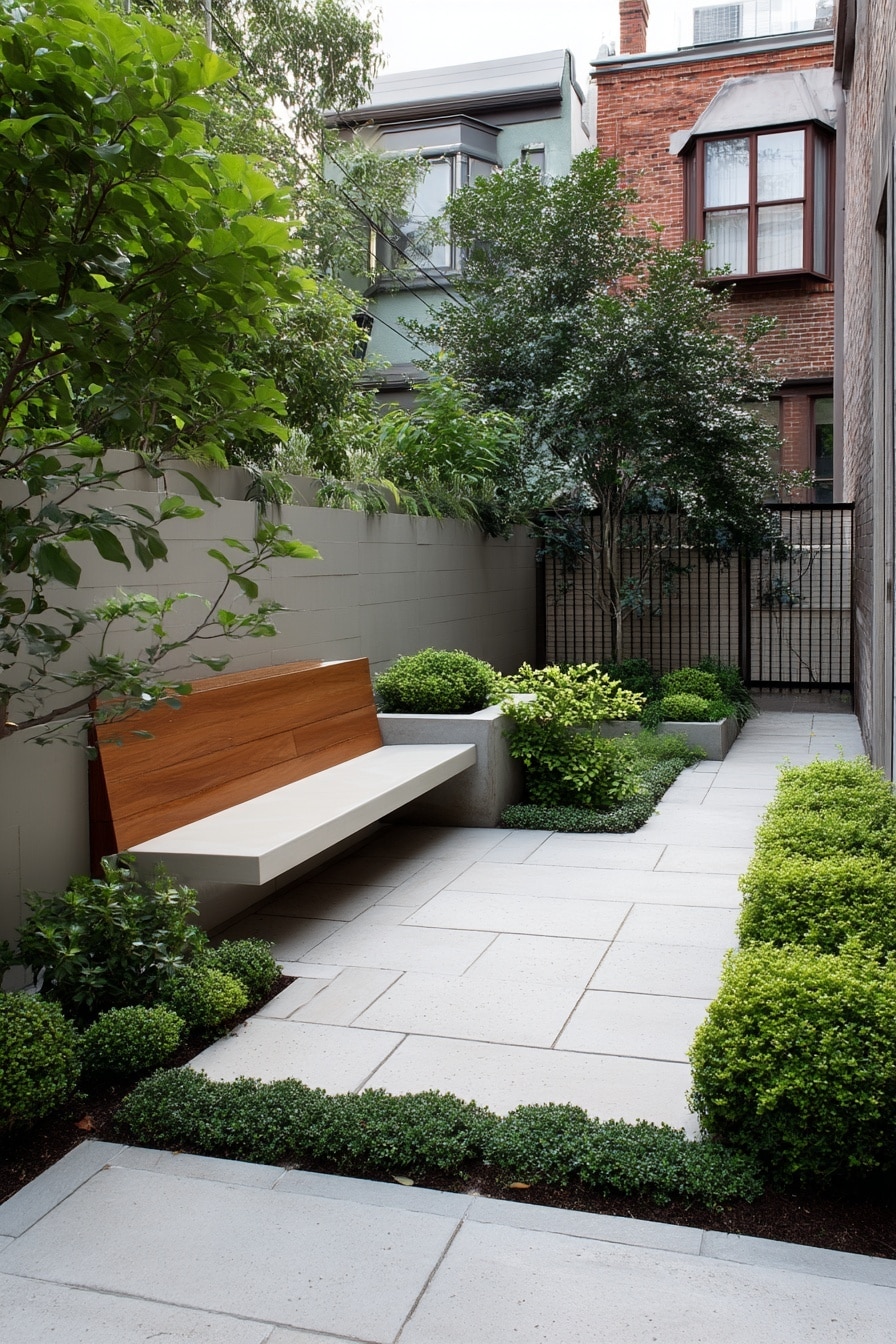
Small backyard spaces may feel limiting at first, but with smart planning and thoughtful layout choices, even the tiniest outdoor plot can become an inviting, functional extension of your home.
From courtyard gardens to multi-zonal arrangements, well-designed layouts make the most of every square foot. In this guide, you’ll find actionable ideas and tips that help you organize seating, plants, paving, and structure in ways that enhance comfort and visual appeal.
Table of Contents
1. Make the Most of Light in a Courtyard Garden

A courtyard layout is a common way to maximize small outdoor space.
Position seating where sunlight lands most of the day, whether that’s morning light for breakfast coffee or warm afternoon rays for lounging. Orienting outdoor furniture toward light can make even shaded walled gardens feel lively and welcoming.
Even if your backyard borders buildings or walls, placing mirrors or light-colored materials can help bounce light around the space to brighten it up further.
2. Use Straight Lines and Structural Features
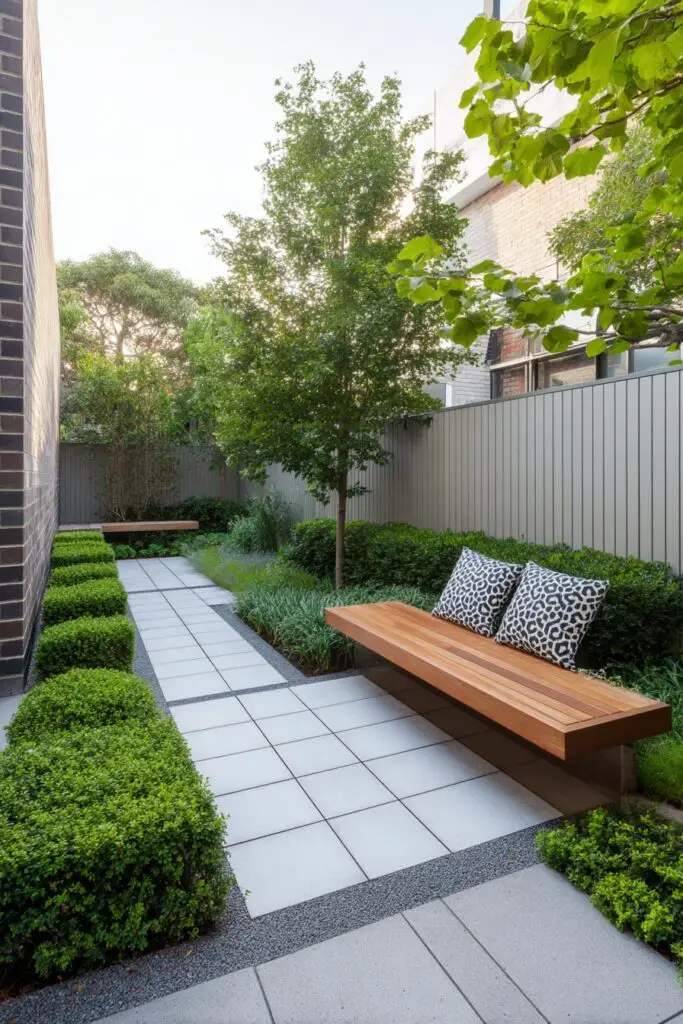
Straight lines and defined paths can visually open up narrow or irregular backyards.
Structures such as built-in seating, linear paving, or a garden fence can guide the eye and help the space feel more spacious.
While curves might work in larger gardens, straight edges paired with strategic planting often add a sense of order in a compact space.
3. Create Defined Zones for Different Activities
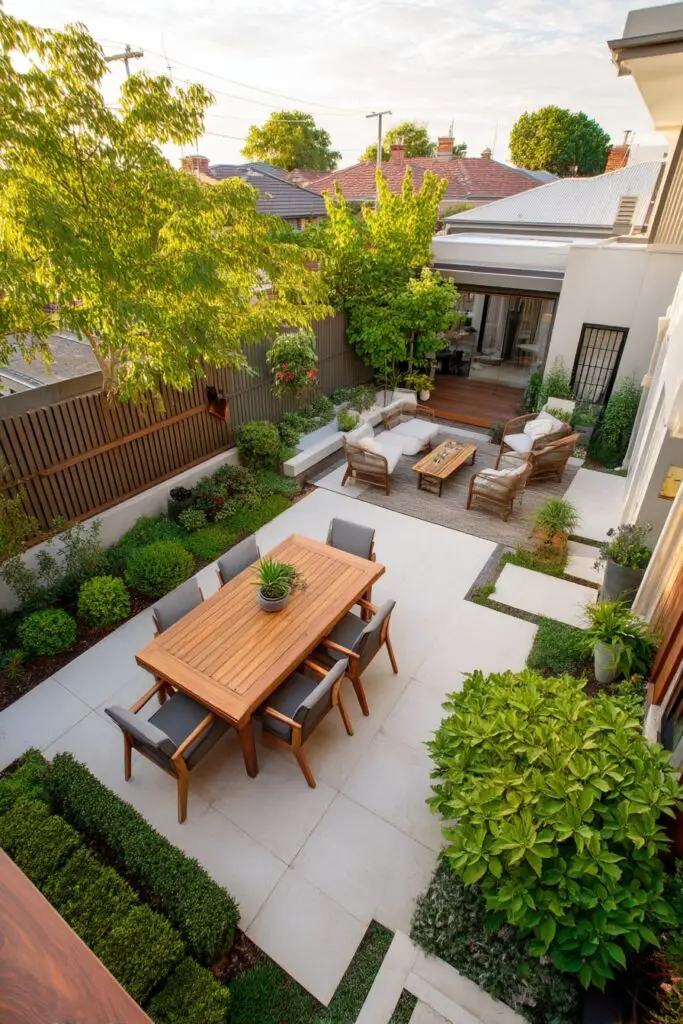
Breaking up a small backyard into distinct zones can paradoxically make it feel larger.
For example, establish a seating area on light paving slabs, a planting zone with soft foliage, and a relaxation or fire-pit nook.
Using different materials or levels helps signal transitions between areas, giving both function and visual depth to the layout.
4. Add Greenery with Vertical Solutions
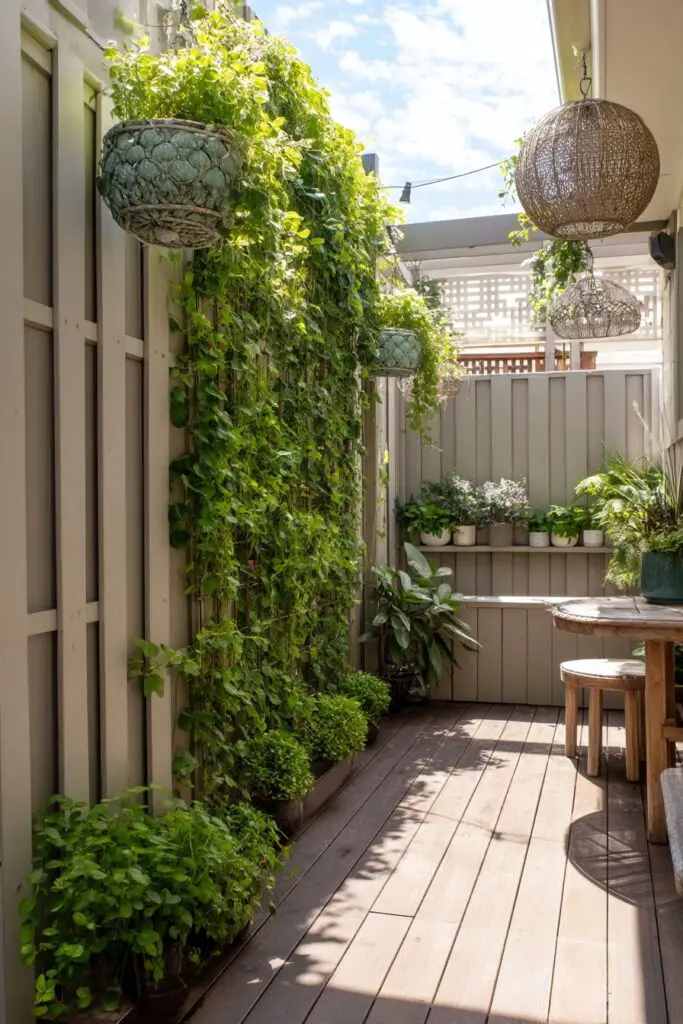
If ground space is limited, think upward.
Adding a living wall with hanging planters or vertical garden pockets brings lush greenery without taking up floor area.
Taller potted trees or shrubs can act as screens for privacy while softening hard landscaping and adding seasonal interest.
5. Choose Small Structural Trees for More Interest
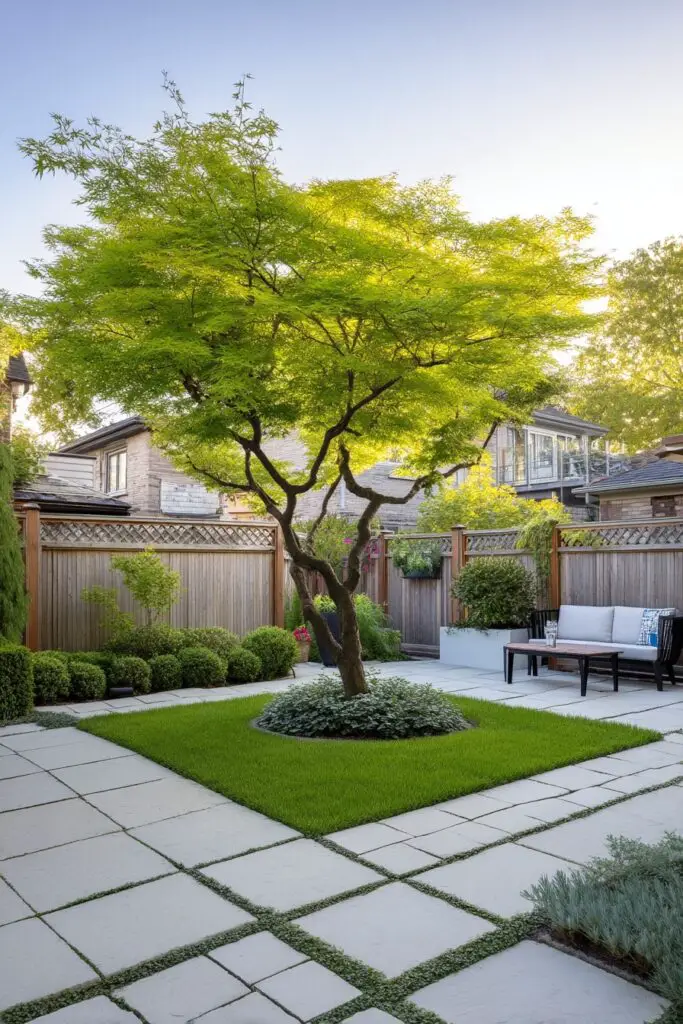
Even small plots can benefit from structural greenery.
Compact trees like Japanese maples, clipped bay trees, or potted olives add dimension, color, and year-round interest to a small backyard.
Positioning a tree at a focal point — such as the end of a path — helps draw the eye outward and gives the space more perceived depth
Layout Ideas for Unique Backyards
Beyond the basics, consider these approaches:
- Sunken or stepped seating creates visual layers that enlarge compact spaces.
- Curved features like a fire pit can soften rigid layouts while adding a central gathering point.
- Split levels help optimize slightly sloping backyard terrain.
Working with levels, materials, and planting wisely allows you to craft a tailored layout that enhances usability and enjoyment in even snug outdoor spaces.
Smart Planning Tips for Small Backyards
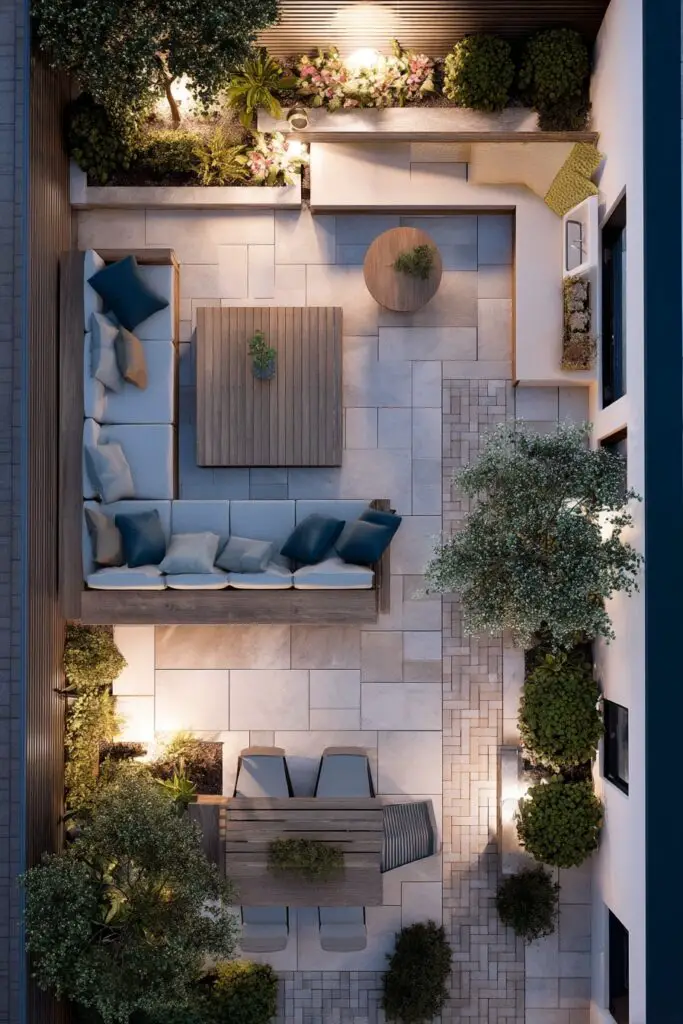
Here are practical ways to boost both function and style:
- Measure your space carefully before designing. Knowing exact dimensions ensures furniture and features fit without crowding.
- Use light-coloured materials to brighten dark corners and visually expand boundaries.
- Integrate planting into structural elements like seating, fences, and planters to unify design and soften edges.
By planning with intention and creativity, small backyard layouts can feel purposeful, personalized, and visually satisfying — no matter the size.
Conclusion
These small backyard layout ideas prove that limited space doesn’t mean limiting design.
With light-sensitive placement, structured zones, vertical greenery, and focal tree features, your outdoor area can feel larger and more inviting.