
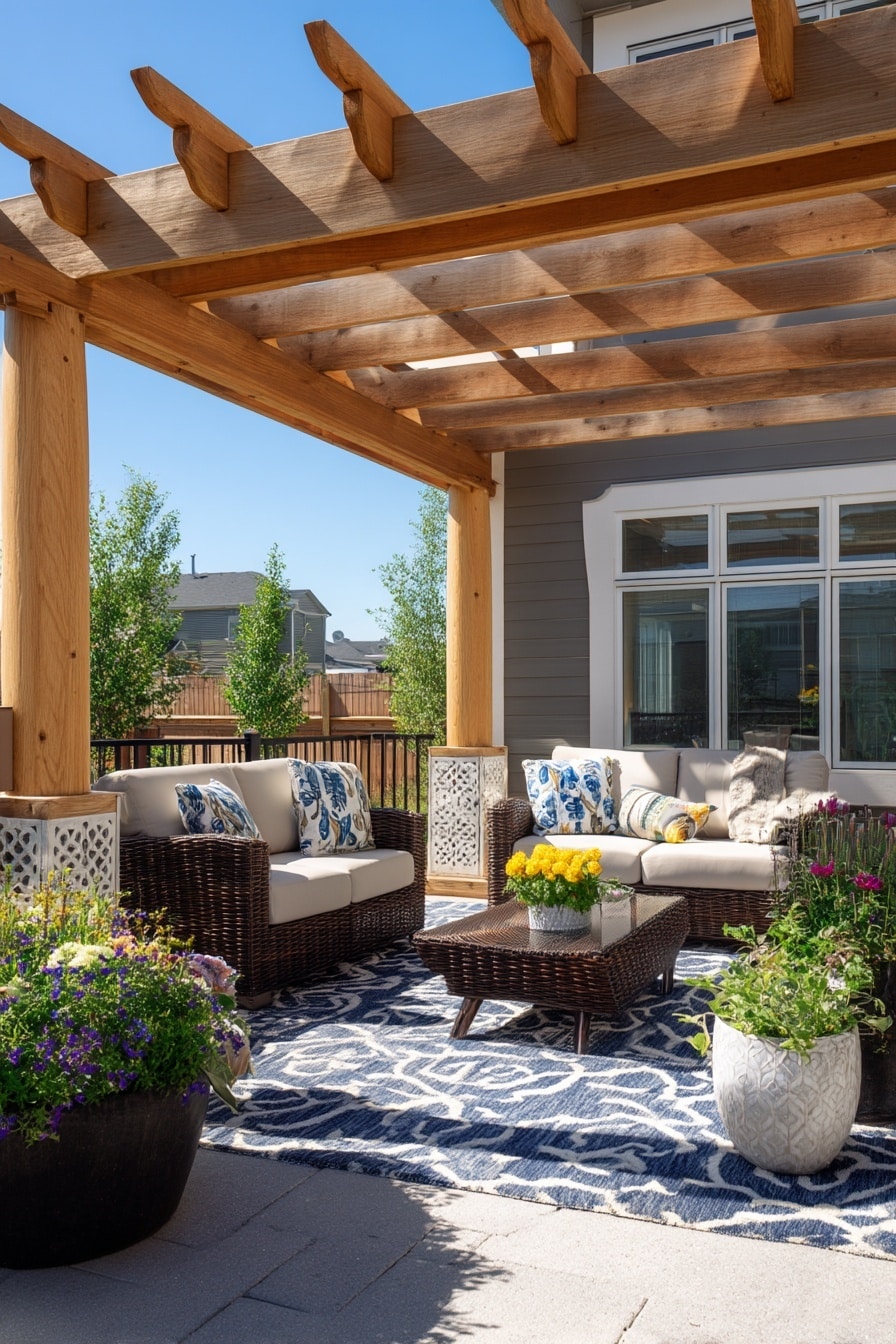
Pergola patio designs can completely transform an ordinary backyard into a functional and stylish outdoor retreat. Whether you want shade for summer afternoons or a defined space for entertaining, the right pergola patio layout makes a noticeable difference.
A thoughtfully planned pergola patio adds structure, visual interest, and comfort to your landscape. From material selection to lighting and plant integration, every detail influences how the space looks and performs.
In this guide, we’ll cover six essential tips to help you design a pergola patio that enhances your outdoor living area while improving long-term value and usability.
Table of Contents
1. Choose the Right Location for Your Pergola Patio

The placement of your pergola patio determines how often you’ll use it and how comfortable it feels throughout the year.
Consider Sun and Shade Patterns
Observe how sunlight moves across your yard during the day. A pergola patio positioned for afternoon shade can make outdoor seating far more comfortable during warmer months.
If full sun exposure is unavoidable, consider adding:
- Retractable canopies
- Climbing vines for natural shade
- Outdoor curtains for adjustable coverage
Think About Accessibility
Your pergola patio should feel like a natural extension of your home. Placing it near a kitchen, living room, or sliding doors improves convenience for entertaining and daily use.
Proper placement sets the foundation for a pergola patio that feels intentional rather than added later.
2. Select Durable Materials for Your Pergola Patio

Material choice plays a major role in how long your pergola patio will last and how much maintenance it requires.
A well-built pergola patio should handle sun exposure, moisture, and seasonal weather changes without constant repairs.
Popular Material Options
Here are common materials used in pergola patio construction:
- Pressure-treated wood – Affordable and widely available
- Cedar or redwood – Naturally resistant to rot and insects
- Vinyl – Low maintenance and clean appearance
- Aluminum – Lightweight and rust-resistant
Each material affects both the look and long-term cost of your pergola patio.
Balance Cost and Maintenance
Wood provides a warm, natural feel but may require sealing or staining over time. Vinyl and aluminum typically need less upkeep, making them practical for homeowners who prefer minimal maintenance.
When selecting materials, consider your climate and how much ongoing care you’re willing to manage. The right choice ensures your pergola patio remains structurally sound and visually appealing for years.
3. Define the Purpose of Your Pergola Patio
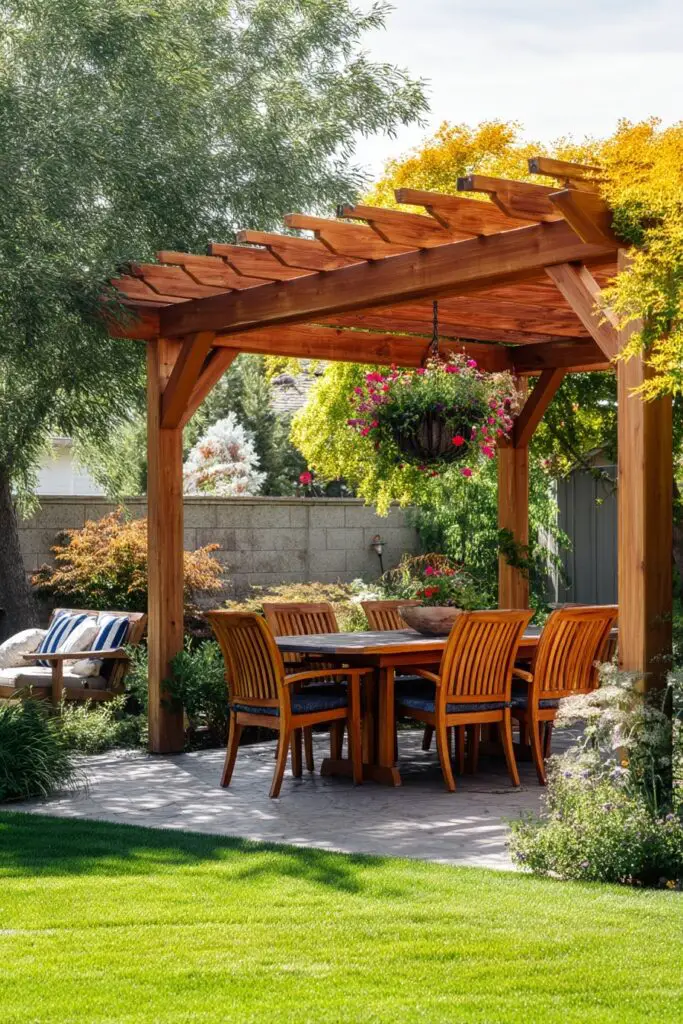
Before finalizing the design, decide how you plan to use your pergola patio. A clear purpose helps guide layout, size, and feature selection.
Some homeowners build a pergola patio primarily for outdoor dining, while others focus on creating a relaxing lounge area. The intended function should shape every design decision.
Common Uses for a Pergola Patio
Your pergola patio might serve as:
- An outdoor dining space
- A seating and conversation area
- A shaded grilling station
- A poolside retreat
- A reading or quiet corner
Each use requires different furniture arrangements and spacing.
Plan for Comfort and Flow
Make sure there is enough room for movement around tables, chairs, or loungers. A cramped pergola patio limits usability and reduces overall enjoyment.
If your site already includes articles under Garden Landscapes, consider internally linking this guide to posts about backyard layout planning or patio flooring ideas. Coordinating these elements ensures your pergola patio integrates smoothly into the larger design.
4. Add Shade Enhancements to Your Pergola Patio
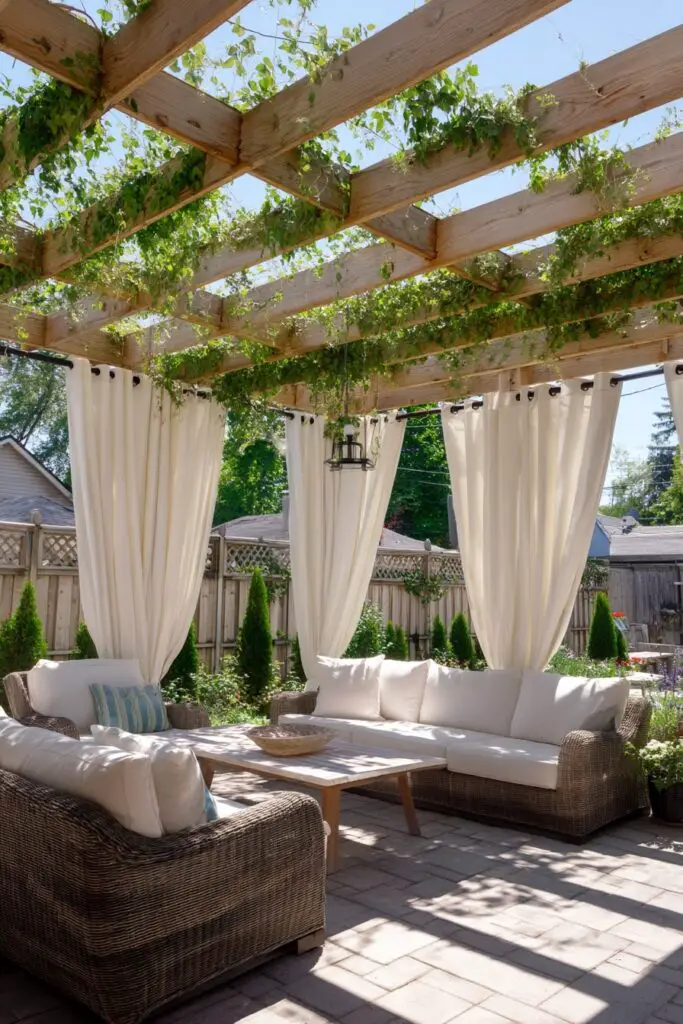
While a pergola patio provides partial shade through its open-beam design, additional coverage often improves comfort during hot or rainy weather.
Enhancing shade allows you to enjoy your pergola patio throughout more seasons.
Shade Options to Consider
You can upgrade your pergola patio with:
- Retractable fabric canopies
- Shade sails
- Adjustable louvers
- Outdoor curtains
- Bamboo roll-down screens
These additions help control sunlight and increase privacy without fully enclosing the space.
Natural Shade with Plants
Climbing plants are another attractive solution. Vines such as wisteria, grapevine, or jasmine can grow across the beams, creating filtered light and a cooler atmosphere.
Adding greenery not only improves shade but also blends the pergola patio into your surrounding garden beds and landscape design.
5. Incorporate Lighting for Evening Use
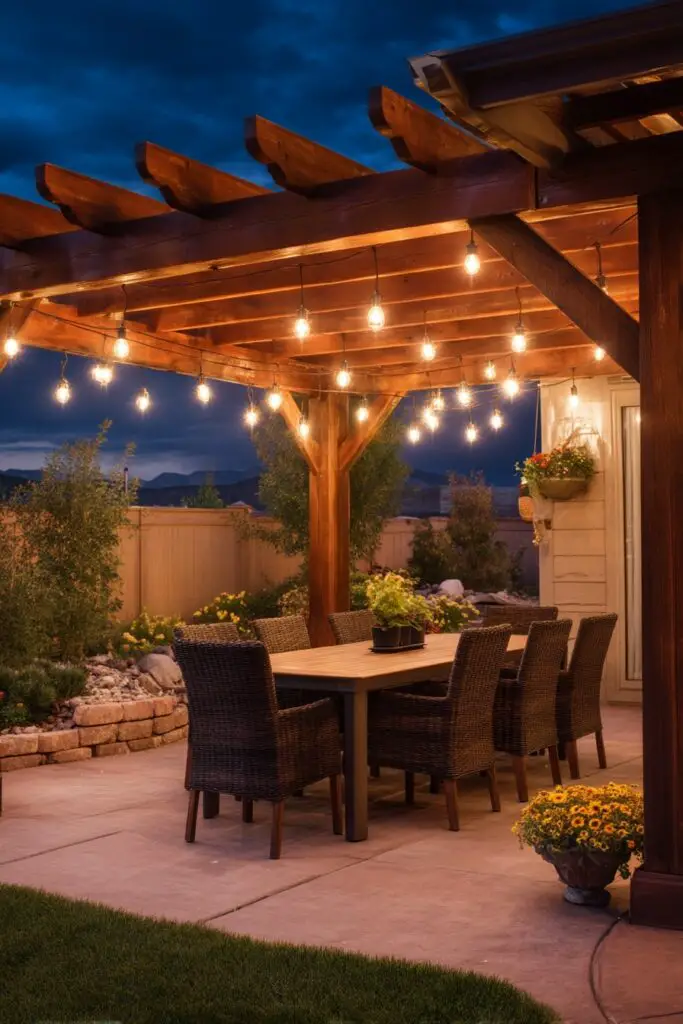
A pergola patio shouldn’t only be enjoyed during daylight hours. Proper lighting extends usability and creates a welcoming atmosphere after sunset.
Thoughtful illumination can turn a simple pergola patio into a warm gathering space.
Popular Lighting Options
Consider adding:
- String lights draped across beams
- LED strip lighting along rafters
- Solar post cap lights
- Lantern-style pendant fixtures
- Recessed lighting for a modern look
Layering different light sources allows you to adjust brightness depending on the occasion.
Focus on Safety and Ambiance
Lighting along pathways leading to your pergola patio improves visibility and reduces tripping hazards. Soft, warm tones create a relaxed mood, while brighter lights are useful for dining or cooking areas.
Electrical planning should be done early in the design phase to avoid exposed wiring or costly retrofits later.
6. Personalize the Design of Your Pergola Patio
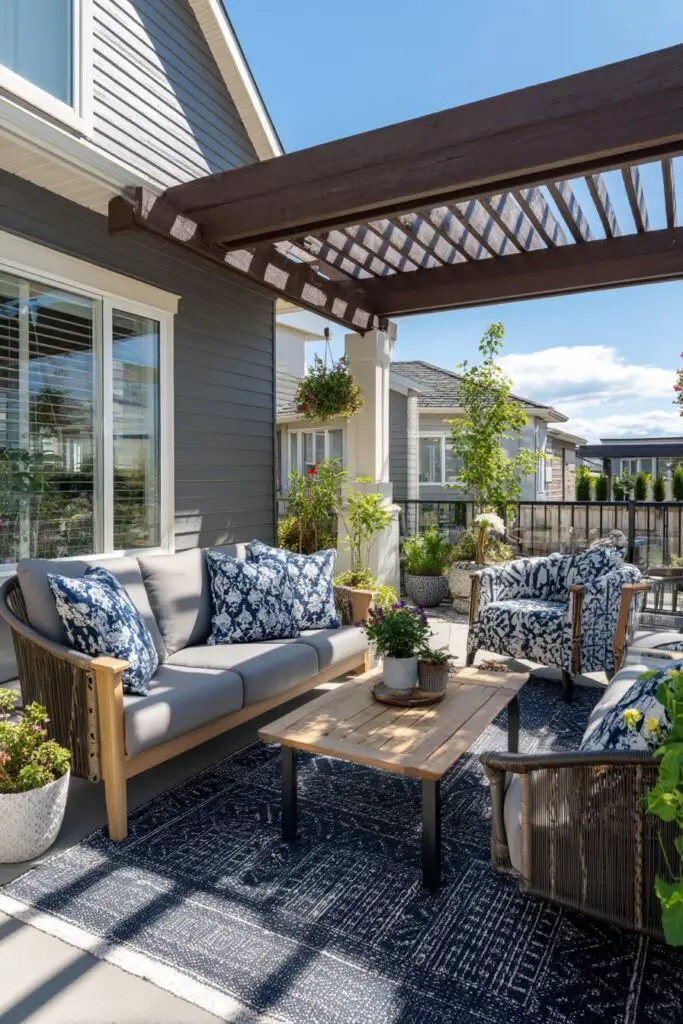
A pergola patio should reflect your style while remaining practical. Small design details can elevate the space and make it feel complete.
Personal touches also help your pergola patio blend naturally with your home’s architecture.
Coordinate with Your Home’s Exterior
Match colors and finishes to your house siding, trim, or roof. A cohesive look ensures your pergola patio feels like part of the original design.
You can enhance visual appeal by:
- Staining wood to complement decking
- Choosing neutral tones for a modern finish
- Adding decorative beam ends
- Installing stone or brick column bases
Add Comfort Features
Comfort elements make a pergola patio more inviting:
- Outdoor rugs
- Cushioned seating
- Weather-resistant throw pillows
- Ceiling fans for airflow
Conclusion
Pergola patio planning requires careful attention to location, materials, purpose, shade, lighting, and personalization. When these elements work together, your outdoor space becomes more functional and visually appealing.
A well-designed pergola patio enhances comfort, increases property value, and creates a defined gathering area for family and guests.