
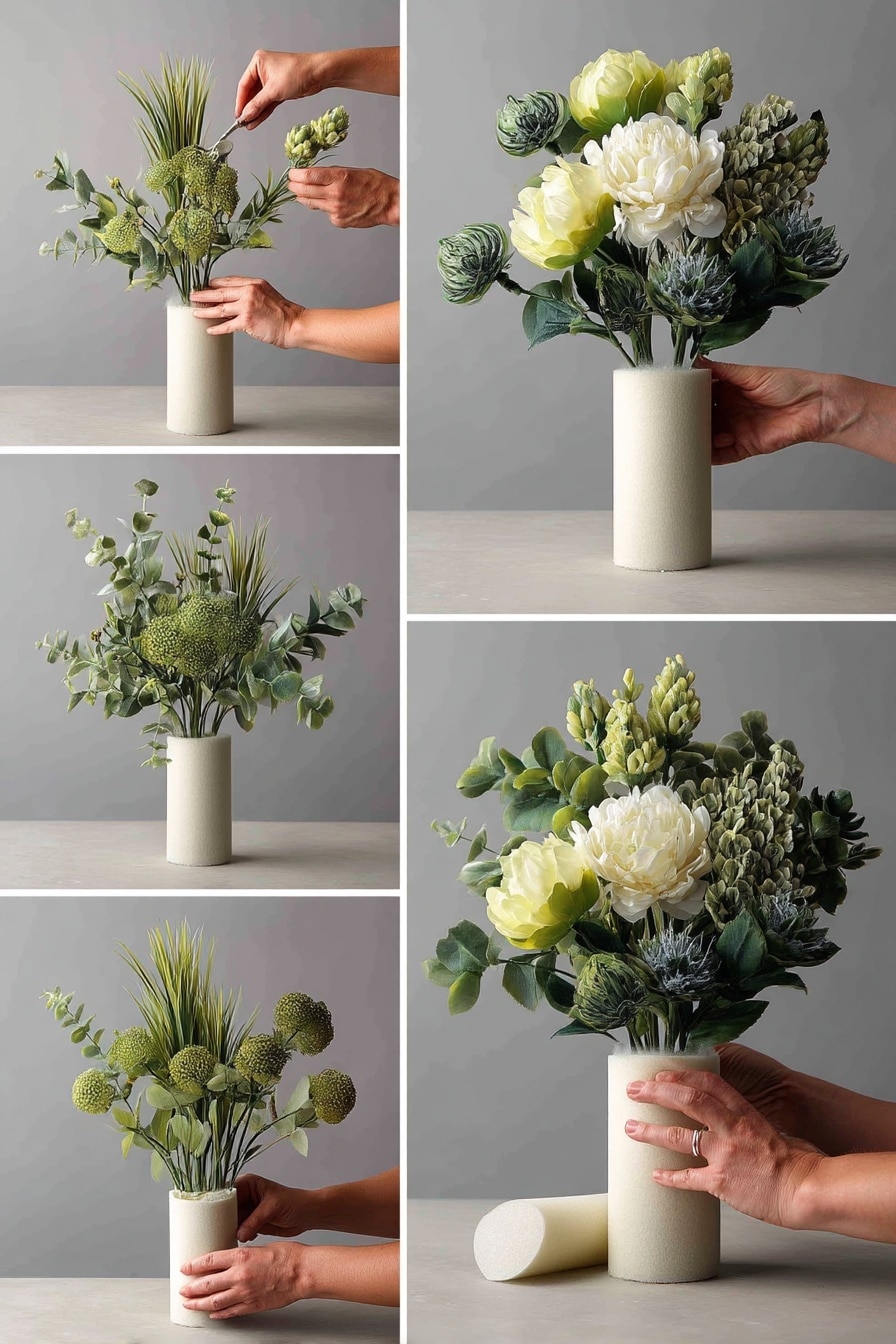
Artificial flower arrangements offer the beauty of real blooms without the upkeep, making them perfect for long-lasting decor, special events, or brightening up any room. Whether you’re a hobbyist or preparing for a big celebration, knowing how to style faux flowers professionally can make all the difference in achieving a natural, elegant look.
In this article, we’ll walk through techniques and tips to help you elevate your faux floral designs from simple to stunning—without breaking the bank or spending hours in craft stores.
Table of Contents
Why Choose Artificial Flower Arrangements?

Artificial flowers have evolved significantly in realism and quality. They’ve become a go-to solution for both event designers and home decorators. Here’s why they’re worth considering:
- Long-lasting: No wilting, browning, or water changes needed.
- Cost-effective over time: Invest once, reuse for years.
- Allergy-friendly: Ideal for people sensitive to pollen.
- Customizable: Easily bendable stems and detachable parts allow creative freedom.
- Availability: Seasonal varieties year-round.
Using artificial flower arrangements ensures that your space always looks fresh—no matter the weather or season.
Essential Materials to Create Stunning Arrangements
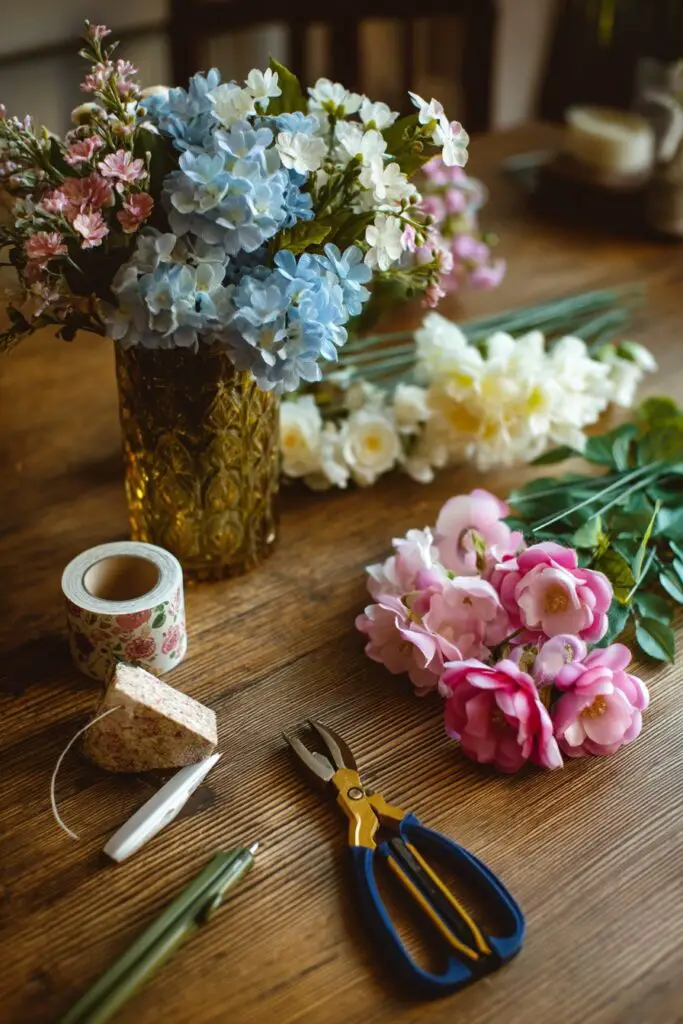
To get started, gather the following tools and materials:
Supplies List
- Faux flowers in various types and sizes
- Wire cutters or floral shears
- Floral tape or hot glue gun
- Foam or reusable base (like a floral block)
- Decorative vases, pots, or containers
- Greenery and filler accents (e.g., eucalyptus, baby’s breath)
Choose flowers with different textures and shades within your color scheme to create dimension and realism.
Design Principles for Lifelike Arrangements
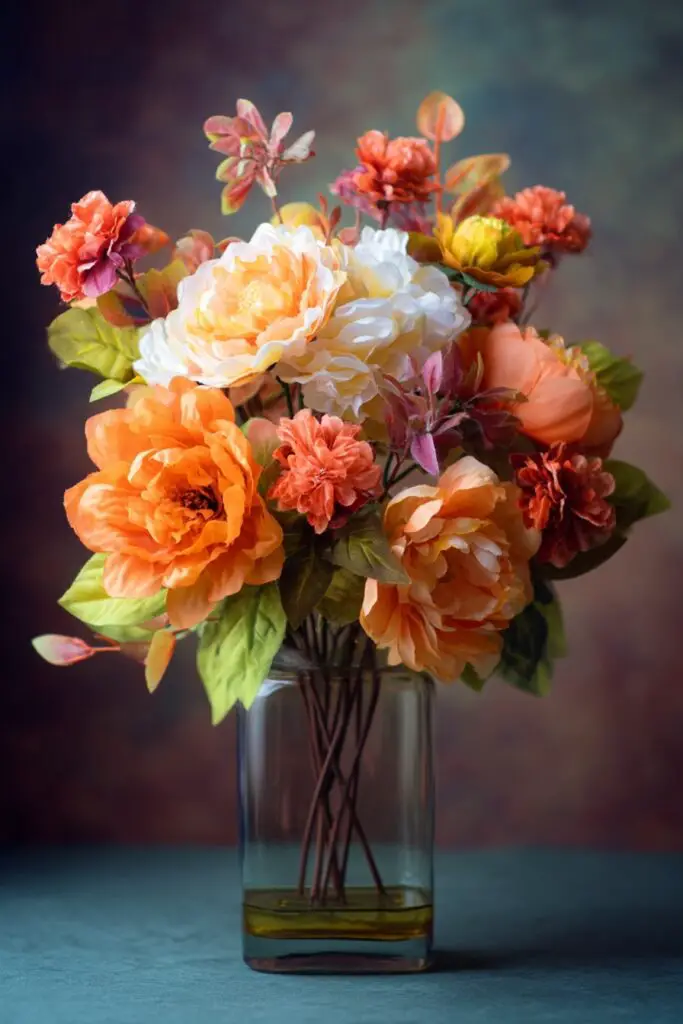
A professional-looking arrangement isn’t just about pretty flowers—it’s about thoughtful design. Follow these principles to create artificial flower arrangements that look as if they were freshly picked.
1. Balance and Symmetry
Whether you’re aiming for a symmetrical or asymmetrical look, maintain visual balance. Distribute flowers evenly, ensuring one side doesn’t appear heavier than the other.
2. Vary Heights and Shapes
Create visual interest by trimming stems to different lengths. Taller blooms can serve as focal points, while shorter ones help fill gaps and create volume.
3. Use the Rule of Three
Odd numbers are more pleasing to the eye. Group flowers in sets of 3 or 5 for a more organic, natural appearance.
4. Blend Textures
Mix bold blooms like peonies or roses with soft fillers like lavender or fern leaves to enhance depth.
5. Incorporate Greenery
Never underestimate the power of greenery. It breaks up the florals, adds contrast, and mimics how real bouquets are structured.
Step-by-Step Guide to Arranging Faux Flowers
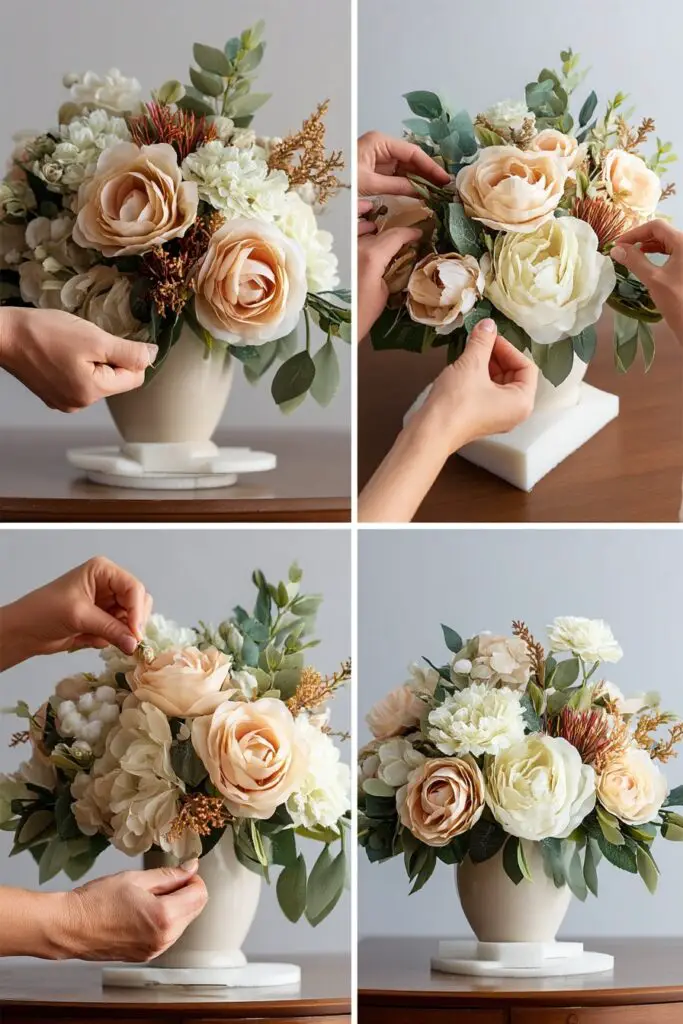
Use this foolproof method to create your own artificial flower arrangements at home.
Step 1 – Prep Your Flowers
- Trim stems using wire cutters to varying lengths
- Gently bend the wired stems to shape petals and create natural bends
Step 2 – Anchor the Base
- Insert a floral foam block or stabilizing weight into your vase
- Secure it with glue if needed for added support
Step 3 – Start with Greenery
- Add greenery first to define the shape and structure
- Focus on evenly spreading the base leaves around the container
Step 4 – Add Focal Flowers
- Place large, bold flowers toward the center or along the primary viewing angle
- Keep them slightly taller than filler blooms
Step 5 – Fill with Secondary Flowers and Accents
- Use medium-sized flowers to fill in spaces
- Layer smaller blooms and fillers like baby’s breath or berries to create fullness
Step 6 – Final Adjustments
- Step back and assess
- Reposition or tweak to enhance symmetry and flow
Common Mistakes to Avoid with Artificial Flower Arrangements
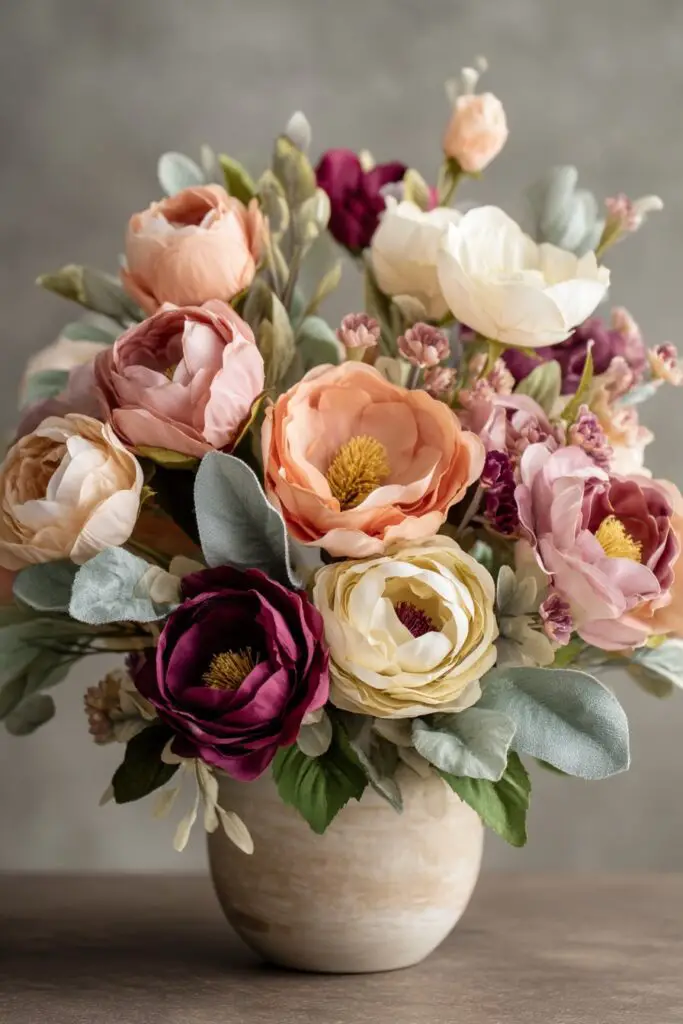
Even the most beautiful faux florals can fall flat if common mistakes aren’t avoided. Here are key missteps to watch for when creating your artificial flower arrangements:
Overstuffing the Arrangement
Packing too many flowers into a single container makes the arrangement look crowded and unnatural. Leave space for air and depth.
Ignoring Color Harmony
Stick to a cohesive color palette. Too many contrasting colors can clash and look chaotic. Choose complementary hues and tones.
Skipping Greenery
Artificial flowers without greenery often appear stiff or unrealistic. Foliage softens the look and makes arrangements more convincing.
Using Low-Quality Faux Flowers
Cheap plastics and overly shiny petals give away the artificial nature. Invest in high-quality silk or latex flowers for a more natural appearance.
Not Shaping the Stems
Leaving stems straight out of the package is a dead giveaway. Gently bend and shape them to mimic the curves of real flowers.
Conclusion
Creating beautiful artificial flower arrangements is both an art and a practical skill. With the right materials, an eye for design, and a few professional tricks, your faux floral creations can rival even the most lavish fresh bouquets. Whether you’re decorating your home, planning an event, or just crafting for joy, the key is to approach each arrangement thoughtfully and with creativity.